New York's Potassium Bromate Ban: What It Means for Your Bread

New York's legislature passed a bill banning potassium bromate from all food sold in the state. Here's what the law does, why this additive is controversial, and what consumers should check on labels right now.

May 23, 2026|9 min read
By Sanket Patel|Updated 2026-05-23|6 sources|Editorial standards
New York's Potassium Bromate Ban: What It Means for Your Bread

On April 21, 2026, the New York State Assembly voted 106 to 32 to pass the Food Safety and Chemical Disclosure Act — the most significant state-level food additive legislation since California's AB 418 in 2023. The bill awaits Governor Kathy Hochul's signature and would ban three food additives from all food sold in New York: potassium bromate, FD&C Red Dye No. 3, and propylparaben.

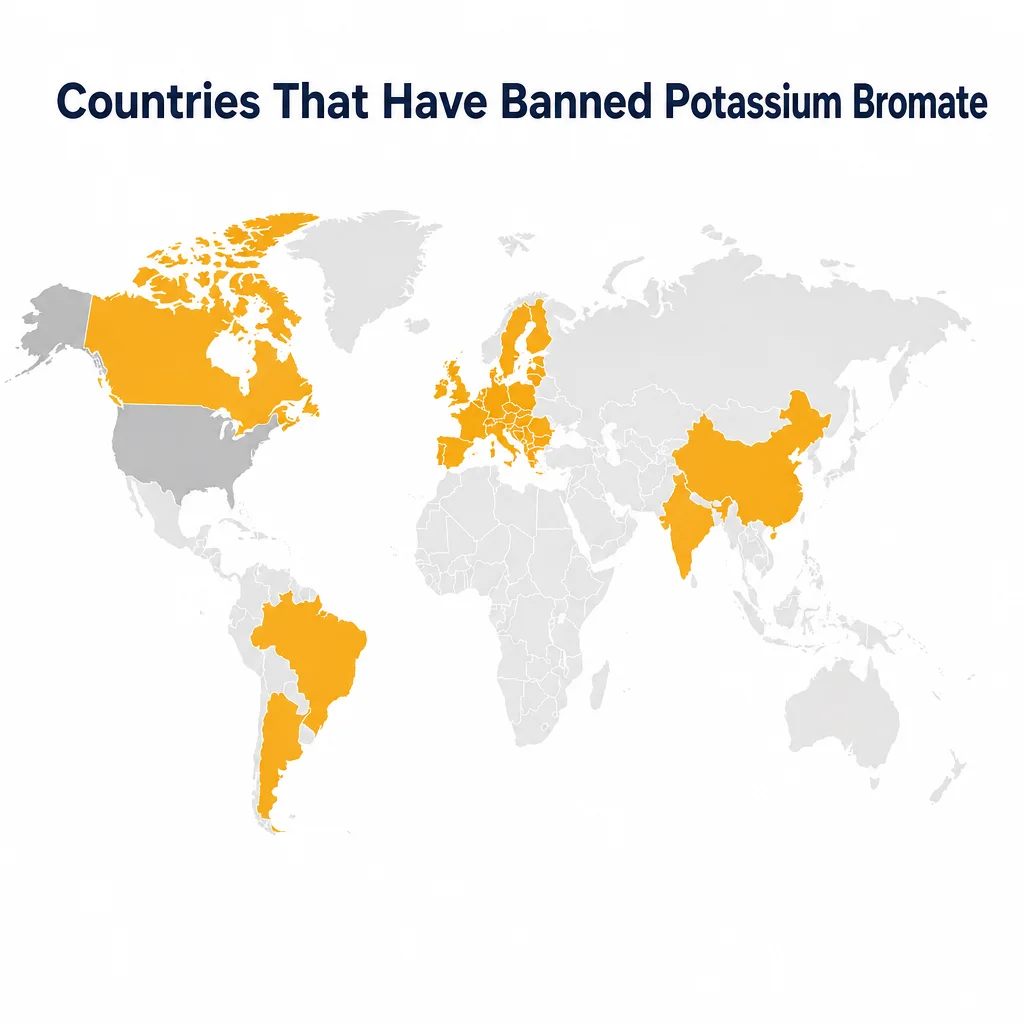
Potassium bromate has been banned in more than 40 countries for decades. The European Union banned it in 1990. Canada banned it in 1994. India banned it in 2016. China banned it in 2005. The United States federal government has known about the cancer concerns since at least the 1970s — and has done almost nothing.

That may be about to change, at least at the state level.

What Potassium Bromate Is and Why It's in Bread

What Potassium Bromate Is and Why It's in Bread

Potassium bromate (KBrO₃) is a powerful oxidizing agent that has been used in commercial baking since the 1940s. When mixed into flour, it reacts with gluten proteins, converting sulfhydryl groups into disulfide bonds. Those bonds create a stronger, more elastic gluten network. Bread rises higher, the crumb is finer, and the loaf comes out of the oven with more consistent volume.

The additive is slow-acting, continuing to work throughout the entire baking process — an advantage that made it popular with high-volume commercial bakeries. It was first patented for baking use in 1914.

The industry argument for keeping it on the market has always been straightforward: under correct baking conditions, potassium bromate converts into potassium bromide, a benign salt. If that conversion is complete, no harmful residue remains in the finished bread. The FDA permits potassium bromate at up to 75 parts per million in flour, with finished baked goods allowed to contain up to 20 parts per billion.

The problem is that the conversion is not always complete. Independent laboratory testing — including studies that preceded the UK's 1990 ban — found residual bromate in retail bread. The center of a thick loaf does not reach the same temperature as the crust. Underbaking, uneven ovens, and thick commercial loaves can all leave residue behind.

The IARC Classification and What It Actually Means

The International Agency for Research on Cancer classified potassium bromate as a Group 2B carcinogen in 1999, based on its Volume 73 monograph review. Group 2B means the substance is "possibly carcinogenic to humans" — there is convincing evidence of cancer in laboratory animals, but limited or inadequate evidence in humans.

That classification has teeth. Animal studies showed that potassium bromate caused renal tubular tumors (both adenomas and carcinomas) and thyroid follicular tumors in rats of both sexes, as well as peritoneal mesotheliomas in male rats. Similar results appeared in mice and hamsters. The carcinogenic effects were observed across multiple species.

The mechanism matters too. Potassium bromate generates oxidative DNA damage — specifically, it produces 7,8-dihydro-8-oxo-guanine lesions in DNA. Research published in the journal Toxicology found that the dose-response relationship for DNA damage is essentially linear, with no apparent safe threshold. Human cell studies have found DNA strand breaks and chromosomal damage in liver and intestinal cells exposed to bromate.

This is not a fringe concern. It is a substance the U.S. Environmental Protection Agency has listed, the IARC has evaluated, and California has listed under Prop 65 as a substance known to the state to cause cancer.

Why the FDA Has Not Acted

The reason potassium bromate remains legal in the United States is partly bureaucratic history. It was in common commercial use before the Food Additives Amendment of 1958, which introduced the Delaney Clause requiring premarket safety review for new food additives. Substances already in use before that cutoff were "prior-sanctioned" and grandfathered into the system. Potassium bromate never went through a modern safety review the way a new additive would.

Since 1991, the FDA has publicly urged bakers not to use it. The agency worked with the American Bakers Association on voluntary reduction programs rather than issuing a formal ban. That voluntary approach produced uneven results for over three decades.

In March 2024, the FDA formally added potassium bromate to its list of select food chemicals under post-market review. As of May 2026, the review is still in the information-gathering phase.

In January 2026, the American Bakers Association announced a voluntary industry pledge for remaining member companies — the majority of major commercial bakeries already had phased out potassium bromate — to eliminate it entirely by December 31, 2026. The pledge is not legally binding.

What New York's Law Actually Does

The Food Safety and Chemical Disclosure Act passed the New York Senate 60 to 0 and the Assembly 106 to 32. It is Assembly Bill A.1556F, sponsored by Assemblymember Anna Kelles and Senator Brian Kavanagh.

Beyond the three direct additive bans, the law creates something novel: a GRAS disclosure regime. Companies that use Generally Recognized As Safe ingredients in foods sold in New York must submit pre-sale reports to the state. Those reports must identify the substance, describe how it is manufactured, document its technical function, estimate dietary exposure, and provide a safety narrative. The New York Department of Agriculture and Markets would maintain a publicly searchable database of these disclosures.

The FDA's GRAS system — under which companies can self-affirm that an ingredient is safe without ever notifying the FDA — has long been criticized as a transparency gap. The NY law would require that gap to be filled, at least for foods sold in the state.

A food and beverage industry coalition commissioned a study claiming the law could add $620 a year in grocery costs for New York families. That figure has been disputed by food safety advocates as speculative. As of late May 2026, Governor Hochul's office said she would review the bill.

New York would become the second state to ban potassium bromate statewide. California's AB 418, signed by Governor Newsom in October 2023, bans it starting January 1, 2027. New Jersey is also advancing a similar bill.

What Foods Contain It — and How to Spot It

What Foods Contain It — and How to Spot It

According to a New York Times investigation published in May 2026, an estimated 80 to 90 percent of commercial bakeries in New York state still use bromated flour. That figure reflects the scale of the transition the industry faces if the bill becomes law.

Potassium bromate appears primarily in:

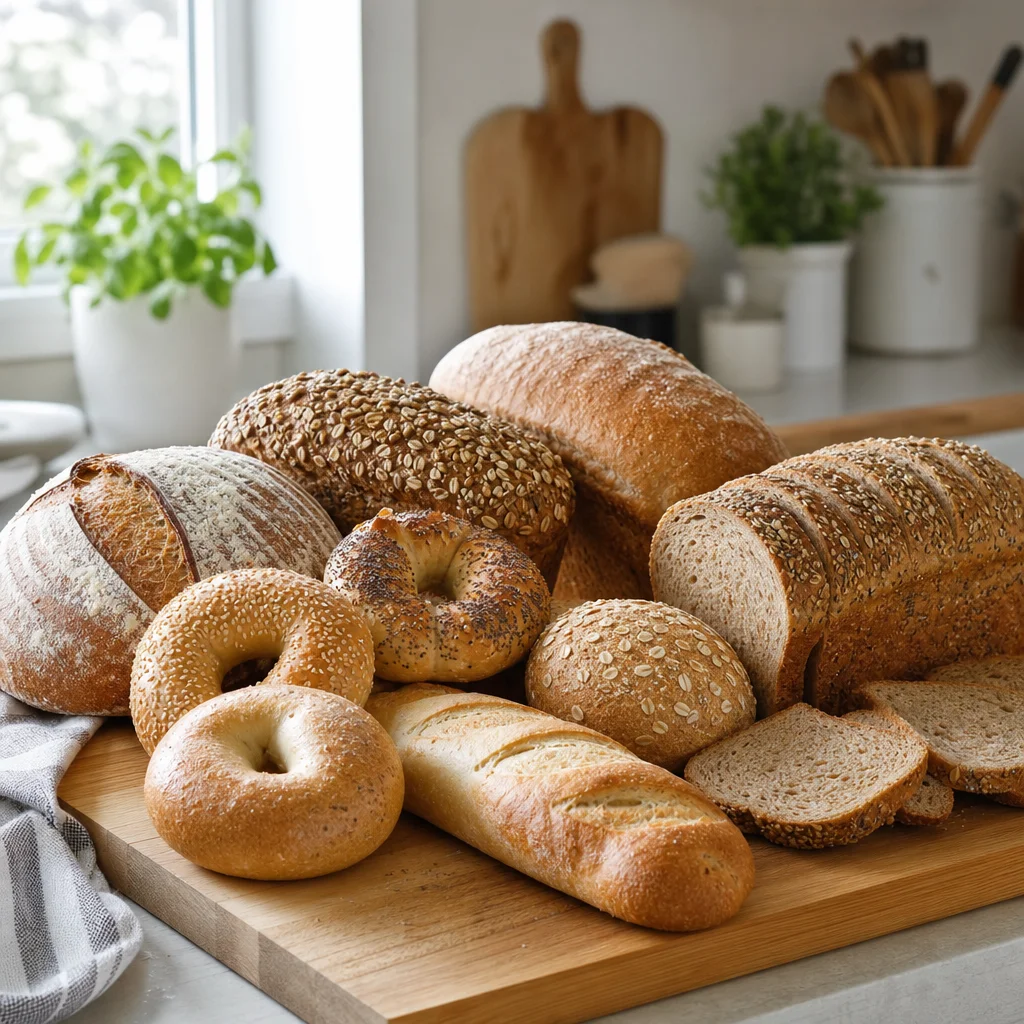
  • White bread and sandwich loaves
  • Bagels
  • Pizza dough and pizza crust
  • Hamburger and hot dog buns
  • Dinner rolls and Kaiser rolls
  • Some whole wheat and multigrain breads
  • Breakfast sandwiches with commercially made bread components
  • Pastry dough and turnover shells

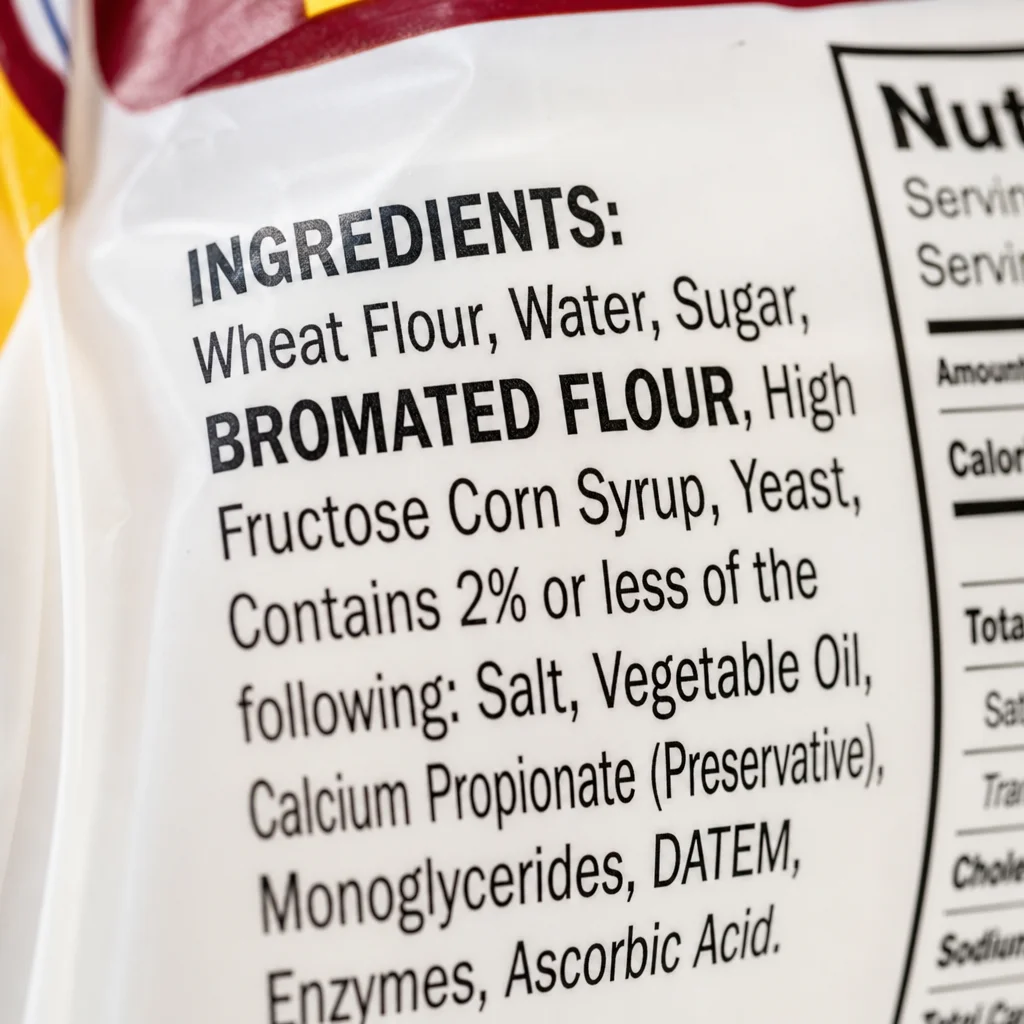
On a food label, it appears as "potassium bromate" or "bromated flour." The international designation is E924, though that designation is mostly used in countries where it was once permitted. Some products list it under "flour treatment agents" in ingredient notes, particularly on imported products.

Notably, flour marketed as "bromated flour" by food service suppliers — sold to restaurants and pizzerias rather than directly to consumers — may not carry the same retail labeling requirements. That is the product most New York pizza shops and bagel bakeries have historically used.

A Note on New York Bagels and Pizza

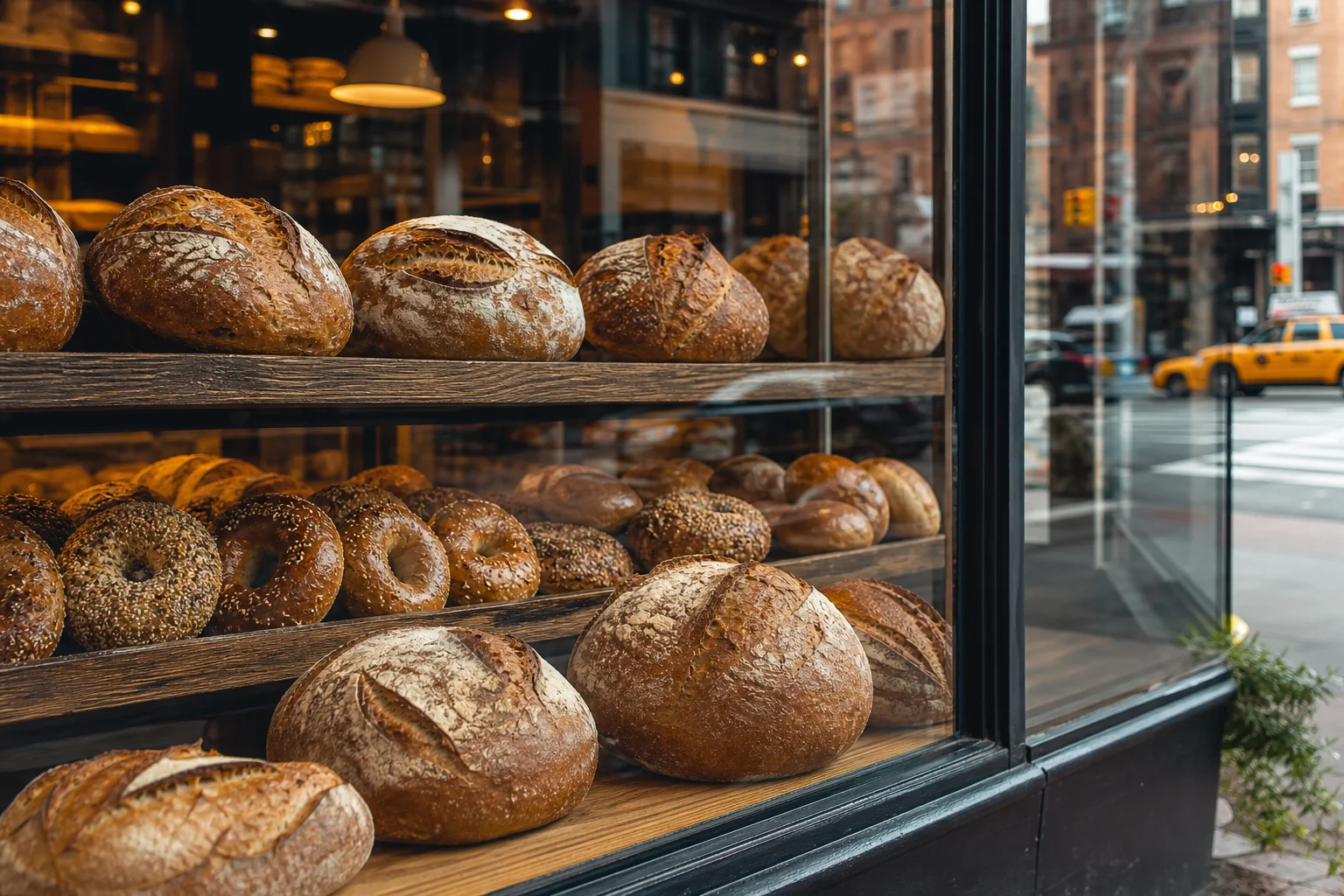
The cultural identity of New York-style bagels and pizza has been linked anecdotally to bromated flour. Bakers argue that the stronger gluten structure bromate creates contributes to the characteristic chew of a New York bagel and the crispness of a coal-oven pizza crust.

Food scientists are more skeptical. Other oxidizing agents — ascorbic acid in particular — can achieve similar results without the associated cancer concerns. Most European commercial bakeries have been producing high-quality bread without bromate for over 30 years. King Arthur Flour, a widely respected American milling brand, has never used bromate and produces flour that bakers consistently praise.

The "special ingredient" argument is not new. Every time a food additive has been phased out — from some artificial dyes to partially hydrogenated oils — industry voices have predicted quality would suffer. Products have generally adapted.
What This Means Right Now

What This Means Right Now

The law has not yet been signed. Until Governor Hochul's decision, potassium bromate remains legal in New York and in the rest of the United States.

The American Bakers Association voluntary pledge — to eliminate bromate by end of 2026 — means many major national bread brands may already be in the process of reformulating. Store brands and smaller regional bakeries are less likely to have made the change.

If you want to avoid potassium bromate in the meantime, the clearest signal is to look for bread labeled "unbromated flour" or "no potassium bromate." Organic bread cannot legally contain it under USDA organic rules. Specialty millers like King Arthur and Bob's Red Mill sell only unbromated flour.

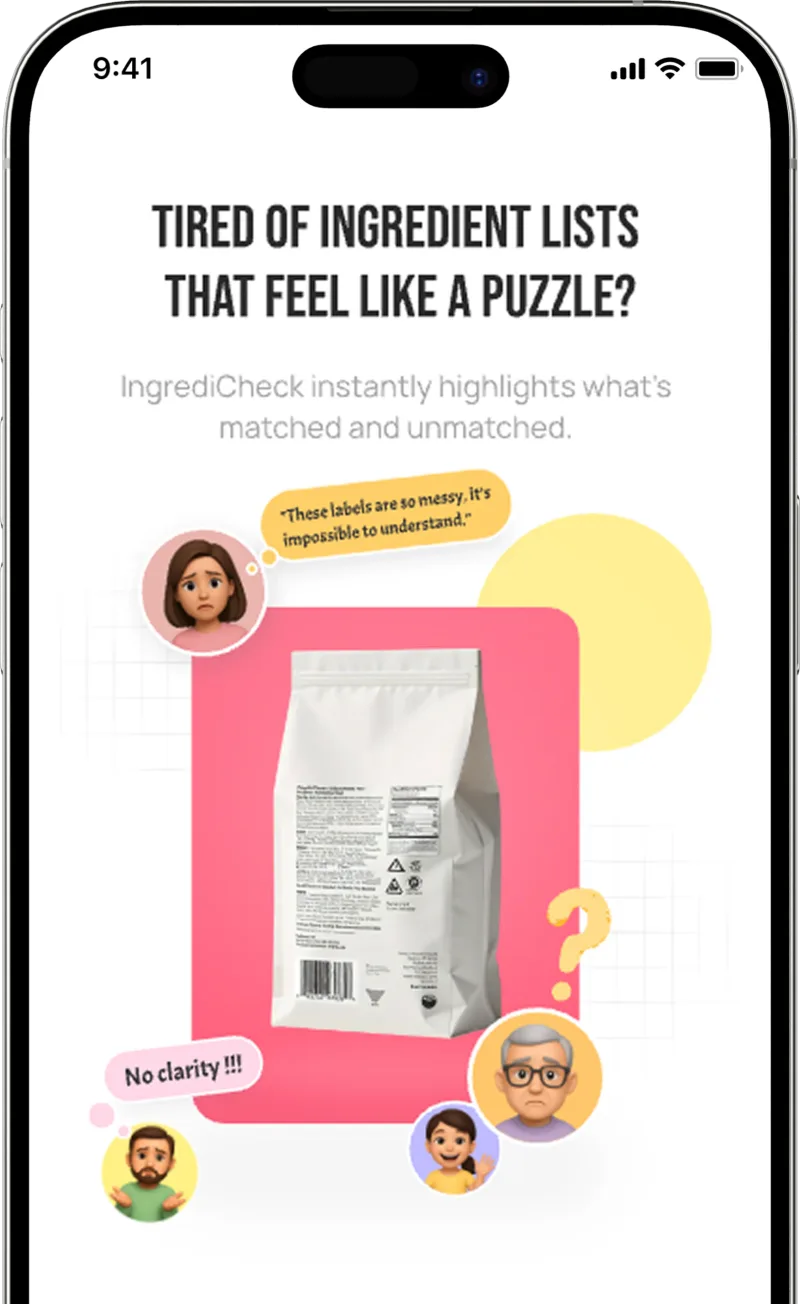
Using IngrediCheck, you can scan any packaged bread, bun, pizza dough, or flour product and instantly flag potassium bromate if it appears in the ingredient list — including under names like "bromated flour" that are easy to overlook when scanning a label quickly.

Next Label Check

Follow the scanner, hub, and ingredient paths connected to this guide

Get the app for clearer label decisions.

Scan labels, see what fits your food notes, and read the why in plain English.

IngrediCheck app