FDA's 2026 Chemical Safety Priorities: What Ingredient Reform Is Coming

The FDA's Human Foods Program released its 2026 Priority Deliverables, targeting food dyes, chemical additives, GRAS reform, and ultra-processed foods. Here is what consumers and families should expect.

Apr 12, 2026|10 min read
By Sanket Patel|Updated 2026-04-12|8 sources|Editorial standards
FDA's 2026 Chemical Safety Priorities: What Ingredient Reform Is Coming

The U.S. Food and Drug Administration is in the middle of its most aggressive food chemical overhaul in decades. In January 2026, the agency's Human Foods Program released a 3,600-word document laying out everything it intends to accomplish this year. The list touches nearly every corner of the grocery aisle: food dyes, preservatives, the GRAS loophole, ultra-processed foods, heavy metals in baby food, and a new front-of-package labeling system.

Not all of these items will become final rules in 2026. Some are multi-year efforts. But the direction of travel is unmistakable. The FDA is signaling that more ingredients will face scrutiny, more labeling changes are coming, and more chemical additives could lose their place in the American food supply.

Here is what each priority actually means for the food you buy.

The Petroleum Dye Phase-Out: Red No. 3 Is Just the Beginning

The Petroleum Dye Phase-Out: Red No. 3 Is Just the Beginning

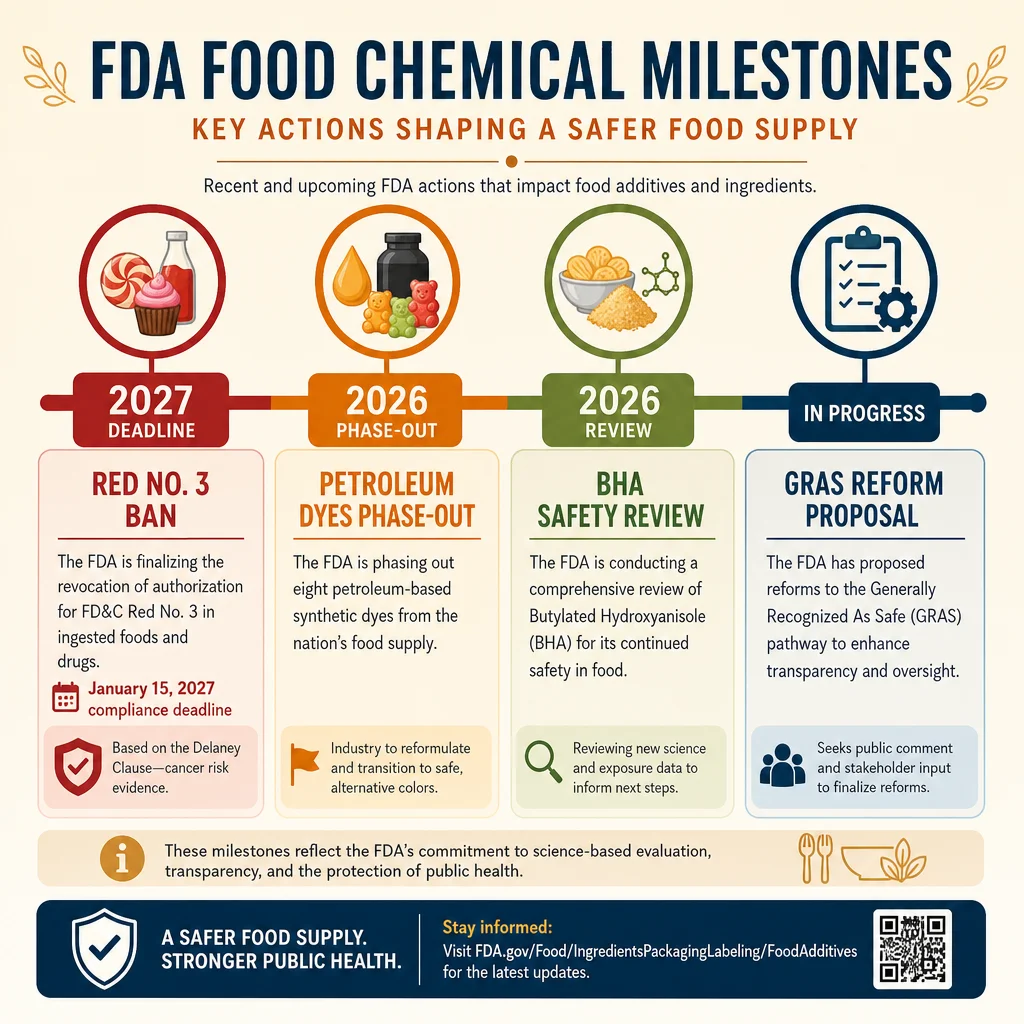
The biggest headline so far came in January 2025, when the FDA revoked authorization for Red Dye No. 3 (erythrosine). The ban was triggered by the Delaney Clause, a 1960 provision that prohibits any food additive shown to cause cancer in humans or animals. Animal studies had demonstrated a carcinogenic risk decades ago, but the agency delayed action until now.

Food manufacturers have until January 15, 2027 to remove Red No. 3 from their products. Ingested drugs get until January 18, 2028. After those dates, any product containing the dye is considered adulterated under federal law.

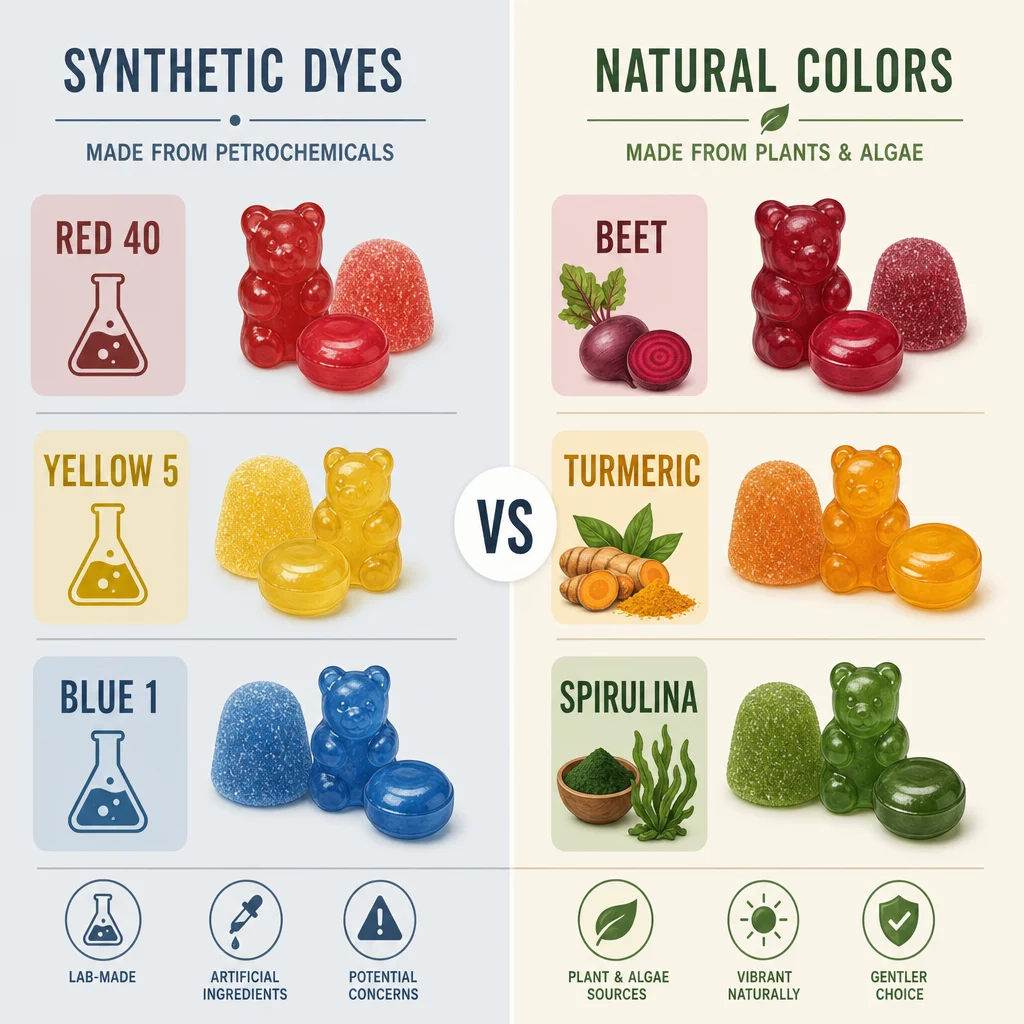
But Red No. 3 is not the end of the line for synthetic colors. In April 2025, the Make America Healthy Again Commission announced a goal to phase out all petroleum-derived certified synthetic food dyes by the end of 2026. The targeted list includes Red 40, Yellow 5, Yellow 6, Blue 1, Blue 2, and Green 3.

These dyes are everywhere. Red 40 and Yellow 5 appear in everything from breakfast cereals to sports drinks to fruit snacks. Blue 1 and Blue 2 color candies and frostings. Green 3 shows up in cake decorations and mint-flavored products.

Whether the full phase-out happens on schedule is an open question. In February 2026, the Environmental Working Group publicly criticized the FDA for easing enforcement of federal food additive rules around synthetic dye labeling, arguing the agency was retreating from its commitments.

The EWG argued that the FDA was easing enforcement of synthetic dye labeling rules, calling it a retreat from the agency's previously stated commitments on petroleum-based food dyes. The group pointed to state-level legislation as the primary driver of family protections, contrasting it with what it characterized as insufficient federal regulatory action.

Even if the federal timeline slips, the pressure is coming from elsewhere. More than 25 states have introduced legislation to ban synthetic food dyes and other chemical additives linked to behavioral effects in children.

What This Means for Your Shopping Cart

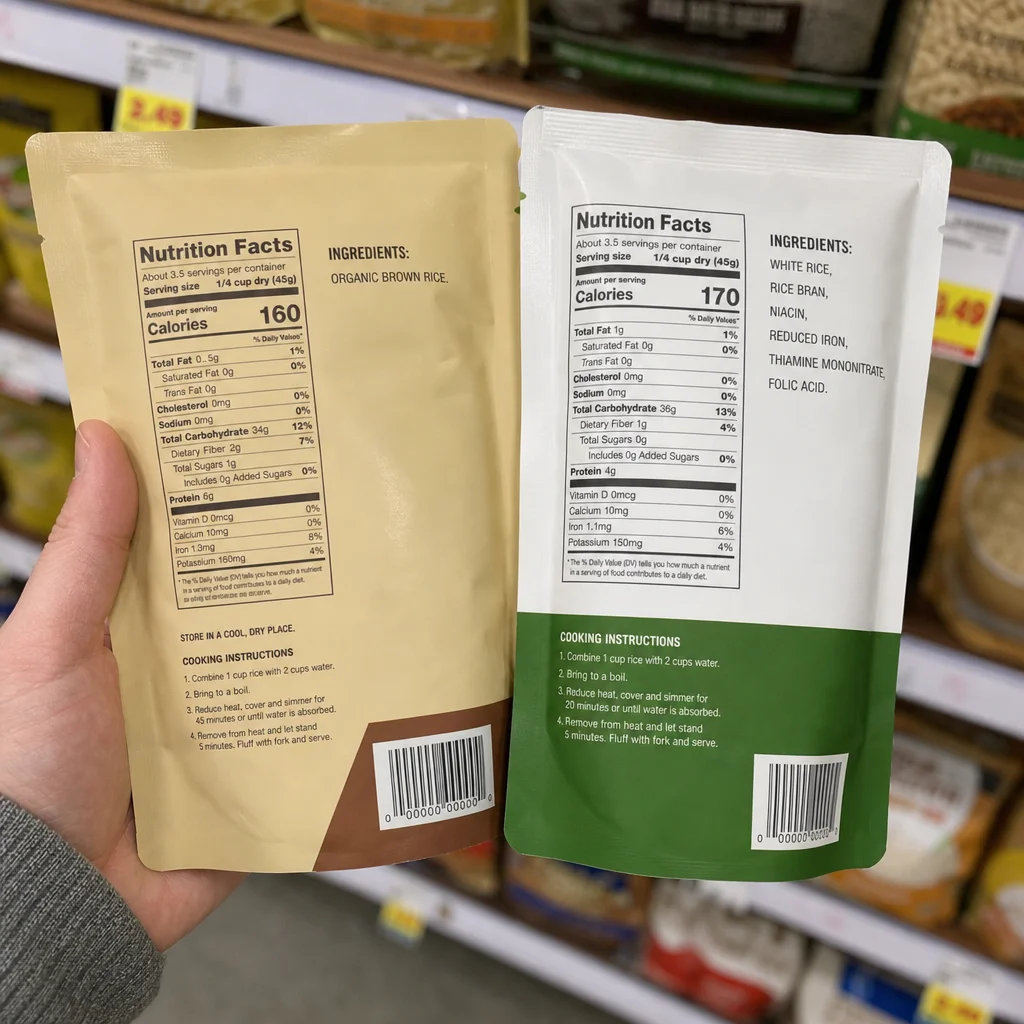
If you want to avoid synthetic dyes before mandates kick in, look for products that list natural color sources on the label. Beet juice, turmeric, annatto, paprika extract, spirulina, and carrot concentrate are common replacements. Products with "No Artificial Colors" claims are multiplying, but verify the ingredient list, since that claim is not yet a standardized regulatory term.
The Chemical Safety Reassessment: BHA, BHT, Propylparaben, and Phthalates

The FDA's 2026 deliverables include a formal post-market chemical oversight program. The agency plans to publish the first edition of its Systematic Post-Market Assessment process, explaining how substances are selected for review, how the public can participate, and what decision-making criteria will apply.

The substances already on the review list are familiar names to anyone who follows ingredient safety:

Butylated hydroxyanisole (BHA) is a preservative used in chips, crackers, cereals, and vegetable oils. The International Agency for Research on Cancer classifies BHA as possibly carcinogenic to humans. It is restricted or banned in the European Union and Japan, but remains legal in the United States.

Butylated hydroxytoluene (BHT) is BHA's chemical cousin and often travels with it in the same product formulations. While less studied than BHA, it faces the same post-market scrutiny in 2026.

Propylparaben is a preservative used in baked goods and processed foods. The European Union banned it as a food additive in 2015. The FDA's 2026 priority list signals that the U.S. may finally reassess its status.

Phthalates are not intentionally added ingredients in most cases. They enter food through packaging, processing equipment, and environmental contamination. The FDA plans to expand research into how phthalates migrate into the food supply and what exposure levels are safe.

The key shift here is the word "systematic." Until now, the FDA's post-market chemical reviews have been ad hoc, often triggered by petitions from advocacy groups or pressure from regulators abroad. A formal process with published criteria and public participation timelines would represent a meaningful change in how the agency monitors chemicals already in use.

The GRAS Loophole: Mandatory Notification Is on the Table

The GRAS Loophole: Mandatory Notification Is on the Table

Perhaps the most structurally significant item in the 2026 deliverables is the FDA's stated intention to reform the Generally Recognized as Safe (GRAS) system.

Under current rules, a food manufacturer can determine on its own that a new ingredient is GRAS and introduce it into the food supply without ever notifying the FDA. The agency estimates that more than 1,000 chemicals have entered the food supply through this self-affirmation pathway. No mandatory review. No public notice. No independent safety assessment required.

The 2026 deliverables propose a mandatory GRAS notification rule. If finalized, companies would need to submit safety data to the FDA before marketing a new ingredient as GRAS. The agency would review the submission and either accept or reject the determination.

In Congress, the GRAS Act (H.R. 4958), introduced in August 2025, would codify this requirement into law. The bill was referred to the House Committee on Energy and Commerce and remains pending. Whether the FDA can achieve reform through rulemaking, or whether it requires legislation, is one of the open questions of 2026.

The practical impact for consumers is straightforward. Under a mandatory notification system, the FDA would know what is in the food supply. Under the current system, it does not. That gap is the foundation of nearly every "banned in Europe, allowed in the U.S." headline. We explored this transatlantic divide in detail in our guide to why Europe bans some food additives the U.S. still allows.

Ultra-Processed Foods: Defining a Category Before Regulating It

The FDA's 2026 plan includes an effort to develop a federal government definition of ultra-processed foods, or UPFs. This is a necessary first step before any regulation can follow.

The term "ultra-processed" is widely used in nutrition research but lacks a legal or regulatory definition in the United States. The most common classification, the NOVA system, groups foods into four categories from unprocessed to ultra-processed. The FDA is now working with the USDA and other federal partners to analyze comments from a 2025 Request for Information and produce a working definition.

Why does a definition matter? Because without one, you cannot set limits. You cannot require labeling. You cannot fund research in a targeted way. Once a definition exists, a cascade of regulatory options opens up.

The public health stakes are well documented. Research published in 2024 in Communications Biology found that common dietary emulsifiers used in ultra-processed foods promote metabolic disorders and impair gut barrier function. A 2025 study in Clinical Gastroenterology and Hepatology00698-6/fulltext) examined the inflammatory effects of five common dietary emulsifiers. The scientific case for UPF reduction is building.

Heavy Metals in Baby Food: The Closer to Zero Initiative

The FDA's Closer to Zero initiative targets lead, cadmium, arsenic, and mercury in foods commonly consumed by infants and young children. In 2026, the agency plans to establish action levels for cadmium and inorganic arsenic in baby and toddler foods.

Heavy metals enter food through contaminated soil, water, and agricultural practices. They accumulate in certain crops: rice absorbs arsenic from groundwater, root vegetables take up cadmium from soil, and leafy greens can concentrate lead from atmospheric deposition.

Action levels are not bans. They are thresholds. If a product exceeds the action level, the FDA can take enforcement action. The goal of Closer to Zero is to push those thresholds lower over time as agricultural practices and supply chain management improve.

Front-of-Package Nutrition Labeling

Front-of-Package Nutrition Labeling

The FDA also plans to advance a front-of-package nutrition labeling program in 2026. The idea is to give consumers a quick-glance summary of key nutritional attributes without requiring them to locate and parse the detailed Nutrition Facts panel on the back or side of the package.

Other countries have already adopted similar systems. Chile uses black octagonal warning labels for products high in sugar, sodium, saturated fat, or calories. Mexico uses a similar system. France and several EU countries use Nutri-Score, a color-coded letter grade. The FDA has not yet specified which model it will follow, and industry pushback on mandatory front-of-pack labeling is significant.

What This Means for Consumers in 2026

The 2026 FDA priorities are not a guarantee of immediate change. Agency rulemaking is slow. Industry challenges are common. Deadlines slip. But the document tells you where the regulatory energy is directed, and that matters for what you see on shelves over the next two to three years.

The synthetic dye transition is already visible. Major brands are reformulating. Natural color alternatives are scaling up. Whether driven by federal mandate or consumer pressure, the shift away from petroleum-based dyes is the most concrete food additive change happening right now.

The GRAS reform effort may take years, but simply putting mandatory notification on the table signals a structural shift in how the FDA thinks about chemical ingredient oversight. The days of manufacturers self-certifying the safety of novel food chemicals without agency review may be numbered.

For consumers who want to stay ahead of these changes, the practical steps are simple. Read ingredient labels, not just marketing claims. Learn the names of additives under active regulatory scrutiny. And use tools that help you check what is actually in your food.

Using IngrediCheck, you can scan product labels to identify synthetic dyes, preservatives under FDA review, and food additives that are already restricted in other countries. As the regulatory landscape shifts throughout 2026 and beyond, staying informed about what you eat starts with knowing what is on the label.

Next Label Check

Follow the scanner, hub, and ingredient paths connected to this guide

Get the app for clearer label decisions.

Scan labels, see what fits your food notes, and read the why in plain English.

IngrediCheck app