Methylparaben
Methylparaben: what it does in food, current safety notes, diet compatibility, and shopper guidance from IngrediCheck.
Aliases and label clues
Related topics
Overview
Methylparaben is a preservative in the paraben family that attracts less public attention than propylparaben but still signals the same broader trust problem for many retailers and shoppers. It matters because ingredient families rarely stay conceptually isolated once one member becomes controversial.
Diet snapshot
What It Does in Food
Methylparaben is most commonly used as preservative and shelf-life stabilizer in packaged food.
Category
Preservative
Evidence and Regulatory Summary
Methylparaben does not map perfectly onto the propylparaben ban story, but it belongs to the same preservative family that retailers increasingly prefer to avoid. Aldi's exclusion is best read as a broader paraben-family policy rather than a one-name-only reaction.
Diet Notes
Methylparaben is not usually a diet-identity issue. It is more relevant to shoppers who want to reduce preservative-family exposure, who already recognize parabens as a label concern, or who prefer simpler shelf-stability systems in processed foods.
Shopper Guidance
Use methylparaben as a family clue, not a standalone mystery. If it appears, compare the product with alternatives and read it in relation to other parabens or preservative-heavy choices in the same category.
Next Label Check
Use Methylparaben in the scanner and topic paths around it
Related Guides
Read the connected explainers
Ingredient Deep Dives
Apr 27, 2026 | 8 min read
Methylparaben: The Paraben Preservative That Slips Under the Radar
Methylparaben does not carry the same recognition as propylparaben, but it belongs to the same preservative family that retailers increasingly treat with suspicion.
Ingredient Deep Dives
Mar 28, 2026 | 8 min read
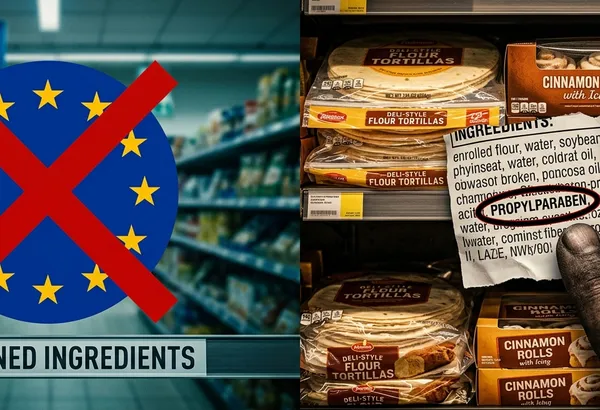
Propylparaben: Why Europe Banned It and the US Hasn't Yet
Propylparaben is a common preservative in US tortillas, baked goods, and snacks — but the EU banned it from food in 2006 over hormone-disruption concerns. California follows in 2027. Here's what you need to know.
Food Policy Watch
Apr 27, 2026 | 11 min read
ALDI Restricted Ingredients List: All 57 Ingredients
ALDI says its private-label food, vitamin, and supplement products will exclude 57 restricted ingredients by the end of 2027. Here is the full list, grouped and normalized for shoppers.
Food Policy Watch
Mar 26, 2026 | 10 min read
How 'FDA Approved' Food Additives Are Still Making People Sick
The GRAS loophole lets food companies self-certify their own ingredients as safe — without telling the FDA. Here's how approved additives get into your food, and why 'safe' has a much lower bar than you think.
Sources
This profile uses regulatory and journal sources and follows the IngrediCheck editorial policy.
Get the app for clearer label decisions.
Scan labels, see what fits your food notes, and read the why in plain English.