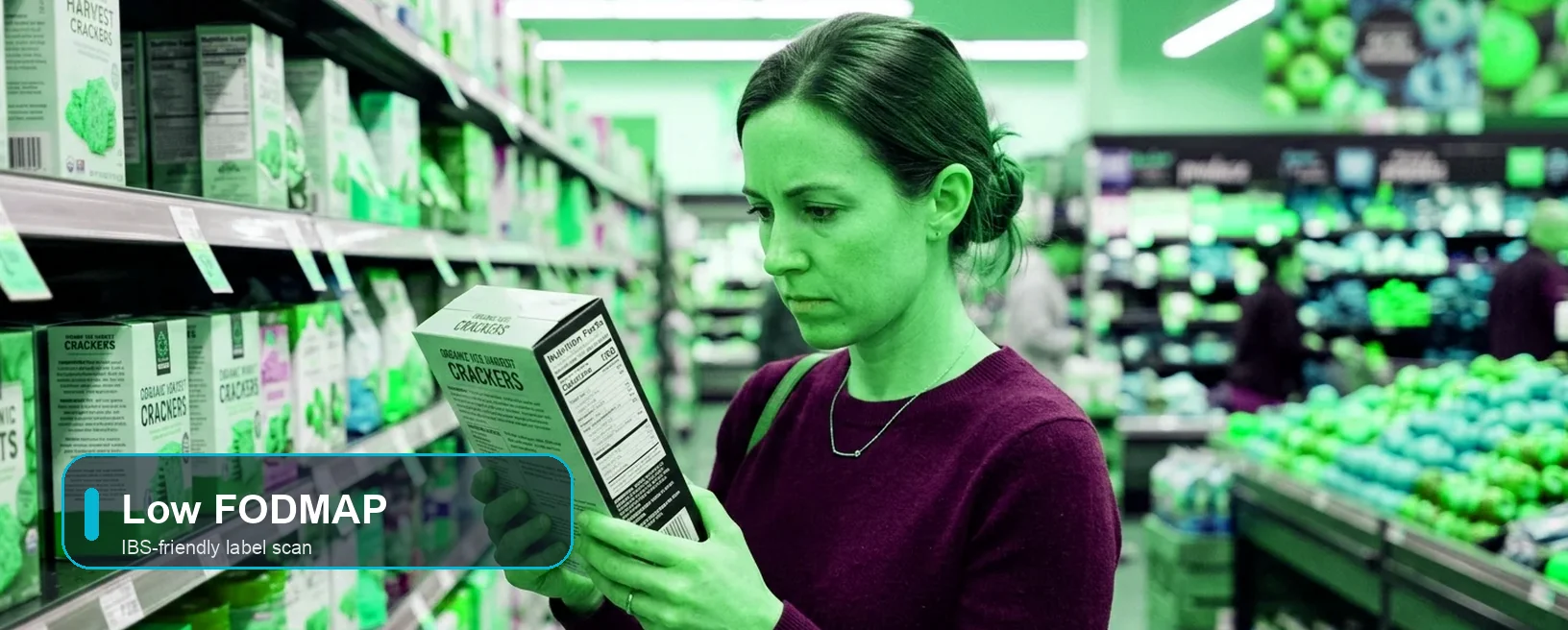
If you live with IBS, packaged food can feel like a guessing game. One protein bar causes bloating, another seems fine, and the only obvious difference is a long ingredient list full of terms that do not tell you much at a glance.
That is why a low FODMAP scanner, FODMAP checker, or FODMAP ingredient checker can be useful. It helps surface likely trigger ingredients quickly, so you are not decoding every label from scratch in the middle of a grocery trip.
The key word is likely. Low FODMAP shopping is more complicated than allergen avoidance because FODMAP tolerance depends on ingredient type, quantity, and your personal stage of the diet. A scanner can help you review labels faster, but it should support good IBS management rather than replace it.
This article is for informational purposes only and should not be considered medical advice. Work with a gastroenterologist or FODMAP-trained dietitian if you are using a low FODMAP diet to manage IBS symptoms.
NIDDK recommends the low FODMAP diet as one option clinicians may use to help reduce IBS symptoms. The problem is that food packages are not designed around FODMAP clarity.
You do not get a simple "high FODMAP" warning on most labels. Instead, you get ingredient names that require background knowledge:
- inulin and chicory root fiber
- honey and high-fructose corn syrup
- onion powder and garlic powder
- sugar alcohols like sorbitol, mannitol, maltitol, and xylitol
- wheat- or rye-based ingredients that may raise fructan load
Monash, the research group that developed the low FODMAP diet, has long emphasized that label reading is one of the hardest practical parts of the diet. That is because a trigger is often hiding inside what looks like a normal "healthy" packaged food.
Why This Matters in Real Life
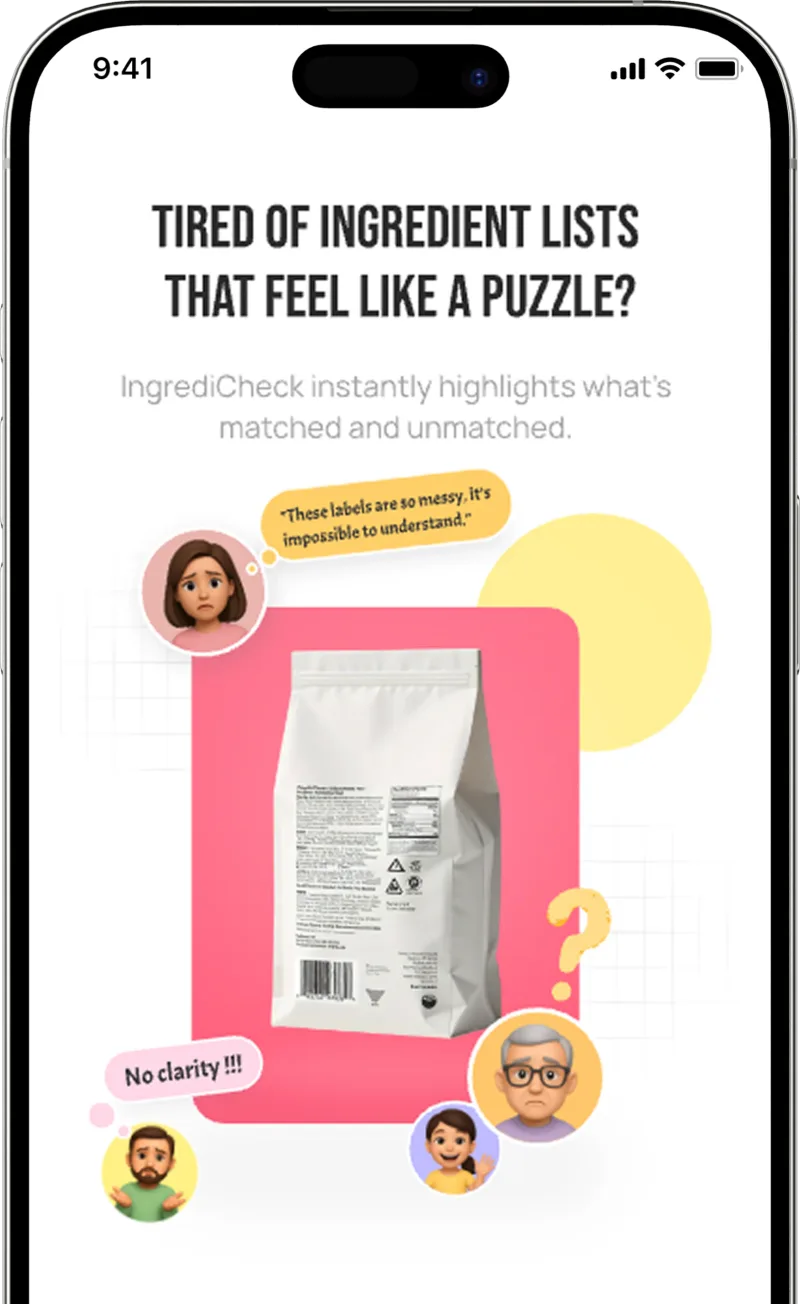
You should not need a nutrition degree to understand whether a cereal bar is packed with chicory root fiber, whether a sauce contains onion concentrate, or whether a "sugar-free" product is loaded with polyols.
That said, low FODMAP is not just an ingredient blacklist. It is a structured IBS tool. The smartest workflow is:
- use a scanner to flag likely triggers fast
- read the label with more attention when something is flagged
- keep serving size and your own tolerance in mind
- work from a structured reintroduction plan instead of permanent fear-based restriction
That is the difference between using technology well and outsourcing judgment.
For the broader scanner cluster, compare this page with the general guide to checking ingredients in food, open the dedicated low FODMAP ingredient checker workflow, and browse the full ingredient checker and food scanner guides hub to compare low-FODMAP, gluten-free, and other saved-rule workflows in one place.
Try It on Your Next Label
If IBS makes grocery shopping slower, more stressful, or more uncertain than it should be, a low FODMAP scanner can give you a better starting point. Instead of trying to remember every fructan, polyol, and hidden trigger by memory alone, you can scan the label, catch likely problem ingredients faster, and make a more informed decision before the product reaches your cart.
With IngrediCheck, the goal is simple: fewer missed triggers, less label fatigue, and a clearer way to shop around your IBS plan.