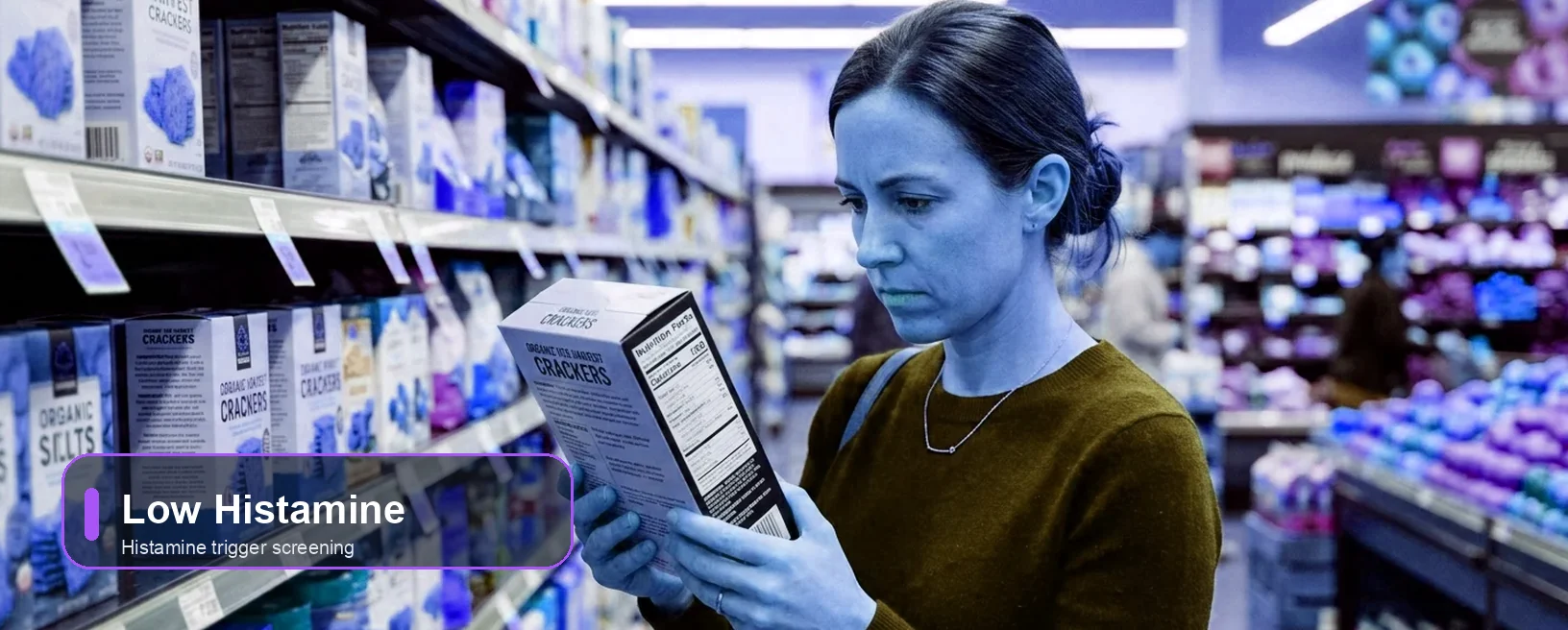
If you are trying to follow a low-histamine approach, packaged food can be frustrating fast. Labels do not say "high histamine," ingredient lists rarely tell the whole story, and symptom patterns can be delayed enough that it is hard to know which food actually caused the problem.
That is why a low histamine food scanner can be useful. It gives you a faster first-pass screen for ingredients and product types that often raise concern, so you can review labels more efficiently instead of relying on memory alone.
The caution is important: histamine intolerance is not labeled with the same clarity as allergens, and responses vary widely by person, amount, freshness, storage, and overall dietary load. A scanner can help you spot common trigger patterns, but it should support a clinician-guided food plan rather than replace one.
This article is for informational purposes only and should not be considered medical advice. If you suspect histamine intolerance or have persistent gastrointestinal or allergy-like symptoms, work with a clinician or dietitian before making major dietary restrictions.
Why Histamine Is So Hard to Shop For
Monash notes that histamine-related symptoms can overlap heavily with IBS and other gastrointestinal issues, which is part of what makes food triggers difficult to identify. The symptoms are not usually tied to one simple label rule, and reactions can be dose-dependent rather than immediate and binary.
That creates a real shopping problem:
- there is no standard "low histamine" declaration on packaged foods
- histamine content can vary with fermentation, aging, storage, and freshness
- some foods are routinely excluded in low-histamine diets, while other suspected triggers are much more individualized
- labels often show ingredients, but not the context that made them higher risk
That is very different from checking a clear allergen statement. Histamine management often means pattern recognition, not a single legally required warning.
The Packaged-Food Patterns That Matter Most
According to review literature on histamine intolerance, the most consistently higher-risk foods are fermented or microbiologically altered foods, because histamine is often formed during those processes.
In label-reading terms, that means shoppers often look more carefully at products containing:
- fermented ingredients
- aged or cured components
- certain preserved fish or meat ingredients
- vinegar-heavy or fermentation-based flavor components
- additive-heavy products they personally associate with flare-ups
The strongest common thread is fermentation and aging. Review articles consistently describe fermented foods, cured products, and some preserved foods as the most common sources of higher histamine content.
Start with Better Screening, Not More Guessing
Low-histamine shopping is hard because the label rarely tells you everything you actually want to know. But that does not mean you have to decode every packaged food from memory.
With a low histamine food scanner, you can screen for common higher-risk patterns faster, catch obvious fermented or preserved ingredients sooner, and spend your attention on the products that truly need a closer look. For people managing possible histamine-related symptoms, that means less guesswork and a more usable shopping process.
For a shorter shopping workflow, use the low-histamine ingredient checker page. For the broader scanner cluster, compare this page with the general ingredient checker app guide and browse the full ingredient checker and food scanner guides hub to compare low-histamine, low-FODMAP, and other personalized label-review workflows in one place.