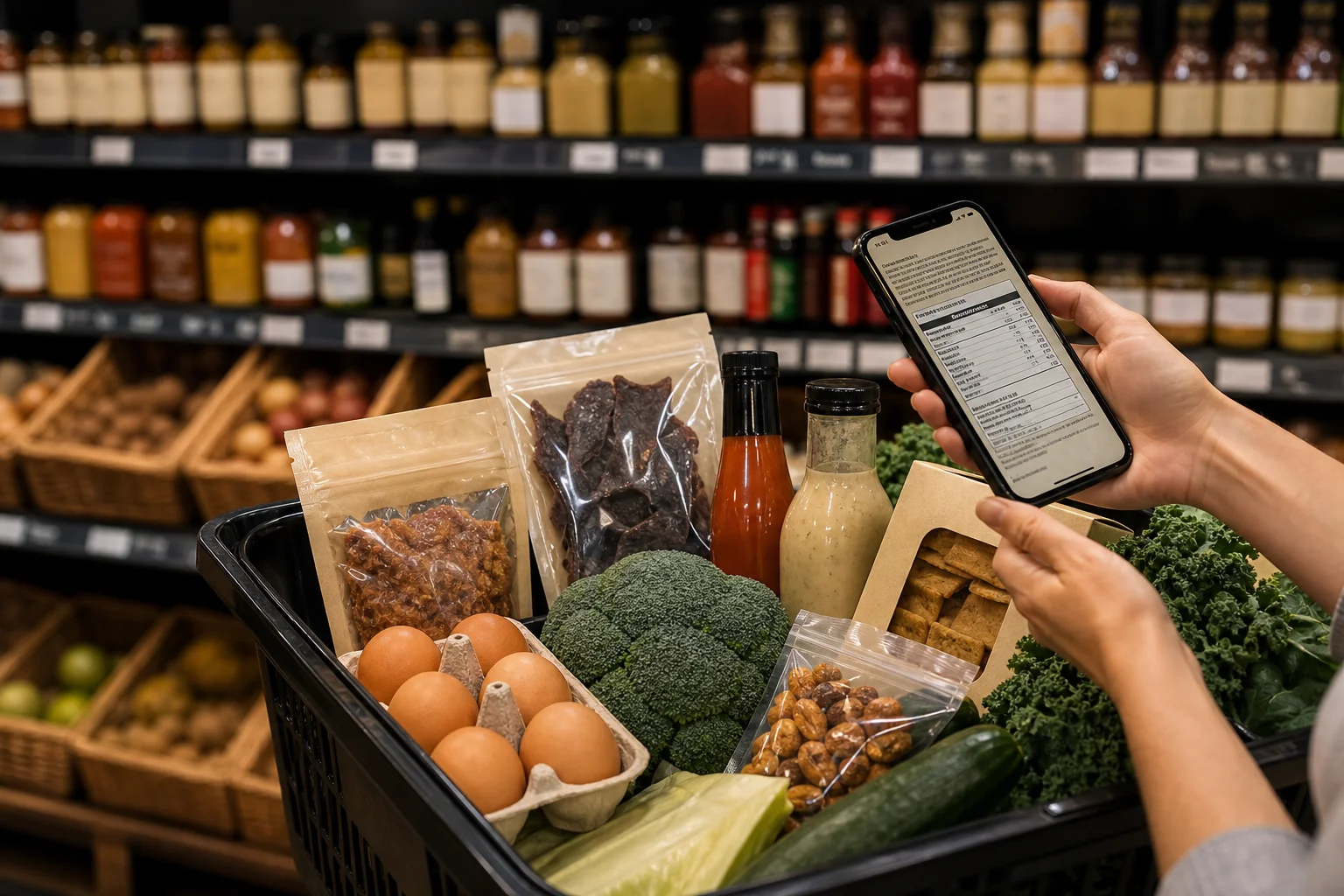
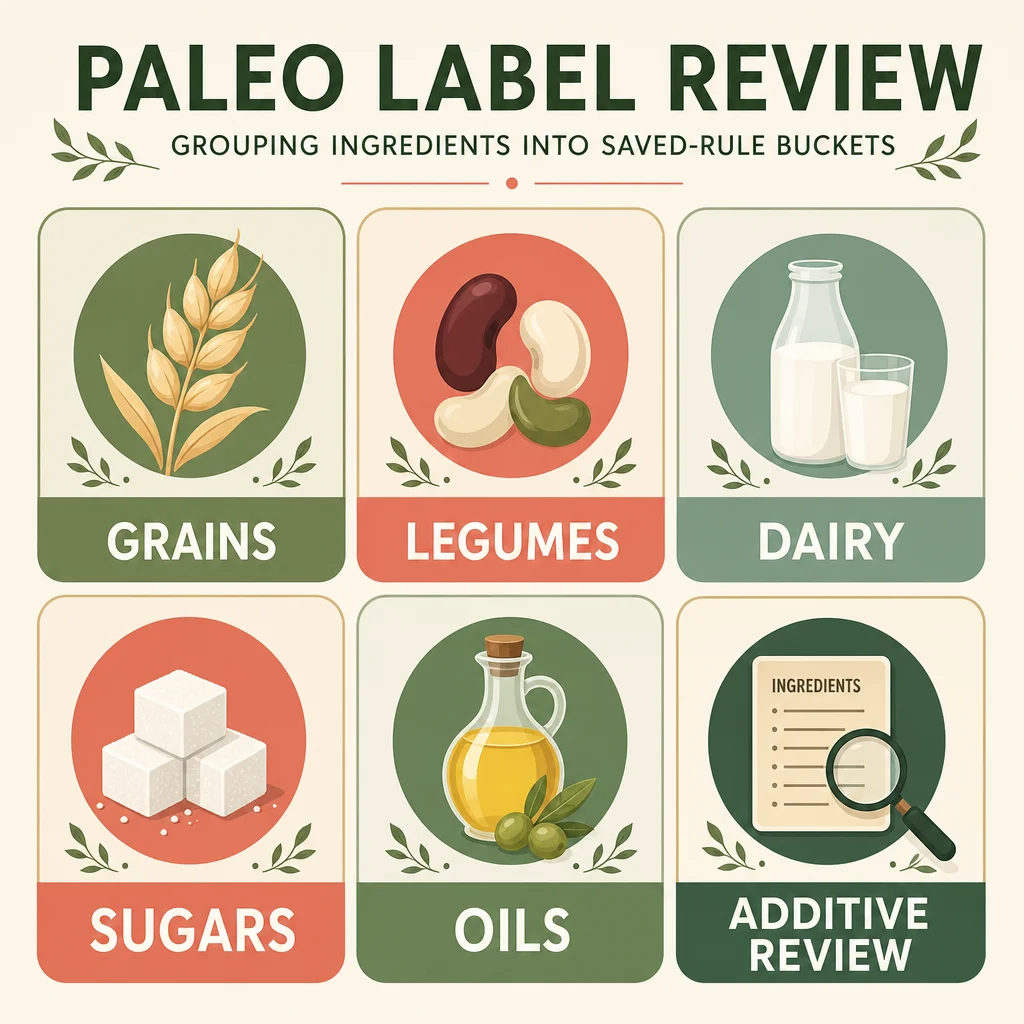
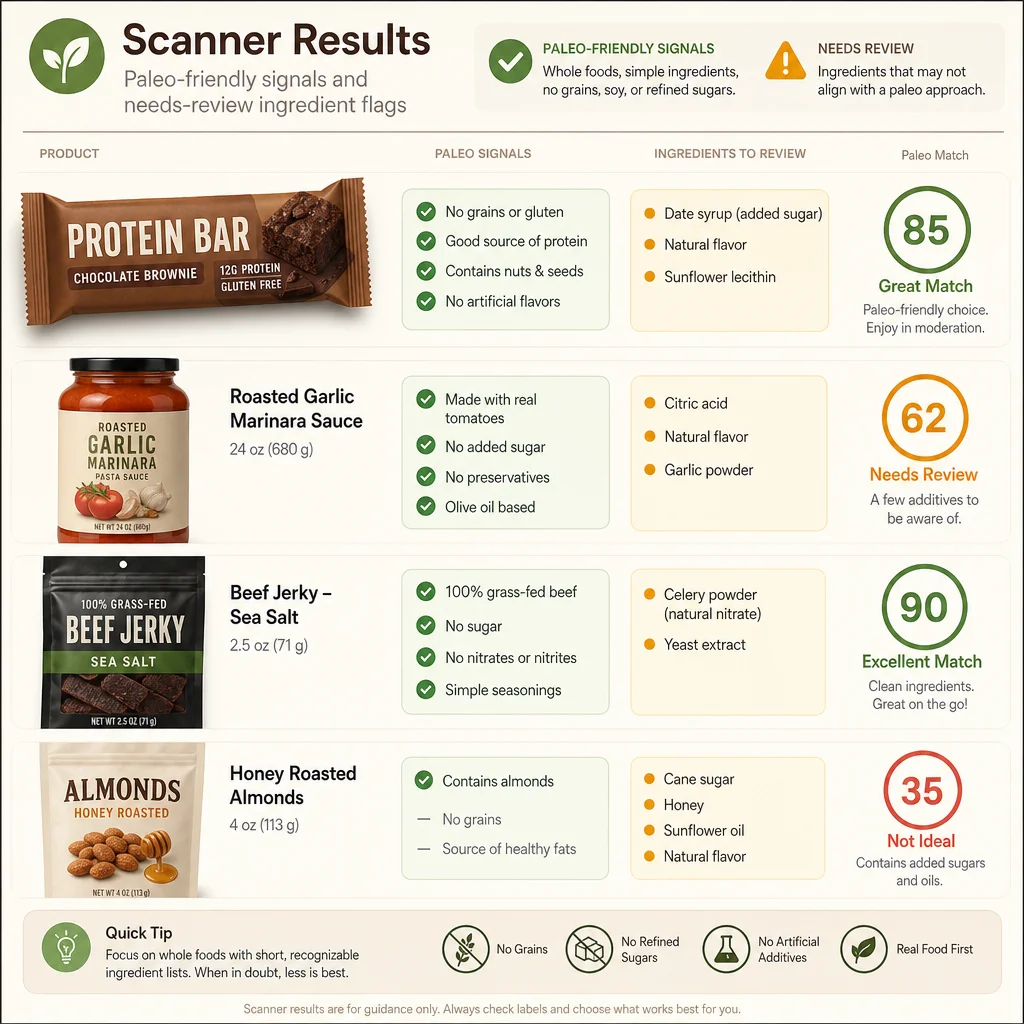
Most paleo label checks start with a few recurring categories.
First, grains. Wheat, barley, rye, oats, rice, corn, millet, sorghum, and grain flours are usually outside strict paleo rules. Gluten-free does not solve this. A gluten-free cracker can be built from rice flour, corn starch, or oat flour and still miss a paleo rule.
Second, legumes. Beans, lentils, chickpeas, soy, pea protein, peanuts, and many plant-protein isolates can show up in protein bars, vegan snacks, dips, and meat alternatives. A paleo shopper may want to flag the entire family or handle some ingredients differently.
Third, dairy. Milk, whey, casein, cheese powders, yogurt solids, butter flavor, and lactose can appear in bars, dressings, seasonings, and baked goods. Some relaxed paleo versions treat grass-fed butter or ghee differently, so this is another saved-rule issue.
Fourth, added sugar and sweeteners. The label may say honey, maple syrup, coconut sugar, cane sugar, dextrose, glucose syrup, brown rice syrup, agave, or maltodextrin. Paleo shoppers do not all handle sweeteners the same way, but the scanner should make them visible.
Fifth, oils and additive systems. Some shoppers care about seed oils, emulsifiers, preservatives, artificial sweeteners, gums, or color additives. Those rules are not inherent to every paleo plan, but they are common enough that a scanner should support them.