Label Reading Guides

Sulfite-Free Scanner App: Check Sulfites and Preservative Clues

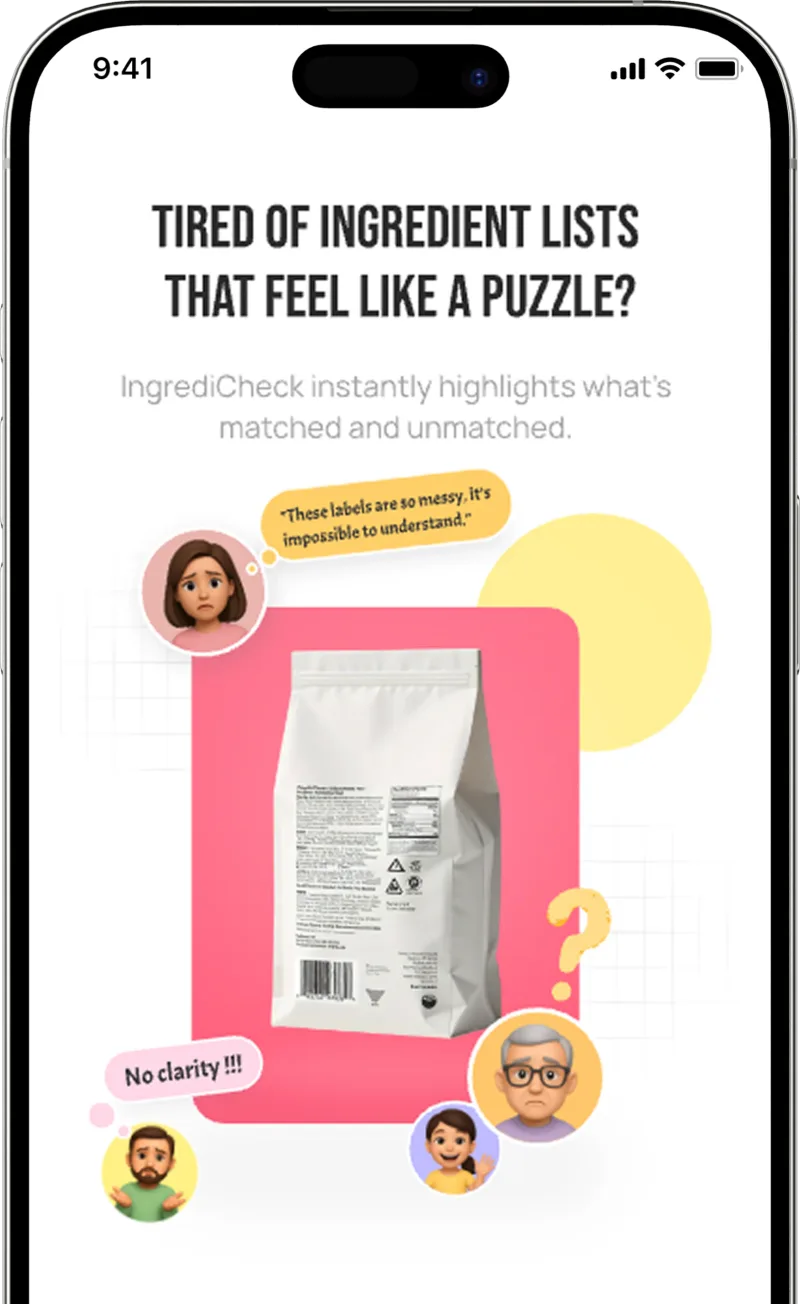
A sulfite-free scanner app helps shoppers flag sulfur dioxide, sodium sulfite, bisulfite, metabisulfite, and sulfite label declarations against saved rules.

May 13, 2026|9 min read
By Sanket Patel|Updated 2026-05-13|6 sources|Editorial standards
Sulfite-Free Scanner App: Check Sulfites and Preservative Clues

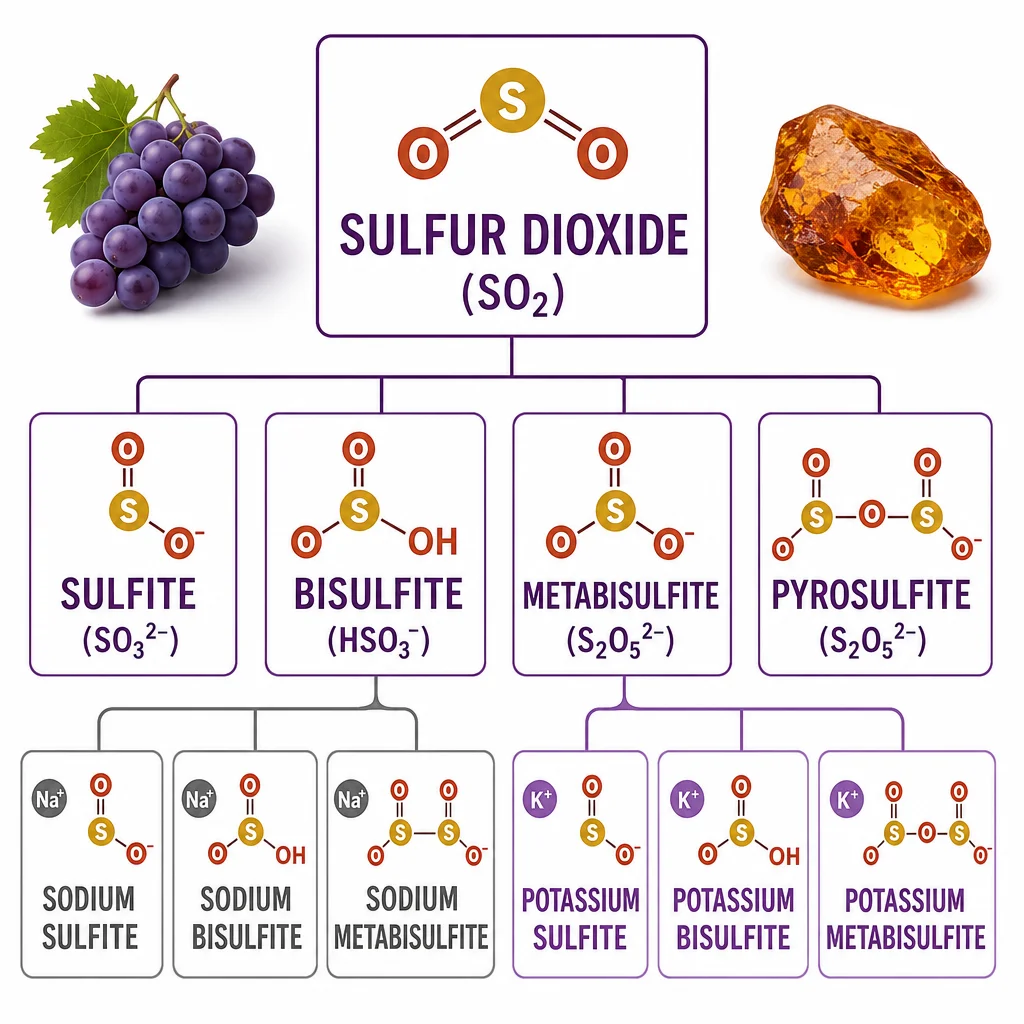
Sulfite-free shopping is a label-reading problem because sulfites rarely appear under one simple name. A shopper may need to catch sulfur dioxide, sodium sulfite, sodium bisulfite, sodium metabisulfite, potassium bisulfite, potassium metabisulfite, or a contains sulfites declaration.

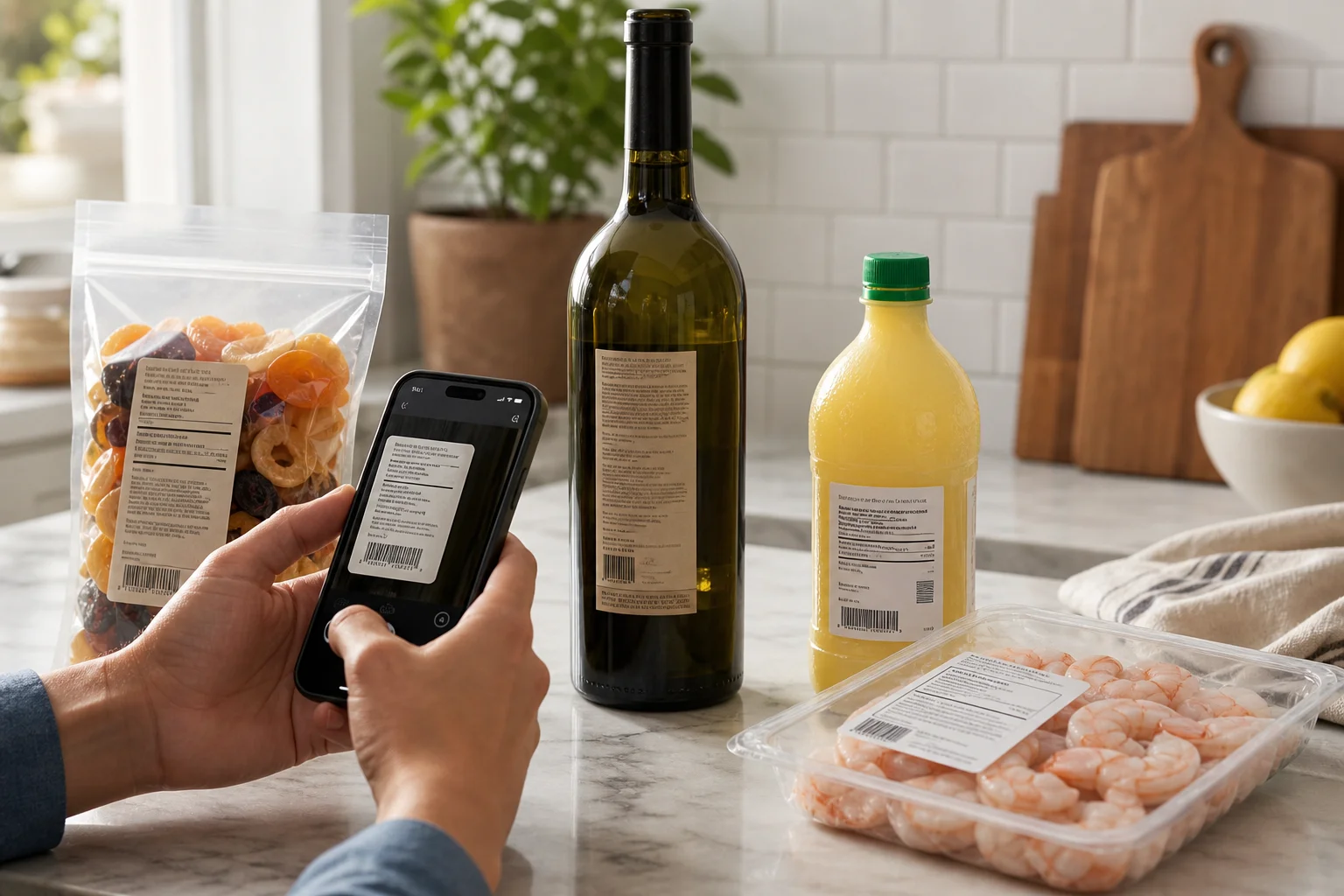
A sulfite-free scanner app helps by applying the shopper's saved sulfite rule to the ingredient list and label declarations. It does not diagnose sensitivity, and it does not replace clinician guidance. It helps with the grocery task: find sulfite clues faster and decide what needs review.
Sulfites Are Not Major Allergens, but They Still Have Label Rules

Sulfites sit in an unusual label category. They are not one of the FDA's current major food allergens, but FDA food allergy guidance still calls them out because sensitive individuals can have adverse reactions, including asthma symptoms.

The FDA says various sulfiting agents, including sodium bisulfite, are allowed as food ingredients, but must be declared on food labels when present in food at 10 parts per million or more total sulfites. 21 CFR 130.9 uses the same detectable amount threshold for standardized foods: 10 ppm or more.

That threshold matters for scanner design. The app should not treat sulfites exactly like peanut or milk allergens, but it should let a user with a sulfite rule flag the family wherever the label reveals it.

The Names to Save in a Sulfite Rule

The Names to Save in a Sulfite Rule

The practical shopping problem is vocabulary. A label might not say sulfites in the ingredient list. It might use a specific additive name.

Common names include:

  • sulfur dioxide
  • sulfites
  • sodium sulfite
  • sodium bisulfite
  • sodium metabisulfite
  • potassium bisulfite
  • potassium metabisulfite
  • sulphites, in some regional spellings

The University of Nebraska's Food Allergy Research and Resource Program lists the common U.S. sulfiting agents and explains the 10 ppm declaration rule. For shoppers, the key takeaway is simple: save the whole family, not only one spelling.

Where Sulfites Usually Appear

Sulfites are used because they can preserve color, slow browning, and help control oxidation or spoilage in certain foods. They are not evenly distributed across the grocery store.

Categories that deserve a second look include:

  • dried fruit
  • bottled lemon or lime juice
  • wine and some other alcoholic beverages
  • pickled or preserved vegetables
  • shrimp and some seafood treatments
  • dehydrated potatoes
  • maraschino cherries
  • jams, syrups, sauces, and some condiments
  • some baked goods or mixes

Wine is its own important case. The Alcohol and Tobacco Tax and Trade Bureau explains that wine labels need a sulfite declaration when sulfur dioxide or a sulfiting agent is detected at 10 ppm or more, measured as total sulfur dioxide.

That does not mean all wine or dried fruit is a problem for every shopper. It means these categories are likely enough to contain sulfite clues that a scanner can save time.

Why a Sulfite Scanner Needs a `Needs Review` State

Sulfite shopping is not always a clean yes-or-no from the label alone.

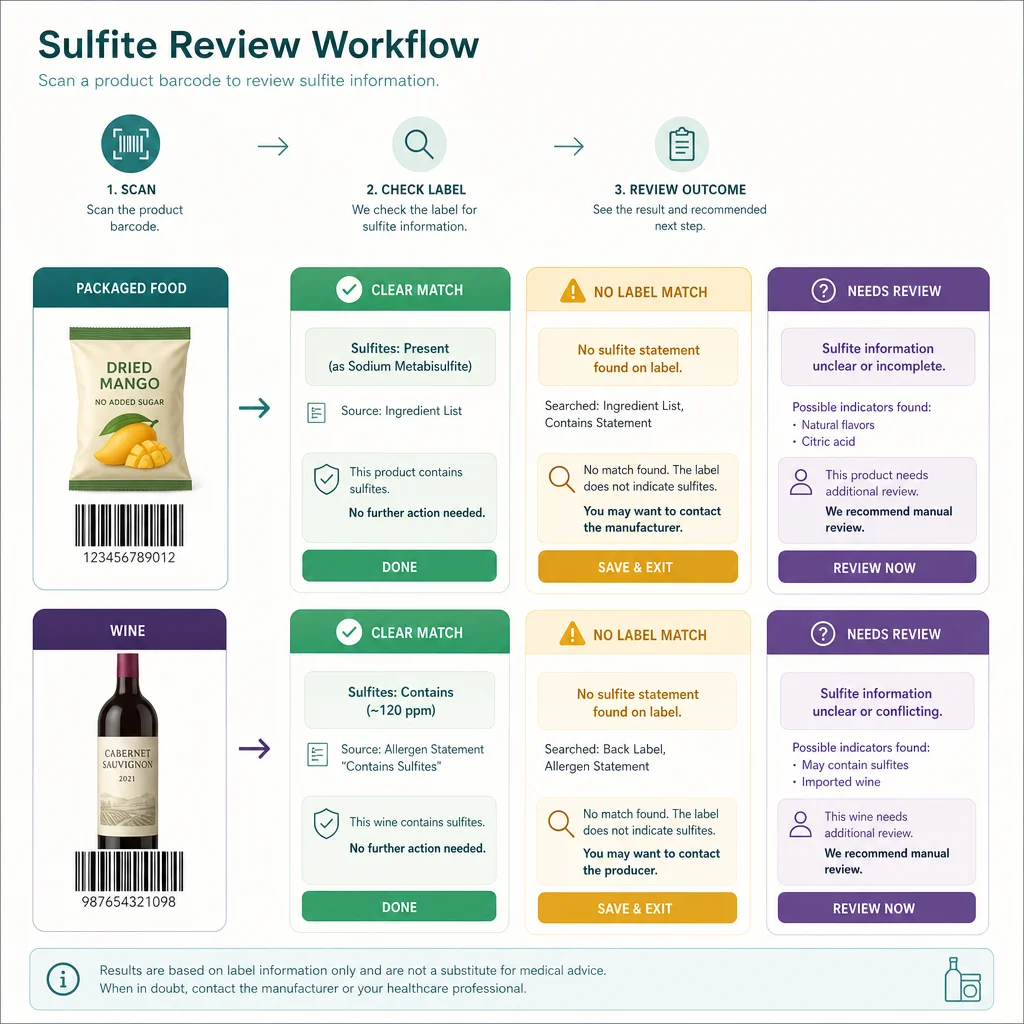
Sometimes the label clearly lists sodium metabisulfite. Sometimes the declaration says contains sulfites. Sometimes a category is known for sulfite use but the label does not show it. Sometimes the shopper is looking at a restaurant food, bulk food, or imported product where label details are incomplete.

That is why a useful scanner should support three outcomes:

  • clear match, when a sulfite term appears
  • no label match, when the scanned label does not show sulfites
  • needs review, when category or packaging context suggests manufacturer confirmation may matter

That workflow is especially important for shoppers who are managing a clinically important sulfite sensitivity. The app can reduce missed label terms, but it cannot prove absence in every supply-chain context.

Do Not Treat Sulfite-Free as a Universal Health Claim

Do Not Treat Sulfite-Free as a Universal Health Claim

The Cleveland Clinic's sulfite sensitivity guidance describes sulfite sensitivity as a condition that affects some people, especially some people with asthma. That is different from saying every sulfite-containing food is unsafe for everyone.

This distinction matters for product copy. A scanner should not say bad ingredient or unsafe food. It should say something like:

  • sodium metabisulfite found
  • contains sulfites declaration found
  • sulfite-family preservative found
  • category may need confirmation for strict sulfite avoidance

The shopper's saved rule determines the action. Some people avoid sulfites medically. Some avoid them as a preservative preference. Others do not care.

How IngrediCheck Helps

IngrediCheck lets you save plain-English rules and scan a barcode or ingredient list. For sulfite-free shopping, saved rules might include:

  • avoid sulfur dioxide
  • avoid sodium sulfite
  • avoid sodium bisulfite and sodium metabisulfite
  • avoid potassium bisulfite and potassium metabisulfite
  • flag contains sulfites declarations
  • flag dried fruit and wine for manual review

Then the scan shows which terms matched and why the product needs attention.

For the broader scanner cluster, compare this page with the ingredient checker app guide, the general food allergy scanner app, the sulfite deep dive on sulfites in food, and the full ingredient checker and food scanner guides hub.

A Practical Sulfite Label Routine

Use this order:

  1. Scan the ingredient list.
  2. Look for sulfur dioxide, sulfite, bisulfite, and metabisulfite terms.
  3. Check for contains sulfites declarations.
  4. Treat wine, dried fruit, shrimp, bottled citrus juice, and dehydrated potato products as higher-review categories.
  5. Contact the manufacturer when a strict medical rule depends on source details the label does not provide.
  6. Follow clinician guidance for diagnosis and reaction management.

That keeps the scanner useful without asking it to answer questions no label can answer perfectly.

Save the Whole Sulfite Family

Sulfite-free shopping gets easier when the scanner watches for the whole family of label names. IngrediCheck helps catch those terms, explain the match, and keep the final decision tied to the rule your household actually uses.

Next Label Check

Follow the scanner, hub, and ingredient paths connected to this guide

Frequently Asked Questions

Are sulfites one of the major U.S. food allergens?

No. Sulfites are not one of the FDA major food allergens, but FDA rules still require declaration when sulfites are present at 10 ppm or more in relevant situations.

What sulfite names should a scanner flag?

Common names include sulfur dioxide, sodium sulfite, sodium bisulfite, sodium metabisulfite, potassium bisulfite, and potassium metabisulfite.

Can IngrediCheck diagnose sulfite sensitivity?

No. IngrediCheck helps screen labels against saved rules. Diagnosis and medical management should come from a clinician.

Get the app for clearer label decisions.

Scan labels, see what fits your food notes, and read the why in plain English.

IngrediCheck app