Label Reading Guides

MSG-Free Food Scanner: Check Flavor Enhancers and Glutamate Clues

An MSG-free food scanner helps shoppers flag monosodium glutamate, E621, flavor-enhancer systems, and savory label clues against saved rules.

May 13, 2026|9 min read
By Sanket Patel|Updated 2026-05-13|5 sources|Editorial standards
MSG-Free Food Scanner: Check Flavor Enhancers and Glutamate Clues

MSG-free shopping is not the same as avoiding every savory food. Tomatoes, cheese, mushrooms, seaweed, meat, and many fermented foods naturally contain glutamate. The practical label task is narrower: does this packaged food add monosodium glutamate or a flavor-enhancer system you choose to avoid?

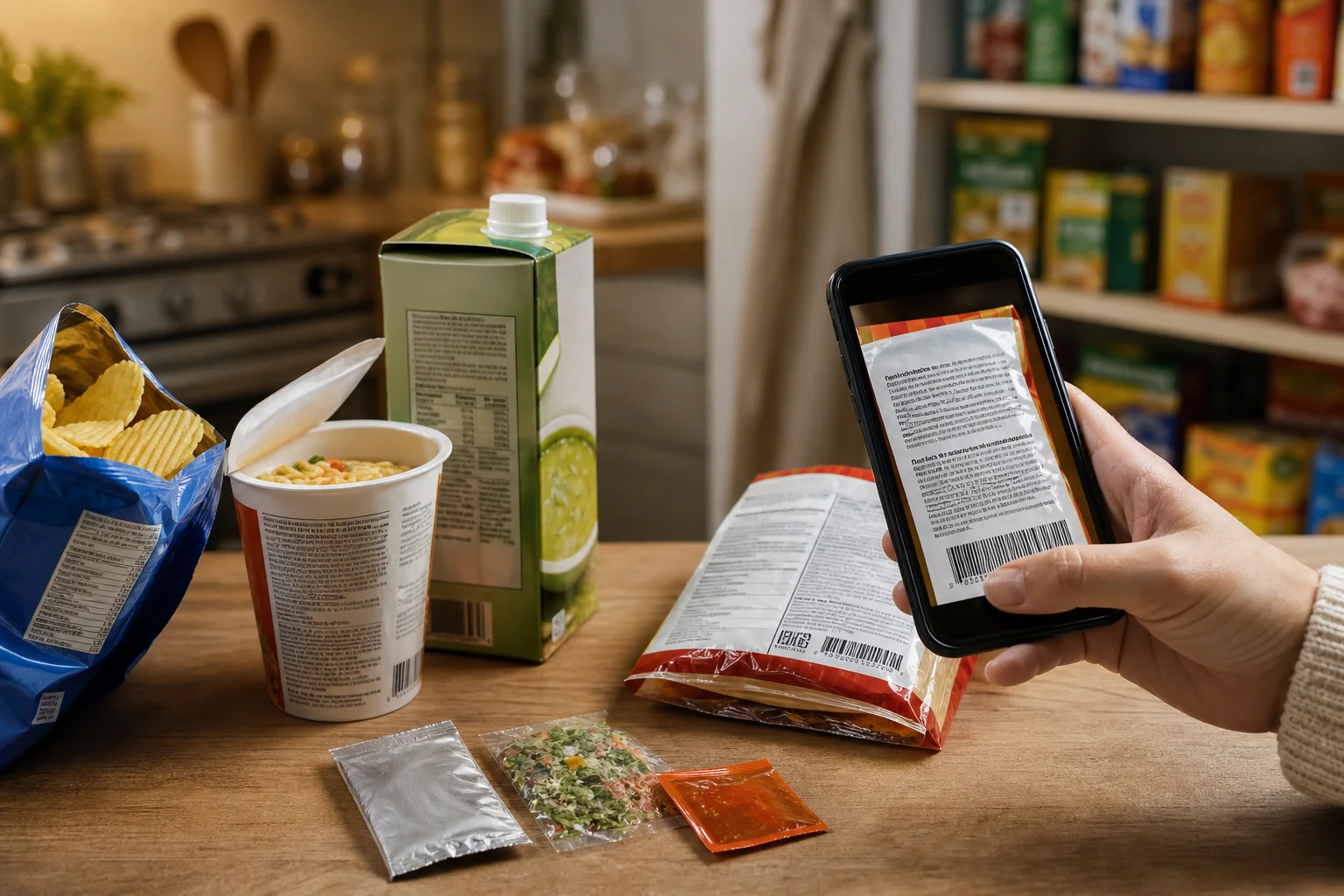
An MSG-free food scanner helps by checking the ingredient list against saved rules. It should flag monosodium glutamate, MSG, E621 where used, and adjacent flavor-enhancer clues without turning the scan into a universal panic score.
FDA Allows MSG, but Personal Rules Still Matter

The FDA's MSG questions and answers page says monosodium glutamate is the sodium salt of glutamic acid and that the agency considers added MSG generally recognized as safe. It also notes that glutamic acid naturally occurs in the body and in many foods.

That is important context. An MSG scanner should not claim the ingredient is universally dangerous. Many shoppers still want to avoid it for personal preference, symptom tracking, clean-label reasons, sodium awareness, or household rules. That is a valid label-review use case.

The best product framing is: Here is the MSG or flavor-enhancer clue the label shows. Decide based on your saved rule.

What MSG Looks Like on Labels

What MSG Looks Like on Labels

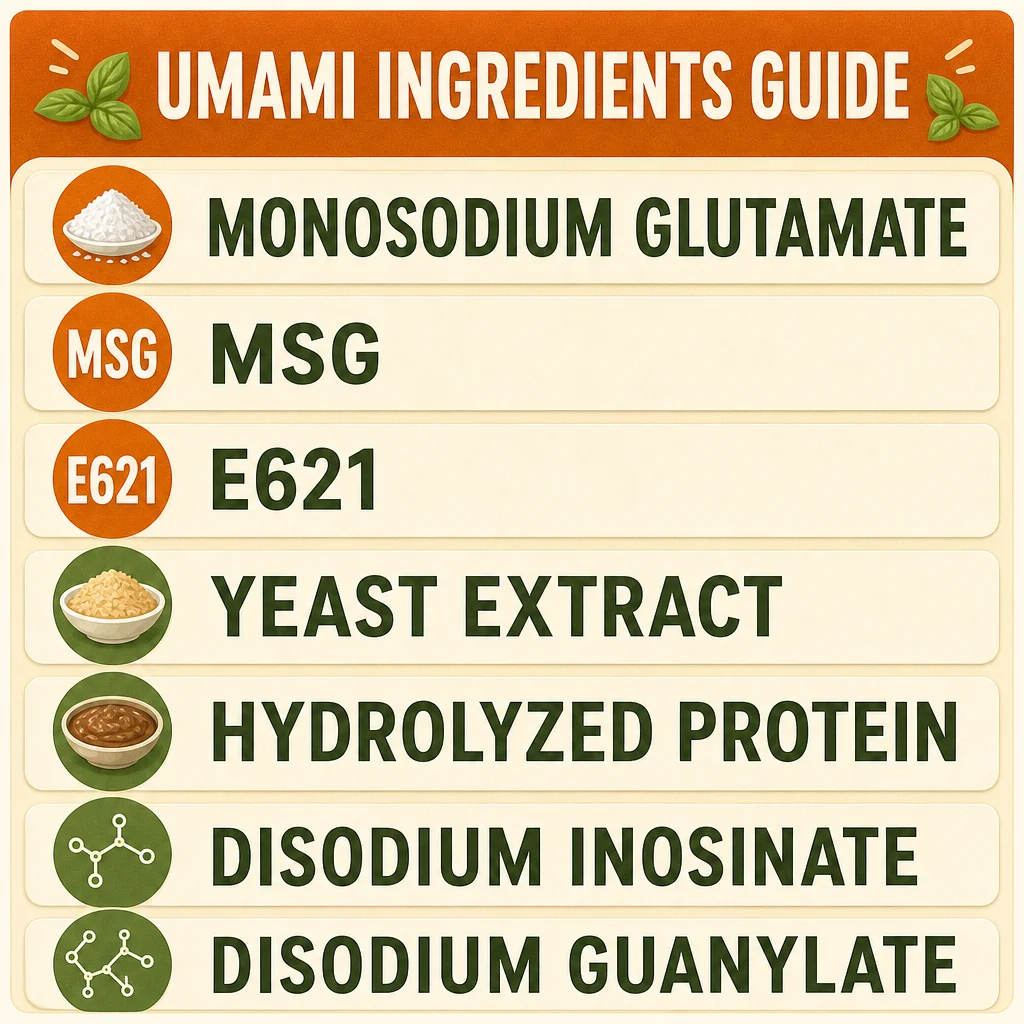
The clearest terms are:

  • monosodium glutamate
  • MSG
  • sodium glutamate
  • E621 on some international labels

The FDA says added MSG must be identified as monosodium glutamate in the ingredient list. It cannot simply be hidden inside spices or flavoring.

But label review can still get messy because shoppers often care about adjacent flavor systems too. A product may not list monosodium glutamate and still contain ingredients used for savory intensity, such as yeast extract, hydrolyzed vegetable protein, autolyzed yeast, disodium inosinate, or disodium guanylate.

Those are not all the same thing as MSG. A careful scanner should not flatten them into one claim. It should let the user choose whether to flag them as MSG-family, glutamate-related, or flavor enhancer review.

Why MSG-Free Claims Need Careful Language

MSG is also a clean-label term. Some brands use No MSG added or No added MSG because shoppers recognize it quickly. The difficulty is that glutamate can be naturally present in foods and ingredient systems.

For a scanner, the safest wording is precise:

  • monosodium glutamate found
  • no monosodium glutamate label match
  • yeast extract found, review if you flag savory flavor enhancers
  • disodium inosinate found, review flavor-enhancer system

That is better than saying MSG hidden whenever a food contains yeast extract. The point is to help shoppers apply a saved rule, not overstate the chemistry.

Where MSG and Flavor Enhancers Commonly Appear

You are most likely to see MSG or adjacent enhancers in savory, high-flavor packaged foods:

  • instant noodles and seasoning packets
  • bouillon cubes and broth powders
  • chips, snack coatings, and popcorn seasonings
  • canned and boxed soups
  • frozen prepared meals
  • meat snacks and marinades
  • restaurant-style sauces
  • seasoning blends
  • savory vegan or plant-based meat alternatives

These foods are engineered for flavor intensity. Sometimes MSG is listed clearly. Sometimes the product uses yeast extract or nucleotide flavor enhancers instead. Sometimes it uses a high-sodium seasoning system without MSG.

That is why this article pairs naturally with a low-sodium food scanner. MSG is a sodium-containing flavor enhancer, but the Nutrition Facts sodium line is still the main sodium number.

What EFSA and BfR Add to the Picture

The European Food Safety Authority's 2017 re-evaluation of glutamic acid and glutamates, published in the EFSA Journal, reviewed glutamic acid and glutamate additives E620 through E625 and derived a group acceptable daily intake. Germany's BfR later summarized that assessment and noted that people who want to reduce glutamate additive intake can check ingredient lists for glutamate additives.

That reinforces the scanner role. For people who choose to limit glutamate additives, the ingredient list is the action point. The app should not make a medical diagnosis. It should make the label easier to review.

What an MSG-Free Scanner Should Do

What an MSG-Free Scanner Should Do

A useful MSG checker should:

  • scan the full ingredient list
  • flag monosodium glutamate and MSG
  • flag E621 when labels use additive numbers
  • optionally flag yeast extract, hydrolyzed proteins, autolyzed yeast, disodium inosinate, and disodium guanylate
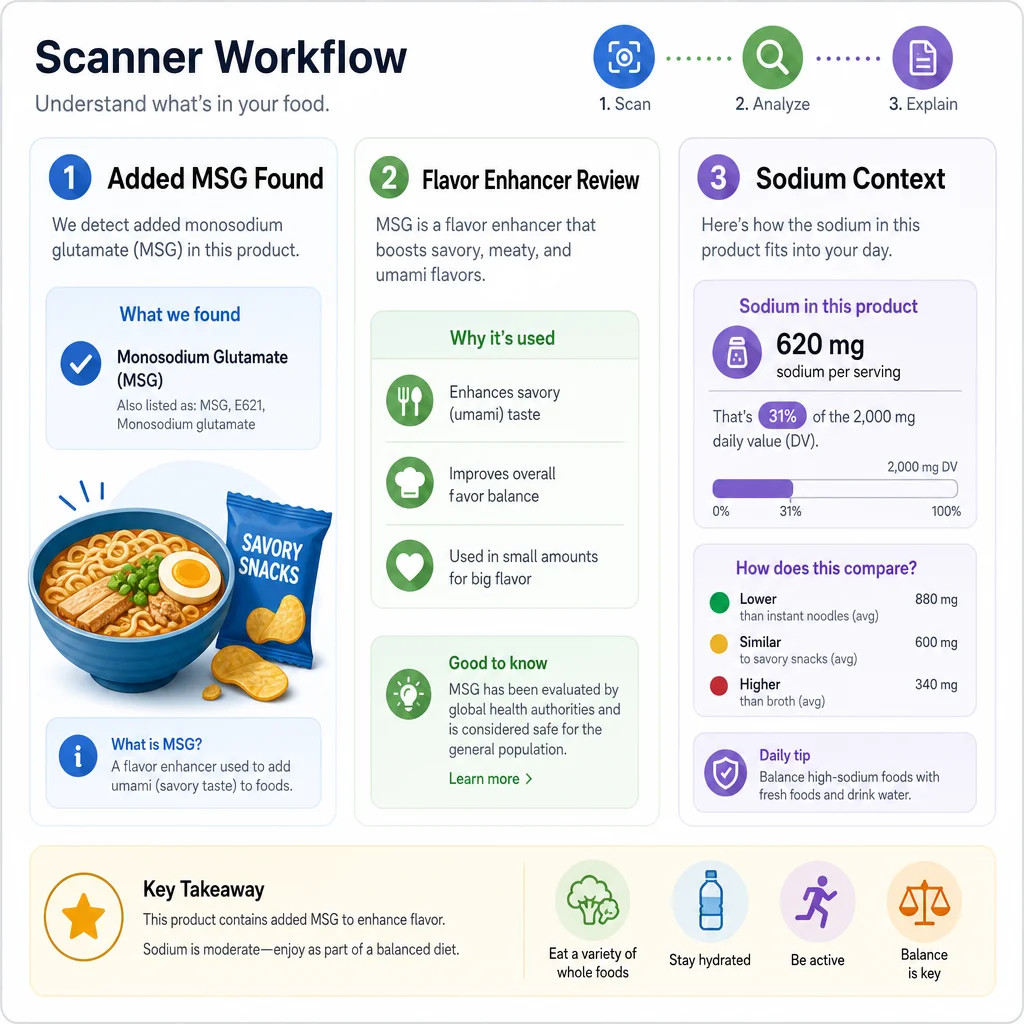
  • separate added MSG found from flavor enhancer review
  • show the Nutrition Facts sodium line when available
  • let users save personal thresholds and preferences
  • avoid claiming a food is universally safe or unsafe

How IngrediCheck Helps

IngrediCheck works from saved food rules. For MSG-free shopping, that means a user might save:

  • avoid monosodium glutamate
  • flag MSG and E621
  • flag yeast extract for review
  • flag hydrolyzed vegetable protein
  • flag disodium inosinate and disodium guanylate
  • show sodium when flavor enhancers appear

Then the scan explains which label term matched.

For the broader scanner cluster, compare this post with the ingredient checker app guide, the MSG ingredient profile, the deeper MSG clean-label explainer, and the full ingredient checker and food scanner guides hub. For additive-adjacent preferences, also compare the sulfite-free scanner.

A Practical MSG-Free Label Routine

Use this order:

  1. Scan the ingredient list.
  2. Look for monosodium glutamate, MSG, sodium glutamate, or E621.
  3. Decide whether your saved rules also flag yeast extract or hydrolyzed proteins.
  4. Review disodium inosinate and disodium guanylate as flavor-enhancer clues.
  5. Check sodium if the product is savory or seasoning-heavy.
  6. Compare similar products rather than assuming one front claim tells the whole story.

That routine respects both sides of the issue: FDA's position that MSG is allowed in food, and the shopper's right to set a personal avoid rule.

Make MSG a Saved Preference

MSG-free shopping works best when the scanner uses precise label language. IngrediCheck helps you flag the exact terms and adjacent flavor-enhancer clues you care about, without pretending every savory food has the same answer.

Next Label Check

Follow the scanner, hub, and ingredient paths connected to this guide

Frequently Asked Questions

Does FDA consider added MSG allowed in food?

Yes. FDA says MSG is generally recognized as safe when added to food, but shoppers may still choose to flag it for personal or household preferences.

What should an MSG scanner flag?

It should flag monosodium glutamate, MSG, E621 where used, and related flavor-enhancer systems the user chooses to review.

Can IngrediCheck prove a food has no naturally occurring glutamate?

No. Glutamate occurs naturally in many foods. IngrediCheck helps review label terms and saved preferences, not laboratory composition.

Get the app for clearer label decisions.

Scan labels, see what fits your food notes, and read the why in plain English.

IngrediCheck app