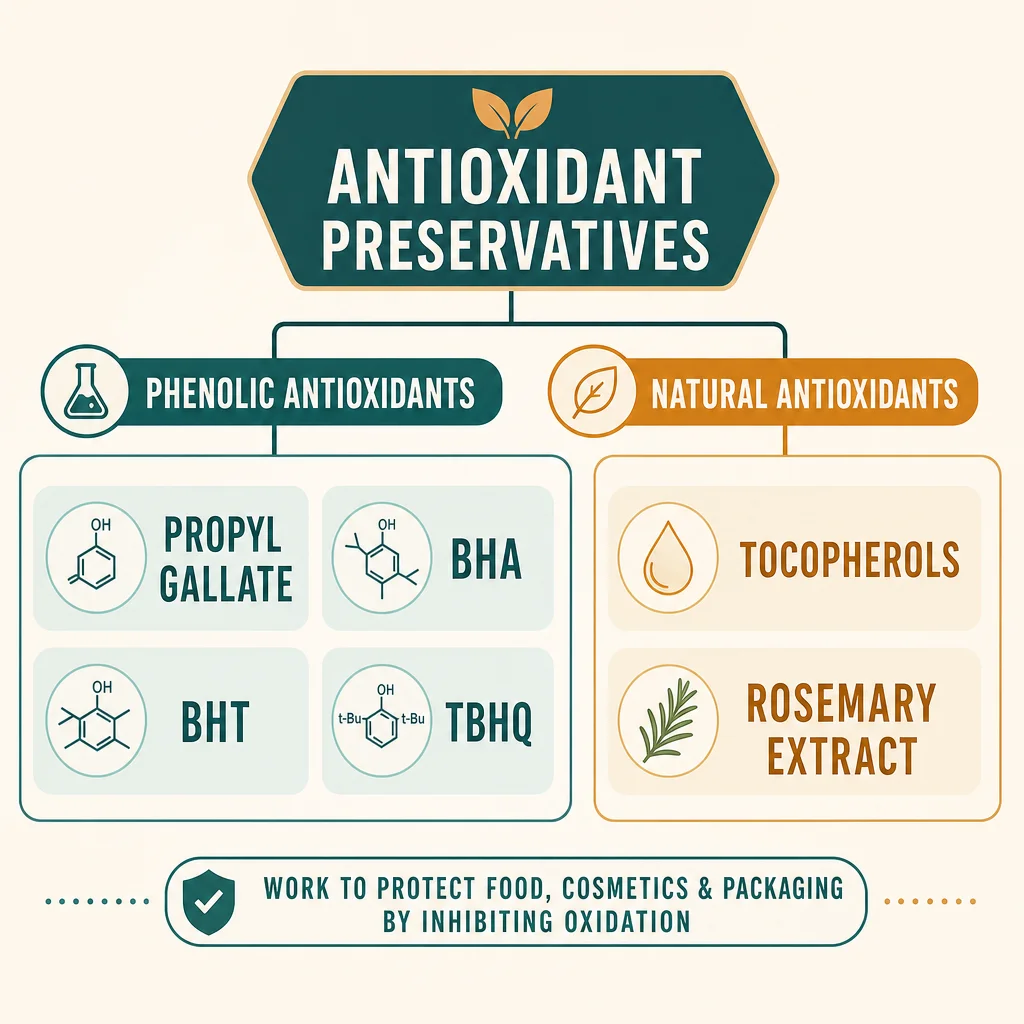
Propyl gallate, BHA, BHT, and TBHQ are different chemicals. They may all protect fats, but they do not have identical regulatory histories, toxicology profiles, or consumer awareness.
The shopper-level distinction is still useful:
- BHA is a well-known antioxidant preservative with a long-running carcinogenicity debate.
- BHT often travels with BHA in cereals, snacks, and fat-containing foods.
- TBHQ is common in crackers, instant noodles, and fried snack systems.
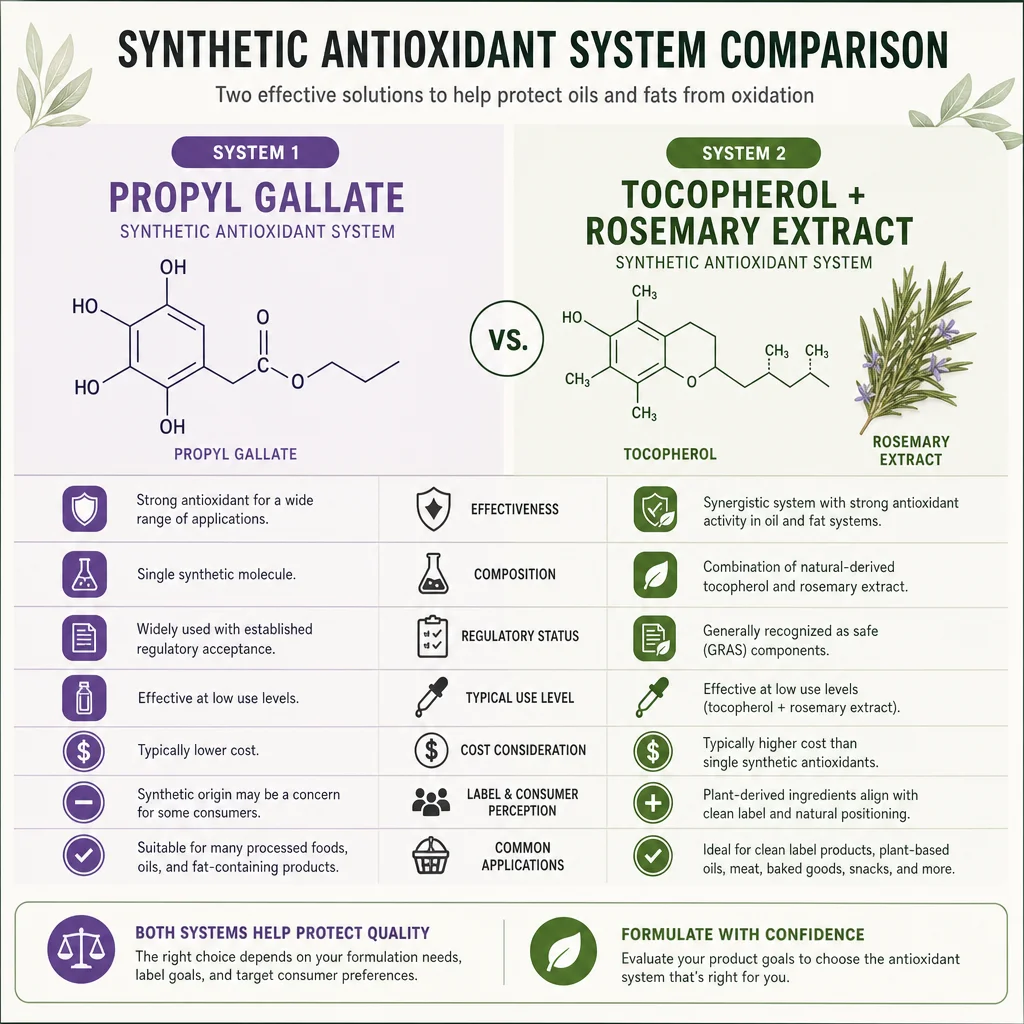
- Propyl gallate is a lower-profile antioxidant preservative that can appear in similar fat-containing categories.
If your household rule is avoid synthetic antioxidant preservatives, all four can sit in one saved group. If your rule is narrower, you may choose to flag only specific terms.
This is also where replacement terms can confuse the decision. A product without propyl gallate is not automatically additive-free. It may use tocopherols, rosemary extract, ascorbic acid, citric acid, a different packaging system, or a shorter shelf life. For clean-label shoppers, that comparison may still be exactly what they want. For safety-focused shoppers, the better question is whether the alternative fits the same evidence standard and household rule.
For context, compare this page with BHA: The Preservative the FDA Is Finally Reviewing, BHT: The Preservative That Usually Travels With BHA, and TBHQ: The Preservative in Your Crackers and Cereal.