Ingredient Deep Dives

TBHQ: The Preservative in Your Crackers and Cereal

TBHQ is an antioxidant preservative used to protect fats and oils in shelf-stable foods. Learn where it appears, what regulators say, and how to screen labels.

May 13, 2026|8 min read
By Sanket Patel|Updated 2026-05-13|5 sources|Editorial standards
TBHQ: The Preservative in Your Crackers and Cereal

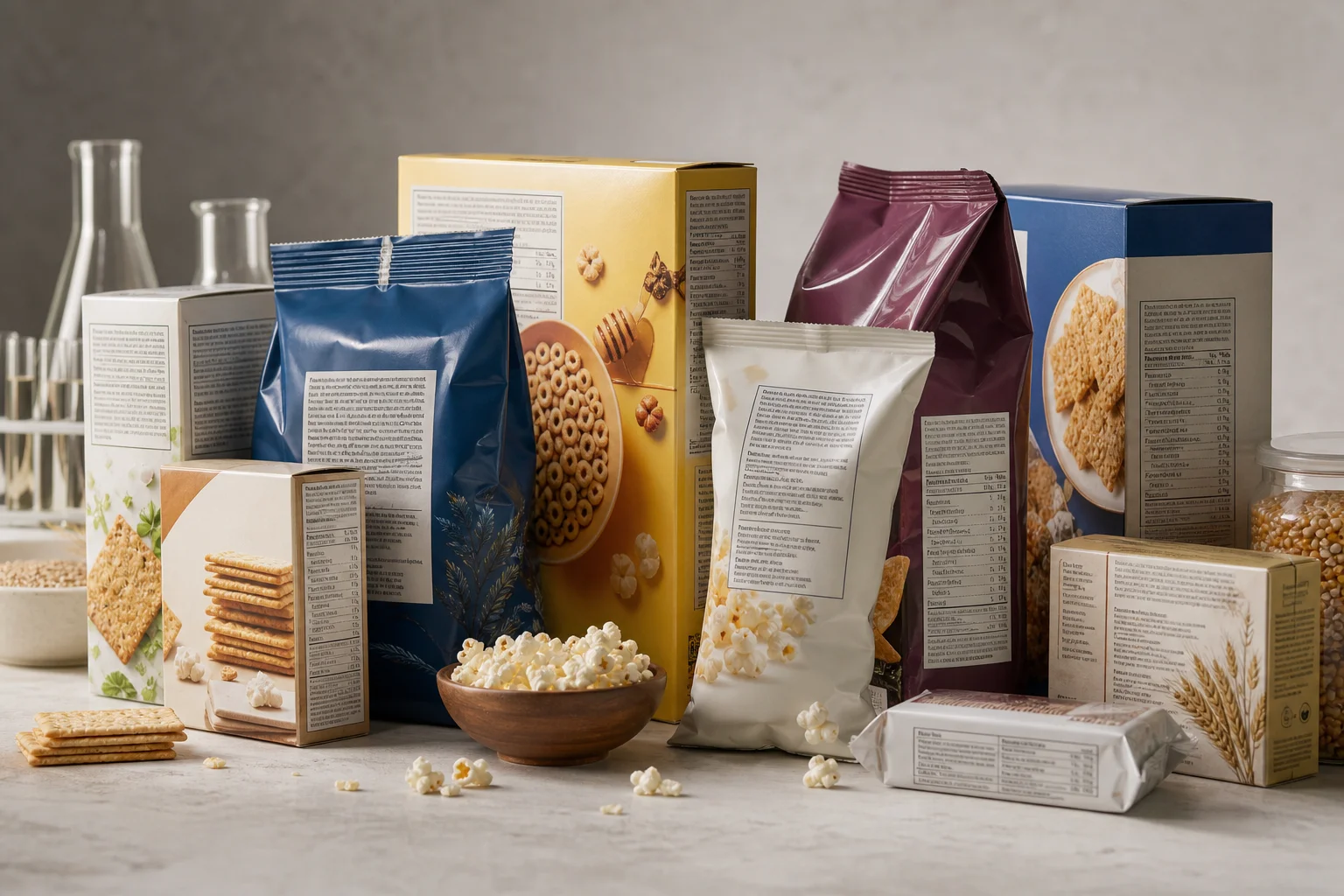
TBHQ is one of those ingredients most shoppers skip over until they start reading snack labels closely. It can appear in crackers, cereals, microwave popcorn, frozen foods, packaged snacks, oils, and fat-containing pantry products where manufacturers want longer shelf life and fewer stale flavors.

TBHQ stands for tertiary butylhydroquinone. Its job is not sweetness, color, or texture. Its job is oxidation control.
What TBHQ Does

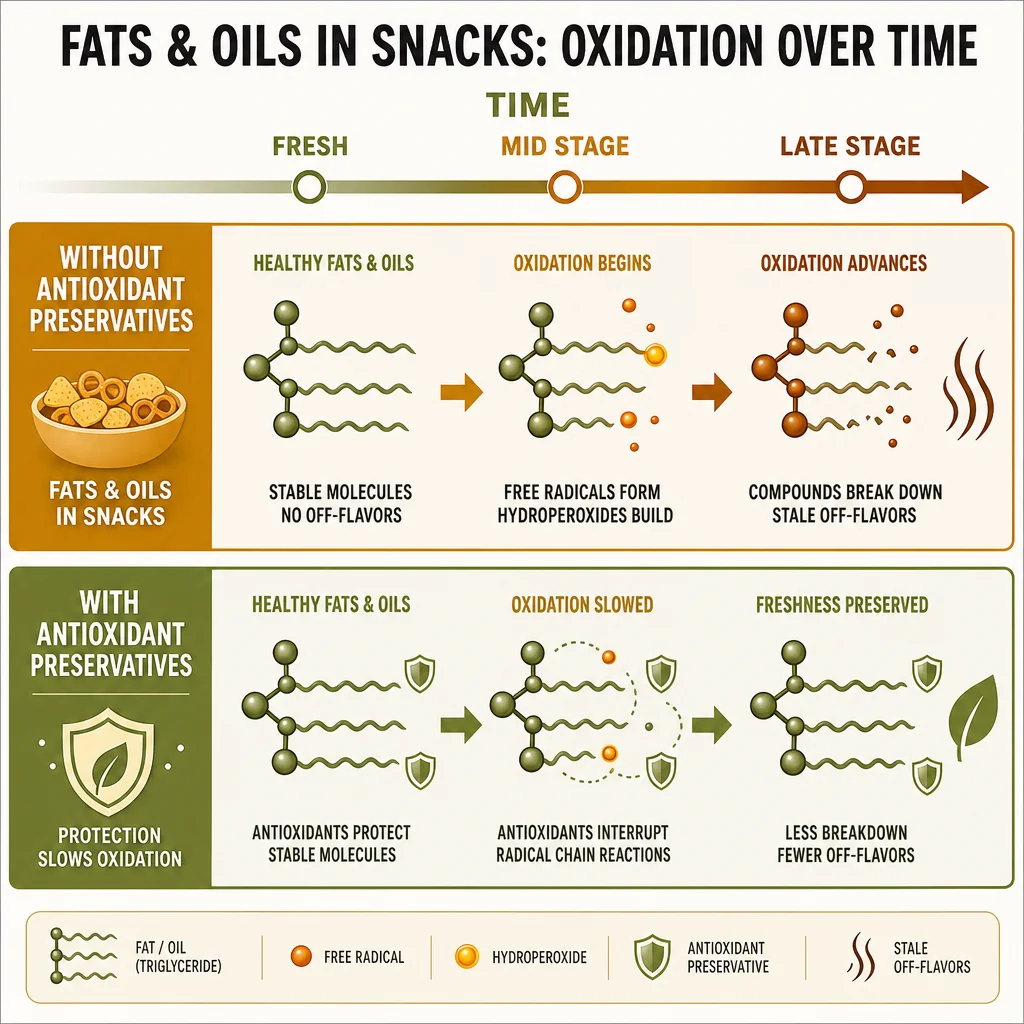
Fats and oils change when they oxidize. They can develop rancid flavors, stale aromas, and shorter shelf life. TBHQ is an antioxidant preservative, which means it slows that deterioration.

The FDA regulation for TBHQ describes it as the chemical 2-(1,1-dimethylethyl)-1,4-benzenediol, also known as tertiary butylhydroquinone. The same regulation says TBHQ may be used as an antioxidant alone or with BHA and BHT.

That pairing matters. TBHQ sits in the same label-reading neighborhood as BHA, BHT, and propyl gallate: antioxidant preservatives used to protect fats and oils in shelf-stable processed foods.

Where You Are Most Likely to See TBHQ

Where You Are Most Likely to See TBHQ

Look for TBHQ in foods that combine fat, long storage time, and high distribution demands.

Common places include:

  • crackers
  • cereal
  • instant noodles
  • microwave popcorn
  • fried snack foods
  • frozen potato products
  • packaged baked goods
  • vegetable oils and fat blends
  • seasoning-coated snacks
  • shelf-stable convenience foods

If a product can sit in a pantry for months and still taste similar, the formulation often includes some kind of preservation or stability system. TBHQ is one possible tool in that system.

What U.S. Rules Say

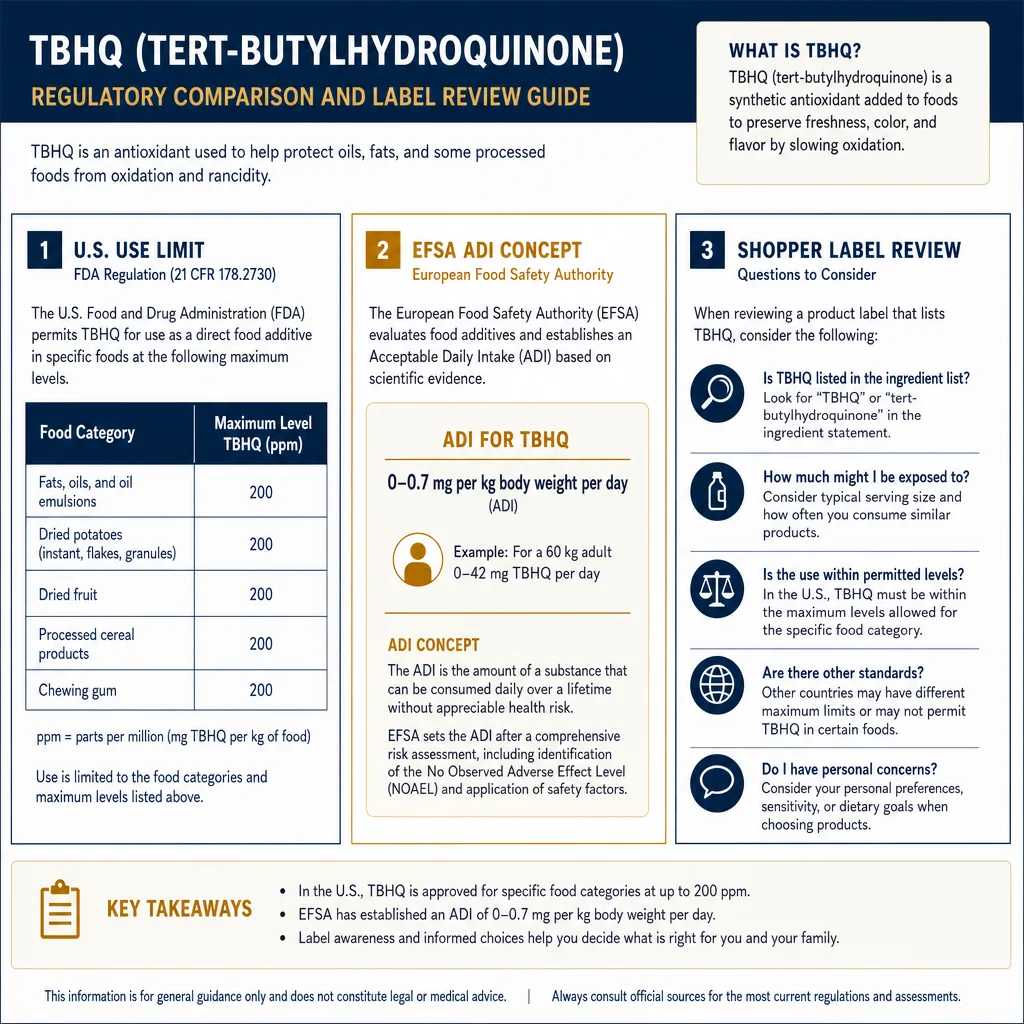
The key U.S. limit is specific. Under 21 CFR 172.185, the total antioxidant content of food containing TBHQ must not exceed 0.02 percent of the oil or fat content of the food, including essential volatile oil content.

That does not mean every product with TBHQ is identical. It means TBHQ is permitted only within specified use conditions. The FDA also finalized a 2015 rule related to the TBHQ regulation, including purity criteria and melting point language.

For shoppers, the practical point is this: TBHQ is not an undeclared mystery contaminant. If it is used as an ingredient in a packaged food, it should appear in the ingredient list.

What EFSA Reviewed

What EFSA Reviewed

In Europe, TBHQ is known as E 319. The EFSA Journal 2016 refined exposure assessment states that TBHQ is authorized as a food additive in the EU with an acceptable daily intake of 0.7 mg per kg body weight per day. EFSA concluded that exposure estimates using maximum permitted levels could exceed the ADI for toddlers and children at high levels, but refined exposure scenarios did not exceed the ADI in any population group.

That is the kind of nuance that gets lost in short social posts. Regulators did not say TBHQ is never worth thinking about. They evaluated allowed uses, exposure scenarios, and population groups.

Why Shoppers Still Flag It

Some shoppers avoid TBHQ even though it is legally allowed. That can be a reasonable personal preference if the rule is framed clearly.

Reasons shoppers flag TBHQ include:

  • preference for simpler ingredient panels
  • desire to reduce ultra-processed snack foods
  • concern about repeated exposure to synthetic antioxidant systems
  • sensitivity to additives as a family rule
  • comparison shopping when equivalent products are available without it

The strongest use of TBHQ as a label clue is not panic. It is comparison.

If two similar crackers are on the shelf and one uses TBHQ while the other does not, a shopper who prefers simpler labels has a clear reason to choose the second product.

What TBHQ Is Not

TBHQ is not the same thing as a banned contaminant. It is also not a nutrition claim, allergen, dye, or sweetener. It is an intentionally added antioxidant preservative with a specific technical function.

That matters because exaggerated language makes label reading worse. If every unfamiliar chemical name is treated as the same kind of threat, shoppers lose the ability to prioritize.

A cleaner way to think about TBHQ is:

  • it is allowed under specified U.S. conditions
  • it is used to protect fats and oils from oxidation
  • it is associated with long shelf-life processed foods
  • it has been assessed by regulators, including EFSA
  • it remains a reasonable personal avoidance rule for shoppers who prefer simpler labels

That framing is more useful than calling it universally safe or universally dangerous.

TBHQ, BHA, and BHT Belong Together

TBHQ often makes more sense when read as part of a preservative family rather than a lone ingredient. The same snack category may contain TBHQ, BHA, BHT, or combinations across related products.

That is why this post pairs naturally with:

Retailer clean-label standards often remove ingredients before regulators ban them. Aldi-style restrictions are not the same as law, but they influence shopper expectations.

Questions to Ask When You See TBHQ

Instead of asking only is this ingredient allowed?, ask more practical shopping questions:

  • Is this a repeat-purchase snack or a one-off product?
  • Does a similar product exist without TBHQ?
  • Is TBHQ appearing with BHA, BHT, artificial colors, or other additives you already avoid?
  • Is the product built around refined oils or long shelf-life fat systems?
  • Does your household have a saved clean-label rule that should flag synthetic antioxidant preservatives?

Those questions turn TBHQ from a scary acronym into a usable comparison signal.

How IngrediCheck Helps

IngrediCheck can help if TBHQ is part of your saved ingredient rules. You do not have to memorize the full chemical name or scan the label line by line every time.

You can set a rule such as:

  • flag TBHQ
  • flag tertiary butylhydroquinone
  • flag BHA, BHT, and TBHQ
  • review synthetic antioxidant preservatives

Then a scan can surface the relevant ingredient and help you compare products quickly.

For broader additive context, use the Ingredient Safety hub, the Food Additives hub, and the ingredient checker app guide if you want the scanner workflow behind personalized rules.

A Practical TBHQ Label Routine

Use TBHQ as a pattern clue:

  1. Look for TBHQ, tertiary butylhydroquinone, BHA, and BHT.
  2. Note the product category. Snacks, crackers, cereals, and fats are the highest-yield checks.
  3. Compare similar products before assuming the additive is unavoidable.
  4. Treat TBHQ as one signal among several, not the whole food decision.
  5. Save the rule in a scanner if you want consistent repeat checks.

Try It on Your Pantry Snacks

TBHQ is easiest to understand when you compare actual products side by side. IngrediCheck helps you scan crackers, cereals, oils, and snack labels, flag TBHQ when it appears, and choose the product that best matches your saved ingredient rules.

Next Label Check

Follow the scanner, hub, and ingredient paths connected to this guide

Frequently Asked Questions

What is TBHQ used for in food?

TBHQ is an antioxidant preservative used to slow oxidation in fats and oils, which helps shelf-stable foods resist rancid flavors and quality loss.

Is TBHQ allowed in U.S. food?

Yes. FDA regulations allow TBHQ under specified conditions, including a total antioxidant limit of 0.02 percent of the oil or fat content of the food.

Should I avoid every food with TBHQ?

That is a personal rule decision. TBHQ is allowed by regulators, but shoppers who prefer simpler labels often use it as a reason to compare similar products.

Get the app for clearer label decisions.

Scan labels, see what fits your food notes, and read the why in plain English.

IngrediCheck app