Label Reading Guides

Cheese Brands Without Animal Rennet: Vegetarian Options

Compare five exact cheeses using manufacturer rennet statements, including the exceptions that make brand-wide vegetarian lists unreliable.

Sep 24, 2026|8 min read
By Sanket Patel|Updated 2026-09-24|9 sources|Editorial standards
Cheese Brands Without Animal Rennet: Vegetarian Options

Tillamook Medium Cheddar, Cabot Extra Sharp Dairy Block, Organic Valley Raw Sharp Cheddar, Organic Valley White American Slices and BelGioioso Vegetarian Parmesan have manufacturer evidence supporting their inclusion in a no-animal-rennet shortlist. The exact versions matter. A brand may also sell cheeses that use animal enzymes or fall outside its vegetarian statement.

We checked the U.S. product information and sourcing statements on September 24, 2026. This is a documentary comparison, not a taste test, laboratory test or independent certification. Every cheese below contains milk. None is a vegan or milk-allergy-safe alternative.

The shopping question is narrower than whether enzymes can be vegetarian. For the underlying chemistry, use our animal rennet versus microbial enzymes explainer. Here, the job is to match a package you can buy to evidence about that particular product.
Five Exact Cheeses to Compare

Product reviewedPackageEvidence for no animal rennetCheck before substituting
Tillamook Medium Cheddar Block8 ozProduct panel plus manufacturer fermentation-produced vegetarian rennet statementMaker’s Reserve 10-Year is an explicit animal-rennet exception
Cabot Extra Sharp Cheddar Dairy Block8 ozPlain block falls within Cabot’s microbial-enzyme statementSlices, blends and other formats have exceptions or separate qualifications
Organic Valley Raw Sharp Cheddar Block8 ozExact panel says “Vegetarian Enzyme”; product is described as vegetarian-friendlyRaw-milk processing is a separate consideration
Organic Valley White American Slices6 oz, eight slicesPanel says “Vegetarian Enzyme”; product FAQ identifies microbial rennetMatch White American, not another cheese or color variant
BelGioioso Vegetarian Parmesan Wedge8 oz, item 52010Vegetarian-specific specification explicitly excludes animal rennetPackage must say Vegetarian Parmesan, not just Parmesan

The order is not a quality ranking. Blocks, sandwich slices and grating cheese solve different kitchen jobs. Store availability and prices were not established, and online listings may show multipacks rather than a single retail package.

Tillamook Medium Cheddar: Read the Exception

The reviewed Medium Cheddar Block lists cultured milk, salt, enzymes and annatto for color. The ingredient word “enzymes” would not, by itself, settle whether the cheese uses animal rennet. Tillamook’s sourcing FAQ supplies the missing information: it says the company has used fermentation-produced vegetarian rennet since 2016.

That statement is not permission to approve every Tillamook cheese. The same FAQ directs shoppers seeking animal rennet to Maker’s Reserve 10-Year Extra Sharp Cheddar. This is a useful example of why a blanket list of “vegetarian cheese brands” can fail even when it started with a genuine manufacturer statement.

Choose the ordinary Medium Cheddar product identified above and reread the current wrapper. Do not replace it with a specialty aged cheese because the logo looks familiar. The FAQ also discusses kosher and halal certification of the rennet; that is not a blanket certification claim for every finished cheese, which we have not established here.

Annatto is a separate ingredient decision. A shopper excluding a particular color would need to consider it independently of the rennet source. The reviewed product also explicitly declares milk, so vegetarian suitability does not override a milk allergy or dairy-free requirement.

Cabot Extra Sharp: Keep the Plain Block Distinct

Cabot Extra Sharp: Keep the Plain Block Distinct

Cabot’s 8 oz Extra Sharp Cheddar Dairy Block lists fresh pasteurized milk, cheese cultures, salt and enzymes. Its FAQ explains that microbial-based enzymes coagulate milk into curds and whey and are approved for vegetarians. The plain block sits within that statement rather than the named exceptions.

Cabot’s FAQ has different qualifications for some product formats and certifications. Processed American slices and Shredded Mexican Blend are specifically discussed as sourced from other plants, where the same microbial-enzyme guarantee is not provided. Other sections list broader exceptions for particular claims. An exception means the evidence does not cover that product; it does not automatically prove that animal rennet is present.

This guide therefore recommends checking the plain Extra Sharp Dairy Block, not treating shredded, sliced, flavored or snack-size products as equivalent. A grocery substitution can change the format while preserving nearly the same brand and flavor wording.

For a recipe that calls for grated cheddar, buying the verified block and grating it yourself keeps your purchase within the evidence reviewed here. That is a sourcing strategy, not a claim that all pre-shredded cheeses contain animal enzymes or that grating at home improves food safety.

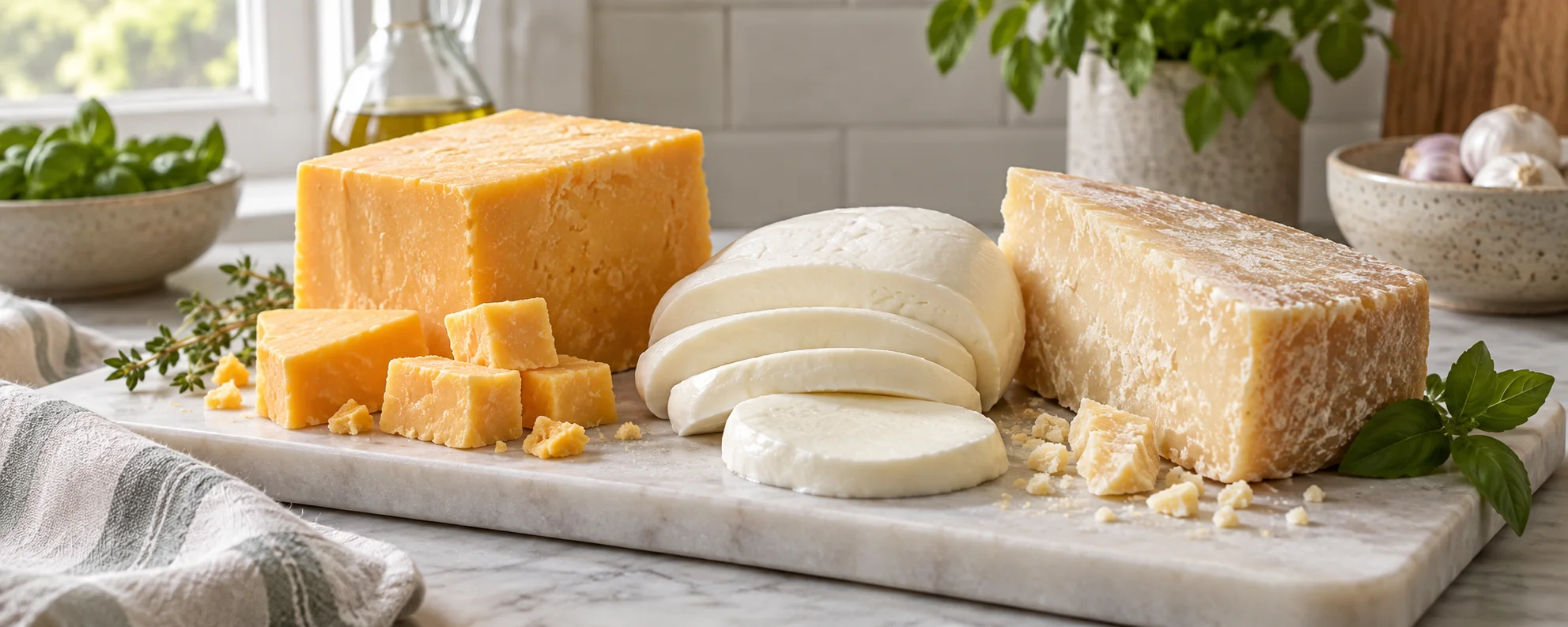
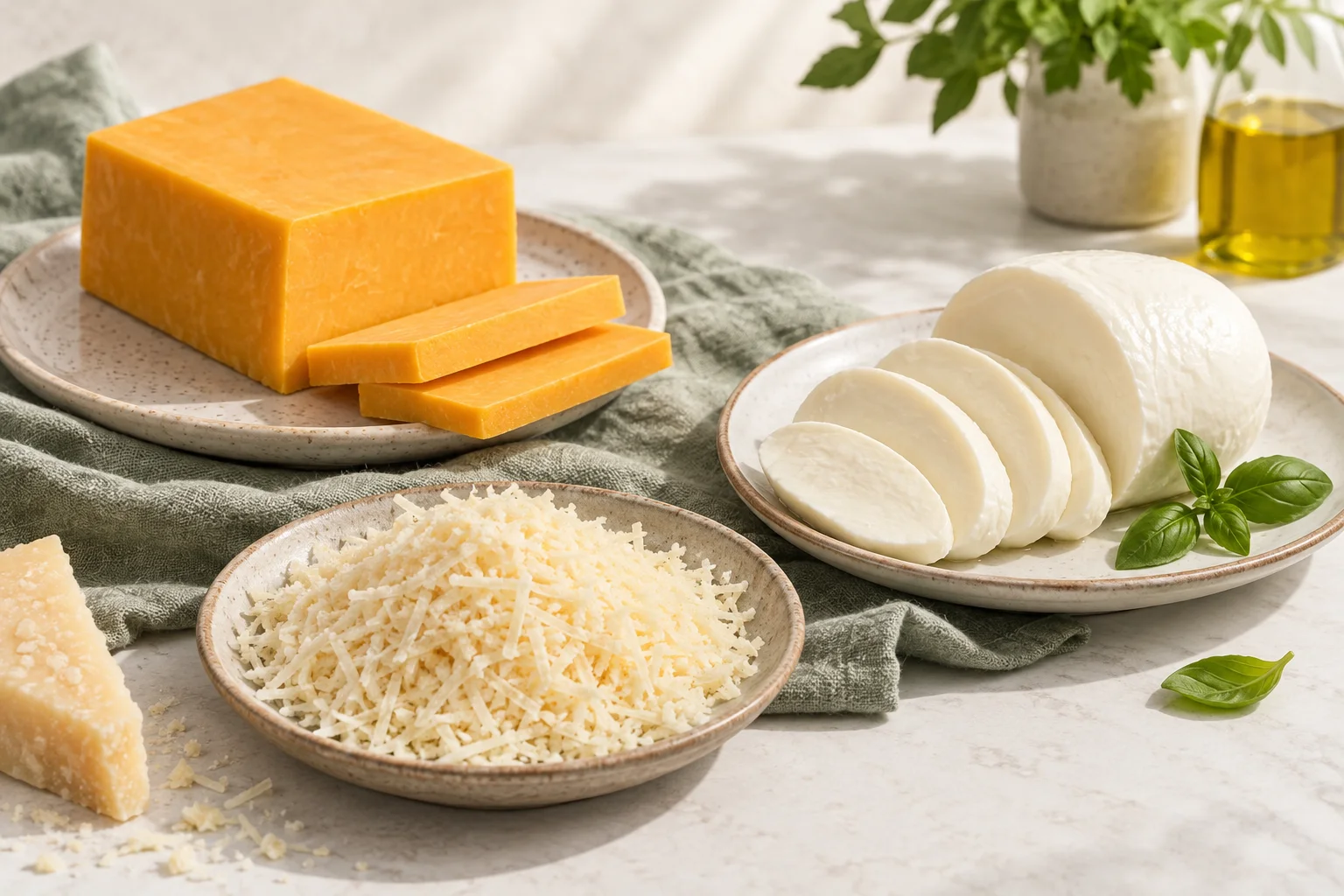
Illustration only. These are not photographs of the reviewed products or proof of their rennet sources.

Organic Valley: Two Different Formats, Explicit Enzyme Wording

The Organic Valley Raw Sharp Cheddar Block has a particularly direct panel: organic cultured milk, salt and vegetarian enzyme. Its own product description also calls the cheese vegetarian-friendly. You do not need to infer its status from the absence of the word “animal.”

The word “Raw” is a separate issue. The manufacturer explains that the milk has been heated at 155°F for 16 seconds. We include that processing distinction rather than presenting the cheese as interchangeable with every pasteurized option. Rennet sourcing does not answer whether a particular milk-processing method fits someone’s food-safety requirements.

Organic Valley White American Slices offer a different format. The reviewed 6 oz package contains eight slices and lists organic cultured milk, water, organic butter made from organic pasteurized sweet cream and salt, sodium citrate, salt and vegetarian enzyme. Its product FAQ identifies a microbial-based vegetarian rennet produced from Rhizomucor miehei.

That panel is for the white variety. Do not import ingredients from the orange version or from a generic American-cheese description. Sodium citrate and the butter are relevant label details even though they do not create an animal-rennet problem.

Organic Valley also flags an animal-derived lipase in its Blue Cheese. Lipase is not the same thing as rennet, but the distinction matters for vegetarians avoiding slaughter-derived enzymes. A narrow promise about the milk-clotting enzyme should never be stretched into a claim about every ingredient in every cheese the company sells.

BelGioioso: The Word Vegetarian Is Essential

BelGioioso sells a specifically identified Vegetarian Parmesan. Its current Parmesan page distinguishes that product from the ordinary range, while the vegetarian-specific specification says it is made without any animal rennet. The specification lists an 8 oz wedge as item 52010 and gives cultured milk, enzymes and salt as its ingredients.

This is a case where the product name and sourcing document do more work than the short ingredient list. Generic “enzymes” still appears on the vegetarian product. You cannot identify the approved version just by searching for a different enzyme word on two similar packages.

The specification document is dated 2022, and the current product page still promotes Vegetarian Parmesan. Check the present package and availability with the seller rather than assuming every retailer stocks the wedge. Do not accept an ordinary Parmesan substitution without separate confirmation.

Also distinguish this U.S. product from Parmigiano Reggiano. The Parmigiano Reggiano Consortium’s U.S. guidance identifies milk, salt and calf rennet as its ingredients. Similar culinary uses do not mean identical production rules or vegetarian suitability.

What Counts as Useful Rennet Evidence?

The strongest practical evidence combines an exact package with an explicit manufacturer statement about vegetarian or non-animal enzymes. A current certification can add another layer, provided it covers the actual product rather than just a supplier ingredient or an unrelated range.

The Vegetarian Society’s cheese guidance distinguishes animal rennet from microbial rennet. It is useful background, but a general explanation does not establish the source used in a cheese on your supermarket shelf. That still needs product-specific evidence.

“Natural,” “organic,” “artisan,” “aged” and “three ingredients” are not answers to the rennet question. Nor is a cheese vegetarian just because it has no visible meat. Conversely, an unfamiliar enzyme name is not proof of an animal source. The right outcome for missing evidence is unresolved, not an invented yes or no.

A Short Message to Send the Manufacturer

A Short Message to Send the Manufacturer

When a package only says enzymes, include the full product name, size, country, UPC and lot information in your question. Ask whether the milk-clotting enzyme is animal-derived, microbial, plant-derived or fermentation-produced. Then ask separately whether any animal-derived lipase or other slaughter-derived enzyme is used.

Request a response that covers the current formula and exact product. “Most of our cheese is vegetarian” may be true but does not resolve a specialty wedge. Keep the answer with the package details so you can recognize a later formulation or range change.

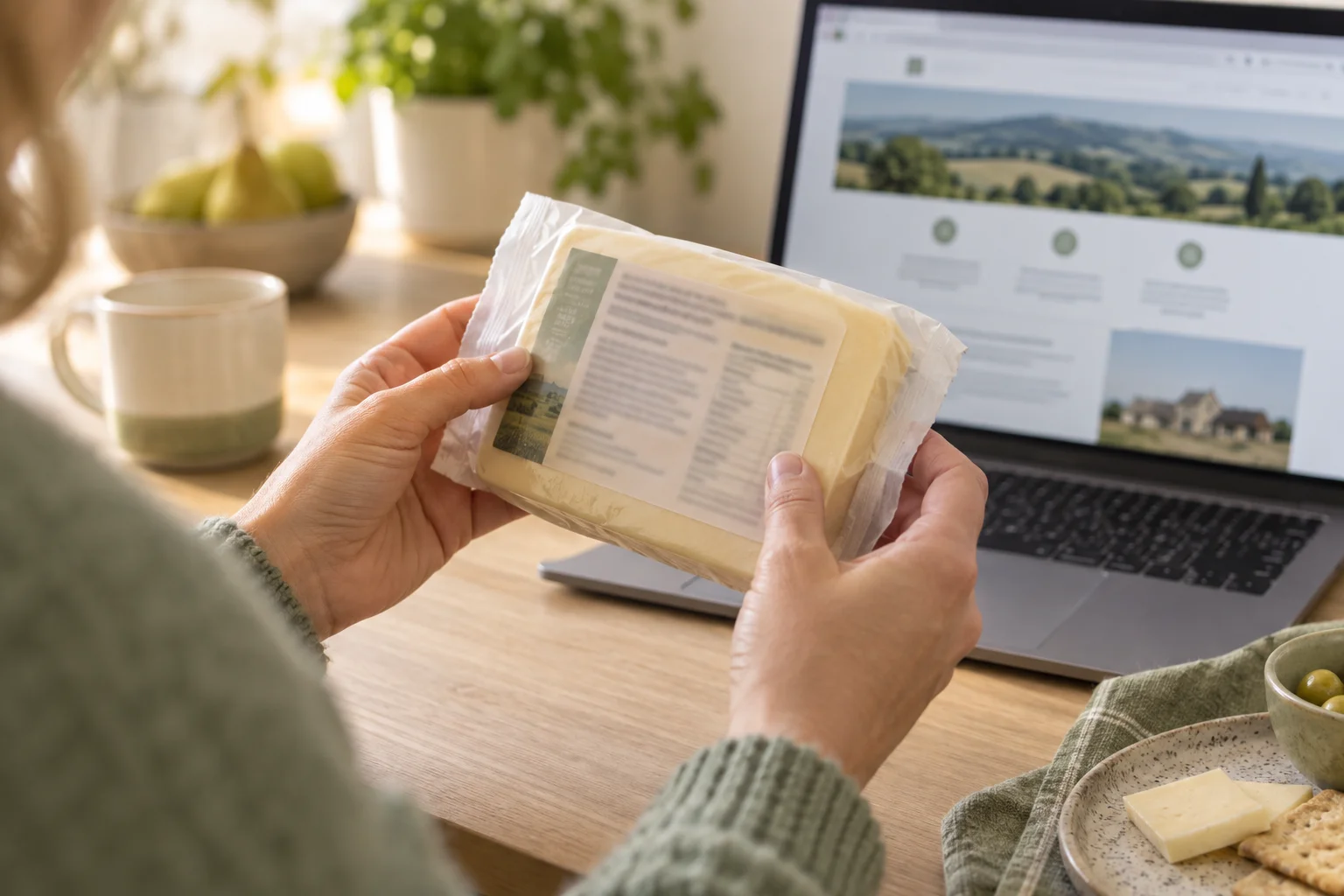
Illustration only. The unreadable wrapper and screen are not source documents.

Keep the Shopping Rule Narrow

Start with the no-animal-rennet requirement, then check the rest of your household’s rules: milk, colors, other enzymes, certifications and any ingredients in coatings or flavor blends. A retailer-cut piece may need the original maker’s label or specification rather than just the deli sticker.

The vegetarian ingredient checker can help review declared ingredients against saved preferences. It cannot discover a private rennet source from the word “enzymes,” independently certify a cheese, or detect undeclared cross-contact. Manufacturer confirmation remains necessary when that uncertainty controls the purchase.

IngrediCheck helps you compare the declared ingredients with your saved vegetarian preferences and identify source questions worth asking. Use it alongside the current package and the manufacturer’s exact-product answer, not as a substitute for either.

Frequently Asked Questions

Which cheese brands offer products without animal rennet?

The reviewed products include Tillamook Medium Cheddar, Cabot Extra Sharp Dairy Block, Organic Valley Raw Sharp Cheddar and White American Slices, and BelGioioso Vegetarian Parmesan. These are exact-product findings, not approval of every cheese from those brands.

Does enzymes on a cheese label mean animal rennet?

Not necessarily. Generic enzymes does not establish the source. Look for a vegetarian enzyme declaration or a manufacturer statement covering the exact cheese, size and variety.

Is Parmesan vegetarian?

Some U.S. Parmesan products are explicitly made without animal rennet, such as BelGioioso Vegetarian Parmesan. Do not substitute ordinary Parmesan or Parmigiano Reggiano; the latter uses calf rennet under its production specification.

Is cheese made without animal rennet vegan?

No. All five cheeses in this comparison contain milk. Avoiding animal rennet does not make dairy cheese vegan, dairy-free or suitable for a milk allergy.

Next Label Check

Follow the scanner, hub, and ingredient paths connected to this guide

Get the app for clearer label decisions.

Scan labels, see what fits your food notes, and read the why in plain English.

IngrediCheck app