Label Reading Guides

Enzymes on Food Labels: Animal Rennet or Microbial?

The word enzymes can describe animal rennet, microbial chymosin, plant enzymes, or processing aids. Learn how to verify cheese and packaged foods.

Jul 19, 2026|8 min read
By Sanket Patel|Updated 2026-07-19|3 sources|Editorial standards
Enzymes on Food Labels: Animal Rennet or Microbial?

Quick answer: The word "enzymes" does not automatically mean animal rennet. Food enzymes can come from animals, plants, or microorganisms. In cheese, an unqualified enzyme declaration may include animal rennet, microbial coagulants, fermentation-produced chymosin, or a blend. The ingredient list often cannot distinguish them, so vegetarians and vegans need a certification or a source statement from the manufacturer.

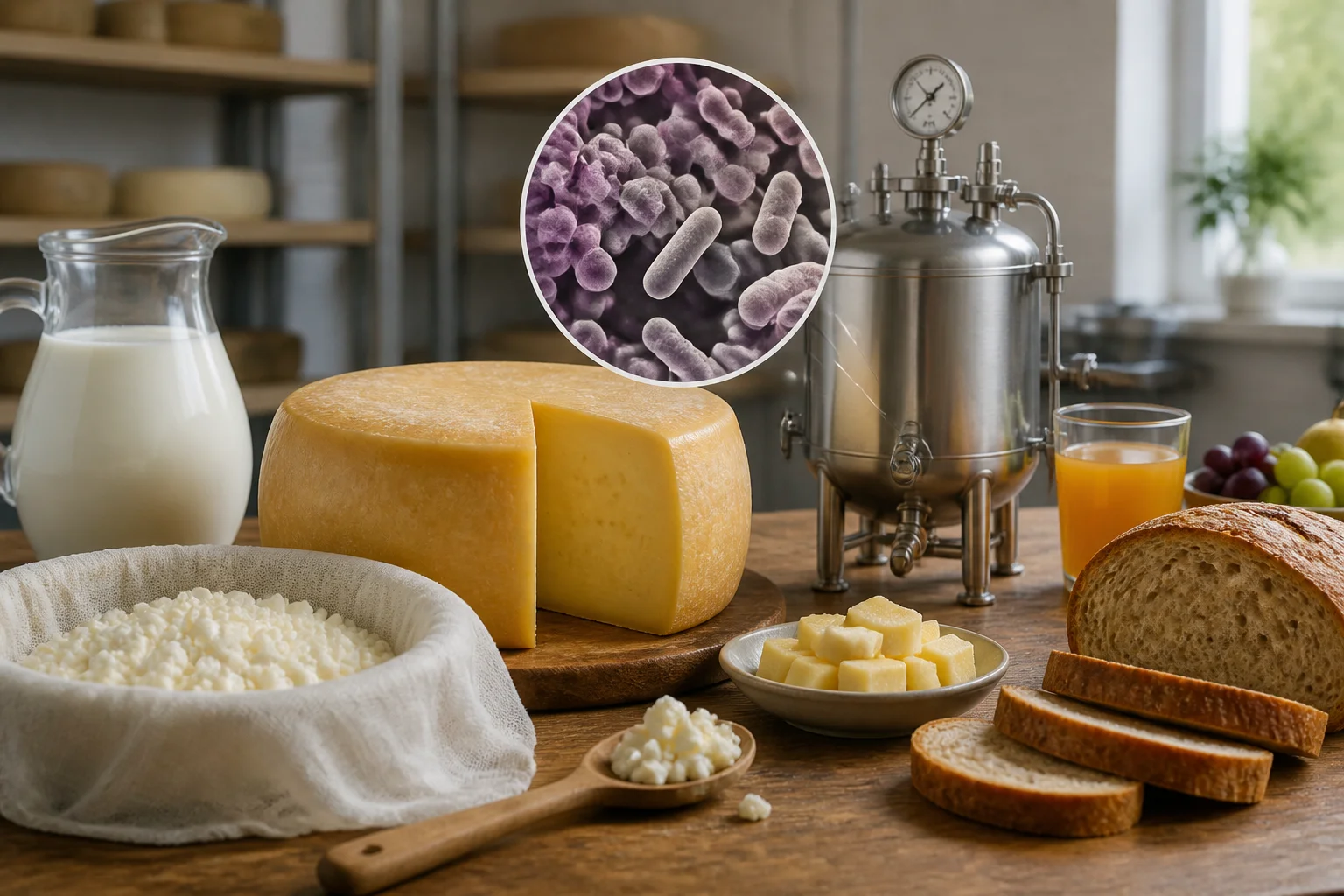
Enzymes are tools rather than one ingredient family. They speed up specific biochemical reactions, often in tiny amounts, and can be removed, deactivated, or left without a continuing function in the finished food. That makes them useful to manufacturers and unusually difficult for shoppers to trace.

Cheese is the best-known example, but the same label question appears in bread, juice, brewing, dairy processing, sweeteners, and flavor production. A useful answer starts by asking what the enzyme does and how it was produced.
Four Different Sources Can Produce the Same Function

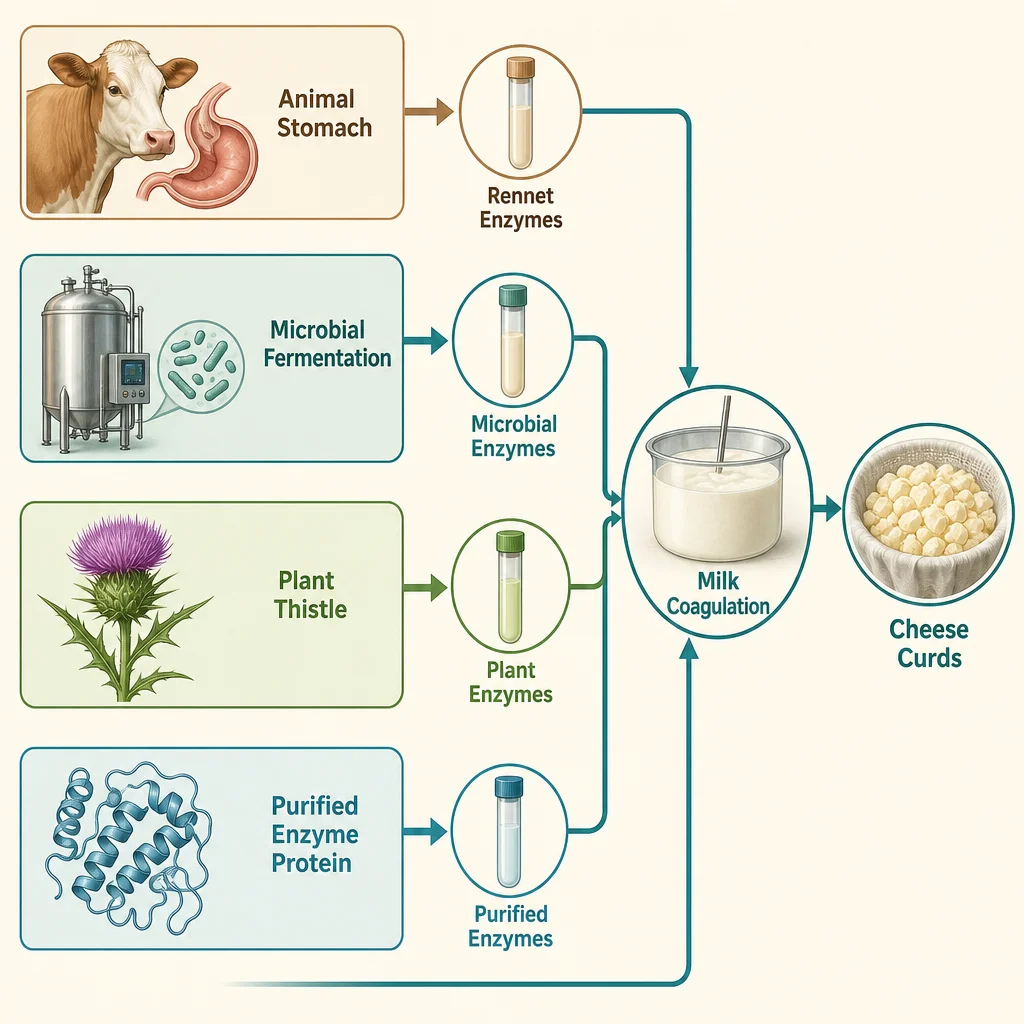
Four Different Sources Can Produce the Same Function

An enzyme is a protein that helps a reaction happen more efficiently. Its name often ends in -ase, as in lactase, amylase, protease, lipase, or pectinase. The functional name does not necessarily reveal its source.

Animal-derived enzymes

Traditional rennet is collected from the stomach tissue of young ruminants, most often calves but also lambs or kids. Its key milk-clotting enzyme is chymosin. Animal lipases can also be used to develop characteristic flavors in some cheeses.

For vegetarians who avoid slaughter-derived ingredients, animal rennet is unsuitable. It is also unsuitable for vegans because the cheese already contains milk and the enzyme itself is animal-derived.

Microbial enzymes

Fungi and bacteria produce many enzymes used in food manufacturing. Microbial coagulants can clot milk without using an animal stomach. Other microbial enzymes break down starch, protein, lactose, pectin, or fats.

"Microbial enzyme" is a strong non-animal source signal, but it does not make the finished product vegan. A cheese made with microbial rennet still contains dairy. A bread enzyme may be microbial while the bread contains whey, egg, honey, or another animal-derived ingredient.

Fermentation-produced chymosin

Fermentation-produced chymosin is made by microorganisms that have been given the genetic instructions to produce chymosin. The microorganisms grow in controlled fermentation, and the enzyme is separated and purified for use in cheesemaking.

Many vegetarian standards accept fermentation-produced chymosin because the commercial enzyme is not extracted from slaughtered animals. Some shoppers separately avoid ingredients made with genetically engineered production organisms. Those are different criteria, so ask which one a certification addresses.

Plant enzymes

Plants also supply food enzymes. Papain comes from papaya, bromelain from pineapple, and ficin from figs. Certain thistles and other plants have traditional milk-clotting uses. Plant coagulants can create distinctive flavors and textures, which is why they are more common in particular regional cheeses than as a universal rennet replacement.

Why Cheese Labels Can Say Only "Enzymes"

Ingredient rules generally focus on a common or usual name, not a full supply-chain biography. A cheese label may list "enzymes," "cheese cultures and enzymes," "rennet," "microbial enzymes," or "vegetarian rennet." The more specific declarations are helpful, but they are not equally common.

Processing-aid rules add another layer. Under the US exemption in 21 CFR 101.100, certain substances used during processing can be exempt from ingredient declaration when they meet the regulatory conditions. Whether a particular enzyme must be named depends on its role, presence, and the applicable food standard.

The European Union regulates food enzymes through Regulation 1332/2008, but a regulatory authorization still does not function as a vegan-source directory. Safety assessment, technological need, labeling, and dietary certification remain separate questions.

For shoppers, the consequence is simple: "enzymes" is a source-dependent term. It should trigger verification, not an automatic rejection and not an automatic approval.

What the Common Label Phrases Mean

Label wordingWhat it tells youWhat remains unknown
Animal rennetAnimal-derived coagulant was usedExact animal species may not be stated
Calf rennetAnimal source is explicitOther enzymes may also be present
Microbial rennetCoagulant was produced by microorganismsFinished product may contain other animal ingredients
Fermentation-produced chymosinChymosin came from microbial fermentationCertification standards may differ on production methods
Vegetable rennetMarketed as non-animal coagulant"Vegetable" may be used loosely, so certification is stronger
EnzymesA functional enzyme preparation was usedAnimal, microbial, plant, or mixed source
LipaseThe enzyme function is namedLipase can have animal or microbial sources

"Non-animal enzymes" is more useful than "natural enzymes." Natural does not identify whether the origin was an animal tissue, microorganism, or plant.

Foods Where Source Questions Matter

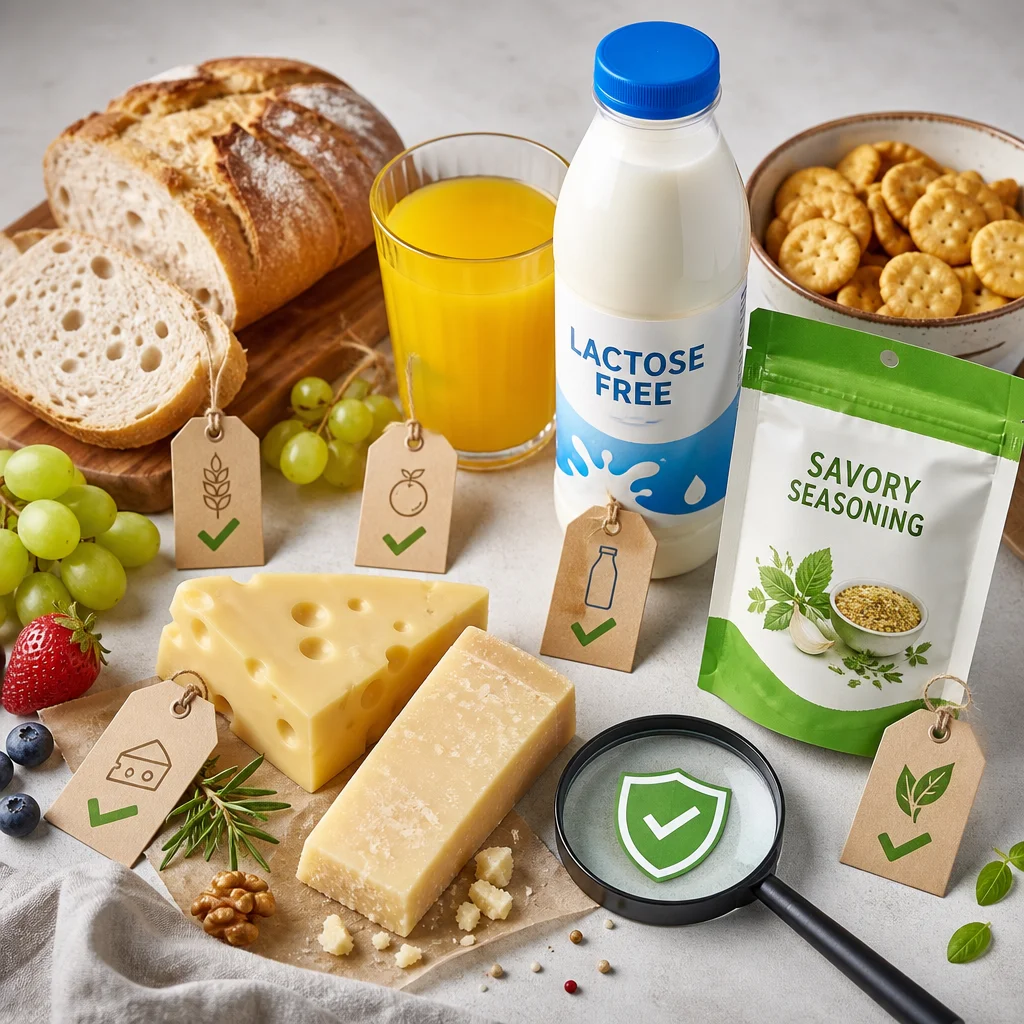
Foods Where Source Questions Matter

Cheese and cheese ingredients

Hard and aged cheeses, enzyme-modified cheese, cheese powders, whey-derived flavor systems, and products made with cheese can carry the rennet question forward. A cracker may not list rennet because it lists "cheese" as a compound ingredient or uses a flavor preparation under applicable labeling rules.

Check pizza, pesto, pasta sauce, snack seasonings, soups, frozen meals, and meal kits for Parmesan, Romano, Asiago, or generic cheese ingredients. A vegetarian finished product needs every relevant cheese component to meet the chosen standard.

Bread and baking

Amylases, xylanases, proteases, and lipases can improve dough handling, volume, browning, or softness. Many modern baking enzymes are microbial, but the word "enzymes" alone is not proof. Bread also raises separate questions about L-cysteine, mono- and diglycerides, whey, milk, egg wash, and shortening.

Juice, wine, and brewing

Pectinases can clarify juice. Enzymes can support extraction, filtration, and fermentation in beverages. The enzyme source may be microbial, but alcoholic beverages can also use animal-derived fining agents such as gelatin, isinglass, casein, or egg albumin. Verifying only the enzyme does not verify the full production process.

Lactose-free dairy

Lactase breaks lactose into simpler sugars. Commercial lactase is commonly produced through microbial fermentation. Lactose-free cow's milk is still dairy and is not vegan, even though the processing enzyme may be non-animal.

Flavors, sweeteners, and processed foods

Enzymes can create flavor compounds, hydrolyze proteins, convert starch into syrups, or modify fats. The finished label may name the resulting ingredient rather than every processing input.

A Better Way to Check Cheese

1. Look for explicit source language

"Microbial rennet," "vegetarian enzymes," "non-animal enzymes," or "fermentation-produced chymosin" provides more information than "enzymes." Read the exact ingredient list because marketing copy may refer to only one component.

2. Use certification, not the cheese style, as evidence

Parmesan-style, cheddar, mozzarella, and other cheese names do not reliably identify the coagulant source across all products. Traditional production rules may matter for protected regional cheeses, while similar products made elsewhere can follow different formulas.

A product-level vegetarian certification should evaluate the cheese and its processing inputs. A vegan certification is relevant only for non-dairy alternatives because dairy cheese itself cannot be vegan.

3. Check compound foods

If a prepared food contains cheese, determine whether the manufacturer's vegetarian claim covers that cheese. Do not assume an "enzymes" declaration elsewhere on the package describes the coagulant used in a purchased cheese ingredient.

4. Ask a precise manufacturer question

Are every enzyme and cheese-coagulating preparation used in this product, including lipase and enzymes used in compound cheese ingredients, produced without animal tissue or animal-derived processing materials?

For vegan products, extend the question to all processing aids and carriers.

5. Recheck by market

A brand may source cheese locally, so a vegetarian formula in one country can differ elsewhere. Use the package's country, manufacturer, and current product code when requesting confirmation.

Common Questions

Does microbial rennet make cheese vegan?

No. It can make the coagulant suitable for many vegetarians, but conventional cheese still contains animal milk. Vegan cheese must also avoid casein, whey, lactose, milk fat, and every other animal-derived input.

Is "enzymes" an allergen warning?

No. The term describes function, not a major-allergen category. Allergen obligations depend on the source and applicable law. Dietary suitability and allergy safety should be evaluated separately.

Is fermentation-produced chymosin the same as animal rennet?

They perform the same key coagulation job, but their production sources differ. Traditional animal rennet is extracted from animal tissue. Fermentation-produced chymosin is made in microbial fermentation and purified from that production system.

Can a vegetarian rely on "suitable for vegetarians"?

It is more useful than an unqualified enzyme list, especially when supported by a recognized certification. Check who defines and verifies the claim, and confirm it covers the exact product.

IngrediCheck can flag an unqualified "enzymes" declaration as source-dependent and identify clearer terms such as animal rennet, microbial rennet, chymosin, whey, casein, and gelatin. Use the vegetarian ingredient checker or vegan ingredient checker to review the whole label, then confirm ambiguous enzyme sources with the manufacturer.

Next Label Check

Follow the scanner, hub, and ingredient paths connected to this guide

Get the app for clearer label decisions.

Scan labels, see what fits your food notes, and read the why in plain English.

IngrediCheck app