Ingredient FAQs

Vitamin D3 Sources: Is Cholecalciferol Always Vegan?

Vitamin D3 may come from lanolin, fish-derived material, or vegan lichen. Learn how D3 differs from D2 and what labels can prove about the source.

Jul 19, 2026|8 min read
By Sanket Patel|Updated 2026-07-19|5 sources|Editorial standards
Vitamin D3 Sources: Is Cholecalciferol Always Vegan?

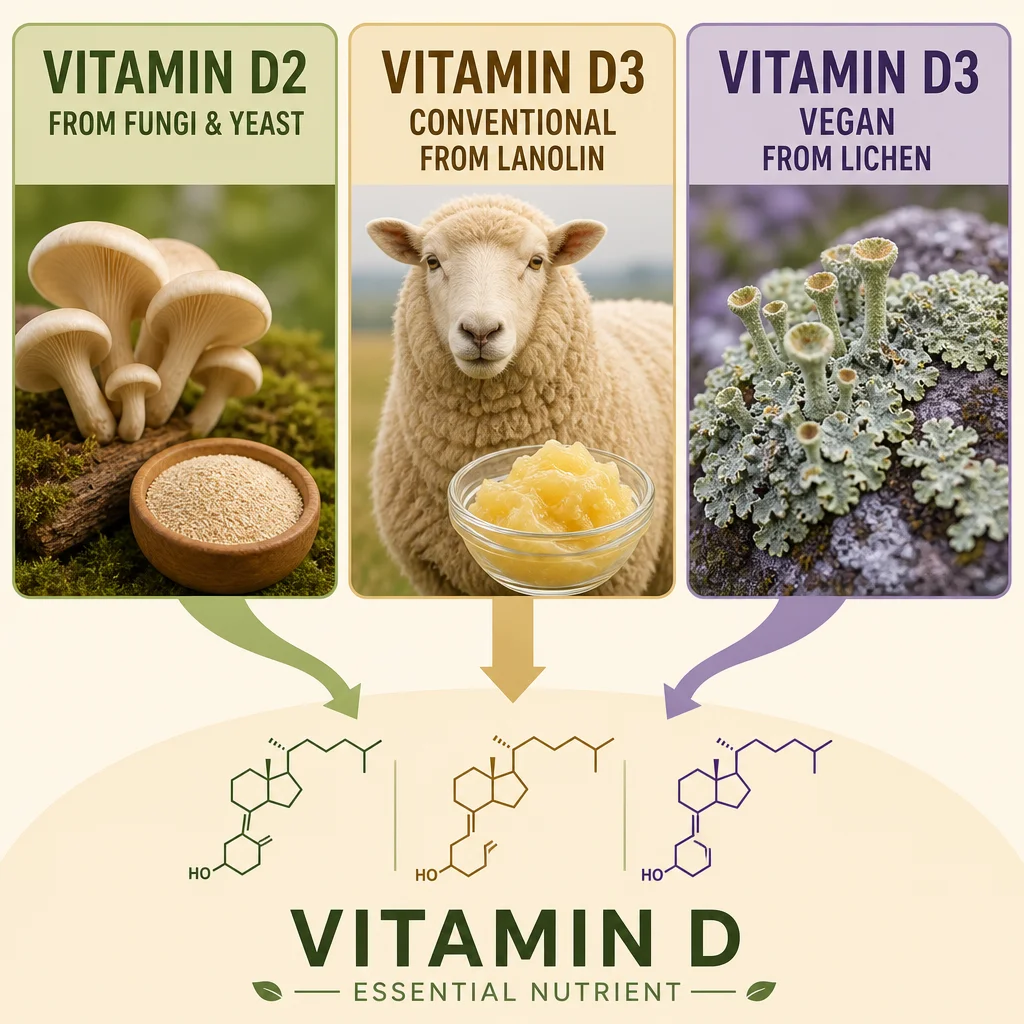
Quick answer: Vitamin D3 is not always vegan. Most conventional D3, also called cholecalciferol, has historically been produced from lanolin associated with sheep's wool or from other animal sources. Vegan D3 made from lichen is commercially available. Vitamin D2, or ergocalciferol, is generally produced from fungi or yeast and is usually vegan, but the finished food or supplement still needs a complete ingredient review.

The word "vitamin" sounds source-neutral. Chemically, it often is. A molecule of cholecalciferol performs the same nutritional role whether its production began with lanolin or a lichen-derived material. For a vegan shopper, however, the production path still matters.

That creates a familiar label problem: the Nutrition Facts panel can tell you how much vitamin D a serving provides, while the ingredient list may identify D3 without explaining where it came from. The front label may say plant-based even when a minor fortification ingredient needs separate verification.
Vitamin D2 and D3 Are Different Forms

Vitamin D2 and D3 Are Different Forms

Vitamin D is a family name. The two forms most often used in foods and supplements are:

  • Vitamin D2: ergocalciferol
  • Vitamin D3: cholecalciferol

Both can support vitamin D status, but they differ slightly in structure and origin. The NIH Office of Dietary Supplements describes D2 and D3 as the principal supplemental forms and summarizes the evidence used to set vitamin D intake guidance.

Vitamin D2 is commonly produced by exposing yeast or fungi to ultraviolet light, which converts ergosterol into ergocalciferol. This production route is generally compatible with vegan standards when all media and processing materials also comply.

Vitamin D3 is the same form animals make in skin after ultraviolet exposure. Commercial D3 can be produced from animal-associated sterols or from non-animal sources such as lichen. The label name "cholecalciferol" does not distinguish them.

The dietary question should therefore be phrased as which form, from which source, in which finished product?

How Lanolin-Derived D3 Is Made

Lanolin is a waxy substance associated with sheep's wool. During wool processing, it can be recovered, refined, and used as a starting material for sterol chemistry. A precursor can then be exposed to ultraviolet light and converted through subsequent processing into vitamin D3.

The finished cholecalciferol is highly purified. That does not make its origin irrelevant to a vegan standard. Veganism evaluates the use of animals and animal-derived materials in production, not only whether intact wool wax remains in the final microgram dose.

Vegetarian acceptance varies. Many vegetarians who consume dairy, eggs, or wool-associated products may accept lanolin-derived D3. Others avoid it because it depends on animal husbandry. A vegetarian certification or the shopper's own defined standard determines the answer.

Lanolin should not be confused with lactose. Lanolin is associated with wool, while lactose is milk sugar. A product can be lactose-free and still use lanolin-derived D3. It can also use vegan D3 while containing milk elsewhere.

What Vegan D3 Means

Vegan vitamin D3 is commonly marketed as lichen-derived cholecalciferol. Lichens are symbiotic organisms involving a fungus and a photosynthetic partner. Manufacturers extract and refine sterol material from selected sources, then produce D3 under controlled conditions.

A label may say:

  • vegan vitamin D3
  • lichen-derived vitamin D3
  • plant-based cholecalciferol
  • vegan cholecalciferol
  • vitamin D3 from lichen

"Plant-based" is familiar marketing language, although lichen is not literally a conventional plant. The useful part is the explicit non-animal source and the product-level certification behind it.

Do not assume every product from a brand uses the same D3. A company may choose lichen-derived D3 for a vegan multivitamin while using conventional D3 in another product. The exact SKU and country matter.

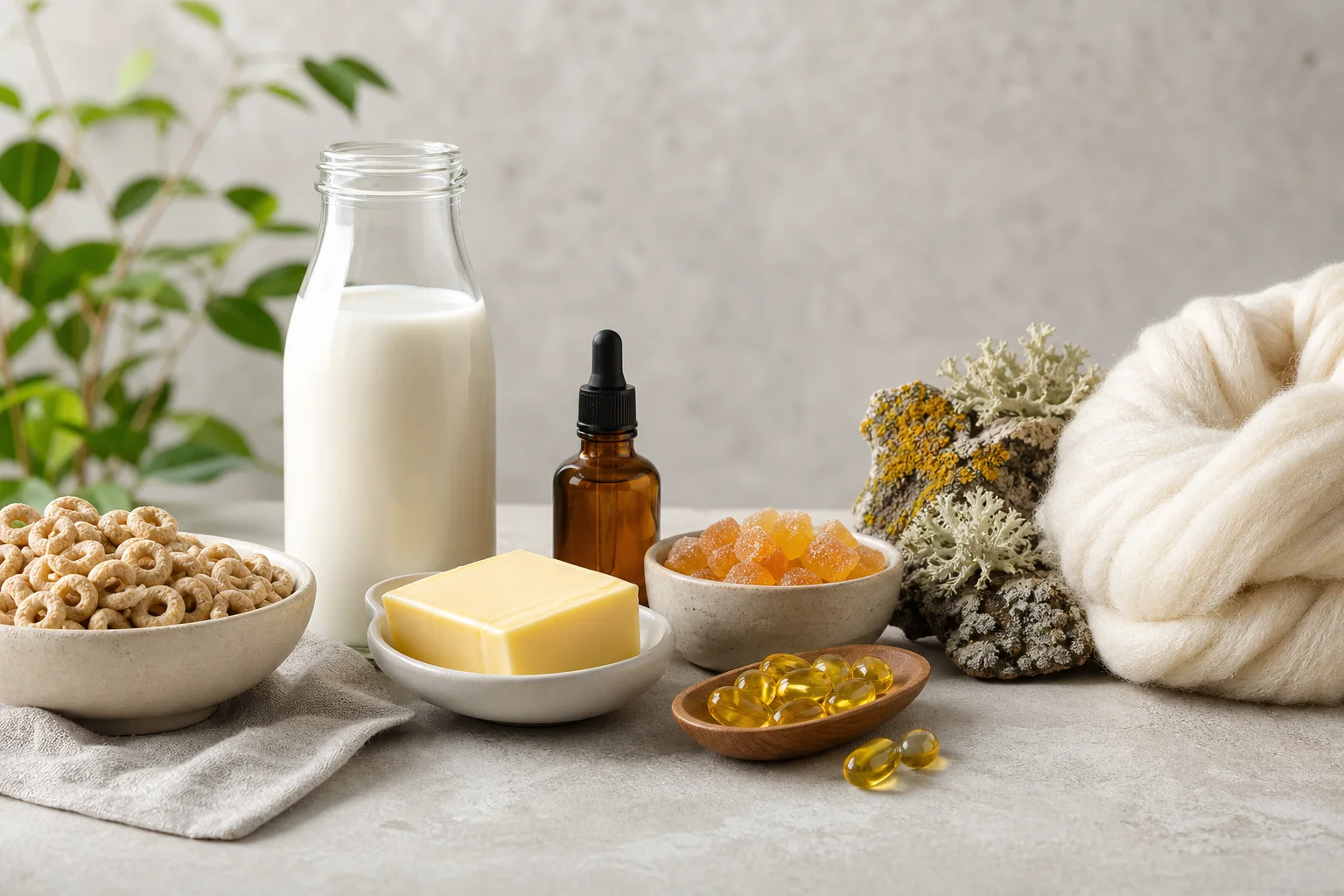
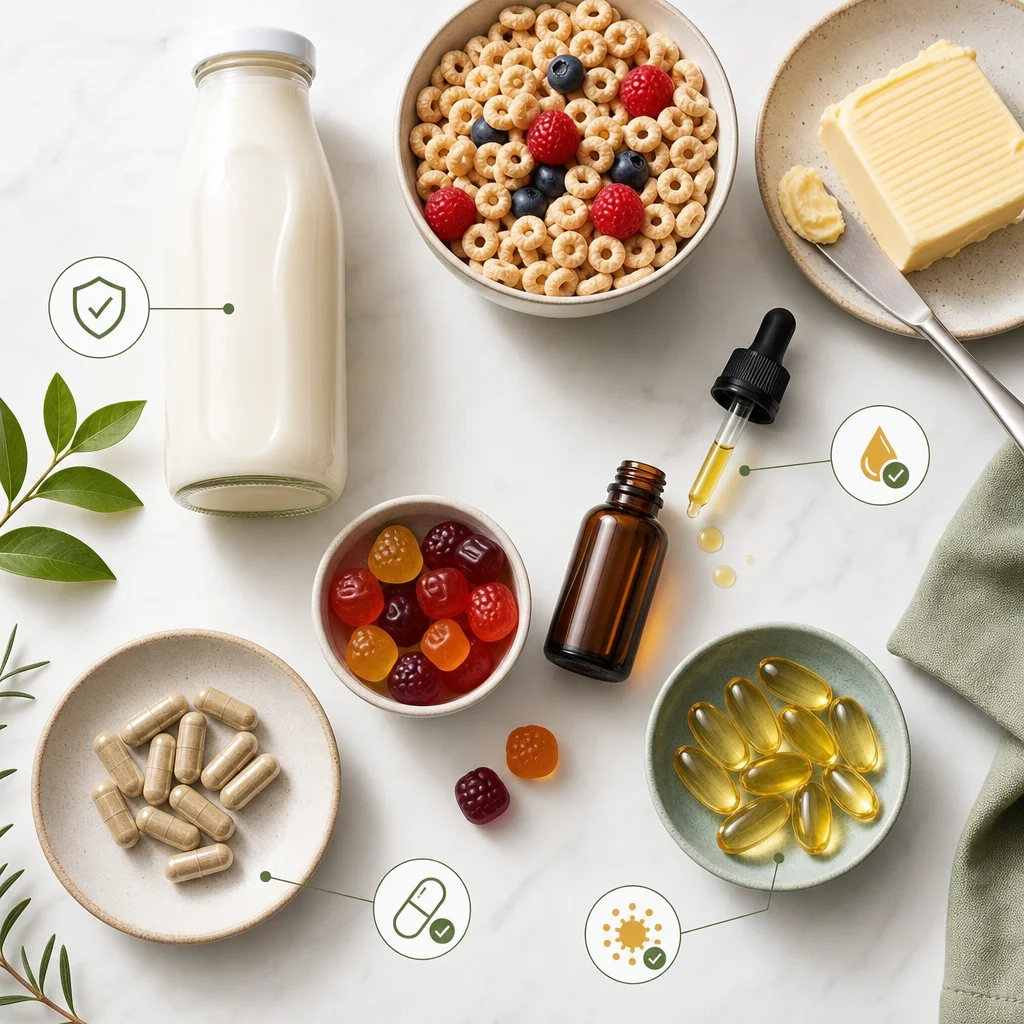
Where Vitamin D3 Appears

Where Vitamin D3 Appears

Plant milks and dairy alternatives

Fortified oat, soy, almond, pea, and coconut drinks may contain D2, conventional D3, or lichen-derived D3. The base beverage can be entirely plant-derived while the added vitamin remains source-dependent.

Breakfast cereal and nutrition bars

Fortification premixes can supply several vitamins at once. The ingredient list may identify "vitamin D3" or "cholecalciferol" among a longer group of nutrients. A vegan claim should cover the premix specification, not only the cereal ingredients.

Margarine and spreads

Vitamin D can be added to plant-based spreads as a nutritional fortifier. Check both the vitamin source and other ingredients such as whey, milk solids, natural flavors, and mono- and diglycerides.

Infant formula and meal replacements

These products have complex nutrient and carrier systems. Dietary suitability cannot be decided from the D3 source alone. Protein, fat, carbohydrate, vitamins, carriers, and processing aids all need evaluation.

Supplements

D3 appears in multivitamins, standalone tablets, gummies, drops, sprays, and softgels. The active vitamin may be vegan while the delivery system contains gelatin, beeswax, shellac, lactose, or an animal-derived glycerin source.

Naturally occurring animal foods

Fish, egg yolks, liver, and some animal-derived foods naturally provide vitamin D. An ingredient panel may not list cholecalciferol separately when it is naturally present rather than added.

Reading the Nutrition Facts and Ingredient List Together

In the United States, vitamin D appears as a declared nutrient on the Nutrition Facts panel under applicable labeling requirements. That panel reports amount and percent Daily Value. It does not identify whether the nutrient is D2, lanolin-derived D3, or lichen-derived D3.

The ingredient list may provide more detail:

  • ergocalciferol usually indicates D2
  • cholecalciferol indicates D3 but not its source
  • vitamin D2 identifies the form
  • vitamin D3 identifies the form but not its source
  • vitamin D alone may require manufacturer clarification

A source can also disappear into a compound premix declaration depending on the product and applicable rules. Product documentation or certification may carry information the retail label does not.

The Carrier and Capsule Can Change the Answer

Vitamin D is fat-soluble, so supplements and fortification preparations often use an oil or carrier system. Review:

  • gelatin softgel shells
  • glycerin or glycerol source
  • beeswax
  • shellac or pharmaceutical glaze
  • lactose or milk-derived carriers
  • fish oil
  • medium-chain triglycerides
  • sunflower, olive, or other plant oils
  • modified starch or cellulose capsule materials

A lichen-derived active ingredient inside a bovine-gelatin softgel is not a vegan finished product. Conversely, conventional D3 in a cellulose capsule is still not vegan merely because the capsule is plant-derived.

A Practical Verification Checklist

  1. Identify the form. Look for D2, ergocalciferol, D3, or cholecalciferol in the ingredient list.
  2. Look for an explicit source. "Lichen-derived D3" is more informative than "premium D3" or "natural vitamin D."
  3. Confirm product-level certification. A vegan mark should apply to the complete formula, including carriers, capsule, coating, and processing materials.
  4. Review every inactive ingredient. Gelatin, shellac, beeswax, lactose, and source-dependent glycerin can change the result.
  5. Check the exact market and format. Gummies, drops, tablets, and softgels from one brand can use different systems.
  6. Ask about alternate suppliers. Confirm that all approved D3 sources for the current product are lichen-derived or otherwise certified vegan.
  7. Save the response date. Fortification premixes can change without a prominent front-label announcement.

A useful manufacturer question is:

Is the cholecalciferol in this exact product derived from lichen or another verified non-animal source, and are its carrier, capsule, coating, fermentation media, and processing aids also free from animal-derived materials?

If a company answers only that the product contains "natural vitamin D," ask again. Natural is not a source category that separates lanolin from lichen. A useful answer names the form, its raw-material source, and the scope of the company's supplier specification.

Common Questions

Is vitamin D2 always vegan?

D2 is generally produced from fungal or yeast sources, making it a strong vegan option. "Always" is still too broad for a finished product because culture media, carriers, capsules, coatings, and other ingredients need review.

Is all D3 made from sheep's wool?

No. Lanolin-derived D3 is common, but lichen-derived vegan D3 is commercially available. The chemical name alone does not identify which one was used.

Can a plant milk contain non-vegan D3?

Yes. A plant base does not automatically establish the source of every added vitamin. Look for a vegan certification or an explicit lichen-derived statement.

Is lanolin-derived D3 safe?

Source suitability and nutritional safety are separate questions. This guide addresses whether production aligns with vegan or vegetarian preferences, not whether permitted vitamin D3 is nutritionally acceptable at appropriate intakes.

IngrediCheck can identify cholecalciferol, vitamin D3, gelatin, shellac, beeswax, glycerin, and other source-sensitive ingredients in fortified foods and supplements. Use the vegan ingredient checker or vegetarian ingredient checker to evaluate the complete label, then verify an unspecified D3 source with the manufacturer.

Next Label Check

Follow the scanner, hub, and ingredient paths connected to this guide

Get the app for clearer label decisions.

Scan labels, see what fits your food notes, and read the why in plain English.

IngrediCheck app