Ingredient FAQs

Is Taurine Vegan? Energy Drink Sources Explained

Taurine occurs in animals, but commercial taurine is usually synthesized. Learn what energy-drink and supplement labels can prove for vegan shoppers.

Jul 22, 2026|8 min read
By Sanket Patel|Updated 2026-07-22|6 sources|Editorial standards
Is Taurine Vegan? Energy Drink Sources Explained

Quick answer: Documented commercial routes manufacture taurine by chemical synthesis rather than extracting it from bulls or other animals, so synthetic taurine can be suitable for vegans. However, the word "taurine" on a label does not certify the route or the whole product. Flavor systems, vitamin carriers, colors, sweeteners, and capsule shells still need review, and strict shoppers should prefer a current manufacturer statement or vegan certification.

Taurine has one of the most persistent ingredient myths in packaged food. Its name resembles taurus, the Latin word associated with bulls, and taurine was first identified in ox bile in the nineteenth century. Those facts are often compressed into the false claim that energy-drink taurine is collected from bull semen, urine, or testicles.

That is not how mainstream food and supplement taurine is produced. The more useful question is how the commercial ingredient in a specific product was manufactured and whether the complete formula meets your dietary standard.
What Taurine Is

What Taurine Is

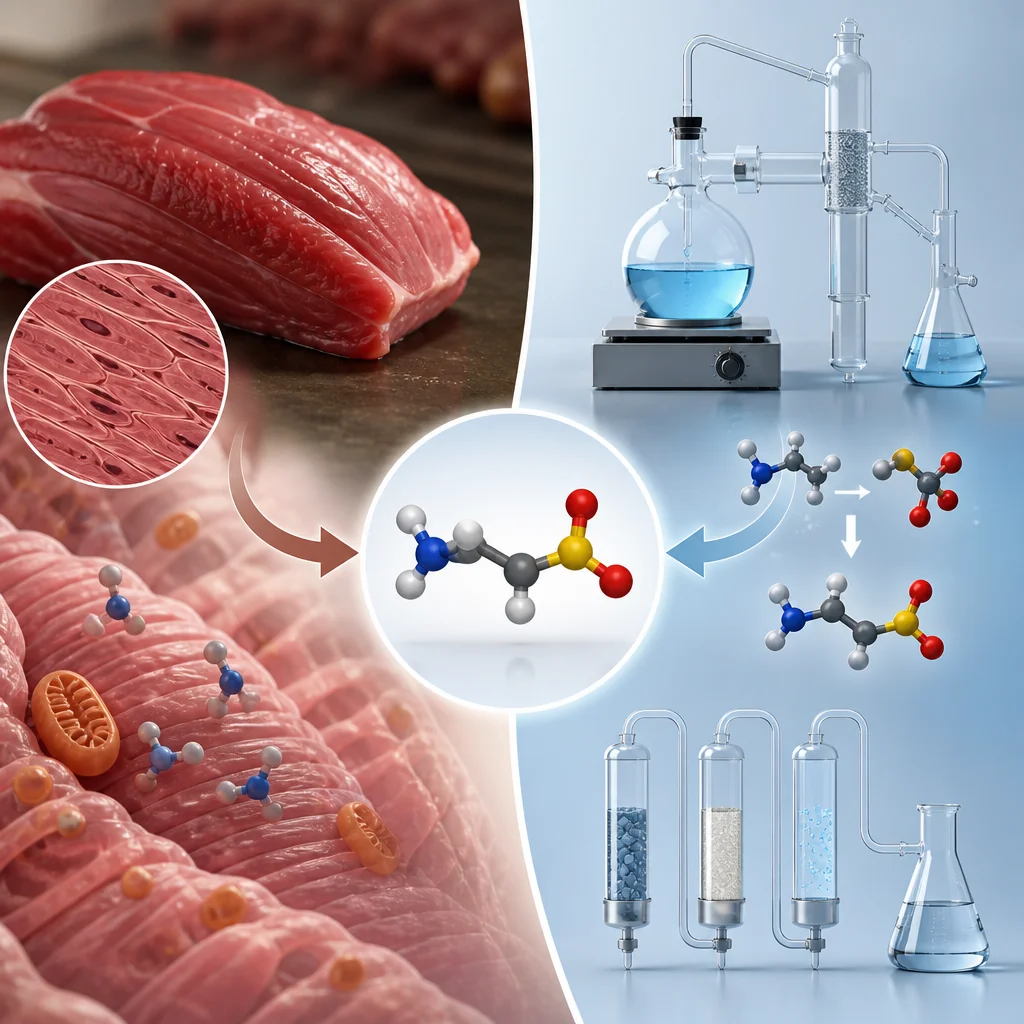
Taurine is a sulfur-containing amino sulfonic acid. It is often casually called an amino acid, although its chemistry differs from the amino acids that are assembled into proteins. The human body contains taurine in tissues including the brain, heart, muscle, and retina.

Animal foods naturally contain taurine because animal tissues contain it. Plants generally contain little or no taurine, with some variation among algae and microorganisms. That natural distribution explains why people associate the compound with animals, but the origin of a purified commercial ingredient is a separate manufacturing question.

The National Library of Medicine's PubChem record identifies taurine as 2-aminoethanesulfonic acid and provides its chemical identity. A molecule produced by chemical synthesis has the same identity as taurine isolated from a biological tissue. Dietary suitability depends on the route and inputs, not a difference visible in the final formula.

How Commercial Taurine Can Be Synthesized

Extracting food-grade taurine from animal organs would be inefficient, expensive, difficult to standardize, and unattractive for high-volume beverage production. Industrial chemistry can produce a consistent purified ingredient at scale.

A documented industrial process builds the taurine molecule from monoethanolamine through chemical conversion, followed by purification and quality testing. Other exact methods can vary by supplier and may evolve. The important point for label readers is that the presence of taurine in an animal body does not mean the additive in a can was taken from an animal.

"Synthetic" is useful evidence, but it is not a complete product-level vegan claim. A supplier may confirm a non-animal synthesis route for taurine while the finished drink uses dairy-derived flavoring, carmine color, honey, vitamin D3 from lanolin, or a non-vegan processing aid. A supplement may put synthetic taurine inside a gelatin capsule.

The Bull Myth, Carefully Unpacked

The myth usually combines three true or partly true statements into one false conclusion:

  1. Taurine's name has a historical connection with bulls.
  2. Taurine occurs naturally in animal tissues and bile.
  3. Energy drinks contain taurine.

None of those statements proves that beverage manufacturers harvest bodily fluids from bulls. The name describes the history of scientific discovery, not the current factory source.

The best correction is not to promise that every taurine-containing product is vegan. It is to separate the ingredient's usual commercial production from the rest of the formula. "Commercial taurine is generally synthesized" is defensible. "Every product with taurine is vegan" is not.

Where Taurine Appears

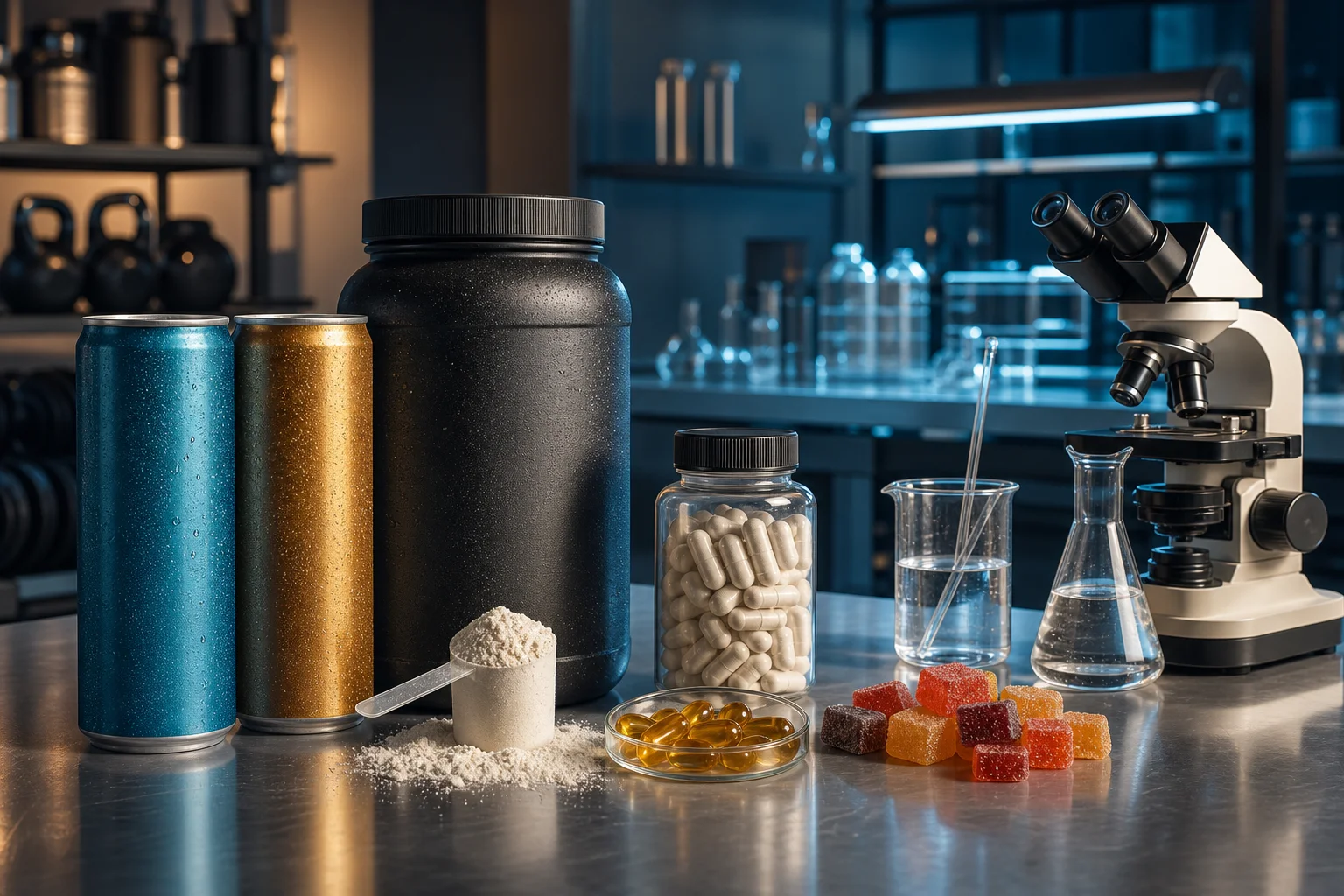
Taurine is used in several product categories:

  • energy drinks and energy shots
  • pre-workout and sports-nutrition powders
  • standalone taurine capsules or powders
  • multivitamins and combination supplements
  • infant formula and specialized nutrition products
  • cat food and some other animal foods
  • functional beverages marketed for focus or performance

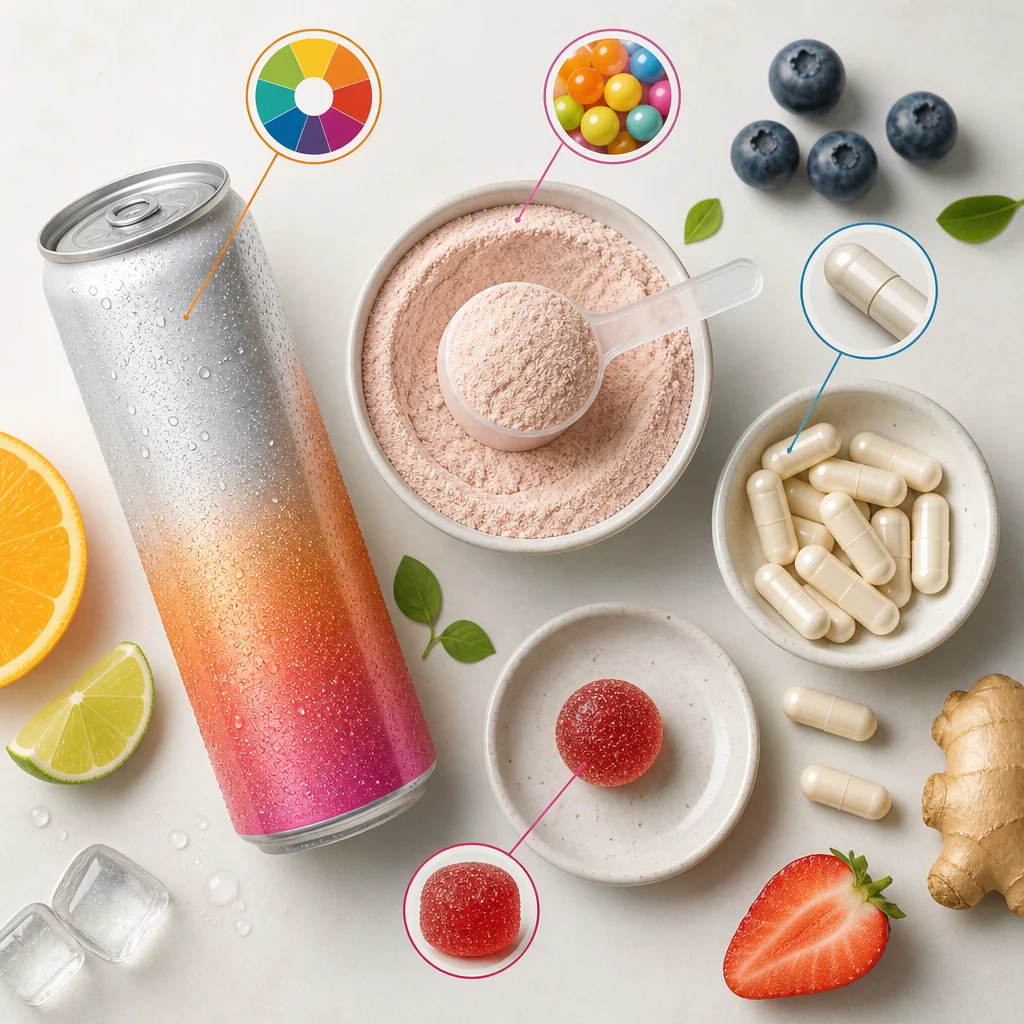
The product type changes what else you need to inspect. A powder may have a short ingredient list but include natural flavors and anti-caking agents. A gummy can contain gelatin or confectioner's glaze. A capsule shell can be gelatin even when the powder inside is animal-free. An energy drink can use color and vitamin ingredients with their own sourcing questions.

How to Read an Energy-Drink Label

Start by separating the active-style ingredients from the complete ingredient list. The front of a can may highlight taurine, caffeine, B vitamins, or botanical extracts. Vegan suitability depends on everything in the formula, not only the highlighted blend.

Look closely at:

Also check whether a vegan statement covers the exact flavor and country. Beverage companies sometimes use different color systems, vitamin blends, or sweeteners in different markets.

Taurine in Capsules and Gummies

Taurine in Capsules and Gummies

Supplement packaging creates a two-part verification problem: the active ingredient and the dosage form.

A bottle may list "taurine 1,000 mg" prominently while the capsule is made from bovine or porcine gelatin. Vegetarian capsules are commonly made from cellulose-based materials such as hypromellose, but the words "vegetable capsule" or a vegan certification are more useful than assumptions based on color or transparency.

Gummies can add gelatin, beeswax, confectioner's glaze, dairy-derived flavors, or colors. Tablets may use source-dependent stearates as lubricants. The stearic acid and magnesium stearate guide explains why a mineral-sounding tablet aid can still need an origin check.

A Practical Verification Ladder

1. Read the full formula

Do not stop at the front-label taurine claim or a nutrition panel. Review ingredients, capsule composition, allergen statements, and certification marks.

2. Search the official product FAQ

Many major beverage brands directly address the taurine-source myth. Confirm that the answer is current and applies to your product, flavor, and country.

3. Prefer a product-level vegan statement

An explanation that the taurine is synthetic resolves one ingredient. A credible vegan certification or product-specific vegan statement evaluates a wider scope.

4. Ask a precise question when needed

Use wording such as:

Is the taurine in this product manufactured without animal-derived feedstocks or processing aids, and is the complete formula, including flavors, vitamins, colors, carriers, and capsule or coating, suitable for vegans?

Ask whether the company controls supplier changes and whether the statement applies to the current market formula.

5. Recheck after reformulation

Brands can change contract manufacturers, vitamin premixes, flavors, and capsule materials without changing the basic product name. Date your evidence and compare it with the package in hand.

Common Questions

Is taurine made from bull semen?

No credible evidence supports that claim for commercial food or supplement taurine. The myth appears to come from the compound's name and its natural presence in animal tissues. Synthetic routes are documented and used for commercial taurine production.

Is naturally occurring taurine vegan?

Taurine present in meat, fish, dairy, or another animal-derived food does not make that food vegan. The same chemical molecule can be made by a non-animal industrial route for use as an isolated ingredient.

Is synthetic always vegan?

Not automatically. "Synthetic" can address the main production route, but strict standards may also consider processing aids, carriers, testing policies, and the rest of the product. Product-level certification provides stronger evidence.

Do vegans need taurine supplements?

That is a nutrition and clinical question, not a label-origin question. The body can synthesize taurine, and individual needs vary with age, health, diet, and medical context. Do not start high-dose supplements based on an ingredient-origin article. Ask a qualified clinician about personal need and interactions.

Is taurine the same as caffeine?

No. They are different compounds. Energy drinks often combine them, which causes confusion. The stimulant effect of a typical energy drink is closely associated with caffeine, while taurine has different biological roles.

Are energy drinks healthy if their taurine is vegan?

Vegan suitability does not establish healthfulness. Caffeine dose, sugar, serving size, age, pregnancy, medications, and health conditions require separate consideration. A vegan verdict answers origin, not overall risk or nutritional quality.

The Best Decision Rule

Treat isolated commercial taurine as usually non-animal in modern beverages and supplements, but verify the product rather than relying on the myth or its rebuttal. That position reflects current manufacturing reality without turning a generalization into an unsupported universal promise.

Use the complete vegan label-reading guide for other source-dependent vitamins, additives, coatings, and flavor terms. Vegetarian shoppers can use the vegetarian hidden-ingredient guide to review gelatin capsules and animal-derived processing materials.

IngrediCheck can surface taurine and the surrounding ingredient list against your saved rules. The vegan ingredient checker and vegetarian ingredient checker help make the review systematic, while current manufacturer documentation or certification answers what an ordinary ingredient panel cannot.

Next Label Check

Follow the scanner, hub, and ingredient paths connected to this guide

Get the app for clearer label decisions.

Scan labels, see what fits your food notes, and read the why in plain English.

IngrediCheck app