Ingredient FAQs

Is Vitamin A Palmitate Vegan? Retinyl Palmitate Sources

Vitamin A palmitate combines retinol with palmitic acid, and labels rarely disclose every production input. Learn how vegan shoppers can verify fortified foods.

Jul 22, 2026|8 min read
By Sanket Patel|Updated 2026-07-22|5 sources|Editorial standards
Is Vitamin A Palmitate Vegan? Retinyl Palmitate Sources

Quick answer: Vitamin A palmitate, also called retinyl palmitate, cannot be classified as vegan from its name alone. It is a defined vitamin A compound made by joining retinol with palmitic acid. Commercial production can use highly processed inputs whose original source is not disclosed on the food label. Many fortified plant foods use vegan-suitable vitamin A, but strict shoppers should look for certification or a manufacturer statement covering the vitamin premix, carrier, and complete product.

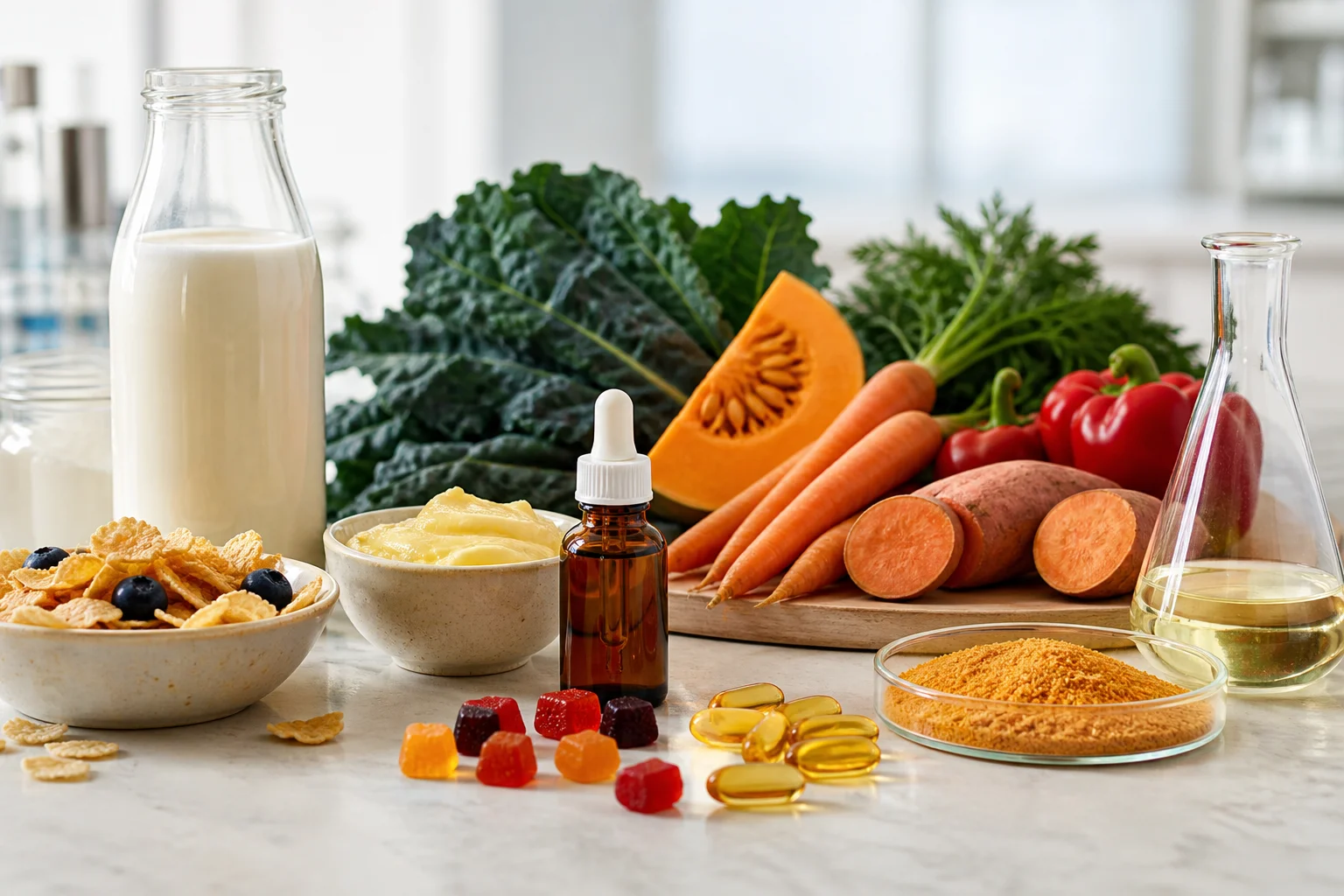
Vitamin A palmitate appears in products that otherwise look straightforwardly plant-based: oat milk, almond milk, breakfast cereal, margarine, nutrition shakes, and multivitamins. Shoppers often see "vitamin A palmitate" and ask whether the word palmitate means palm oil or whether retinyl means an animal source.

Neither shortcut is reliable. The chemical name describes the finished compound. It does not function as a supply-chain disclosure.
What Vitamin A Palmitate Is

Vitamin A is a family of fat-soluble compounds. Food and supplement labels may refer to preformed vitamin A compounds such as retinol and retinyl esters, or to provitamin A carotenoids such as beta-carotene.

Retinyl palmitate is an ester formed from retinol and palmitic acid. Esterification makes a stable, fat-soluble form that can be incorporated into vitamin premixes, oils, fortified foods, and supplements. It may appear under names including:

  • vitamin A palmitate
  • retinyl palmitate
  • retinol palmitate
  • vitamin A, sometimes with the form identified elsewhere
  • preformed vitamin A

The National Institutes of Health vitamin A fact sheet distinguishes preformed vitamin A from provitamin A carotenoids and explains the foods in which each occurs naturally. That nutritional distinction does not reveal how a commercial fortificant was manufactured.

Why "Palmitate" Does Not Prove Palm Oil

Why "Palmitate" Does Not Prove Palm Oil

Palmitic acid was named for its association with palm oil, but it is not unique to palms. It is a common saturated fatty acid found across plant oils and animal fats. A palmitate is a chemical salt or ester of palmitic acid.

This is the same reasoning problem seen with stearic acid and stearates. Once a fatty acid is purified, the chemical name does not encode whether the upstream fat was plant-derived, animal-derived, or made through another route.

Therefore:

  • "palmitate" does not prove palm-derived
  • "palmitate" does not prove animal-derived
  • a palm-free environmental claim does not automatically answer vegan suitability
  • a vegan claim does not necessarily answer whether palm oil was used

Vegan sourcing and palm-oil sourcing are separate questions, even when both matter to the same shopper.

Where the Source Uncertainty Comes From

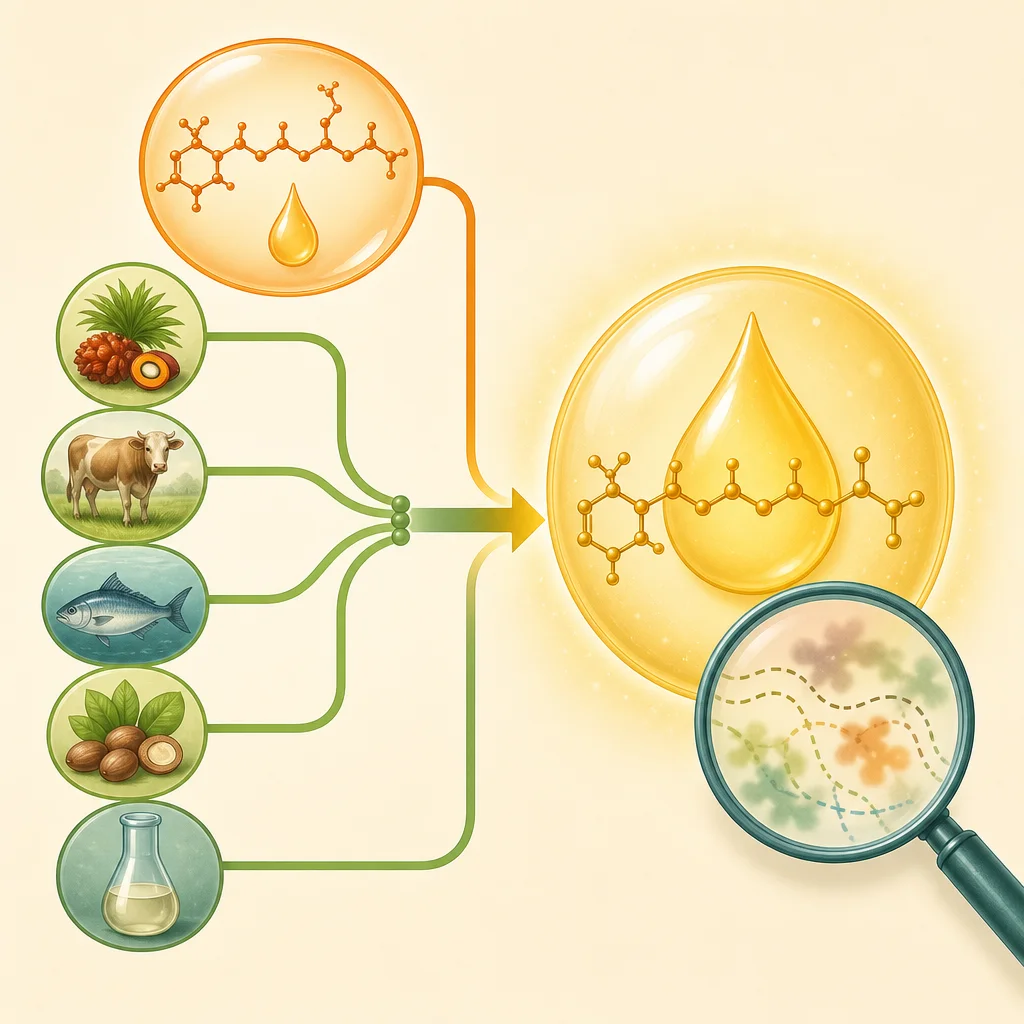
There are several layers between a vitamin name and the food in your cart:

  1. the manufacture of the retinol component
  2. the source of the palmitic acid component
  3. solvents, catalysts, or processing aids used during production
  4. the carrier oil, starch, antioxidant, or encapsulating material in the premix
  5. the ingredients and processing aids in the final product

Large-scale vitamins are often manufactured through chemical and biotechnological processes rather than extracted directly from animal foods. That makes vegan-suitable supply possible and common. It does not make every supplier, grade, premix, or finished product universally vegan.

The U.S. food rule for vitamin A is unusually direct: it describes retinol obtained from fish-liver oils as well as retinol made by total synthesis, then describes vitamin A palmitate as the palmitate ester of retinol. This proves that more than one documented retinol route can sit behind the same finished name. It does not identify the route used by the package in your hand.

The package may list only the active fortificant. A plant milk can declare "vitamin A palmitate" while its premix specification, held by the manufacturer, contains the useful source information. Retail labels are not designed to reproduce every supplier document.

Vitamin A Palmitate vs Beta-Carotene

Beta-carotene is a provitamin A carotenoid. The body can convert it into vitamin A. It occurs naturally in carrots, sweet potatoes, leafy greens, and other plant foods, and it is also used as a color or nutrient ingredient.

Retinyl palmitate is preformed vitamin A. The body does not need to convert it from a carotenoid before using it as vitamin A. The two forms differ in metabolism, dosing, stability, formulation, and labeling.

From a vegan-shopping perspective, beta-carotene is often perceived as the simpler option because of its strong plant association. Even then, a formulated beta-carotene ingredient can use carriers or encapsulation materials that deserve product-level review. Do not replace evidence with color: an orange powder is not a certification.

Where Vitamin A Palmitate Appears

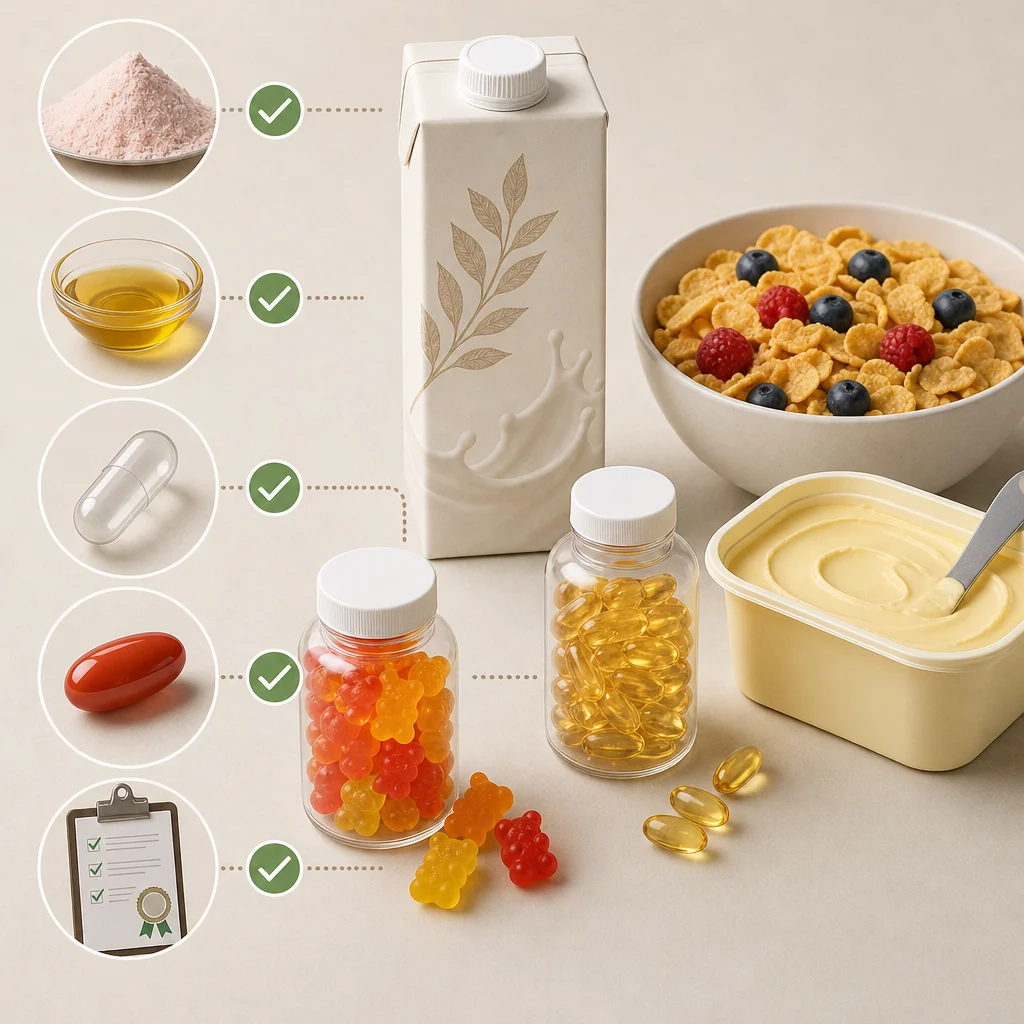
Common product categories include:

  • fortified dairy milk and plant-based milk alternatives
  • breakfast cereal and meal-replacement products
  • margarine and spreads
  • infant formula and specialized nutrition products
  • multivitamin tablets, softgels, gummies, and drops
  • fortified flour or staple-food programs in some markets
  • skin-care and cosmetic products, which follow different labeling systems

The surrounding formula changes the verification task. A fortified oat drink might have a short food ingredient list. A gummy can include gelatin, beeswax, or confectioner's glaze. A softgel frequently uses gelatin unless it is explicitly identified as vegetarian or vegan. A dry tablet can use source-dependent stearates.

How to Read Fortified Plant-Milk Labels

How to Read Fortified Plant-Milk Labels

Plant milks illustrate the difference between the base food and the final formulation. Oats, almonds, soybeans, peas, or coconuts are plant ingredients. Manufacturers then add vitamins, minerals, stabilizers, flavors, and oils to meet a nutrition or sensory goal.

Check four places:

The ingredient list: look for vitamin A palmitate, vitamin D, natural flavors, gums, oils, and any allergen declarations.

The nutrition panel: it can show that vitamin A is present, but it may not identify the chemical form or source.

Certification marks: verify that a vegan symbol is issued by a real program and applies to the exact product.

The manufacturer's official FAQ: brands often explain whether their vitamin premix is plant-derived or suitable for vegans.

Do not use "non-dairy" as a universal vegan guarantee. It is a different claim with different regulatory and consumer meanings.

A Practical Verification Ladder

1. Identify the exact form

Write down whether the product lists vitamin A palmitate, retinyl palmitate, retinol, beta-carotene, or only vitamin A. Similar nutrition claims can rely on different ingredients.

2. Check dosage-form ingredients

For supplements, inspect "other ingredients" and the capsule or gummy composition. The vitamin can be suitable while the shell or coating is not.

3. Look for product-level certification

A credible vegan certification is stronger than a retailer filter or an undefined "plant-based" badge. Confirm that the exact size, flavor, and market are covered.

4. Ask about the premix, not just the vitamin

Use wording such as:

Is the vitamin A palmitate in this exact product made without animal-derived feedstocks or processing aids, and are its carrier, encapsulation materials, and the complete vitamin premix suitable for vegans?

This prevents a narrow answer that addresses only the purified active molecule.

5. Date the answer

Vitamin premix suppliers can change. Keep the response date and recheck after a packaging or formula update.

Common Questions

Is vitamin A palmitate made from fish liver oil?

Preformed vitamin A occurs naturally in animal foods, and food regulations document fish-liver extraction as one possible retinol route alongside total synthesis. That does not prove the origin of a specific modern fortificant. Ask for the current manufacturing source rather than inferring it from nutrition history.

Is vitamin A palmitate dairy?

The compound is not synonymous with milk. It can be added to dairy products and dairy-free products alike. An allergen statement addresses regulated milk-allergen disclosure, not every upstream animal-origin question.

Does "retinyl" mean animal-derived?

No. Retinyl describes a vitamin A chemical group. The name alone does not identify the industrial feedstock or processing route.

Is beta-carotene always the vegan choice?

Beta-carotene is strongly associated with plants and can be vegan-suitable, but a commercial preparation may include carriers or encapsulation materials. Product certification or supplier documentation remains the stronger answer.

Is vitamin A palmitate safe?

Safety, dose, and dietary origin are different questions. Preformed vitamin A can be harmful in excessive amounts, and pregnancy or medical circumstances may change appropriate intake. Follow the labeled dose and seek clinical advice for personal supplementation decisions.

Can a scanner identify the source?

A scanner can recognize the ingredient and connect it with known product documentation. It cannot derive private supplier information from the chemical name alone. Any confident source verdict needs evidence behind it.

The Best Decision Rule

Treat vitamin A palmitate as source-dependent unless the product or supplier provides stronger evidence. Do not reject it solely because retinol exists in animals, and do not accept it solely because the product's base ingredient is a plant.

Review nearby fortificants independently. The source of vitamin A does not settle vitamin D3 from lanolin or lichen, and neither answer settles capsule gelatin, flavors, or sugar processing.

The complete vegan label-reading guide and vegetarian hidden-ingredient guide provide the wider context. IngrediCheck can flag vitamin A palmitate and the rest of the formula against your saved rules through the vegan ingredient checker or vegetarian ingredient checker, while certification or current manufacturer documentation resolves the source question.

Next Label Check

Follow the scanner, hub, and ingredient paths connected to this guide

Get the app for clearer label decisions.

Scan labels, see what fits your food notes, and read the why in plain English.

IngrediCheck app