Ingredient FAQs

Is DHA Vegan? Fish Oil vs Algal Omega-3 Sources

DHA and EPA can come from fish, krill, or microalgae. Learn how to identify algal omega-3 and verify capsules, carriers, and fortified foods.

Jul 22, 2026|8 min read
By Sanket Patel|Updated 2026-07-22|5 sources|Editorial standards
Is DHA Vegan? Fish Oil vs Algal Omega-3 Sources

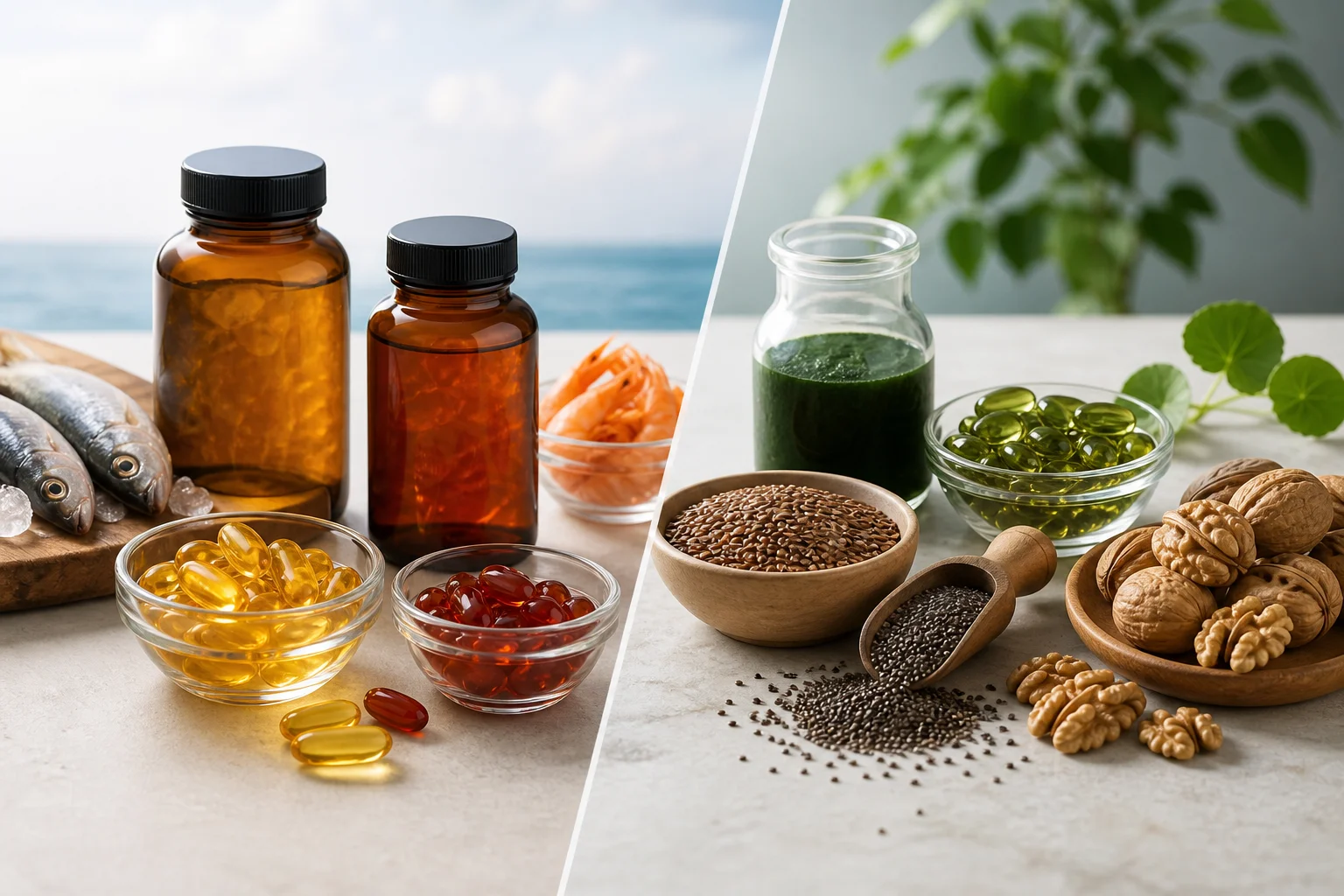
Quick answer: DHA is not inherently vegan or non-vegan. It is a specific omega-3 fatty acid that can be supplied by fish oil, krill oil, or cultivated microalgae. Fish- and krill-derived DHA are not vegan; verified algal DHA can be. A label that says only "DHA" or "omega-3" may not identify the source, and the capsule, carrier, flavor, and full product still need review.

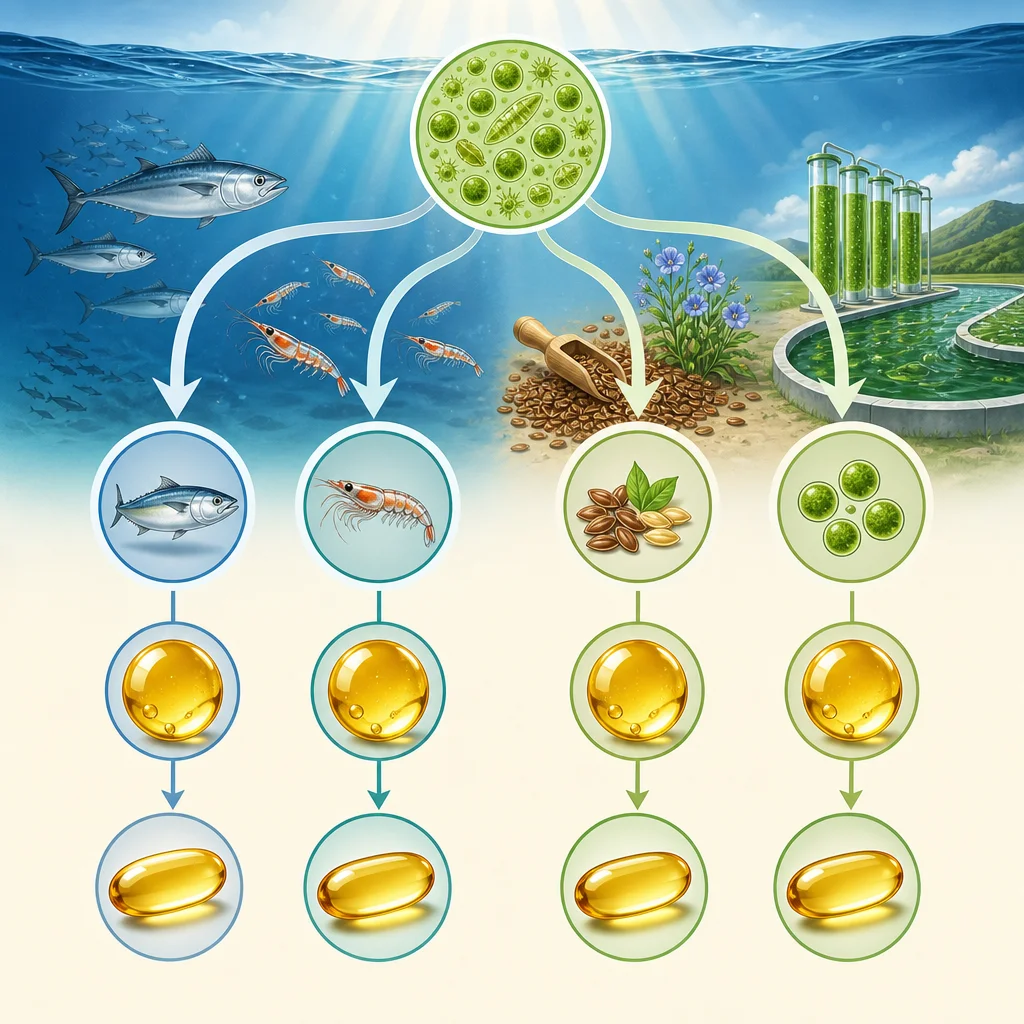
DHA is often marketed through fish imagery because fatty fish are familiar dietary sources. Fish do not create the entire marine omega-3 story from nothing. Microalgae produce long-chain omega-3s, which then move through aquatic food webs. Manufacturers can cultivate those microorganisms directly and formulate algal oils without using fish.

That creates a genuine vegan option, but not every plant-looking omega-3 product uses it. Source words on the package matter.
DHA, EPA, and ALA Are Different

Omega-3 is a family name, not one ingredient. Three abbreviations appear most often:

Omega-3Full nameCommon sources
ALAalpha-linolenic acidflax, chia, walnuts, canola, soy
EPAeicosapentaenoic acidfish oil, krill oil, some algal oils
DHAdocosahexaenoic acidfish oil, krill oil, algal oil

The body can convert some ALA to EPA and DHA, but conversion is limited and variable. That nutrition question is different from the source question. A vegan product can provide ALA from seeds or preformed DHA/EPA from microalgae.

The NIH consumer omega-3 fact sheet distinguishes these forms and common food sources. When comparing products, read the actual milligrams of DHA and EPA rather than assuming that "1,000 mg oil" means 1,000 mg of active long-chain omega-3.

Fish Oil and Krill Oil Are Not Vegan

Fish oil is produced from fish tissues. Common sources include anchovies, sardines, mackerel, tuna, and other species, depending on the product. Krill oil comes from small crustaceans. Both are animal-derived.

The U.S. food rule for menhaden oil provides a clear official example of oil prepared from fish and discusses its EPA and DHA content. That does not mean every fish-oil product uses menhaden; it shows why the fatty-acid abbreviations alone cannot replace the source ingredient.

Marketing terms such as "marine omega-3," "ocean-sourced," or "natural triglyceride form" may describe fish, krill, or algae. They do not independently establish vegan suitability.

A vegetarian standard may also exclude fish and krill even when a pescatarian diet permits them. Use the standard you actually follow rather than treating "not red meat" as equivalent to vegetarian.

Algal DHA and EPA Can Be Vegan

Algal DHA and EPA Can Be Vegan

Algal oil is produced from cultivated microalgae. Depending on the strain and process, it can provide DHA alone or a combination of DHA and EPA. The oil is purified and formulated for supplements, fortified foods, infant formula, or other nutrition products.

EFSA has separately evaluated DHA- and EPA-rich oil from Schizochytrium, documenting an official non-fish route for these same fatty acids. Product specifications still differ, so do not infer an exact DHA-to-EPA ratio from the word "algal."

Direct algal production avoids fish as the omega-3 source. For strict vegan verification, also consider the cultivation medium, processing aids, antioxidants, carriers, and finished dosage form. Credible vegan certification or a detailed manufacturer statement can cover those layers.

Look for phrases such as:

  • algal oil
  • algae-derived DHA
  • microalgae oil
  • DHA from Schizochytrium species
  • vegan omega-3
  • plant-based DHA, supported by a specific algal source statement

"Plant-based" is less precise than "algae-derived" because algae are biologically distinct from plants and because marketing language can be broad. What matters is that the source is identified and verified as non-animal.

Where DHA and EPA Appear

Source checks apply beyond standalone supplement bottles:

  • omega-3 capsules and liquid oils
  • prenatal vitamins
  • infant formula and toddler nutrition products
  • fortified plant milk and juice
  • nutrition shakes, bars, and powders
  • eggs marketed as omega-3 enriched
  • margarine and spreads
  • gummies and chewable supplements
  • pet foods

An "omega-3 egg" remains animal-derived because it is an egg, regardless of what the hen was fed. A plant milk with added DHA can be vegan if the DHA and the rest of the formula are verified. Product context comes before ingredient shortcuts.

The Capsule Can Change the Answer

Many fish-oil products use gelatin softgels. Some algal-oil products also use gelatin unless they are specifically formulated for vegetarians or vegans. The oil source and capsule source are independent decisions.

Check for capsule materials such as:

  • gelatin, which is animal-derived unless a specific non-mammalian source is relevant to another dietary standard
  • fish gelatin, which is not vegan
  • modified starch, carrageenan, or cellulose-based shells, which can support vegan formulations
  • glycerin, which may be plant, animal, microbial, or synthetic and should be source-verified

The glycerin and E422 guide explains why "vegetable glycerin" is stronger evidence than an unqualified glycerin listing.

Fish Allergy and Vegan Status Are Separate

Fish Allergy and Vegan Status Are Separate

An algal oil can provide a non-fish option, but allergy decisions require product-specific controls, including cross-contact and facility information. A vegan claim does not automatically mean a product is tested or controlled for fish allergens.

Likewise, a highly purified fish oil may be discussed differently in clinical allergy contexts, but it remains animal-derived and therefore not vegan. Do not use an allergen statement to answer an ethical sourcing question, or a vegan logo to answer a medical allergy question.

People with fish or shellfish allergies should follow clinician guidance and the manufacturer's allergen information. The fish-allergy dietary guide covers the broader label context.

A Practical Verification Ladder

1. Find the source noun

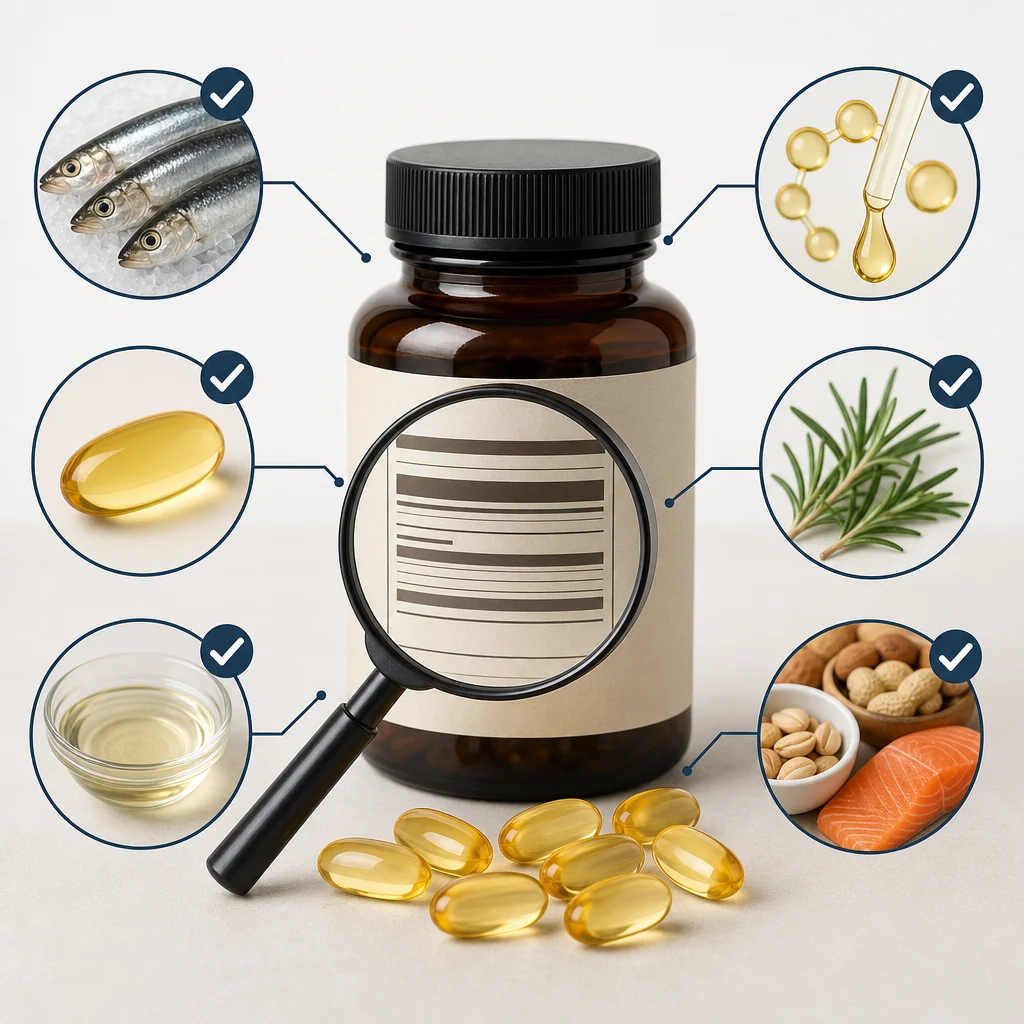
Look for "fish oil," a named fish species, "krill oil," "algal oil," or a named microalga. "DHA," "EPA," and "marine oil" alone may be insufficient.

2. Read the amount correctly

Separate total oil weight from the listed DHA and EPA amounts. This helps compare products without confusing vegan status with potency.

3. Inspect the delivery system

Review the capsule, gummy, flavor, antioxidant, and carrier. A lemon-flavored algal softgel can still use gelatin or an ambiguous flavor system.

4. Verify the exact product

Prefer a credible vegan certification or official manufacturer statement that applies to the exact formula and country.

5. Ask a complete question

Use wording such as:

Are the DHA and EPA in this product derived exclusively from microalgae, and are the cultivation inputs, processing aids, carrier, antioxidants, flavor, and capsule free from animal-derived materials?

If allergy is relevant, ask a separate question about fish and shellfish cross-contact controls.

Common Questions

Is all DHA made from fish?

No. DHA can be produced from cultivated microalgae and used directly in supplements and fortified foods.

Is algae vegan?

Algae are not animals. Algae-derived oil can fit a vegan diet when the production system and finished product do not introduce animal-derived materials.

Is algal DHA as real as fish DHA?

Yes. DHA describes a molecule, not a marketing category. Source, concentration, formulation, contaminants, oxidation control, and clinical purpose are separate product-quality questions.

Does "vegetarian omega-3" always mean vegan?

No. A vegetarian formula may allow ingredients that a vegan standard excludes, such as dairy-derived carriers, beeswax, or certain processing materials. Read the published certification criteria.

Is flaxseed oil a direct DHA source?

Flaxseed oil is rich in ALA, not preformed DHA. The body can convert a portion of ALA through metabolic steps, but a label should not present ordinary flax oil as though it directly contains the same DHA quantity as algal or fish oil.

Should everyone take DHA?

Supplement need and dose depend on diet, life stage, pregnancy, health conditions, medications, and clinical goals. Use professional guidance for personal decisions, especially for children, pregnancy, anticoagulant use, or high-dose products.

The Best Decision Rule

Treat "DHA" as a nutrient identity that requires a source noun. Fish oil and krill oil are not vegan. Verified algal DHA or EPA can be vegan, provided the capsule and full formula also meet the standard.

This avoids two common errors: assuming all marine omega-3 is fish-derived and assuming every algae-marketed supplement is fully vegan. The strongest evidence covers the oil, processing, and finished product.

What Useful Documentation Looks Like

A strong algal-oil statement names the organism or clearly states that the DHA and EPA are produced from cultivated microalgae without fish or krill inputs. It should also cover the finished dosage form. "The active oil is algae-derived" is helpful, but it leaves a gelatin softgel unresolved.

For a supplement, check the oil specification, capsule composition, carrier, antioxidant system, flavor, certification scope, and manufacturing date. For a fortified food, check whether the statement applies to the complete vitamin or lipid premix used in the current market formula. A generic corporate sustainability page is weaker than a product-specific origin statement.

Purity and contaminant testing matter for product quality, but they do not replace source documentation. A certificate showing oxidation or heavy-metal limits cannot prove vegan origin. Conversely, a vegan logo does not tell you the precise DHA dose or whether a supplement is clinically appropriate. Keep origin, quality, dose, and personal medical suitability as separate decisions.

Use the complete vegan label-reading guide or vegetarian hidden-ingredient guide for related capsule, vitamin, and flavor questions.

IngrediCheck can identify DHA, EPA, fish oil, krill oil, and algal oil in the declared formula and compare them with your saved rules. Use the vegan ingredient checker or vegetarian ingredient checker to organize the label review, then use current certification or manufacturer documentation when the source or production system remains unclear.

Next Label Check

Follow the scanner, hub, and ingredient paths connected to this guide

Get the app for clearer label decisions.

Scan labels, see what fits your food notes, and read the why in plain English.

IngrediCheck app