Ingredient FAQs

Is Glycerin Vegan? Glycerol and E422 Sources Explained

Glycerin can come from vegetable oils, animal fats, fermentation, or synthetic production. Learn what E422 reveals and how to verify its source.

Jul 21, 2026|9 min read
By Sanket Patel|Updated 2026-07-21|4 sources|Editorial standards
Is Glycerin Vegan? Glycerol and E422 Sources Explained

Quick answer: Glycerin is sometimes vegan, but the name alone does not prove it. Glycerin, glycerine, glycerol, and E422 can describe the same basic substance. Commercial glycerin may be made from vegetable oils, animal fats, microbial fermentation, or synthetic raw materials. A label that says "vegetable glycerin" or a credible vegan certification gives stronger evidence than an unqualified "glycerin" listing.

The ambiguity comes from a simple mismatch. Ingredient labels identify what a substance is, while vegans and vegetarians often need to know how it was made. Once glycerin has been purified, its chemical identity does not disclose whether its carbon came through coconut oil, palm oil, tallow, fermentation, or an industrial synthesis route.

That makes glycerin a good example of a source-dependent ingredient. It should not be treated as automatically animal-derived, but it should not be declared vegan without evidence either.
Glycerin, Glycerol, Glycerine, and E422

Glycerin, Glycerol, Glycerine, and E422

Glycerin is the common commercial name for glycerol. "Glycerine" is an alternate spelling, and E422 is the additive number used in Europe and on many international labels. The PubChem glycerol record identifies the molecule as propane-1,2,3-triol, a small alcohol with three hydroxyl groups.

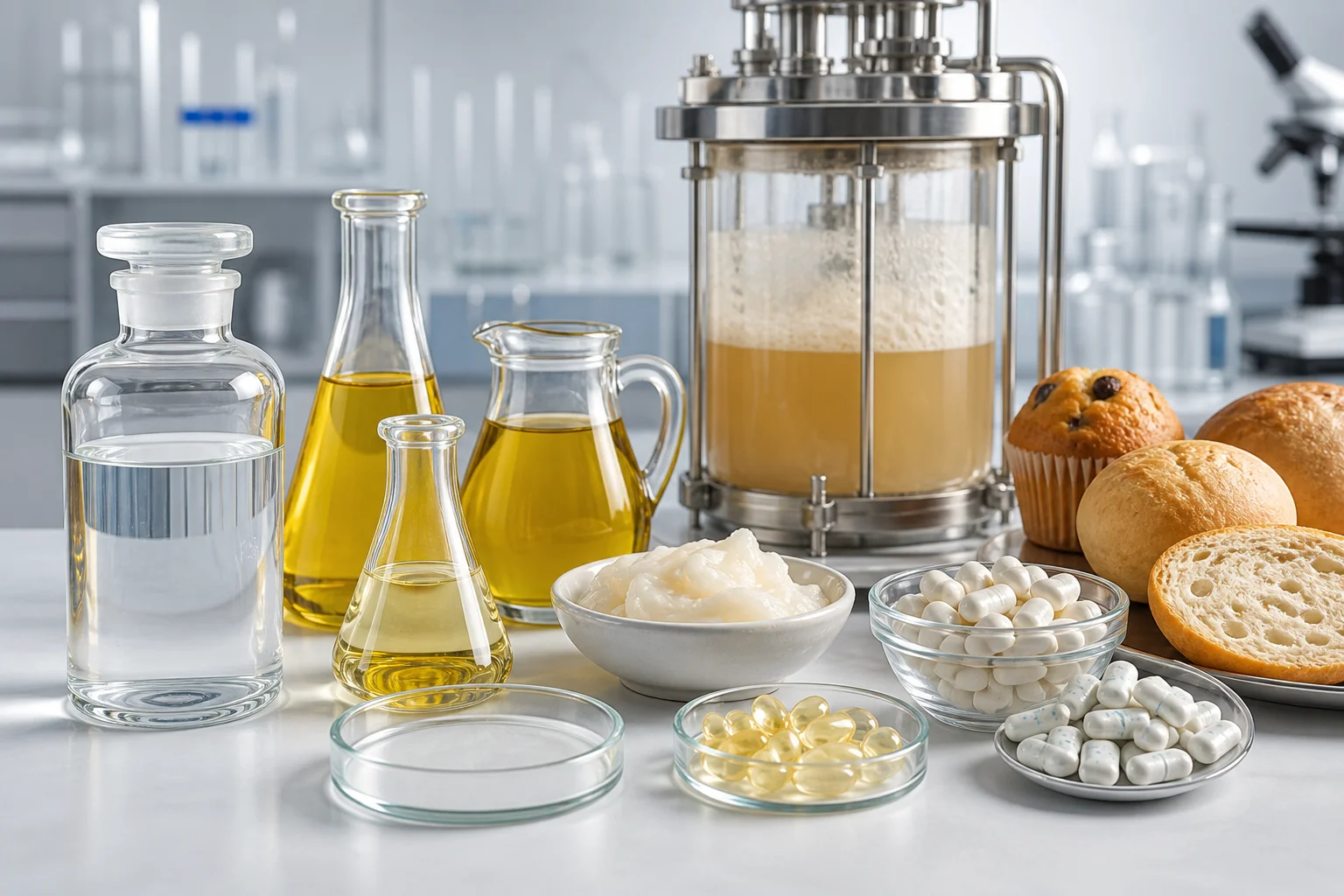
Those hydroxyl groups attract water. In food, glycerin can act as a humectant, solvent, carrier, texture aid, and mild sweetener. It helps soft products retain moisture, keeps some fillings smooth, and carries flavors or colors evenly through a formula.

You may find it in:

  • soft cakes, cookies, fondant, and icing
  • chewing gum, candy, and protein bars
  • dried fruit and fruit preparations
  • flavor concentrates and food colors
  • supplements, capsules, syrups, and oral-care products
  • some frozen drinks and reduced-sugar foods

The US rule for glycerin recognizes food-grade glycerin under good manufacturing practice. That rule addresses identity and permitted use. It is not a vegan sourcing standard.

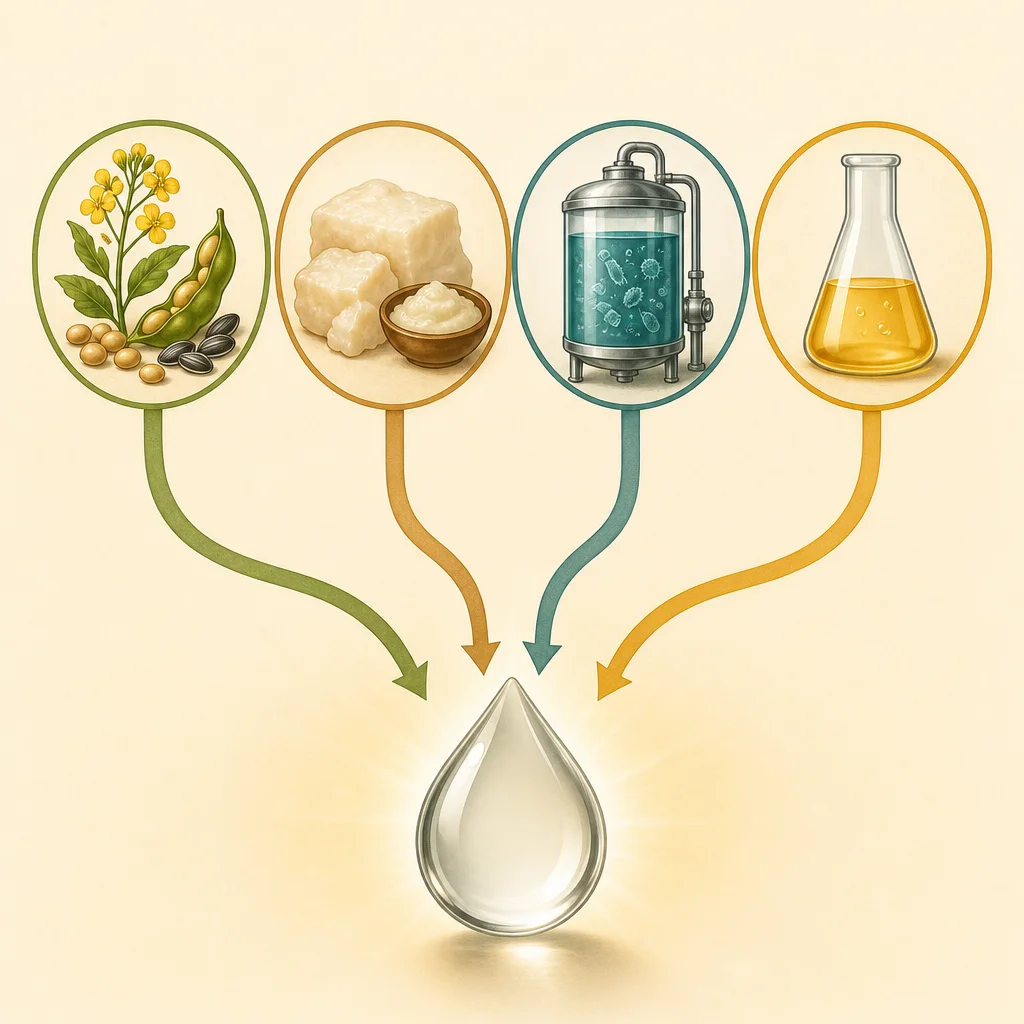
Four Routes Can Lead to the Same Ingredient

Vegetable oils

Much commercial glycerin is recovered while processing plant oils. Splitting triglycerides into fatty acids and glycerol, making soap, and producing biodiesel can all yield glycerin as a co-product. Soybean, rapeseed, sunflower, palm, and coconut oils are possible starting materials.

A clearly stated "vegetable glycerin" claim is useful because it identifies the raw-material class. It still does not answer separate questions about palm sourcing, genetic modification, or shared equipment. Those are different purchasing standards.

Animal fats

Animal fats are triglycerides too. When tallow or another animal fat is hydrolyzed or processed, glycerol can be separated and purified. The finished glycerol molecule is not visibly marked as animal-derived. An ordinary ingredient panel can therefore list it with exactly the same name as plant-derived glycerin.

This is the route that creates the vegan and strict-vegetarian concern. It does not mean every glycerin supply uses animal fat. It means the generic name leaves the possibility unresolved.

Fermentation

Microorganisms can produce glycerol while metabolizing carbohydrates. A fermentation-derived supply may be acceptable to vegans when the growth medium, processing aids, and downstream ingredients also meet the relevant standard. The word "fermented" alone is not a complete certification because fermentation media can vary.

Synthetic production

Glycerol can also be made through chemical synthesis. A synthetic route does not begin with animal fat, but strict product verification may still review carriers, processing aids, or other ingredients in the finished formulation.

The practical lesson is that chemical identity and ethical origin are separate fields. The label usually gives the first and omits the second.

What E422 Tells You, and What It Does Not

E422 tells you that the ingredient is glycerol meeting the applicable additive specification. It helps shoppers recognize the same additive across countries and languages. It does not mean "vegetable glycerin," "animal glycerin," or "certified vegan glycerin."

The same limitation applies to a US ingredient list that says only "glycerin." Food labeling is designed mainly to identify ingredients by common or usual name and to disclose regulated allergens. Vegan origin is not a major-allergen category. A product can lack a milk, egg, or fish warning and still contain a slaughter-derived processing input.

Nor does "plant-based" on the front of a package settle every additive. That marketing language may describe the main ingredients or the product's positioning. A third-party vegan mark evaluates a more specific standard. For example, the V-Label criteria exclude animal-origin ingredients and animal-origin processing aids from vegan-certified products.

Is Vegetable Glycerin Always Vegan?

Vegetable glycerin is normally compatible with a vegan diet because its declared feedstock is plant oil. For a strict standard, consider whether the statement comes from the ingredient supplier, the product manufacturer, or an independent certification body.

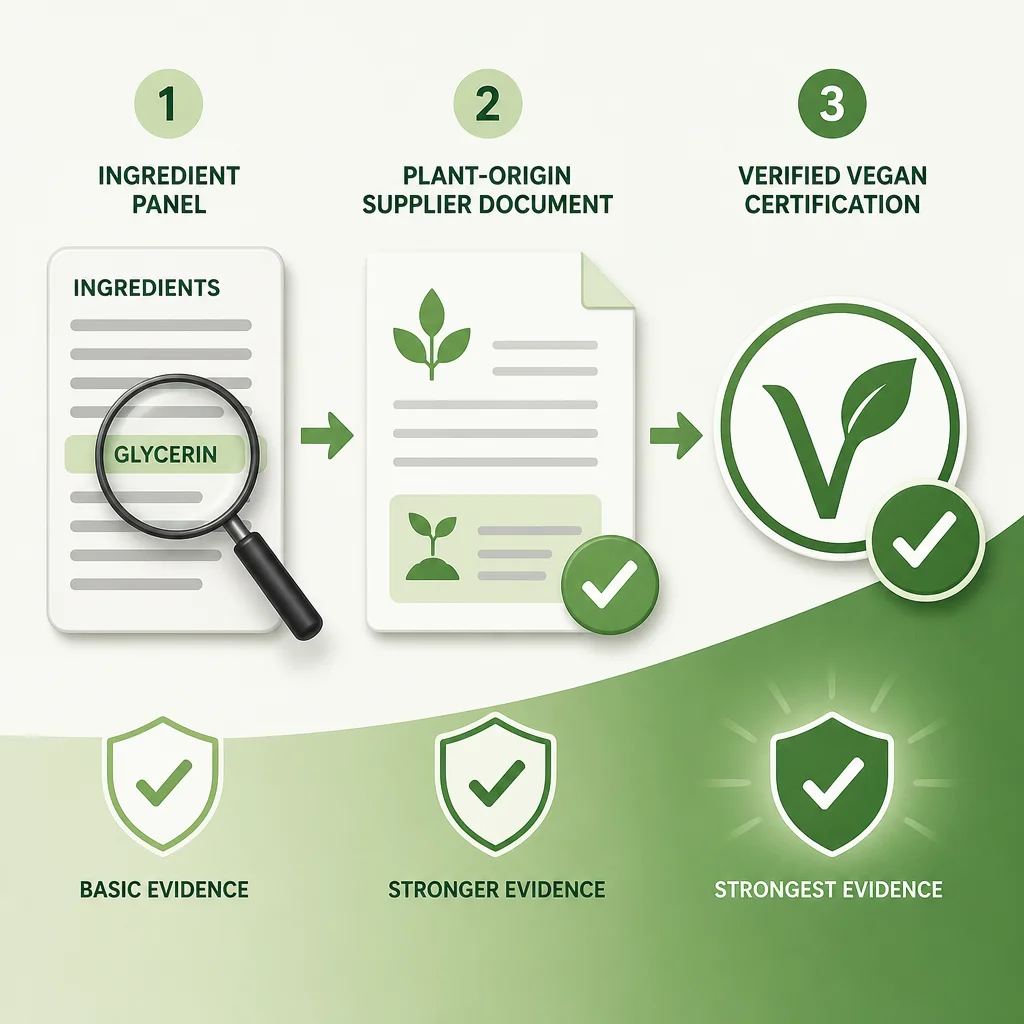
There are three levels of evidence:

  1. Generic ingredient name: "glycerin," "glycerol," or "E422" leaves origin unresolved.
  2. Source claim: "vegetable glycerin" or "plant-derived glycerol" directly addresses the feedstock.
  3. Product certification: a credible vegan mark evaluates the complete product and its production requirements, not just one ingredient.

Certification is product-specific. A vegan statement for one flavor or market does not automatically cover every formula sold by the same company.

Glycerin Is Not the Same as Mono- and Diglycerides

Glycerin Is Not the Same as Mono- and Diglycerides

The names sound related because both involve glycerol chemistry, but they are not interchangeable. Glycerin is the free three-carbon alcohol. Mono- and diglycerides are glycerol molecules attached to one or two fatty acids and are used mainly as emulsifiers.

Both can have plant or animal sourcing questions. Confirming that a product's glycerin is vegetable-derived does not prove that its mono- and diglycerides, stearates, enzymes, or flavors are vegan. Each ambiguous term needs its own answer.

The same separation matters for the existing glycerol slush-drink safety guide. That article addresses dose and acute risk for young children. Source verification is a different question. Plant-derived glycerol and animal-derived glycerol have the same dose-related properties.

A Practical Verification Ladder

1. Read the exact wording

"Vegetable glycerin" is meaningfully more informative than "glycerin." "E422" is only an additive identity. Do not infer origin from a green package, a natural claim, or the type of food.

2. Look for vegan certification

A recognized vegan mark is the fastest product-level evidence. Check that the seal applies to the exact product, size, flavor, and country where you are buying it.

3. Check the manufacturer's current information

Use the official product page, ingredient FAQ, or written support response. Retailer listings and old forum answers can lag behind a supplier change.

4. Ask a precise question

Use wording that covers more than the final molecule:

Is the glycerin or E422 in this product derived exclusively from plant, microbial, or synthetic non-animal sources, and are animal-derived processing aids excluded from its manufacture?

Also ask whether the answer applies to the current formula in your market. Save the date of the response.

5. Review the whole product

Glycerin may be resolved while another ingredient remains ambiguous. Check natural flavors, stearates, vitamin D3, enzymes, confectioner's glaze, carmine, and mono- and diglycerides independently.

Common Questions

Is glycerin dairy?

Glycerin is not inherently a dairy ingredient. It can be made from several kinds of fat or by non-fat routes. A dairy-allergen statement answers whether regulated milk allergen disclosure is required, not whether every input is vegan.

Is glycerin made from pork?

It can be made from animal fats, but a generic glycerin listing does not identify species and should not be assumed to be pork-derived. Shoppers following vegan, vegetarian, halal, or kosher rules should seek source documentation or relevant certification.

Is E422 always plant-based today?

No universal rule makes E422 plant-based. Plant-derived glycerin is widely available, but the additive number does not encode the feedstock.

Can a laboratory tell whether purified glycerin was animal-derived?

Routine product specifications usually establish identity, purity, water content, and contaminants. Supply-chain records and certification are more useful for origin verification because highly purified molecules from different routes can be chemically equivalent.

What Good Source Documentation Looks Like

A useful manufacturer answer should identify the permitted feedstock class, not merely repeat that glycerin is a food-grade ingredient. "Our glycerin meets E422 purity specifications" answers a regulatory question. "Our glycerin is produced only from vegetable oils and the specification excludes animal-derived processing aids" answers the vegan question.

Supplier documents may include a product specification, origin declaration, allergen statement, halal or kosher certificate, and vegan-suitability letter. These documents overlap, but they are not interchangeable. An allergen statement focuses on regulated allergenic proteins. A halal or kosher certificate applies a different religious standard. A vegan certificate directly addresses animal-origin ingredients and processing aids.

Also check the scope. A document for USP-grade glycerin used in cosmetics may not cover food-grade E422 supplied to a confectionery factory. A general corporate policy may not cover an acquired plant or backup supplier. Strong evidence names the ingredient grade, manufacturing site or approved source class, and current validity period.

This is why a short, precise customer-service exchange can be more valuable than a long article claiming that modern glycerin is "usually vegetable." Frequency does not identify the supply used in the package in your hand.

When a label lists glycerin, glycerol, glycerine, or E422, IngrediCheck can flag the term as source-dependent and help you review the rest of the formula against your saved preferences. Use the vegan ingredient checker or vegetarian ingredient checker, then confirm unresolved origin with the manufacturer or a trusted certification.

Next Label Check

Follow the scanner, hub, and ingredient paths connected to this guide

Get the app for clearer label decisions.

Scan labels, see what fits your food notes, and read the why in plain English.

IngrediCheck app