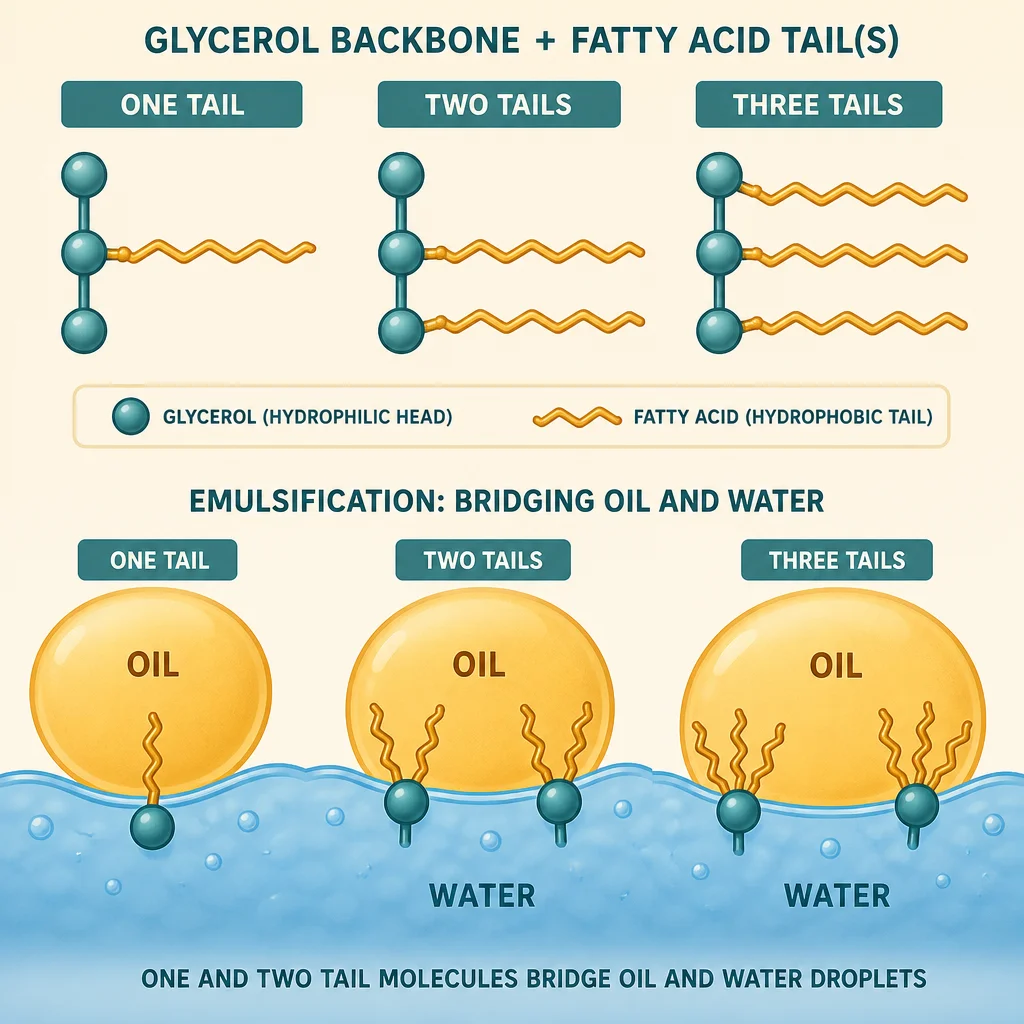
Quick answer: Mono- and diglycerides are not automatically vegan or vegetarian. They are emulsifiers made from glycerol and fatty acids. Those fatty acids may come from vegetable oils or animal fats, and an ordinary ingredient list usually does not disclose which source was used. A certified vegan mark or a direct answer from the manufacturer is more useful than the name alone.
Found E471 alongside other unfamiliar names? Check the full food ingredient list with the vegan checker, then ask the manufacturer about any unresolved sources. An ingredient check cannot establish the source of E471 from its name alone.
That ambiguity is frustrating because the ingredient looks like a precise chemical declaration. A shopper sees "mono- and diglycerides" or "E471" and reasonably assumes the name should settle the question. It does not. The name describes the structure and function of the additive, not the biological source of every raw material used to make it.
This guide explains what the ingredient does, why plant and animal versions can share the same label name, and how vegans and vegetarians can make a practical decision without treating every emulsifier as identical.