Ingredient Deep Dives

DATEM in Bread: E472e, Dough Strength, and Vegan Sources

Decode DATEM on bread labels, understand its dough-conditioning role, and separate ingredient sourcing from blanket claims about bans or safety.

Sep 5, 2026|8 min read
By Sanket Patel|Updated 2026-09-05|3 sources|Editorial standards
DATEM in Bread: E472e, Dough Strength, and Vegan Sources

DATEM is a bread emulsifier and dough conditioner, not another name for potassium bromate. Its longer name is diacetyl tartaric acid esters of mono- and diglycerides. On European-style labels it can appear as E472e. It helps a dough behave consistently during mixing, proofing, and baking.

The ingredient raises several reasonable questions. Why does a loaf need it? Does the fat used to make it come from plants or animals? Is an online claim about a European ban accurate? None of those questions can be answered simply by deciding that a long chemical name looks suspicious.

This is a DATEM-specific label guide, based on regulatory and scientific sources reviewed on September 5, 2026. It is not a general list of banned bread additives or a replacement for the existing guide to mono- and diglyceride sourcing.
The Short Answer Table

QuestionUseful answer
What is it?A mixture of esters used as a food emulsifier and dough conditioner
Which code identifies it?E472e; the final letter matters
Why is it in bread?To support dough strength and consistent processing
Is it a mold preservative?That is not its main bread-making role
Is it necessarily animal-derived?No; the name does not specify the edible-fat source
Does it certify a loaf as vegan?No; sourcing and the rest of the recipe still matter
Is it the same as bromate?No, the chemistry and regulatory questions are different

The U.S. regulation 21 CFR 184.1101 identifies DATEM and explicitly permits the acronym as an alternative common or usual name on labels. A short acronym is therefore not necessarily an attempt to hide a substance. It can be the recognized way to name it.

Why Industrial Bread Uses a Dough Conditioner

Why Industrial Bread Uses a Dough Conditioner

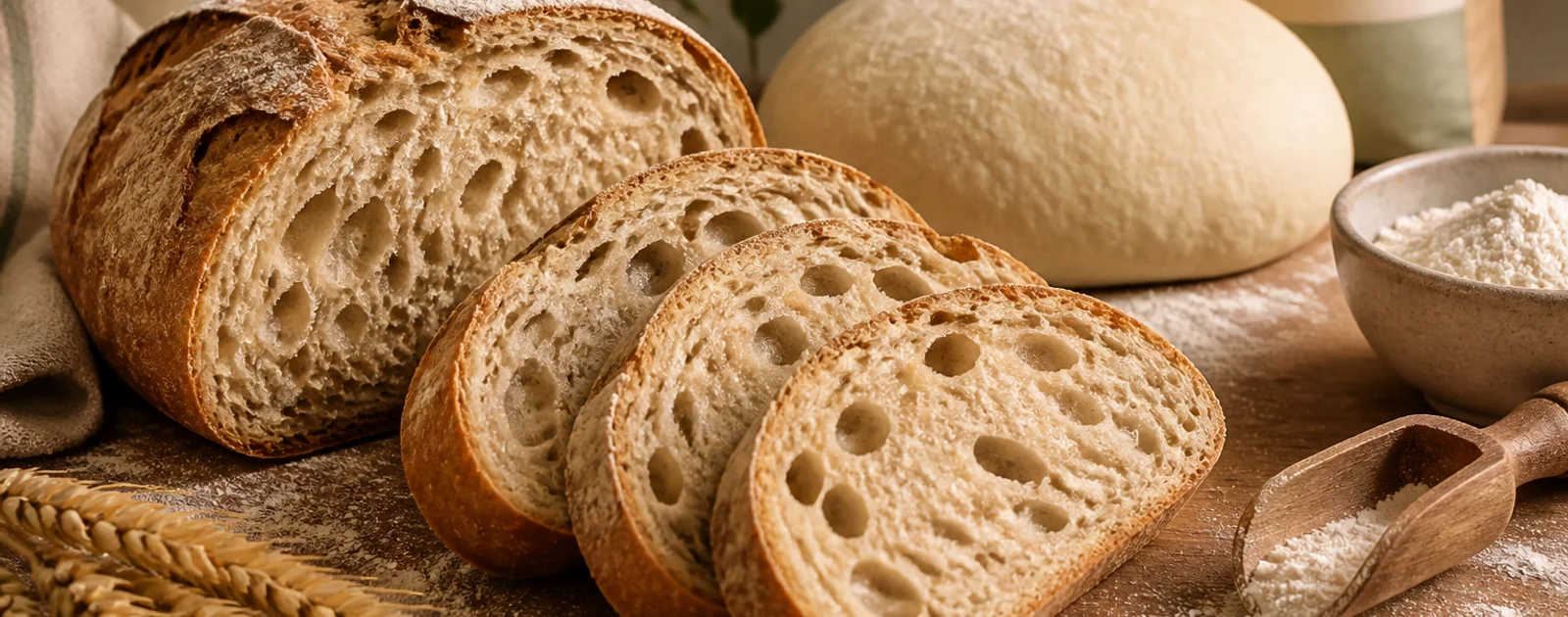
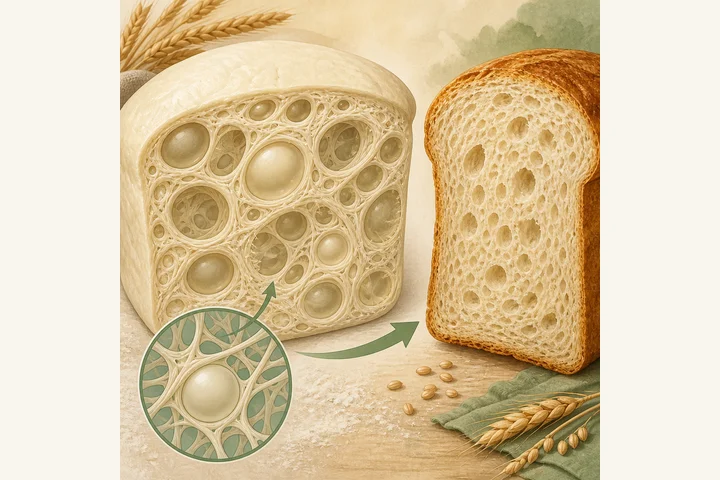
Bread dough must hold gas while yeast works and while the loaf expands in the oven. It also has to survive real manufacturing conditions: mixing, dividing, conveying, shaping, proofing, and baking. Small differences in flour or handling can affect the result.

DATEM helps formulators manage the dough system. A useful mental picture is reinforcement of how the dough network functions, rather than an ingredient that somehow replaces flour or yeast. Better gas retention and more consistent handling can support loaf volume and crumb structure.

That does not mean home bakers need to add it. A home recipe and a high-throughput bakery solve different production problems. A short fermentation schedule, a particular flour, and automated handling may call for a different formulation than a small batch of dough shaped by hand.

Nor does DATEM tell you whether the finished bread is whole grain, high in fiber, lower in sodium, or suitable for a wheat allergy. Those properties depend on other ingredients and the nutrition panel. Technological function and nutritional quality are separate dimensions of the same product.

Keep the E472 Letter and the Full Name

E472 is a family, not a single interchangeable additive. EFSA's assessment of E472a-f describes several related esters with different acid components. DATEM corresponds to E472e. Dropping the final letter can turn a precise question into a question about the wrong member of the family.

Common descriptions include DATEM, diacetyl tartaric acid esters of mono- and diglycerides, and mono- and diacetyltartaric acid esters of mono- and diglycerides of fatty acids. The long wording reflects a mixture of related molecules, not a single source declaration.

The U.S. rule says the mono- and diglycerides are derived from edible sources. Edible does not mean exclusively vegetable. That is the point at which a dietary sourcing question becomes relevant. The name explains what the additive is; it does not list the supplier's feedstocks.

If a label separately lists mono- and diglycerides and DATEM, do not delete one as a duplicate. They may represent two distinct additions to the formulation. Our source guide addresses the parent ingredient; this article addresses the modified emulsifier and its bakery role.

Vegan, Vegetarian, Halal, and Kosher Questions

DATEM can be produced with plant-derived ingredients. It is not automatically proof of animal fat in a loaf. But a label that says only "DATEM" generally does not establish which fat source was used, whether suppliers can change, or which certification applies.

For a source-sensitive household, the most helpful evidence is a current certification or a clear product-specific manufacturer statement. Ask about the mono- and diglyceride and fatty-acid inputs used in DATEM, rather than whether the loaf contains "chemicals." Include the product name, country of sale, and package photograph.

Halal and kosher questions may involve more than plant-versus-animal origin. Certification can cover processing and the wider formulation, and households may accept different certifiers. A general online statement about DATEM cannot replace that standard.

After resolving DATEM, read the rest of the bread label. Eggs, milk, honey, butter, cheese, and other ingredients may determine whether the finished product fits your preferences. A confirmed plant-derived emulsifier does not make an enriched milk bread vegan.

Where confirmation is unavailable, "source unspecified" is an honest outcome. It is different from "contains animal fat" and different from "verified vegan." Maintaining those categories is especially useful when comparing several loaves instead of trying to force every uncertainty into a yes-or-no claim.

Is DATEM Banned in Europe?

No blanket EU ban applies to E472e. EFSA's 2020 reassessment discusses its use as an authorized additive and the evidence relevant to that use. The existence of a reassessment is not evidence of a ban; reassessment is part of keeping food-additive evaluations current.

The U.S. regulation affirms DATEM as generally recognized as safe under the stated conditions, including current good manufacturing practice. That does not authorize unlimited use for any purpose. European permissions likewise depend on applicable food categories and conditions.

A supermarket can set a private exclusion policy stricter than the legal requirements. A baker can also remove DATEM for recipe, marketing, or sourcing reasons. Neither action establishes that a government has prohibited it. Ask whether the claim refers to law, a proposed law, certification, or one retailer's specification.

Do not copy the regulatory history of potassium bromate or azodicarbonamide onto DATEM. Their names may appear in the same discussion of bread, but they are different ingredients with different legal and scientific records.

What Emulsifier Research Can and Cannot Establish

Food-additive research includes animal studies, laboratory systems, observational studies of people's diets, and controlled human experiments. These methods answer different questions. A change in a laboratory gut model does not establish that a slice of bread causes disease in a person.

A study of emulsifiers and human gut microbiota in an experimental system illustrates why the method matters. Such work can identify mechanisms worth investigating. It cannot independently set an individual clinical diagnosis or identify the cause of symptoms after a mixed meal.

Equally, regulatory permission should not be rewritten as a promise that every person tolerates every formulation. A bread contains flour, fibers, proteins, and other ingredients alongside DATEM. Someone who notices a recurring problem needs to distinguish those exposures rather than automatically assign it to the least familiar word.

If you prefer to avoid DATEM while the science develops, that is a legitimate purchasing preference. You can apply it without claiming that every DATEM-containing loaf is unsafe or that every substitute is better supported by evidence.

Comparing Two Loaves Fairly

Comparing Two Loaves Fairly

Start with the requirement that matters most. For vegan sourcing, confirmation of the emulsifier's origin matters. For sodium intake, compare the nutrition facts for an equivalent amount of bread. For celiac disease, a loaf made with wheat does not become suitable because it is DATEM-free.

An illustrative comparison shows the problem with one-ingredient scoring:

Fictional loafWhat you knowWhat remains to check
Whole-wheat loaf with DATEMIncludes this emulsifierSource if relevant, sodium, allergens, serving size
White loaf without DATEM but with milkMeets DATEM-avoidance preferenceDoes not meet a vegan preference; other nutrition criteria
Certified vegan loaf with DATEMCertification addresses its stated vegan standardOther household preferences and current label

These examples are not a product ranking. They show why the best choice changes with the question. Removing DATEM can be useful for someone avoiding DATEM, but does not by itself improve every other property of bread.

A Bakery-Aisle Checklist

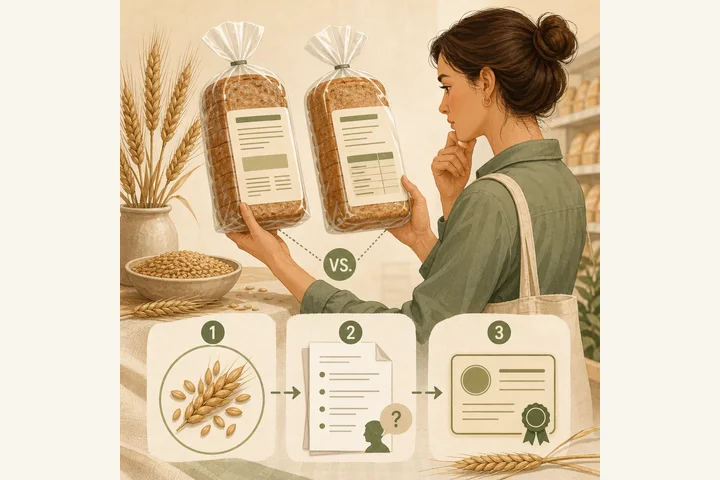
  1. Read the complete ingredient panel, including dough improvers and compound ingredients.
  2. Look for DATEM, its full name, and E472e rather than E472 alone.
  3. Separate sourcing preferences from nutrition goals and allergen requirements.
  4. Check any relevant vegan, halal, or kosher certification on the current product.
  5. Ask the manufacturer a product-specific feedstock question if the answer matters and is not documented.
  6. Compare the remaining ingredients and nutrition at the same serving size.
  7. Recheck when the package, market, or recipe changes, even if the brand name stays familiar.

For additional context, visit the bread-additives hub, the vegan checker, and the vegetarian checker. Religious sourcing preferences have their own halal and kosher tools. Keep these as separate rules rather than one vague "clean bread" category.

IngrediCheck can flag DATEM or E472e against your saved preferences and help organize the other listed ingredients. It cannot infer an undisclosed animal or plant feedstock or replace a certifier. When the label leaves a sourcing question unanswered, use that result to request the missing evidence rather than treating uncertainty as a guarantee.

Frequently Asked Questions

What is DATEM in bread?

DATEM is an emulsifier and dough conditioner made from diacetyl tartaric acid and mono- and diglycerides from edible sources. It is also called E472e and helps bread dough perform consistently.

Is DATEM vegan?

DATEM can be made using plant-derived inputs, but the ingredient name does not identify the fatty-acid source. A relevant certification or manufacturer confirmation is needed when source certainty matters.

Is DATEM banned in Europe?

No blanket EU ban applies to E472e. It is an authorized additive subject to food-specific conditions; EFSA reassessed E472a-f in 2020. Retailer exclusions are not regulatory bans.

Is DATEM the same as potassium bromate?

No. DATEM is an emulsifier and dough conditioner; potassium bromate is a different flour-treatment agent with a different regulatory history. One ingredient's status cannot be transferred to the other.

Next Label Check

Follow the scanner, hub, and ingredient paths connected to this guide

Get the app for clearer label decisions.

Scan labels, see what fits your food notes, and read the why in plain English.

IngrediCheck app