Ingredient Deep Dives

Gellan Gum in Plant-Based Milk: Uses and Vegan Status

Find out why plant-based drinks use gellan gum, what fermentation means for vegan sourcing, and how to compare cartons without confusing stability with nutrition.

Sep 5, 2026|8 min read
By Sanket Patel|Updated 2026-09-05|3 sources|Editorial standards
Gellan Gum in Plant-Based Milk: Uses and Vegan Status

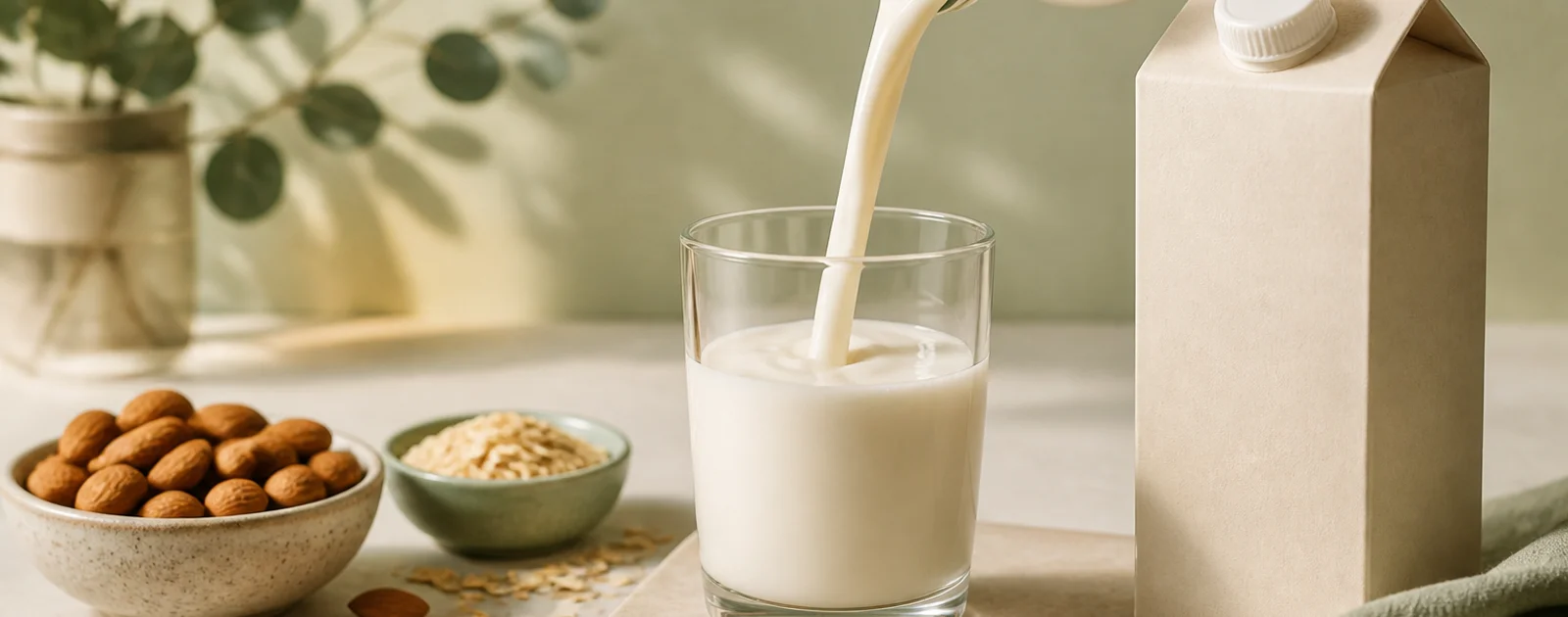
Gellan gum helps keep a plant-based drink evenly mixed. It is a fermentation-produced polysaccharide used as a stabilizer or gelling agent, and its additive number is E418. It is not gelatin, despite the similar sound, and its presence does not mean that a drink contains an animal-derived gel.

The more useful question is what it does in the carton you are choosing. Almond, oat, soy, and other plant drinks contain particles, water, and sometimes added oils or minerals. Those components do not necessarily stay evenly dispersed during storage. A small amount of a suitable stabilizer can help manage that problem.

This guide focuses on choosing and reading plant-based drinks. It uses regulatory assessments and technical sources reviewed on September 5, 2026, rather than a brand ranking or a claim that every gum-free product is better.
Gellan Gum at a Glance

Label questionWhat the evidence supports
What is gellan gum?A polysaccharide made by microbial fermentation
What is its E-number?E418
Is it animal gelatin?No, those are different ingredients
Why is it in plant milk?To help control texture, gel formation, or suspension
Does it provide calcium or protein?Its stabilizing role does not establish nutrient content
Does it make a product dairy-free?No; read the whole recipe and allergen information
Is it banned in the EU?No blanket ban applies; use conditions and specifications matter

In 21 CFR 172.665, the U.S. rule describes the fermentation process, identity, and specifications of food-grade gellan gum. It also requires a process that leaves the additive free of viable cells of the production organism. The food ingredient is not a carton of living fermentation bacteria.

Why Plant-Based Drinks Separate

Why Plant-Based Drinks Separate

A plant drink is more complicated than water with a flavor added. Ground or extracted plant material contributes dispersed particles. Fortification can introduce minerals that are not straightforward to keep in suspension. Oils and proteins add other formulation challenges.

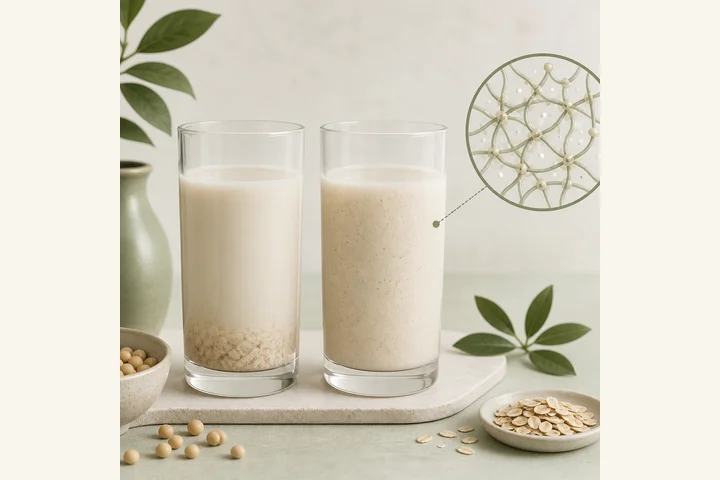
Left unmanaged, some components can settle, form layers, or create an uneven mouthfeel. A drink can be perfectly usable while needing shaking, but manufacturers also want consistency from the first pour to the last. The aim may be suspension rather than obvious thickness.

Gellan can form a weak supporting network within the liquid. At an appropriate formulation and concentration, that network helps hold particles while allowing the drink to pour. A stabilizing system therefore need not make the drink feel gummy or turn it into a solid gel.

The regulatory description identifies gellan as a stabilizer and thickener, with performance dependent on its formulation. That is a technological role, not a claim of superior nutrition or health outcomes. A suspension system can improve consistency while leaving the separate questions of protein, sugar, and fortification unanswered.

Temperature treatment, acidity, mineral content, processing, and the rest of the recipe influence performance. If a plant drink splits in hot coffee, the cause is not automatically gellan. Coffee acidity, heat, and protein behavior can all matter, and a barista-style formulation may differ from the same brand's ordinary drink.

How Fermentation Fits With Vegan Sourcing

EFSA's gellan assessment describes production by fermentation of a carbohydrate using a bacterial culture, followed by recovery and purification. Gellan is a carbohydrate polymer, not collagen extracted from animal tissues.

That makes "gellan means gelatin" a poor rule for vegan shopping. Similar names are not evidence of similar origin. The ingredient itself is generally compatible with vegan diets; animal gelatin is a different substance with a different sourcing question.

For consumers who require a formal vegan standard, certification still matters at the product level. The word gellan does not disclose every fermentation medium component, processing aid, or ingredient in the finished beverage. A certifier or manufacturer can address those details when necessary.

This is not a reason to assume undisclosed animal material is present. It is a reason to distinguish an ingredient's established identity from a verified claim about an entire supply chain. "Compatible by ingredient identity" and "certified under my chosen standard" are related but different statements.

The same carton may also include vitamin D3, flavorings, or other ingredients whose source deserves its own check. Our vitamin D3 source guide explains why the name cholecalciferol alone does not identify its production source.

Gellan, Guar, Xanthan, and Carrageenan Are Different

Several stabilizers can occupy the same place in a shopper's mental category of "gums." Their identities should not be collapsed into one.

IngredientCommon codeKey distinction for this comparison
Gellan gumE418Fermentation-derived polysaccharide used for suspension and gel control
Guar gumE412Derived from guar seed endosperm; a different thickener
Xanthan gumE415A different fermentation-derived polysaccharide with different flow behavior
CarrageenanE407Derived from red seaweed; not another name for gellan
GelatinNot E418Animal collagen-derived protein, not gellan gum

An article about carrageenan does not establish the effects of gellan. A human study of another emulsifier also cannot be relabeled as a gellan trial. Research needs to match the specific ingredient, preparation, dose, and population before it can support a strong claim.

For those other ingredients, see the existing guar gum explainer, xanthan gum guide, and carrageenan article. This guide does not attempt to rank them from universally best to worst.

What the Safety Assessment Actually Says

EFSA's 2018 review concluded that a numerical acceptable daily intake was not needed and that the reported uses and use levels did not raise a safety concern under its refined exposure assessment. That is more specific than either "all gums are harmful" or "unlimited amounts are safe."

The review also identified specification issues for improvement. Purity requirements and manufacturing controls remain important even when the exposure assessment is reassuring. An additive's identity includes a food-grade specification, not just a name written on a container.

The U.S. regulation allows defined food uses under good manufacturing practice and other stated conditions. A permission for an additive does not waive standards of identity for a particular food. Neither the U.S. rule nor EFSA's evaluation is an instruction to choose a carton solely because it contains gellan.

If you notice discomfort after a plant drink, avoid diagnosing the cause from the ingredient that sounds least familiar. The serving size, sweeteners, fibers, protein source, and other meal components can matter. Repeated symptoms deserve a careful, individualized assessment rather than a universal conclusion about E418.

Gum-Free Does Not Automatically Mean Nutritionally Better

Gum-Free Does Not Automatically Mean Nutritionally Better

Imagine two fictional oat drinks. One has gellan and is fortified with calcium and vitamins. The other has a shorter ingredient list but no added calcium. A preference for fewer stabilizers may favor the second; a goal of replacing a meaningful dietary calcium source may lead to a different decision.

That is not an argument that every fortified drink needs gellan. Different products use different stabilization systems. It is a reminder to compare what the package actually says rather than infer nutritional equivalence from a shared oat or almond image on the front.

Look at protein, calcium, vitamin D, added sugars, and serving size when those are relevant to your diet. The number of ingredients does not reliably summarize all of those properties. A smooth texture also does not tell you whether a drink contains much of the plant named on the carton.

Dairy-Free and Allergy Questions Need Their Own Check

Gellan does not mean dairy, but a product containing gellan is not automatically suitable for someone with a milk allergy. Check the complete ingredient list, allergen declarations, and relevant cross-contact information. Almond and soy drinks introduce their own allergen considerations.

The FDA's food-allergen overview explains major allergen source declarations on regulated packaged foods. A vegan claim and an allergen risk assessment are not interchangeable. Manufacturing information may still matter even when every deliberately added ingredient fits a vegan preference.

Our dairy-free versus lactose-free comparison explains another common source of confusion. A lactose-free dairy drink can still contain milk proteins. Gellan's presence or absence does not change that distinction.

A Carton-Comparison Checklist

  1. Identify the drink's plant base and check whether it conflicts with an allergy or preference.
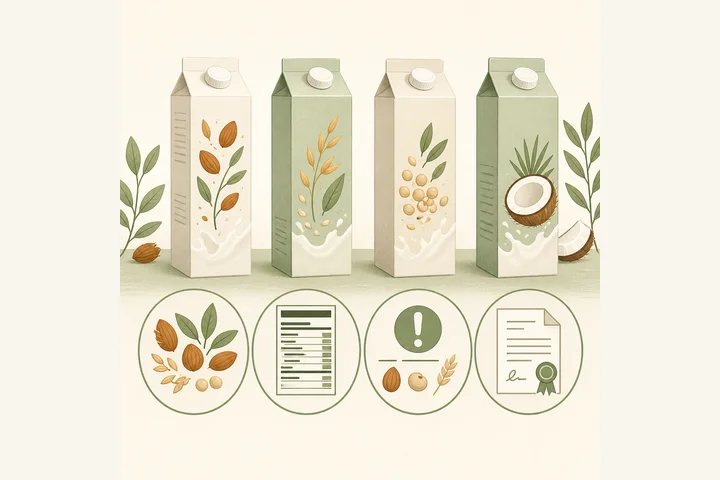
  2. Find gellan gum or E418 in the full ingredient list, not just the front-panel claims.
  3. Decide whether avoiding gellan is actually one of your rules. Do not invent a restriction from an unfamiliar name.
  4. Compare relevant nutrients at equivalent serving sizes, especially when replacing a regular dietary staple.
  5. Check vegan certification or ask about manufacturing details when your standard requires that evidence.
  6. Read storage and shaking instructions. A stabilizer does not replace refrigeration requirements after opening.
  7. Recheck the label when a product is reformulated or purchased in another country.

If gellan is your only concern, a gum-free alternative can be a reasonable preference-based choice. If your concern is dairy, vegan sourcing, or nutrition, evaluate those directly. The strongest shopping decision is the one that answers your actual question with the right evidence.

IngrediCheck helps compare the ingredient list with your saved vegan, vegetarian, or dairy-free rules. It can help flag gellan when you choose to avoid it, but it cannot certify fermentation inputs, measure cross-contact, or infer missing nutrient information from a smooth-looking drink.

Frequently Asked Questions

Why is gellan gum added to almond or oat milk?

Gellan gum helps stabilize the beverage and keep dispersed ingredients suspended. It can support an even texture without making a drink as thick as a pudding.

Is gellan gum vegan?

Gellan is a fermentation-produced polysaccharide, not animal gelatin. The ingredient is generally compatible with vegan diets, but a complete product's certification and other ingredients still need checking.

Is gellan gum the same as carrageenan?

No. Gellan is produced by microbial fermentation and is E418. Carrageenan comes from red seaweed and is E407. Findings about one should not automatically be applied to the other.

Does gum-free plant milk have better nutrition?

Not necessarily. Protein, calcium fortification, vitamin content, added sugars, and allergens are separate from whether a stabilizer is used. Compare the complete labels for your needs.

Next Label Check

Follow the scanner, hub, and ingredient paths connected to this guide

Get the app for clearer label decisions.

Scan labels, see what fits your food notes, and read the why in plain English.

IngrediCheck app