Quick answer: Carmine (also labeled cochineal extract, carmine color, or E120) is a red dye made from crushed cochineal insects. The FDA considers it safe and requires it to be named on labels, but it is not vegetarian or vegan and can rarely cause allergic reactions. It appears in yogurt, fruit drinks, candy, and cosmetics.
Checking the whole product, not just its color? Paste the ingredient list into the vegan checker to review carmine alongside other animal-derived and source-dependent ingredients. The tool does not certify the product.
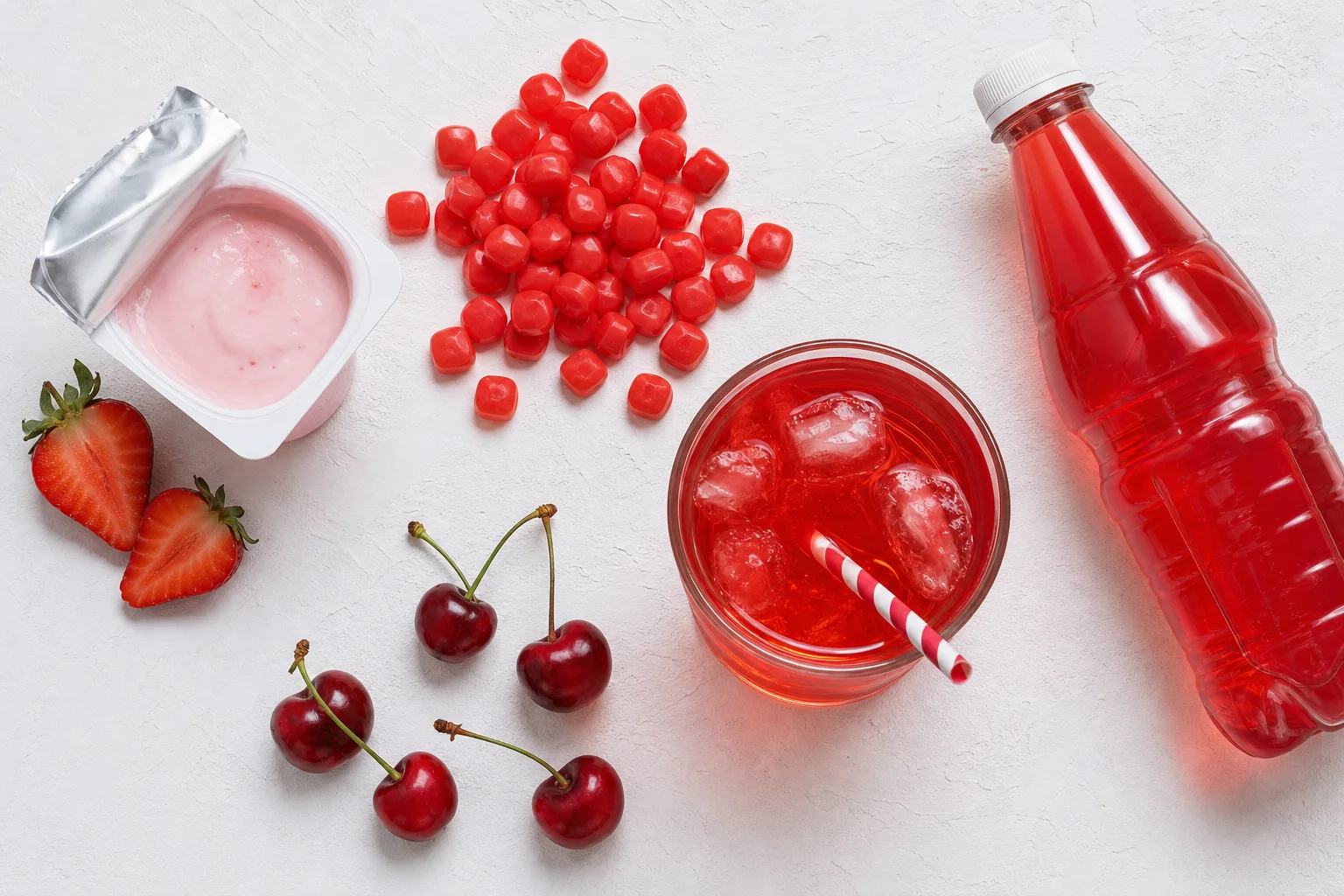
Picture the vivid red swirl in a strawberry yogurt, the deep crimson of a fruit punch, the bright pink flush in some maraschino cherries. Those colors look natural. And one of them technically is — just not in the way most consumers assume.
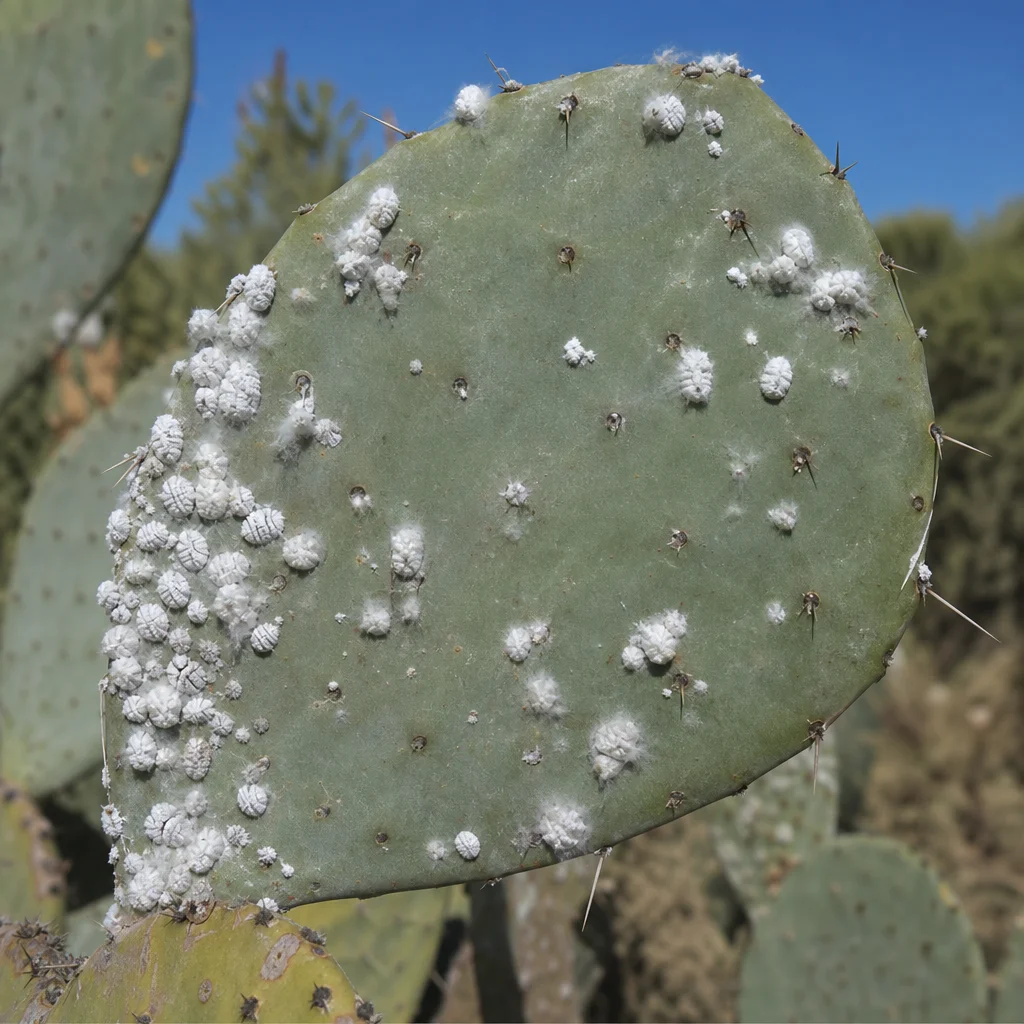
Carmine is a red colorant made from the dried and crushed bodies of Dactylopius coccus — the cochineal insect, a scale bug that lives on certain species of cactus in South America and Mexico. It has been used as a dye for centuries, first by Aztec and Inca civilizations, later imported to Europe where it transformed the textile trade. Today, it is one of the most stable and widely used natural red colorants in the global food industry.
It is also one of the most surprising ingredient disclosures a consumer can encounter. The words "cochineal extract" or "carmine" on a yogurt label stop many shoppers cold. That surprise is partly why the FDA required, effective 2011, that cochineal extract and carmine be disclosed by name in the ingredient list of any food, drug, or cosmetic in which they are used — ending a period when they could be hidden under the generic term "artificial color" or "color added."
The rule was a meaningful step forward. But label literacy still matters, because carmine travels under several names. And for vegans, vegetarians, those following halal or kosher dietary laws, and people with certain allergies, carmine is an ingredient that requires active attention.
What Carmine Is and How It Is Made
Carmine color, E120, and cochineal: a label lookup
| Your question | Short answer | Shopping action |
|---|
| What is carmine color? | An insect-derived red colorant, not a fruit extract. | Read the ingredient list rather than judging by red or pink color. |
| What does E120 mean? | The additive number associated with cochineal-derived coloring. | Treat E120 as an animal-derived color when choosing vegetarian or vegan food. |
| Is cochineal extract exactly the same preparation as carmine? | They are related insect-derived color additives, but different preparations. | Check for both names when avoiding this source. |
| Is carmine Red 40? | No. Red 40 is a different, synthetic dye. | Avoiding one does not establish that a product is free of the other. |
| Does every strawberry yogurt contain it? | No. Formulations use different colors and can change. | Check the current product label; a food category is not a verified brand list. |
For dietary checks beyond colorants, use the vegan ingredient checker or vegetarian ingredient checker. These help review declared ingredients, but they do not certify a product or establish allergy safety.
For specific shopping alternatives, compare four fruit-flavored yogurts without listed carmine. The guide matches exact U.S. flavors and sizes to manufacturer panels, rather than making brand-wide claims.
The cochineal insect feeds on the moisture and nutrients stored in cactus pads, particularly on the prickly pear cactus (Opuntia). The females of the species accumulate carminic acid in their bodies — a compound that serves as a chemical deterrent against predators. Carminic acid makes up approximately 17–24% of the insect's dry weight.
To produce carmine, cochineal insects are harvested by brushing them from the cactus, then killed by exposure to heat, steam, or sunlight. The dried insects are ground into a coarse powder. The carminic acid is then extracted using water or alcohol, and the colorant is precipitated by adding aluminum or calcium salts, creating the aluminum or calcium chelate we know as carmine. To produce one kilogram of carmine, roughly 155,000 individual insects are required.
The resulting colorant is exceptionally stable compared to many plant-based red dyes. It resists heat, light, and oxidation. In acidic food systems, it produces a bright, vivid red. At higher pH, it shifts toward purple-red tones. This pH sensitivity and stability make it valuable in products where berry extracts or beet juice might fade or shift color unpredictably.
The Many Names Carmine Hides Under
The 2011 FDA labeling rule brought greater transparency, but it did not standardize the name. This kind of labeling reform mirrors what happened with synthetic dyes like Red 40 and Yellow 5, where decades-old approvals are only now being revisited. Carmine can appear on ingredient labels under several legally acceptable terms:
- Carmine
- Cochineal extract
- Natural Red 4
- Carminic acid
- Crimson Lake (less common in food, more common in cosmetics)
- C.I. 75470
- E120 (the EU designation)
In the EU, the additive must be declared as "cochineal, carminic acid, carmines" or simply listed as E120. In the US, the FDA's 2009 rule requires "cochineal extract" or "carmine" to be declared by name — the precise term used in the ingredient list may vary by manufacturer.
The practical takeaway for anyone avoiding this ingredient: do not assume a "natural color" or "natural flavors" declaration covers it. Prior to the FDA rule, carmine was sometimes bundled under those terms. The rule closed that loophole for food — though carmine in cosmetics, particularly lipsticks and blushes, may still appear as "CI 75470" or "carmine" depending on the jurisdiction.
Where Carmine Shows Up
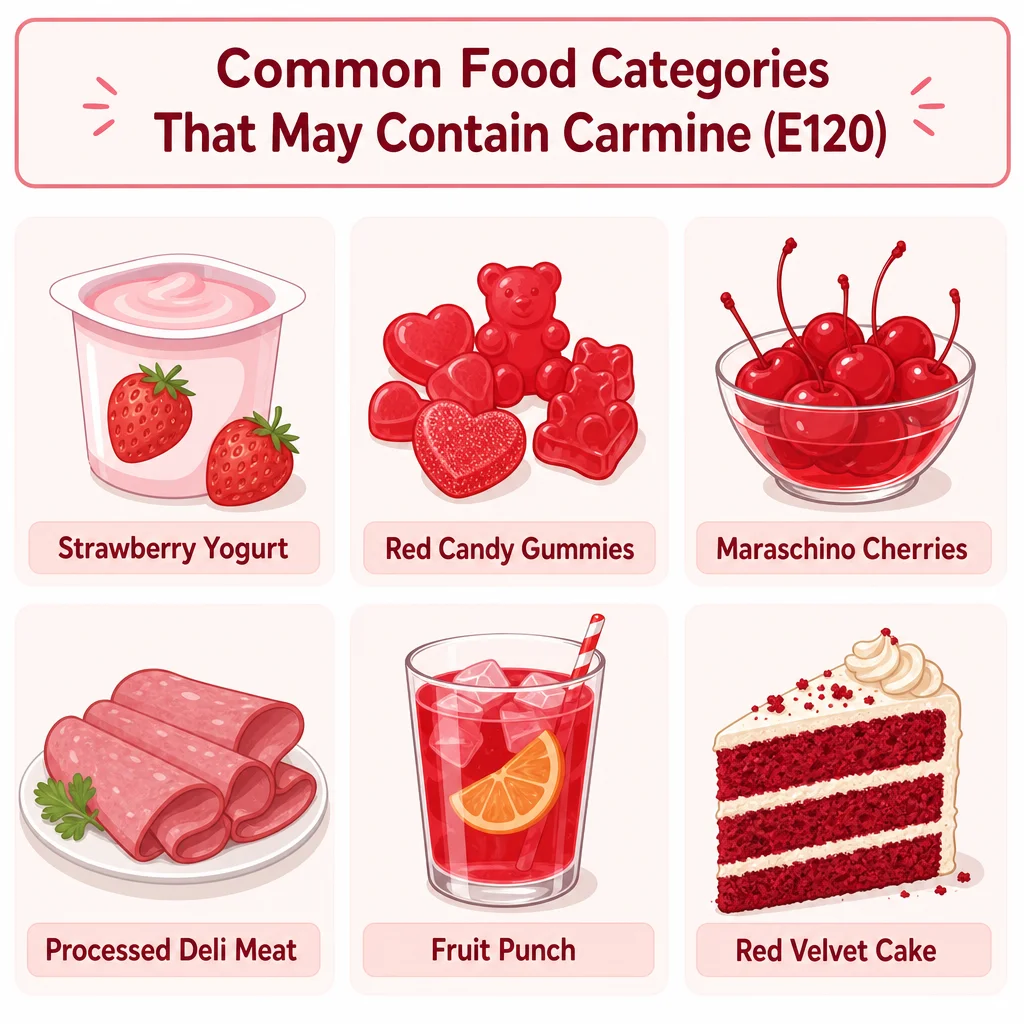
The ingredient is more widely distributed than many consumers realize. Common food categories include:
Dairy and dairy alternatives. Strawberry, cherry, and raspberry-flavored yogurts are a primary source. Fruit-flavored milk drinks and smoothies may also contain it. Some ice cream flavors use carmine to achieve the red tone of strawberry or cherry.
Beverages. Fruit punches, cocktail mixes, energy drinks, and certain juices use carmine for color stability. A red-colored drink that lists "natural color" and was manufactured before 2011 — or is from a jurisdiction with looser labeling rules — may still not disclose it specifically.
Confectionery. Candy, gummy sweets, maraschino cherries, and some coated chocolates use carmine for consistent red and pink tones. Natural berry colorants tend to fade more quickly; carmine holds.
Processed meats. Some charcuterie and processed deli meats use carmine to restore or enhance red tones lost during curing and cooking.
Bakery items. Red velvet cake products, cherry-flavored fillings, and some frosting colors may contain it.
Cosmetics and personal care. Lipstick, blush, eyeshadow, and some hair dyes use carmine. This is particularly relevant for vegetarians and vegans who check cosmetic ingredients, and for anyone with contact sensitivity.
The Allergy Question
Carmine is not classified as a major food allergen under the FDA's Food Allergen Labeling and Consumer Protection Act (FALCPA). That law covers nine foods: milk, eggs, fish, crustacean shellfish, tree nuts, wheat, peanuts, soy, and sesame. Carmine does not qualify because it is a color additive, not a food group.
However, carmine is a documented allergen for a subset of the population. Allergic reactions to carmine range from mild skin reactions and rhinitis to asthma and, in rare cases, anaphylaxis. The cases documented in the medical literature include reactions to carmine in foods, beverages, and cosmetics. The fact that carmine is insect-derived means the proteins present in the colorant — which trigger the allergic response — are structurally distinct from anything in the standard allergen list. Someone who has no food allergies in the traditional sense can still react to carmine.
People with known sensitivities to arthropod proteins (insects, crustaceans, dust mites) may be at elevated risk. A person with shellfish allergy, for instance, should not automatically assume carmine is safe — the protein families overlap. Allergists may test for carmine-specific IgE in patients with unexplained reactions.
The FDA's decision to require by-name labeling was explicitly motivated by this allergy concern. The agency noted that while carmine is not a major food allergen under FALCPA, it is "an allergen for a small subset of the allergic population" and that by-name disclosure would allow sensitive individuals to identify and avoid it.
Dietary Restrictions: Vegan, Vegetarian, Halal, and Kosher
For people with dietary restrictions based on animal sourcing, carmine raises clear concerns that are entirely separate from allergy.
Vegans and vegetarians. Carmine is unambiguously animal-derived — from the bodies of insects. A food or product marketed as plant-based, natural, or "no artificial colors" can still contain carmine. The term "natural colors" has no restriction against insect-derived colorants. Consumers relying on vegan certification marks (the Vegan Society's trademark, PETA's logo, etc.) can trust those certifications, as carmine is excluded. Without a formal certification, the ingredient list is the only reliable check.
Halal. The halal status of carmine is debated among Islamic scholars. Many — though not all — consider carmine haram because it is derived from insects, which are generally not halal. There is no universal ruling, but a significant number of halal certifying bodies reject carmine. Consumers following halal dietary guidelines who are uncertain should check whether their food carries a halal certificate from their trusted certifying body, and should read labels for carmine, cochineal extract, and E120 specifically.
Kosher. Carmine is generally not considered kosher. Insects are non-kosher under Jewish dietary law, and carmine is insect-derived. Products certified kosher by mainstream certifying bodies (OU, OK, KOF-K, Star-K) would not contain carmine. Look for the kosher certification symbol plus an explicit "contains no insect-derived ingredients" statement if you have specific needs.