Ingredient FAQs

Are E627, E631, and E635 Vegan? Sources Explained

E627, E631, and E635 may come from fermentation or animal materials. Learn what these flavor enhancers mean and how vegan shoppers can verify them.

Jul 22, 2026|8 min read
By Sanket Patel|Updated 2026-07-22|8 sources|Editorial standards
Are E627, E631, and E635 Vegan? Sources Explained

Quick answer: E627, E631, and E635 are not automatically vegan or non-vegan. They identify flavor-enhancing nucleotide salts, not the raw material or production route. Commercial versions may be produced by microbial fermentation, enzymatic conversion, or from animal-derived materials. A vegan certificate, supplier origin statement, or current manufacturer confirmation is the reliable way to settle an ambiguous label.

These additives often appear together in savory snacks, instant noodles, soup powders, stock cubes, sauces, and seasoning blends. Their unfamiliar numbers can make them look like three unrelated chemicals. In practice, they belong to one flavor-enhancer family and are often used to strengthen the savory effect of monosodium glutamate, yeast extract, or other umami ingredients.
What E627, E631, and E635 Mean

What E627, E631, and E635 Mean

The three codes identify closely related nucleotide flavor enhancers:

CodeCommon label nameWhat it contributes
E627disodium guanylate or disodium 5'-guanylatesavory flavor enhancement
E631disodium inosinate or disodium 5'-inosinatesavory flavor enhancement
E635disodium 5'-ribonucleotidesa mixture containing guanylate and inosinate

The European specifications in Regulation 231/2012 define the chemical identity and purity requirements for these additives. They do not turn the E-number into a source declaration. The same compliant final ingredient can reach the specification through more than one manufacturing pathway.

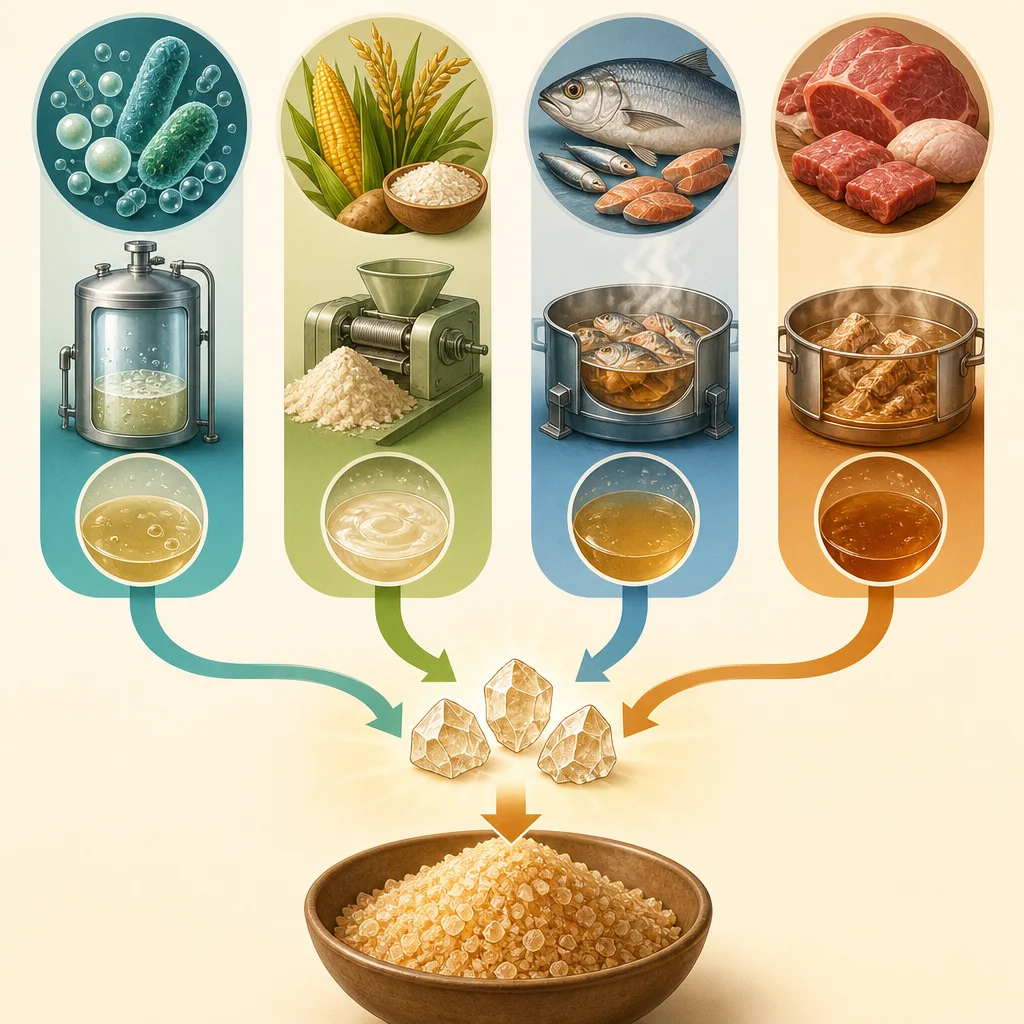
That distinction is the heart of the vegan question. A code tells a food technologist what additive is present. It does not tell a shopper whether a microbe, plant carbohydrate, fish material, meat by-product, or another feedstock was used upstream.

Why the Source Can Vary

Nucleotides are basic components of living cells. Guanylate is related to guanosine monophosphate, while inosinate is related to inosine monophosphate. Because plants, fungi, microorganisms, and animals all contain nucleotides, the chemical family itself is not proof of a particular dietary origin.

Industrial production can use fermentation and enzymatic steps to create or convert nucleotide-rich materials. Modern suppliers may start with sugars or starches and use selected microorganisms, followed by purification and conversion into sodium salts. Other commercial histories and product streams have used extracts or materials associated with fish or meat. E635 inherits the uncertainty because it is a combined ribonucleotide preparation rather than a source category.

Purification makes the final molecules chemically equivalent. It does not erase the ethical or dietary significance of the original feedstock for a vegan or vegetarian shopper. A laboratory identity test can confirm disodium inosinate, but it may not answer which approved supplier route made it.

This is similar to the source problem with glycerin and E422 or stearates and E570/E572. Chemical identity and dietary provenance are two different questions.

Is E627 Vegan?

E627, disodium guanylate, can be compatible with a vegan diet when it comes from a verified microbial or other non-animal production route. The number by itself does not provide that verification.

Some simplified ingredient lists describe E627 as yeast-derived or fermentation-derived. That can be useful evidence, but the exact wording matters. Yeast extract in the same product does not prove that the separately listed E627 came from yeast. Likewise, a manufacturer saying that an additive is "synthetic" may mean only that it is highly processed, not that every production input is non-animal.

For a strict vegan decision, look for a product-level certification or an origin statement that covers the guanylate supplied to the current formula.

Is E631 Vegan?

E631, disodium inosinate, has the strongest reputation for source ambiguity because inosinate has historically been associated with meat and fish as well as fermentation routes. It can be vegan when a supplier uses a verified non-animal process, but it should not be assumed vegan from the code alone.

An allergen statement is not a substitute for source evidence. Major-allergen rules are designed to disclose defined allergenic foods and proteins under particular conditions. They are not a universal animal-origin labeling system. A product can lack a fish allergen warning and still fail a shopper's vegan standard for a different reason.

Vegetarians face the same verification problem. A product marketed as meat-free may still use source-dependent flavor enhancers unless the claim or certification standard evaluates them.

Is E635 Vegan?

E635 is usually described as disodium 5'-ribonucleotides. It combines flavor-enhancing nucleotides, commonly E627 and E631. If either component has unresolved origin, the mixture remains unresolved.

This means E635 is not a shortcut around the individual questions. A supplier declaration should cover the entire preparation and its processing inputs. If a brand confirms only that "no meat is added to the recipe," ask whether the E635 itself and its manufacturing aids are derived from non-animal sources.

Where These Flavor Enhancers Appear

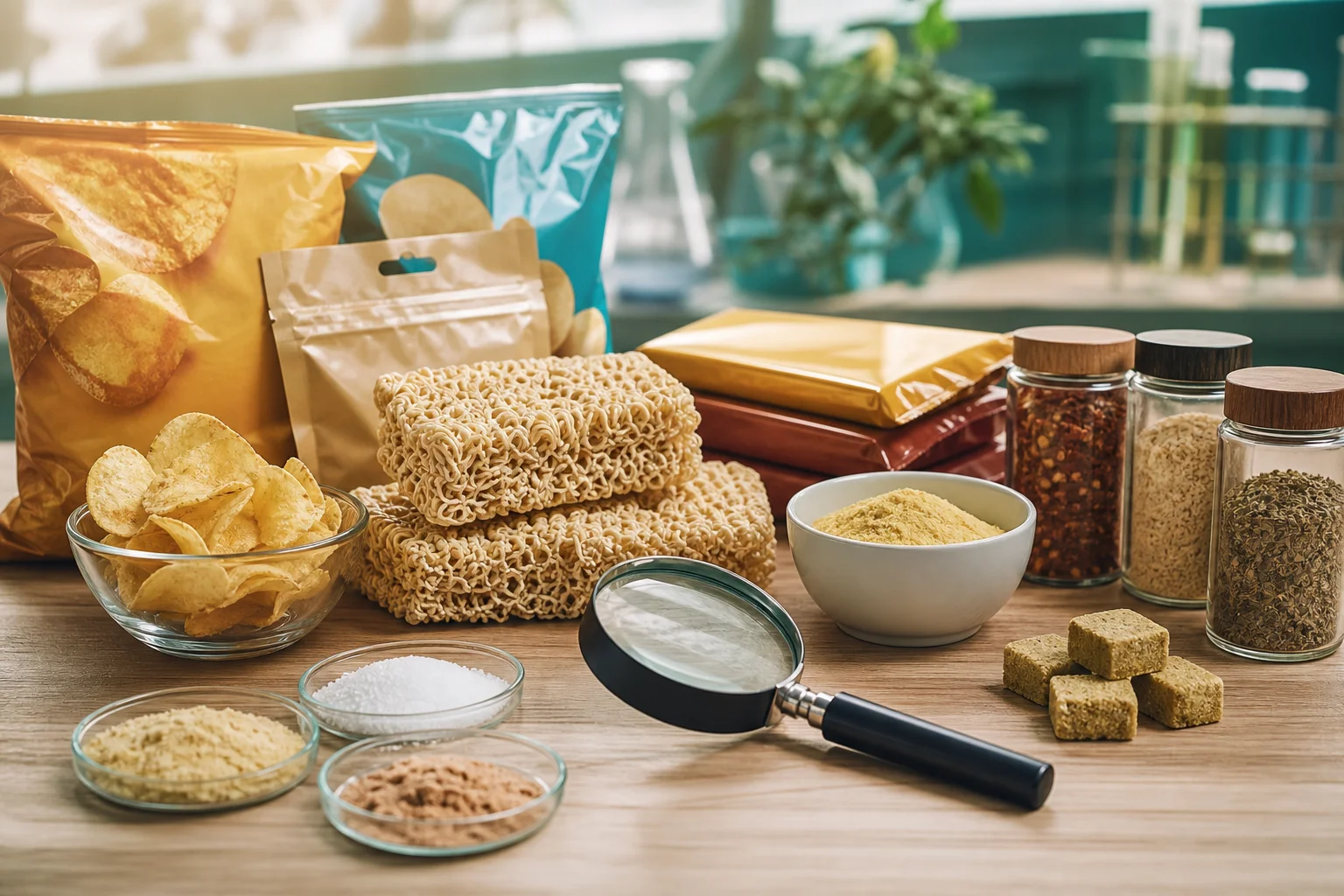
You are most likely to encounter E627, E631, or E635 where manufacturers want a strong savory impact at low concentration:

  • barbecue, cheese-style, chicken-style, and chili snack seasonings
  • instant noodle flavor packets
  • soup powders, stock cubes, and bouillon
  • ready meals and frozen savory foods
  • sauces, gravies, and seasoning pastes
  • flavored rice, lentil, or grain mixes
  • plant-based meat alternatives
  • restaurant or food-service seasoning blends

A plant-based main ingredient does not settle the flavor system. A mushroom snack can use a non-vegan seasoning, while a chicken-flavored snack can sometimes use only non-animal flavor compounds. Judge the declared ingredients and sourcing evidence, not the package illustration.

"Natural," "Artificial," and "Yeast" Do Not Settle It

Several nearby words create false confidence:

Natural flavor is a broad labeling term, not a vegan guarantee. The dedicated natural flavors guide explains why the package may not disclose every source detail.

Artificial flavor does not automatically mean vegan. A flavor system can include carriers, processing aids, or separately listed enhancers that need their own review.

Yeast extract is generally a distinct ingredient. It naturally contributes savory compounds, but its presence does not document the origin of a separate E631 or E635 listing.

MSG-free does not mean free from other umami enhancers. Products can omit monosodium glutamate while using nucleotide enhancers or yeast-derived savory ingredients.

A Practical Verification Ladder

A Practical Verification Ladder

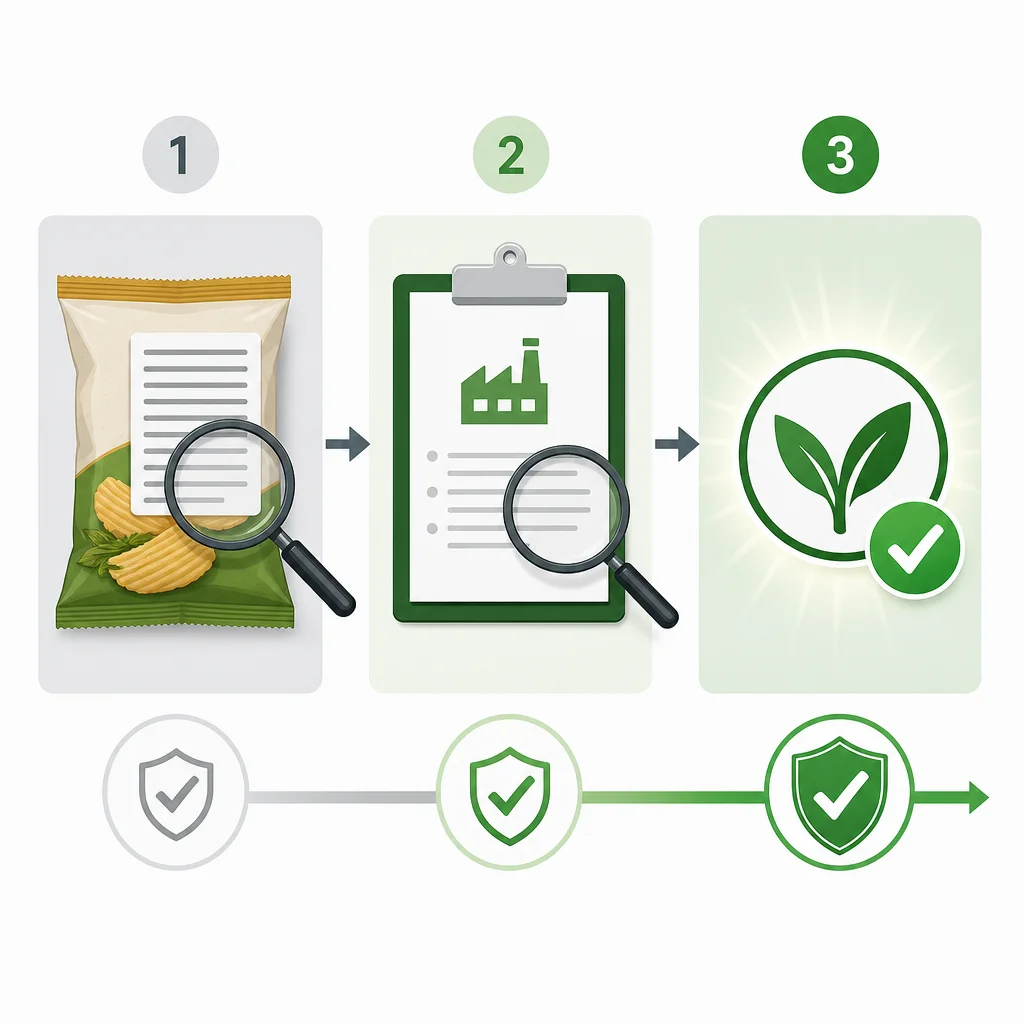
1. Read every version of the name

Search the ingredient list for E627, E631, E635, disodium guanylate, disodium inosinate, disodium ribonucleotides, and "flavor enhancers." Regional packages may use names instead of E-numbers.

2. Check the exact product and market

Formulas can differ by country, factory, package size, or flavor. A vegan answer for one instant-noodle flavor does not automatically cover the full range.

3. Prefer certification that covers the product

A recognized vegan mark is stronger than a general plant-based marketing claim because its standard addresses animal-origin ingredients and, depending on the program, processing aids.

4. Ask the manufacturer a precise question

Use wording such as:

Are the E627, E631, and E635 in this exact product manufactured exclusively from microbial, plant, mineral, or synthetic non-animal sources, with no animal-derived feedstocks or processing aids?

Ask for the answer to apply to the current formula in your country. Save the date because suppliers can change.

5. Review the entire seasoning system

Resolving one additive does not clear natural flavors, animal fats, dairy powders, meat extracts, gelatin, carmine, or other source-dependent ingredients. Treat verification as a product-level decision.

Common Questions

Does E631 always come from pigs?

No. That claim is too broad. E631 can be associated with several animal sources or with non-animal manufacturing routes. The code does not identify a species. Anyone avoiding pork for religious reasons should use appropriate halal or kosher certification rather than infer origin from internet lists.

Are E627 and E631 safe?

Safety approval and vegan suitability are separate questions. Food-additive regulations govern authorized uses and specifications. A shopper can accept an additive's permitted food use while still needing its source verified for a dietary rule.

Can a barcode scanner prove the source?

Only when reliable product data or a documented manufacturer statement supplies that source information. A scanner cannot reveal a proprietary supplier route that is absent from the package and product record.

Is a vegetarian label enough?

It depends on who issued the label and what standard it follows. A credible third-party vegetarian mark is stronger than an undefined front-of-pack "veggie" claim. Strict vegetarians should verify how that standard treats animal-derived additives and processing aids.

The Best Decision Rule

Treat E627, E631, and E635 as source-dependent, not automatically prohibited. This avoids two errors: rejecting every fermentation-derived version and accepting every ambiguous version without evidence. Certification or a current supplier-backed manufacturer answer converts uncertainty into a defensible decision.

Use the complete vegan label-reading guide or the vegetarian hidden-ingredient guide when the seasoning contains several unfamiliar terms.

IngrediCheck can flag E627, E631, E635, guanylate, and inosinate during a label review and connect them with your saved dietary rules. The vegan ingredient checker and vegetarian ingredient checker help organize the evidence, but manufacturer sourcing or certification remains the final authority when the package does not disclose origin.

Next Label Check

Follow the scanner, hub, and ingredient paths connected to this guide

Get the app for clearer label decisions.

Scan labels, see what fits your food notes, and read the why in plain English.

IngrediCheck app
