Ingredient FAQs

Is Smoke Flavor Vegan? Natural and Liquid Smoke Sources

Smoke flavor and liquid smoke usually begin with wood smoke, but compound flavor systems can include carriers and other ingredients. Learn what labels reveal.

Jul 22, 2026|8 min read
By Sanket Patel|Updated 2026-07-22|5 sources|Editorial standards
Is Smoke Flavor Vegan? Natural and Liquid Smoke Sources

Quick answer: Basic liquid smoke and many smoke flavorings begin with smoke from wood or other plant material, so the core flavor can be vegan-suitable. "Smoke flavor," "natural smoke flavor," and "liquid smoke" can also describe formulated ingredients that include carriers, flavors, processing aids, or other components. The label may not disclose that full recipe. Review the whole product and seek certification or manufacturer confirmation when strict sourcing matters.

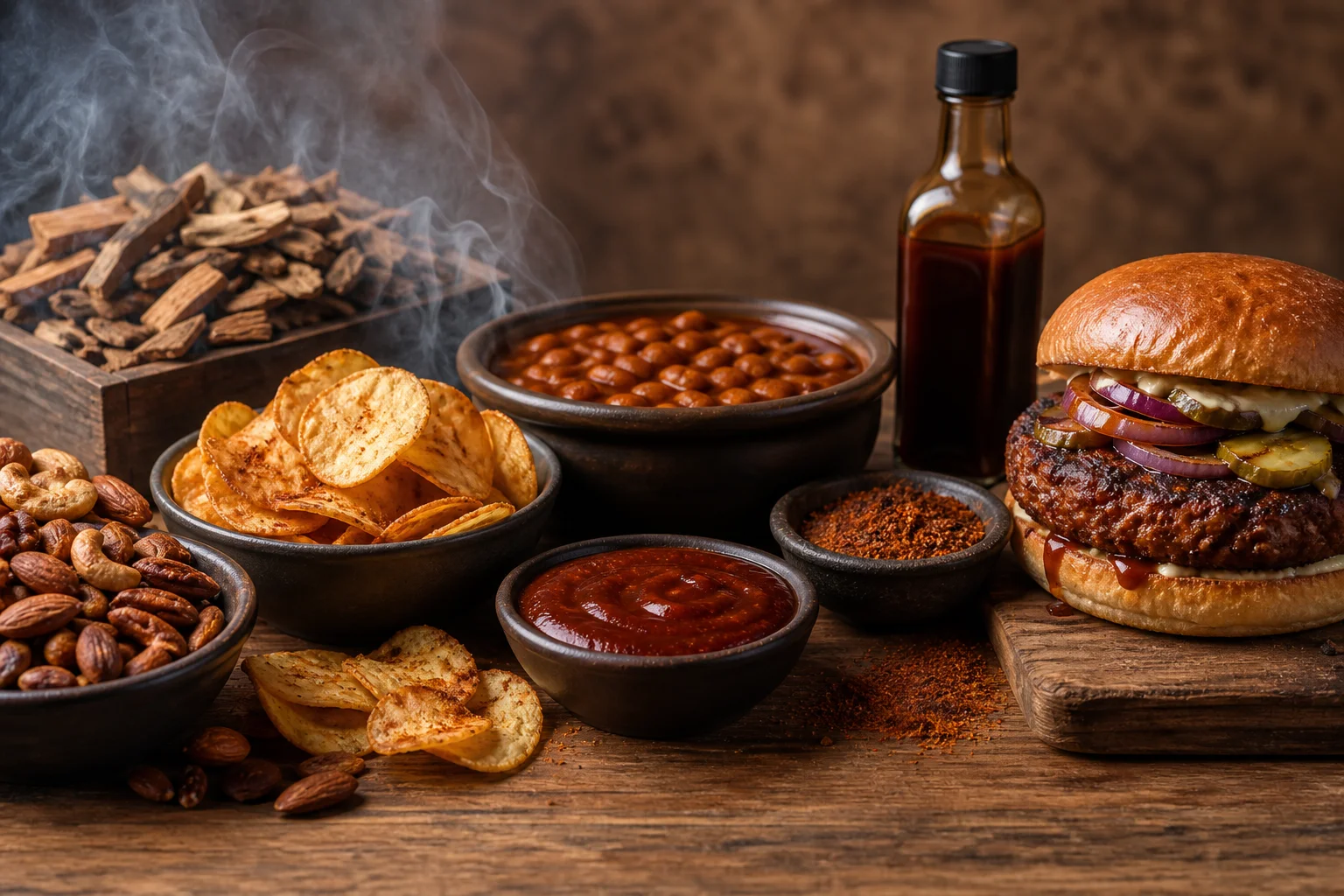
Smoke flavor appears on barbecue chips, sauces, beans, soups, nuts, meat alternatives, cheese-style products, and seasoning blends. Some shoppers assume anything smoky must contain bacon or meat. Others assume that smoke is just burned wood and therefore every smoke-flavored product must be vegan.

Both shortcuts fail. The smoking process, the flavor ingredient, and the food carrying it are separate layers.
What Liquid Smoke Is

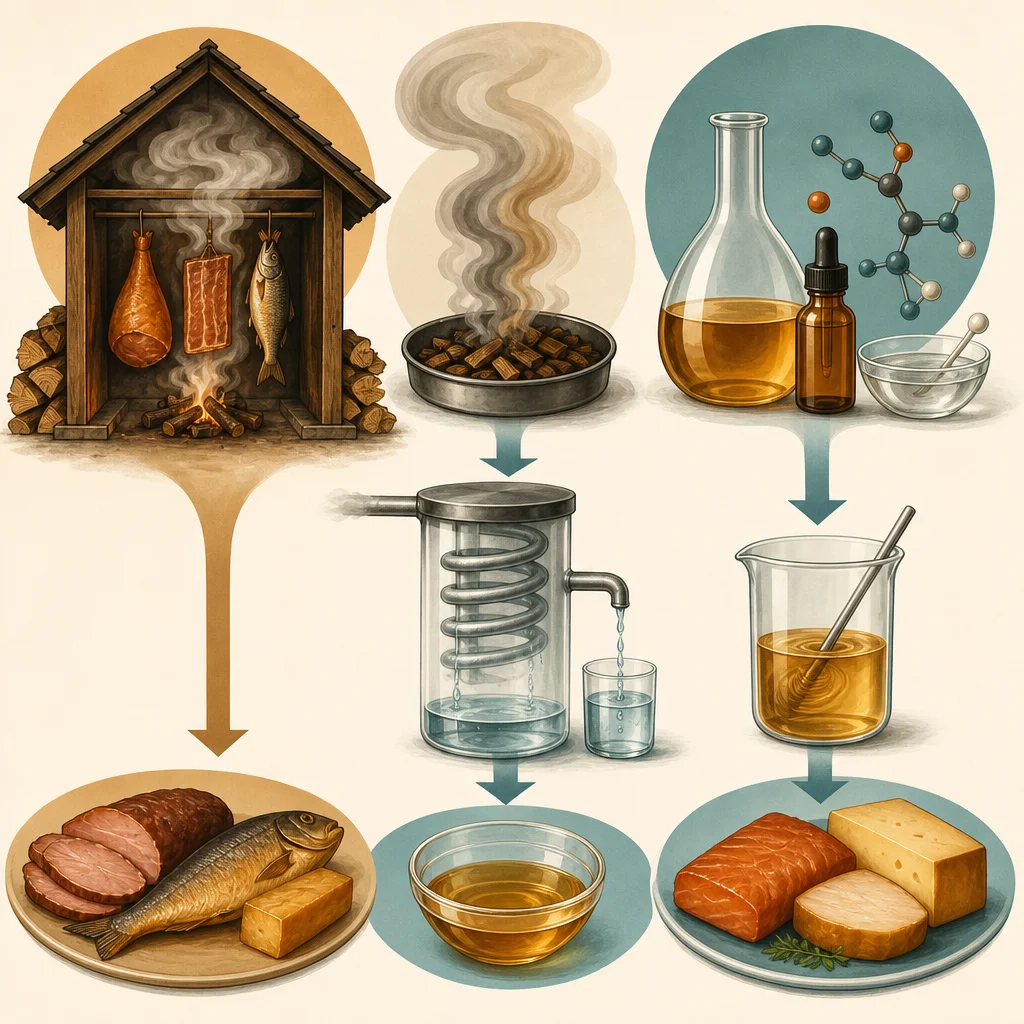
Liquid smoke is generally made by generating smoke from controlled heating of wood, capturing smoke components in water, and separating unwanted tarry or particulate fractions. Manufacturers can further concentrate, fractionate, or formulate the condensate for consistent flavor.

The wood source is plant material. That makes a simple wood-smoke condensate fundamentally different from a meat extract. The flavor can reproduce part of the taste and aroma associated with traditional smoking without placing the food in a smokehouse.

Commercial products may add water, vinegar, molasses, caramel color, salt, or other ingredients depending on whether the bottle is a concentrated smoke preparation, a consumer seasoning, or a sauce. Read the product's own ingredient list rather than treating every bottle called "liquid smoke" as the same formula.

Smoke Flavor Is Broader Than One Bottle

Smoke Flavor Is Broader Than One Bottle

On packaged-food labels, several phrases can appear:

  • smoke flavor
  • natural smoke flavor
  • liquid smoke
  • natural flavors, which may include a smoky component
  • artificial smoke flavor
  • char smoke flavor
  • smoked, which can describe a process rather than an added flavor

The FDA's flavor-labeling rule distinguishes natural and artificial flavors based on defined source categories and functions, but "natural" is not a synonym for vegan. Its natural-flavor categories include plant materials and yeast as well as meat, seafood, poultry, eggs, and dairy. A flavor system can also contain carriers or processing aids that are not obvious from the short collective term.

The natural flavors guide explains this disclosure boundary in detail. The word "smoke" narrows the sensory goal, but it does not always reveal the complete formulation.

Traditional Smoking vs Added Smoke Flavor

Traditional smoking exposes a food to smoke. The food may be tofu, nuts, vegetables, cheese, fish, or meat. The process does not change the dietary origin of the base food.

Added smoke flavor brings selected smoke compounds into a recipe. The base can again be plant- or animal-derived. A smoked almond remains based on almonds unless other ingredients conflict. Smoked bacon remains animal-derived even if no added smoke flavor is used.

This matters when scanning front-of-pack wording:

  • "smoked" does not mean meat-free
  • "bacon flavor" does not prove real bacon is present
  • "natural smoke flavor" does not certify the full product as vegan
  • "plant-based" does not reveal every component of a proprietary flavor system

Always move from marketing language to the actual ingredient declaration and product documentation.

Can Smoke Flavor Contain Animal Ingredients?

The core smoke condensate can be produced from wood without animal material. A compound flavor may combine smoky components with savory flavors, dairy notes, meat extracts, fats, carriers, or processing aids, depending on the target food and supplier design.

For example, a "barbecue flavor" powder is not necessarily just smoke flavor. It may contain sugar, salt, yeast extract, tomato powder, spices, milk powder, animal fat, natural flavors, and nucleotide enhancers. A chip bag might separately disclose milk because it is a regulated allergen, while other source-dependent details remain inside permitted collective flavor wording.

Similarly, a "bacon-flavored" product can be made with animal-free flavor chemistry or with real bacon ingredients. The flavor name describes the intended sensory profile, not a universal recipe.

Where Smoke Flavor Appears

Common categories include:

  • barbecue and bacon-style potato chips
  • roasted nuts and snack mixes
  • barbecue sauce and marinades
  • canned beans and chili
  • soups, broths, and seasoning packets
  • plant-based burgers, sausages, and deli slices
  • cheese and cheese-style products
  • jerky and meat snacks
  • spice rubs and savory powders
  • alcoholic beverages and cocktail ingredients

The most important high-risk pattern is not smoke itself. It is a complex savory system containing several broad or source-dependent terms.

How to Read Barbecue Chips and Seasonings

How to Read Barbecue Chips and Seasonings

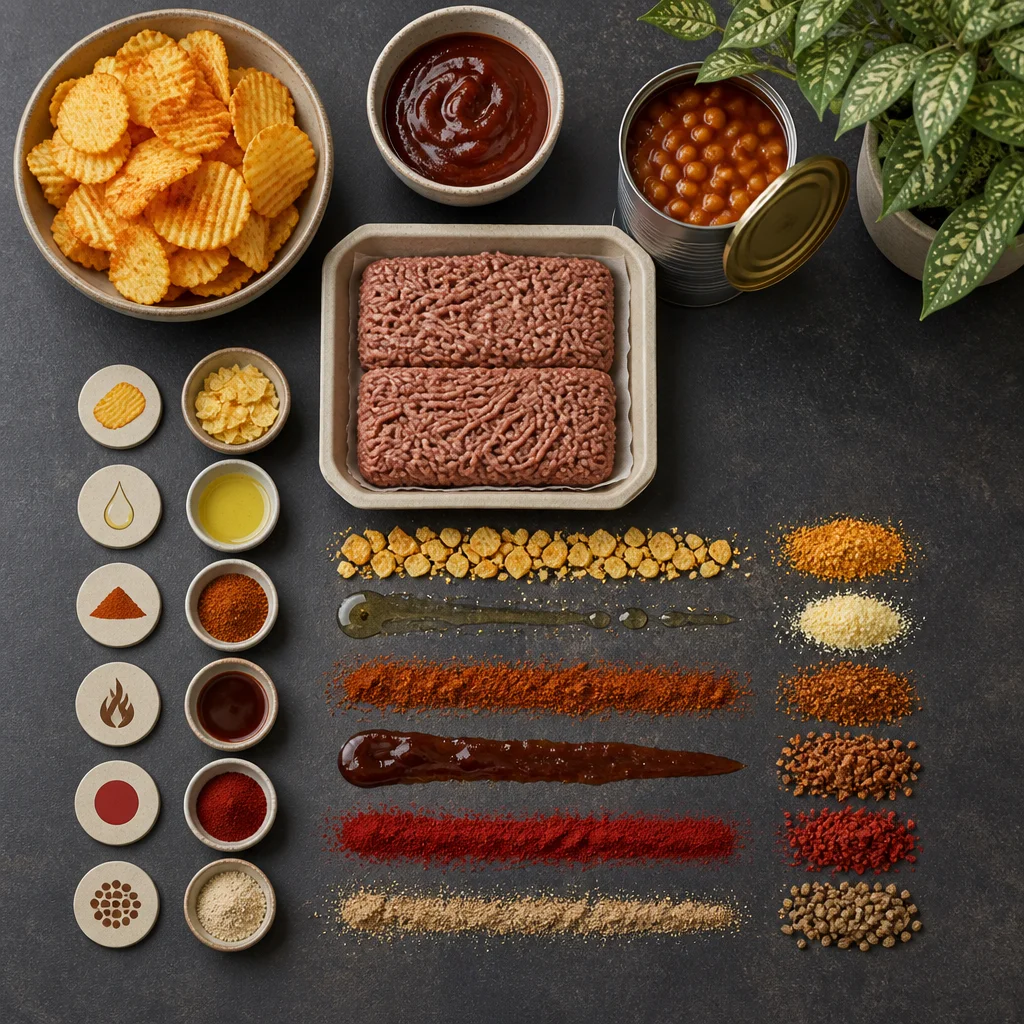
Read the list in layers:

Base food: potato, corn, wheat, nuts, soy, peas, or another main ingredient.

Fat: vegetable oil is straightforward for vegan origin, while animal fat, lard, tallow, butter oil, or an unspecified fat changes the answer.

Seasoning allergens: milk, whey, cheese powder, lactose, and egg are usually clearer conflicts than smoke flavor.

Savory enhancers: E627, E631, and E635 can be source-dependent. The guanylate and inosinate guide explains why the code alone cannot prove origin.

Broad flavors: natural flavor, artificial flavor, smoke flavor, and spice extracts may need manufacturer clarification.

Colors and coatings: carmine, shellac, and confectioner's glaze are animal-derived.

This layered approach prevents an ambiguous smoke term from distracting you from an explicit milk or meat ingredient elsewhere on the same label.

Does "Natural Smoke Flavor" Mean Vegan?

No. "Natural" is a regulatory source and function category, not an ethical certification. A wood-derived smoke component may be vegan, but a natural flavor system can include or be combined with other materials whose origins are not stated in that phrase.

The opposite shortcut also fails. "Artificial smoke flavor" does not automatically mean non-vegan. Synthetic or artificial flavor compounds can be made without animal inputs. Strict suitability still depends on the complete formulation and production standard.

Use natural-versus-artificial wording to understand labeling, not to infer a moral or dietary verdict.

A Practical Verification Ladder

1. Identify the exact smoke wording

Distinguish "smoked," "liquid smoke," "smoke flavor," "natural flavor," and a broader named seasoning such as "barbecue flavor."

2. Clear explicit conflicts first

Look for meat, fish, dairy, egg, honey, gelatin, animal fat, carmine, shellac, and other clearly declared ingredients before investigating an ambiguous flavor.

3. Check certification and the official FAQ

A credible vegan mark is stronger than a front-label plant-based claim. Manufacturer FAQs sometimes confirm whether flavor systems and processing aids meet a vegan standard.

4. Ask a precise question

Use wording such as:

Is the smoke flavor or liquid smoke in this exact product made only from non-animal source materials, and do its carriers, processing aids, compound flavors, and the complete seasoning exclude animal-derived ingredients?

Ask whether the answer applies to the current flavor and country.

5. Recheck restaurant and food-service items

Menus may say "smoky" without supplying a packaged ingredient list. A restaurant sauce can use a different supplier from a retail bottle. Request the current allergen and ingredient information when available.

Common Questions

Is liquid smoke made from animals?

Basic liquid smoke is generally produced from wood smoke captured in water, not from animals. A consumer product or formulated flavor can contain additional ingredients, so check its declaration.

Does bacon flavor contain bacon?

Sometimes, but not always. A named flavor can use real animal ingredients, non-animal flavor compounds, or a combination. The ingredient list and manufacturer answer decide the specific product.

Is smoked paprika vegan?

Plain smoked paprika is made from peppers dried or exposed to smoke and is vegan-suitable. A seasoning blend that contains smoked paprika can add dairy, meat flavors, or other non-vegan ingredients.

Is smoke flavor safe?

Safety regulation and vegan origin are separate questions. Smoke flavorings are regulated differently across jurisdictions, and the European Union has reviewed authorizations for specific smoke-flavoring primary products. Dietary suitability does not establish a universal health verdict.

Does an allergen statement settle the flavor source?

No. It is valuable for regulated allergens, but vegan standards include many animal-derived materials outside major-allergen disclosure. An absent milk or fish warning cannot certify the flavor as vegan.

Can a scanner decode proprietary flavor formulas?

No scanner can recover information a manufacturer does not publish. It can flag the broad term, identify explicit conflicts, connect known documentation, and tell you where confirmation is still required.

The Best Decision Rule

Treat simple wood-derived liquid smoke as generally vegan-suitable, while treating an unspecified smoke or barbecue flavor system as potentially compatible but not fully proven by the name. Then review the whole food.

This avoids rejecting every smoky plant food and avoids assuming that plant imagery clears a compound seasoning. Product-level certification is the fastest strong evidence when the flavor formula is proprietary.

Use the complete vegan label-reading guide or vegetarian hidden-ingredient guide for related flavor, fat, enzyme, and additive checks.

IngrediCheck can flag smoke flavor, liquid smoke, natural flavor, and nearby explicit animal ingredients against your saved rules. Use the vegan ingredient checker or vegetarian ingredient checker to structure the review, then confirm proprietary flavor sourcing through current certification or the manufacturer.

Next Label Check

Follow the scanner, hub, and ingredient paths connected to this guide

Get the app for clearer label decisions.

Scan labels, see what fits your food notes, and read the why in plain English.

IngrediCheck app