Ingredient FAQs

Is Lactic Acid Vegan? E270 and Lactate Sources Explained

Lactic acid usually comes from carbohydrate fermentation, not milk, but feedstocks and derivatives vary. Learn how to assess E270 and lactates.

Jul 21, 2026|8 min read
By Sanket Patel|Updated 2026-07-21|4 sources|Editorial standards
Is Lactic Acid Vegan? E270 and Lactate Sources Explained

Quick answer: Lactic acid is often vegan, and its name does not mean that it came from milk. Commercial food-grade lactic acid is commonly produced when microorganisms ferment carbohydrates. Those carbohydrates may come from corn, sugarcane, sugar beet, cassava, or other plant materials, but lactose and non-vegan processing inputs are possible in some processes. E270 alone identifies the additive, not its feedstock or certification.

The word "lactic" creates one of the most persistent label-reading myths. It sounds like "lactose," and both words are historically connected to milk. Chemically, however, lactic acid is a distinct molecule that can be produced in many biological settings, including vegetables, sourdough, human muscles, and industrial fermentation tanks.
Lactic Acid Is Not Lactose

Lactic acid is 2-hydroxypropanoic acid. PubChem identifies lactic acid with the molecular formula C3H6O3. Lactose is a much larger sugar made from glucose and galactose and naturally found in milk.

The two substances have different structures and functions:

  • Lactic acid contributes acidity, preservation, flavor, and pH control.
  • Lactose is a milk sugar and a carbohydrate nutrient.
  • Lactate is a salt or ion formed from lactic acid, such as sodium lactate or calcium lactate.
  • Milk allergen proteins include casein and whey proteins, not lactic acid itself.

A person can therefore see lactic acid in a food with no dairy ingredients. Conversely, a food can contain milk protein without listing lactic acid.

How Commercial Lactic Acid Is Made

How Commercial Lactic Acid Is Made

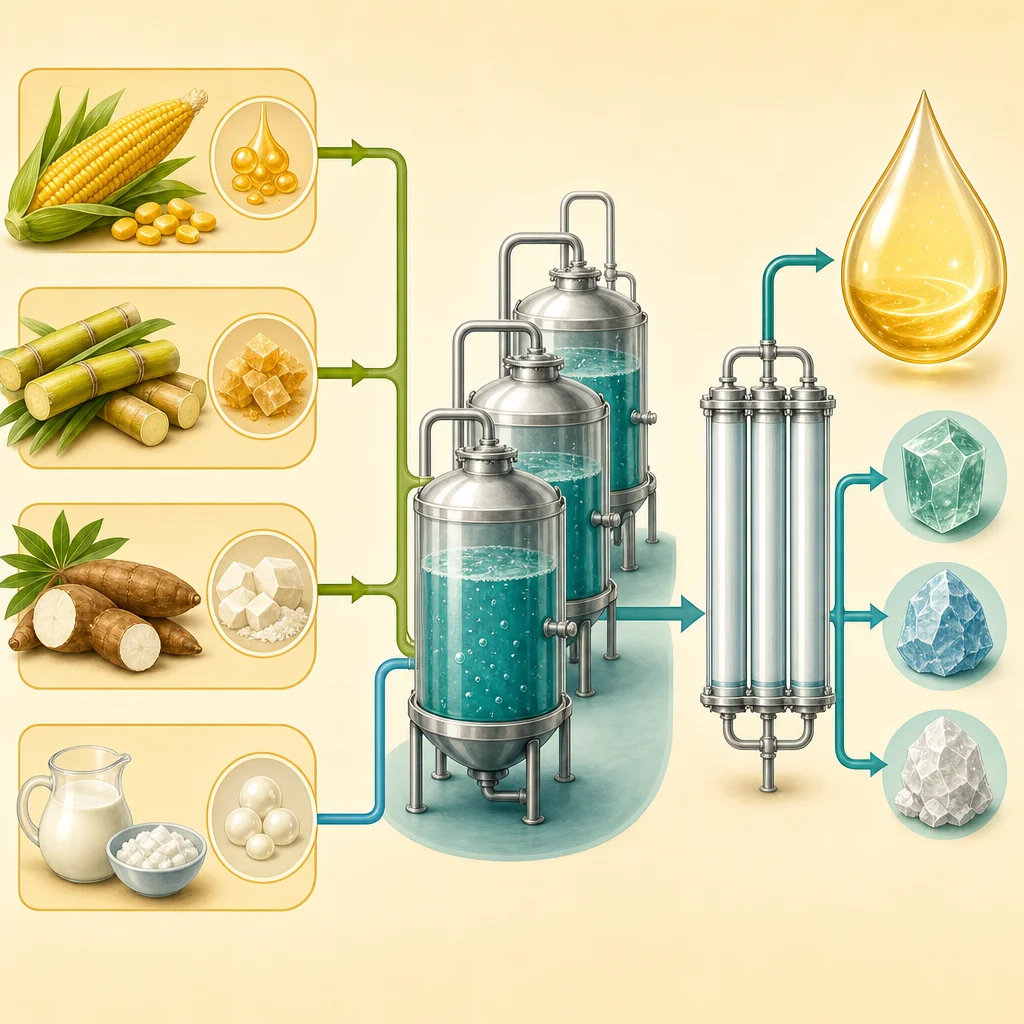
The US regulation for lactic acid states that it occurs naturally in several foods and can be produced commercially by carbohydrate fermentation or by a chemical route. The regulation lists glucose, sucrose, and lactose as examples of possible fermentation carbohydrates.

Modern fermentation uses microorganisms that convert sugars into lactic acid. A review of fermentative lactic-acid production describes a wide range of renewable plant feedstocks and the downstream purification needed to recover the acid.

Common input categories include:

  • corn glucose or dextrose
  • cane or beet sucrose
  • starch hydrolysates
  • cassava and other plant carbohydrates
  • molasses and food-industry side streams
  • lactose or whey streams in some processes
  • synthetic chemical intermediates in non-fermentation routes

The microorganism is the producer, but the complete vegan question includes the fermentation medium, nutrients, antifoaming agents, purification aids, and any carrier used in the final ingredient.

Why E270 Does Not Prove the Source

In the European additive system, E270 identifies lactic acid. This number helps standardize the ingredient's identity and purity. It does not record whether the fermentation carbon came from corn, cane sugar, lactose, or another substrate.

An ingredient list may use:

  • lactic acid
  • E270
  • acidity regulator: lactic acid
  • cultured dextrose, a related but not identical fermentation ingredient
  • sodium lactate, E325
  • potassium lactate, E326
  • calcium lactate, E327

The E-numbers for lactate salts identify the salt, not the biological origin of every process input. Calcium lactate is not automatically dairy because it contains the word "lactate," and sodium lactate is not made from milk merely because lactic acid was first isolated from sour milk.

Is Fermentation-Derived Lactic Acid Vegan?

It often is. Lactic acid produced from plant carbohydrates with non-animal processing inputs fits ordinary vegan standards. Many suppliers deliberately document plant-based fermentation for food, cosmetic, and pharmaceutical customers.

Still, "fermentation-derived" is not as specific as "certified vegan." A fermentation process can use an animal-derived nutrient, lactose-containing stream, or processing aid. A strict certification standard reviews more than the organism's final product. The V-Label criteria explicitly cover animal-origin ingredients, components, and processing aids.

This does not justify treating all lactic acid as suspect. The sensible classification is usually compatible but source-dependent when a strict standard requires proof.

What About Milk Allergy and Lactose Intolerance?

Vegan status, milk allergy, and lactose intolerance are different questions.

Pure lactic acid is not a milk protein and is not lactose. Someone with lactose intolerance is reacting to insufficient digestion of lactose, not to the word "lactic." Someone with a milk allergy is concerned about milk proteins.

However, the finished food may contain dairy elsewhere, and fermentation-derived ingredients can be sold in carriers or blends. Always read the full ingredient and allergen statements. If a person has a diagnosed allergy and the manufacturer cannot answer a process-specific question, follow the person's clinician-approved plan rather than relying on a generic internet list.

This article owns the ingredient-source question. Broader dairy decisions belong with product-level allergen review, not a blanket ruling about E270.

Where Lactic Acid and Lactates Appear

Where Lactic Acid and Lactates Appear

Food manufacturers use lactic acid to lower pH, add tartness, support preservation, and manage texture. It may appear in:

  • pickles, olives, kimchi, and fermented vegetables
  • sourdough, tortillas, and baked goods
  • sauces, dressings, dips, and marinades
  • candy and sour confectionery
  • beverages and flavor systems
  • meat alternatives and prepared meals
  • cheeses and dairy products
  • cured meats and refrigerated foods
  • mineral supplements that use calcium lactate

Finding E270 in cheese does not mean E270 itself came from milk. Finding it in a vegan meat alternative does not prove the entire flavor system is vegan. Product context cannot replace source documentation, especially when the same formula also lists source-dependent enzymes or flavors.

A Practical Verification Method

1. Separate the terms

Do not confuse lactic acid with lactose, lactalbumin, lactoglobulin, casein, whey, or milk solids. Those names describe different substances.

2. Check the allergen statement and full formula

Milk disclosure can settle a dairy question for the product, but its absence does not certify every process input as vegan. Review other source-dependent ingredients too.

3. Prefer specific evidence

Useful statements include "fermented from plant carbohydrates," "non-dairy fermentation medium," "suitable for vegans," or a recognized vegan certification. A generic "natural" claim is not source evidence.

4. Ask the manufacturer the right question

Is the lactic acid or lactate in this product made using exclusively non-animal fermentation substrates, nutrients, processing aids, and carriers, and does that specification apply to the current formula?

For a milk allergy, ask separately about milk-derived inputs and allergen controls. Do not assume a vegan customer-service answer contains clinical cross-contact information.

5. Recheck after reformulation

Fermentation suppliers and carrier systems can change without changing the front of the package. Treat old emails and crowdsourced lists as dated evidence.

Common Questions

Is E270 dairy-free?

Lactic acid itself is not lactose or milk protein. A finished product still needs full allergen and ingredient review. If the process source matters, verify it with the maker.

Is sodium lactate vegan?

It is often produced from fermentation-derived lactic acid and can be vegan. The name alone does not document the lactic-acid feedstock or processing aids.

Are lactobacillus cultures vegan?

The bacterial name does not mean the organism came from milk. Culture media and product carriers can vary, so a strict vegan decision may require supplier or certification evidence.

Does "cultured" mean dairy?

No. Vegetables, dextrose, wheat, and many other foods can be cultured. The ingredient after the word "cultured" and the allergen statement provide more useful context.

Lactic Acid in Fermented Foods Versus Added E270

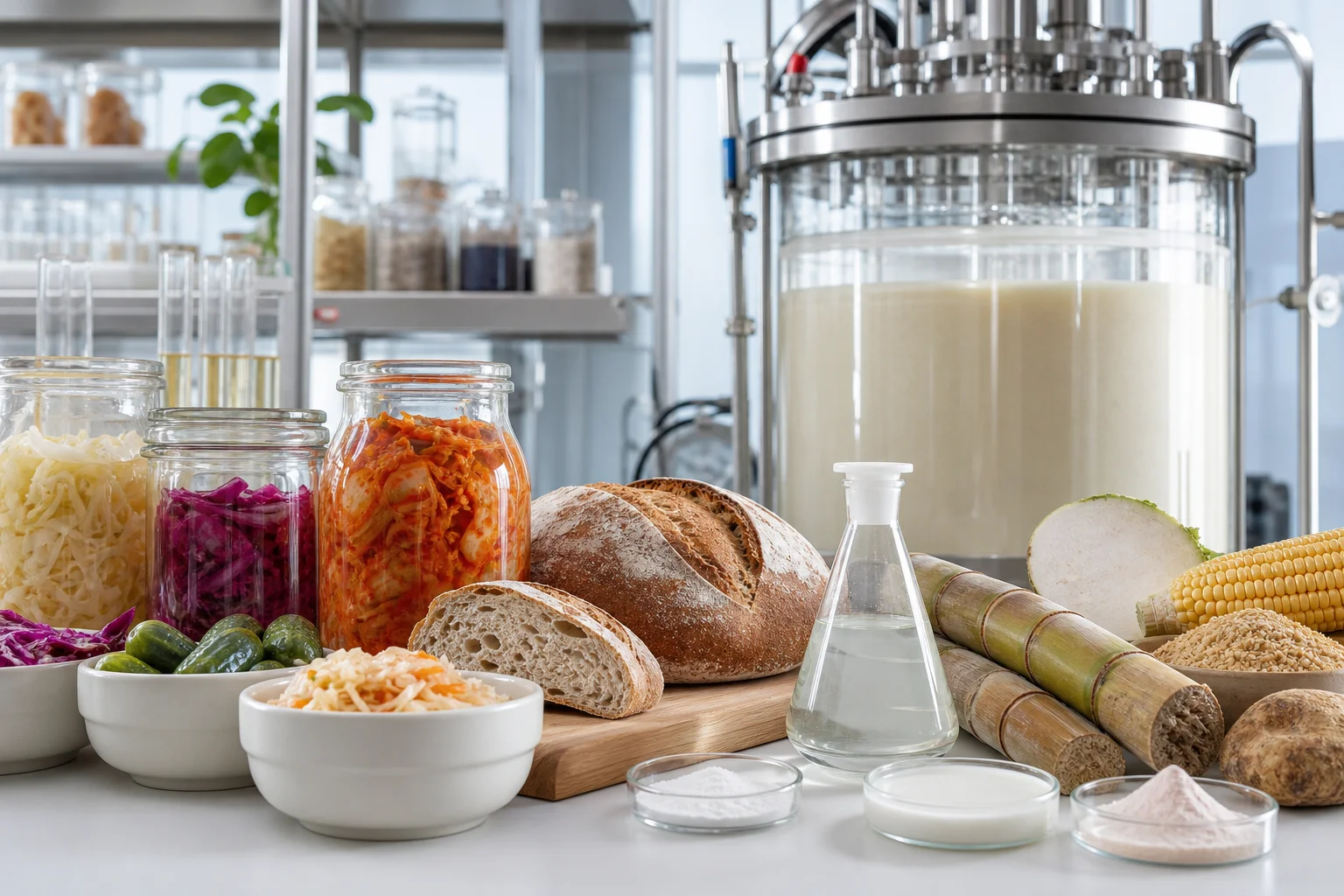
Lactic acid can be present because microbes produced it in the food itself, or because a manufacturer added purified lactic acid. Yogurt cultures produce lactic acid while fermenting lactose. Sauerkraut cultures produce it while fermenting plant carbohydrates. The molecule does not inherit a dairy identity from one familiar example.

An ingredient panel may not list lactic acid when it forms naturally during fermentation rather than being added as an ingredient. A jar of fermented vegetables can therefore contain lactic acid without "lactic acid" appearing on the label. The vegetable ingredients, starter culture, and processing method are the relevant vegan checks.

When E270 is added directly, the additive specification identifies the purified acid. It still does not state the fermentation medium. That is where supplier documentation becomes useful.

Lactates Need Product-Level Review Too

Sodium lactate, potassium lactate, and calcium lactate are made by neutralizing lactic acid with the corresponding mineral base. Their names describe the resulting salts. They do not mean sodium from milk, dairy calcium, or a particular fermentation feedstock.

Calcium lactate may be used to firm fruit, supply calcium, or support texture. Sodium and potassium lactates may control acidity or support preservation. A manufacturer can use plant-fermented lactic acid to make each one, but the generic salt name does not promise that source.

Do not confuse calcium lactate with calcium caseinate. Calcium caseinate is made from milk protein and is a dairy ingredient. Similar-looking prefixes are exactly why labels should be parsed as complete names rather than scanned for fragments like "lact."

What Strong Documentation Says

A useful declaration identifies the carbohydrate feedstock or states that the fermentation medium and processing aids are free from animal-derived materials. It should also cover the carrier if lactic acid is supplied as a powder or blend.

Statements such as "contains no lactose" and "suitable for milk-allergic consumers" answer different questions from "vegan." The first concerns a sugar, the second requires allergen-control evidence, and the third covers animal-origin production inputs. Seek the document that matches the decision you are making.

When lactic acid, E270, or a lactate appears on a package, IngrediCheck can distinguish it from obvious milk ingredients and flag the remaining source question for review. Use the vegan ingredient checker or vegetarian ingredient checker, then verify strict fermentation requirements with the manufacturer or certifier.

Next Label Check

Follow the scanner, hub, and ingredient paths connected to this guide

Get the app for clearer label decisions.

Scan labels, see what fits your food notes, and read the why in plain English.

IngrediCheck app