Ingredient FAQs

Is Sugar Vegan? How Is Bone Char Used in Refining?

Sugar starts with plants, but some cane refineries use animal-derived bone char as a processing aid. Learn which labels help and how to verify a brand.

Jul 21, 2026|8 min read
By Sanket Patel|Updated 2026-07-21|4 sources|Editorial standards
Is Sugar Vegan? How Is Bone Char Used in Refining?

Quick answer: Sugar crystals come from plants, but some refined cane sugar may be processed through animal-derived bone char to remove color. The char is a processing aid, not an ingredient intended to remain in the sugar, so "sugar" on a label usually does not reveal the method. Beet sugar, explicitly bone-char-free sugar, and vegan-certified sugar offer clearer evidence.

This question is different from whether sugar is healthy, hidden in packaged food, or suitable for diabetes. It is narrowly about production origin. Sucrose is a plant molecule. The vegan ambiguity arises after harvest, during some refining systems.

Sugar Starts With Cane or Beets

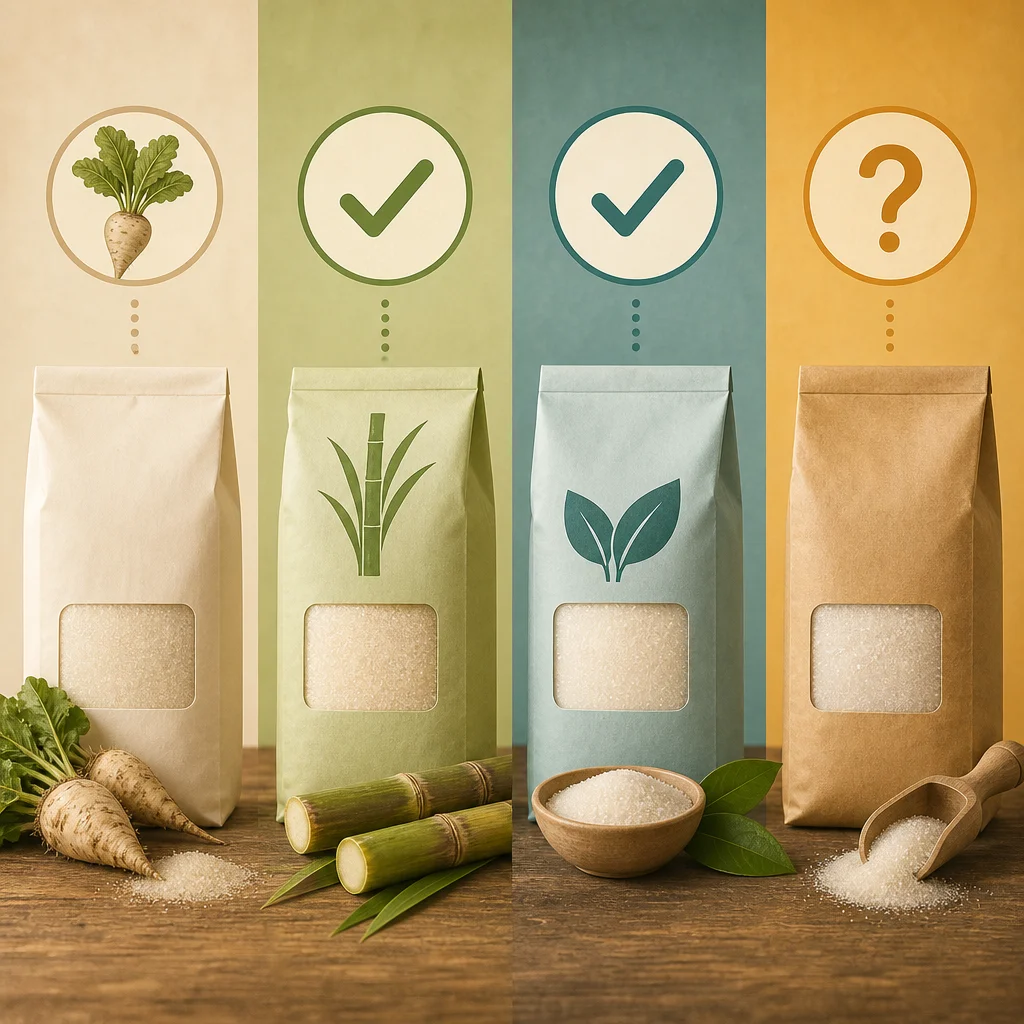
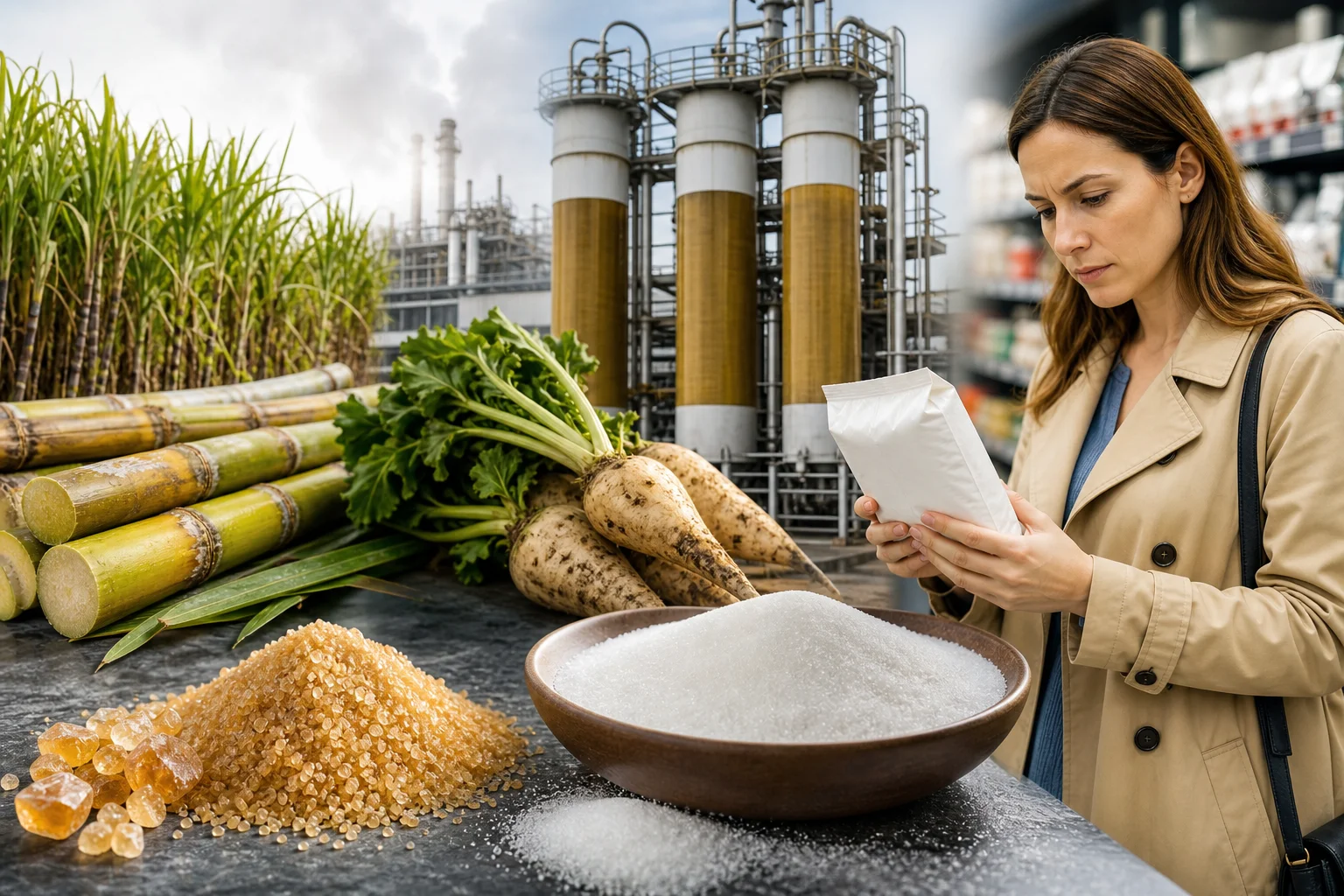
Most table sugar is sucrose extracted from sugarcane or sugar beets. Both plants produce the same sucrose molecule. The US standard of identity for sugar describes the refined crystalline product, not a required vegan processing method.

The two crops reach that product through different factory sequences:

  • Cane sugar begins with juice pressed from sugarcane. The juice is clarified, concentrated, crystallized, and may be further refined to remove color and impurities.
  • Beet sugar begins with sliced sugar beets. Sugar is extracted into water, purified, concentrated, and crystallized in an integrated beet-processing system.

The finished white crystals can look and taste the same. A package that says only "sugar" may not identify the crop, refinery, or decolorization medium.

What Bone Char Does in Cane Sugar Refining

What Bone Char Does in Cane Sugar Refining

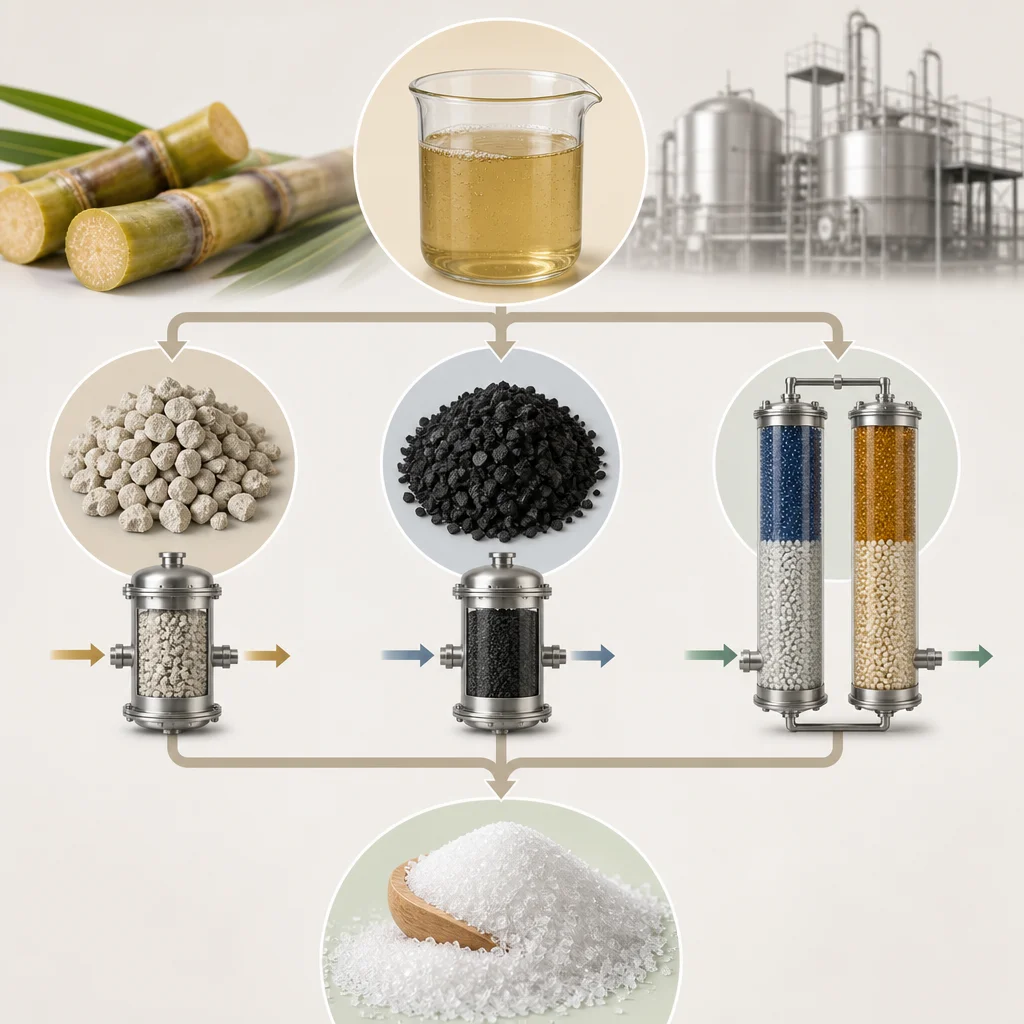
Bone char, also called bone black or natural carbon, is produced by heating animal bones under controlled conditions. The resulting porous material contains carbon and mineral components. In a refinery, it can adsorb color compounds and help purify cane-sugar liquor.

The sugar is not made from bone. Liquid sugar passes through or contacts a filtration medium, then continues through later processing and crystallization. Bone char is not intended to be present as a listed ingredient in the final crystals.

That distinction explains two statements that sound contradictory:

  • Chemically, refined sugar is sucrose from a plant.
  • Ethically, a strict vegan may reject sugar processed with an animal-derived aid.

Neither statement requires claiming that every cane refinery uses bone char. Decolorization technology varies. Refineries may use granular activated carbon, ion-exchange resins, phosphatation, carbonation, or other systems instead.

Why the Ingredient Label Usually Cannot Tell You

Processing aids are often treated differently from ingredients that remain in a finished food and perform a function there. A bag can therefore say "cane sugar" without naming the filter medium. Brown sugar can also be made by adding molasses back to refined white sugar, so color alone is not a dependable process history.

Front-of-pack words have limits:

  • Cane sugar identifies the crop, not the refinery medium.
  • Beet sugar identifies a process route that does not need the same raw-cane decolorization step.
  • Raw, turbinado, or demerara describes less-refined styles, but exact processing varies.
  • Organic is an agricultural and processing certification, not automatically the same as a vegan certification.
  • Natural does not address animal-derived processing aids.
  • Vegan certified directly evaluates the animal-origin standard behind the question.

The Vegan Society's trademark standards and other vegan certification programs examine ingredients and production requirements more directly than the generic word "sugar."

Beet Sugar Versus Cane Sugar

Beet sugar is a practical shortcut for shoppers who want to avoid the bone-char question. Beet factories extract sucrose from sliced beets and do not refine imported raw cane sugar through traditional bone-char beds. Michigan Sugar, a beet-sugar producer, publishes a specific bone-char-free statement.

That does not make every product containing beet sugar automatically vegan. The finished food may contain dairy, gelatin, carmine, confectioner's glaze, honey, animal-derived flavors, or other source-dependent additives.

Cane sugar is not automatically non-vegan either. Many cane refineries use non-animal alternatives. The crop tells you where the sucrose came from, while the refinery or certification tells you how it was purified.

White, Brown, Powdered, and Liquid Sugar

White, Brown, Powdered, and Liquid Sugar

White granulated sugar

If it is cane sugar, the decolorization process may need verification. If it is beet sugar, the bone-char concern does not follow the same route.

Brown sugar

Brown sugar may be less refined, or it may be white sugar blended with molasses. Do not assume the brown color proves it bypassed a particular filter.

Powdered sugar

Powdered or confectioners' sugar is finely milled sugar, often mixed with starch to prevent clumping. Its source question follows the underlying sugar, and the starch should be reviewed separately if another dietary rule applies.

Liquid and invert sugar

Manufacturers may use liquid sucrose, invert syrup, or cane syrup. The label may identify the form without identifying the upstream refinery.

Sugar inside another product

A cookie or sauce manufacturer may buy from several approved sugar suppliers. Customer service may know whether the finished product meets a vegan specification even when it cannot name one refinery for every lot.

A Practical Verification Ladder

1. Look for explicit product evidence

The clearest package signals are a credible vegan certification, a bone-char-free statement, or a named beet-sugar source. Check that the evidence applies to the exact product and market.

2. Check the producer's FAQ or specification

Search the official site for "bone char," "vegan," "decolorization," or "processing aids." Prefer a current statement over a crowdsourced brand list because refinery contracts can change.

3. Ask about all qualified suppliers

Use a question that accounts for alternate sourcing:

Is every sugar source approved for this product processed without bone char or any other animal-derived processing aid, including backup suppliers and co-packers?

For packaged foods, ask whether the finished product is made to a vegan specification rather than asking only whether sugar is plant-derived.

4. Decide what unresolved means for you

Some vegans focus on ingredients intentionally present in the final product and accept generic sugar. Others avoid animal-derived processing aids and require verification. Apply the standard you follow consistently.

5. Recheck formulas and regions

A brand can use different sugar suppliers in different countries or plants. A statement about a retail bag may not cover sugar used in every branded cookie, drink, or restaurant item.
Common Questions

Does bone char remain in sugar?

It is used as a filtration or decolorization medium, not as an ingredient intended to remain in the crystals. The vegan concern is the use of an animal-derived aid, not a claim that sugar crystals are pieces of bone.

Is all cane sugar non-vegan?

No. Cane refineries use several purification technologies, and verified bone-char-free cane sugar is available. Confirm the producer or certification.

Is all beet sugar vegan?

Beet sugar avoids the specific raw-cane bone-char question. Product-level vegan status still depends on every ingredient and processing aid in the finished food.

Is brown sugar safer for a strict vegan?

Not automatically. Some brown sugar is made from refined white sugar plus molasses. Verify the brand rather than judging by color.

Can restaurants answer this question?

Sometimes, but a restaurant may not know the upstream refinery. A supplier's vegan specification or certified product sheet is stronger evidence than a verbal guess.

What About Molasses and Other Cane Products?

Molasses is separated during cane or beet sugar crystallization. Its vegan status depends on the production stream and any later blending, not on the fact that it is dark. Blackstrap, light, and dark molasses describe different products or stages, but those names are not universal bone-char declarations.

Evaporated cane juice, cane crystals, panela, jaggery, muscovado, and similar less-refined products may bypass the white-sugar refinery sequence associated with bone-char decolorization. Their exact manufacturing methods vary by producer and region. Use an explicit process statement instead of assuming that rustic color or packaging proves a particular route.

Beet molasses is commonly directed to industrial, fermentation, or feed uses rather than sold as ordinary table molasses. That market pattern does not change the basic rule: crop names and product styles provide clues, while producer documentation resolves the processing-aid question.

Sugar in Packaged Foods Is Harder to Trace

A retail sugar company can answer how its own bags are processed. A cereal, candy, bakery, or beverage company may purchase bulk sugar through distributors, co-packers, or several regional plants. The package then lists "sugar" without naming any of them.

For a strict vegan standard, ask whether procurement specifications prohibit bone char across every approved source. This is stronger than asking whether the company's usual sugar supplier uses bone char. "Usually" leaves room for alternate lots.

A vegan certification can simplify this chain because the product standard covers the manufacturer's ingredient and processing-aid controls. Without certification, a written finished-product statement is more useful than trying to identify the refinery from crystal color, country of sale, or barcode.

This traceability issue is also why fixed online lists age poorly. A brand can change co-packers or regional suppliers while keeping the same recipe and package design. Date every answer and recheck after a reformulation, ownership change, or unexplained certification change.

IngrediCheck can help you review a complete packaged-food label for obvious animal ingredients and other source-dependent terms, while treating generic sugar as a verification question rather than inventing certainty. Use the vegan ingredient checker or vegetarian ingredient checker, then confirm the sugar specification with the manufacturer or certifier when bone-char avoidance matters.

Next Label Check

Follow the scanner, hub, and ingredient paths connected to this guide

Get the app for clearer label decisions.

Scan labels, see what fits your food notes, and read the why in plain English.

IngrediCheck app