Label Reading Guides

Kosher Pareve vs Vegan: What Food Labels Really Prove

Kosher pareve and vegan labels overlap around meat and dairy, but they certify different rules. Compare fish, eggs, honey, equipment, additives, and allergen limits.

Aug 21, 2026|8 min read
By Sanket Patel|Updated 2026-08-21|9 sources|Editorial standards
Kosher Pareve vs Vegan: What Food Labels Really Prove

Quick answer: Pareve means a kosher-certified food is classified as neither meat nor dairy under the certifier's rules. It does not mean vegan. A pareve product may contain kosher fish, eggs, or honey, while a vegan standard excludes animal-derived foods. Pareve certification also evaluates kosher production status, which is not the same as an allergen-free or vegan manufacturing claim.

The overlap is still useful. A pareve mark can provide strong evidence that a certified product is not classified as meat or dairy. A vegan certification can provide strong evidence that the certified product excludes animal-derived ingredients within that program's scope. Neither symbol should be stretched beyond the question it certifies.

This comparison was checked against Orthodox Union kosher guidance and current vegan certification criteria on August 21, 2026. Certification policies and symbols vary, so the issuing certifier's current product record remains the authority.
The Difference in One Table

The Difference in One Table
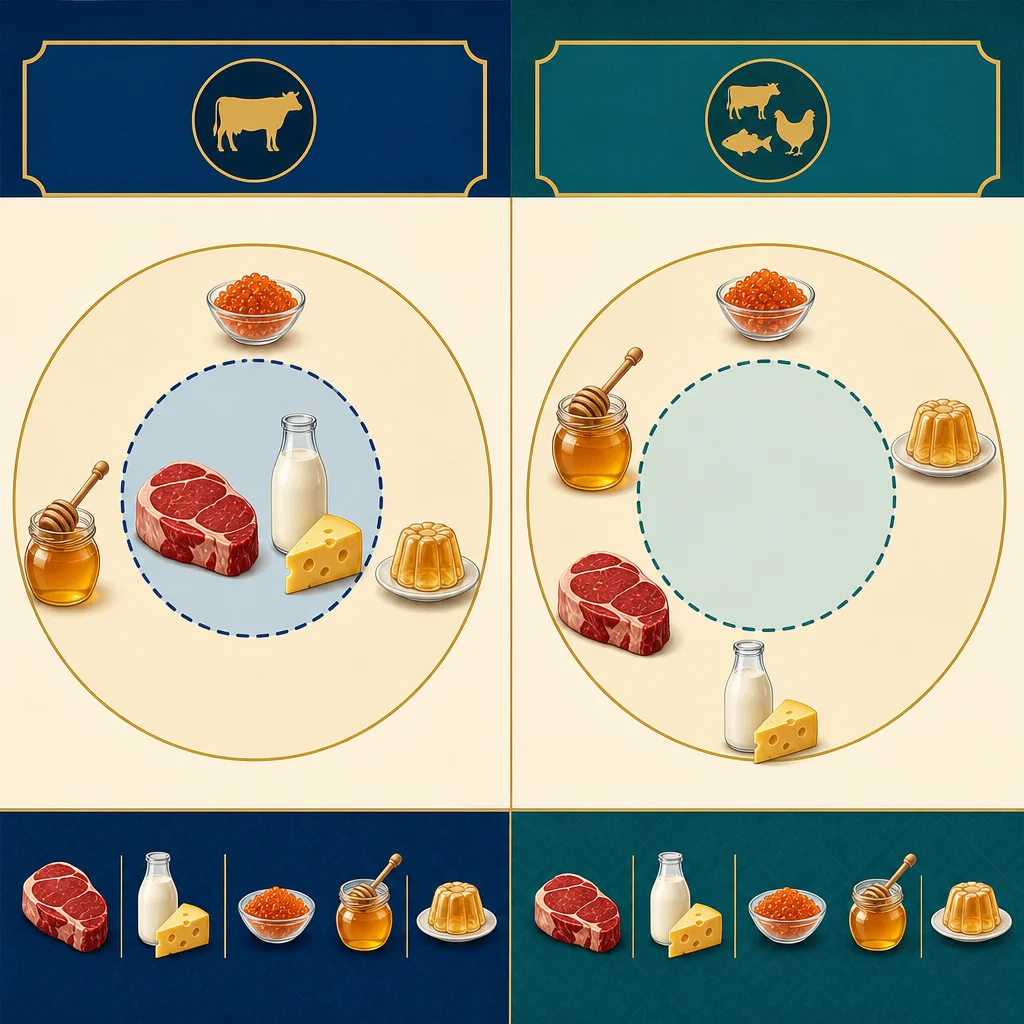
Food or production questionKosher pareveVegan
Meat and poultryExcluded from pareve classificationExcluded
DairyExcluded from pareve classificationExcluded
Kosher fishCan be pareveExcluded
Eggs from permitted birdsCan be pareveExcluded
HoneyCan be pareveExcluded by standard vegan definitions
GelatinDepends on kosher source and certifier; not automatically veganAnimal-derived gelatin excluded
Insect-derived color or glazeKosher status depends on the substance and certifierExcluded when animal-derived
EquipmentEvaluated for kosher status and meat/dairy/pareve classificationAddressed according to the vegan certification program's criteria
Cross-contact with milkPareve status is useful evidence but not an allergy guaranteeVegan status is not an allergy guarantee
Religious complianceAddresses kashrut within the certificationDoes not certify kosher status
Animal-derived ingredientsSome permitted non-meat, non-dairy animal foods can qualifyExcluded within the standard's scope

The shortest memory aid is: pareve separates meat and dairy for kosher classification; vegan separates animal-derived from non-animal-derived.

What Pareve Means

Pareve, sometimes spelled parve, is the neutral kosher category. Orthodox Union guidance describes pareve foods as containing neither meat nor dairy and as not being processed with heat on meat or dairy equipment unless that equipment has been rendered kosher for pareve production under the relevant rules.

Common inherently pareve foods include plain fruit, vegetables, grains, legumes, and many nuts and seeds. The category can also include:

  • kosher fish
  • eggs from permitted birds when they meet kosher requirements
  • honey
  • certified baked goods, snacks, beverages, and pantry products

Those examples show why a pareve logo cannot be translated to vegan. Fish, eggs, and honey are animal-derived even when kosher law classifies them as neither meat nor dairy.

The Kosher Dietary Guide owns the broader reference for symbols, meat and dairy separation, permitted species, grape products, and certification.

What Vegan Certification Means

Vegan standards exclude ingredients and products of animal origin within the program's rules. That normally covers meat, fish, shellfish, dairy, eggs, honey, gelatin, shellac, beeswax, carmine, and animal-derived processing aids addressed by the certifier.

This is a different audit question from kashrut. A vegan certifier can investigate whether an enzyme, flavor carrier, vitamin, fining agent, or source-dependent additive is animal-derived. It does not determine whether production equipment is kosher, whether wine has kosher supervision, or whether every ingredient comes from a kosher-permitted species and process.

A product can therefore be:

  • pareve and vegan, such as certified plain crackers made with plant ingredients
  • pareve but not vegan, such as a product containing egg, honey, or kosher fish
  • vegan but not certified kosher, because vegan sourcing does not establish kosher supervision
  • certified kosher dairy and vegetarian, but neither pareve nor vegan

The Vegan Dietary Guide covers the ambiguous animal-source ingredients. The vegan ingredient checker is the product workflow.

Six Ingredients That Expose the Difference

Egg

Egg can fit pareve when it meets kosher requirements. It does not fit vegan certification.

Kosher fish

Fish with the required kosher characteristics can be pareve. All fish are excluded from vegan food.

Honey

Honey is commonly accepted as kosher pareve. Vegan certification standards exclude honey because it is made by bees.

Gelatin

Kosher certification can accept certain gelatin under the certifier's sourcing and processing requirements. The existence of kosher gelatin therefore does not make gelatin vegan.

Carmine and shellac

These insect-derived ingredients raise different questions under kosher and vegan standards. A kosher certification decision does not prove a non-animal source. Vegan review excludes them when animal-derived.

Wine and grape ingredients

Wine can be made without animal fining agents and still require separate kosher production controls. Conversely, kosher wine is not automatically vegan if the production inputs were not evaluated under a vegan standard. The Beer and Wine Vegan Guide explains the fining-agent question.

Why Equipment Matters to Both, but Differently

Why Equipment Matters to Both, but Differently

Kosher certification evaluates equipment status because heat processing on meat or dairy equipment can affect whether a product is classified as pareve. Production scheduling, cleaning, kosherization, temperature, and certifier supervision can all matter.

Vegan certification programs also set production and cross-contamination criteria, but their purpose is not to assign kosher meat, dairy, and pareve status. A shared line may be handled differently depending on the program's standard and the product claim.

Do not infer that one audit contains the other. If a household needs both kosher pareve and vegan, look for evidence for both requirements.

Pareve Is Not a Milk-Allergy Guarantee

Pareve status is meaningful evidence that the certified product is not classified as dairy. It is not a medical milk-allergy-safe claim.

The questions differ:

  • Kosher certification asks whether the product and process meet the certifier's kashrut requirements and classification.
  • Food-allergen labeling asks whether regulated allergens must be declared.
  • An individual's allergy plan asks what ingredient, facility, equipment, and precautionary evidence is acceptable for that person.

Always read the current ingredient statement and allergen language. If the package has a pareve symbol but also carries a milk precautionary statement, do not erase the warning because of the symbol. Contact the certifier and manufacturer when the records appear inconsistent or the allergy plan requires more detail.

The inverse is also important: a vegan logo is not a universal milk-allergy guarantee. Vegan programs evaluate animal use, while allergy risk concerns unintended cross-contact and clinical thresholds.

How to Check a Product That Must Be Both Pareve and Vegan

  1. Confirm the kosher symbol. Identify the actual certifier and ensure the symbol is not marked dairy, meat, or a special status inconsistent with the rule.
  2. Verify current pareve status. Use the certifier's product database or contact the certifier if the package is unclear.
  3. Read every ingredient. Check for fish, egg, honey, gelatin, shellac, carmine, beeswax, dairy, meat, and source-dependent additives.
  4. Look for credible vegan evidence. A recognized vegan certification is stronger than assuming a pareve product is plant-only.
  5. Check processing aids and beverages. Enzymes, flavors, vitamins, clarifiers, and fining agents may not be obvious from the product name.
  6. Apply allergen needs separately. Read regulated declarations and precautionary language through the person's allergy plan.
  7. Recheck the package and databases. Certification and formulation can change.

The kosher ingredient checker can organize kosher-relevant label evidence. Use it alongside the vegan checker when both rules apply.

Common Front-of-Pack Mistakes

Pareve means plant-based

False. Pareve can include fish, eggs, and honey.

Vegan means kosher

False. Plant-only ingredients do not establish kosher supervision, equipment status, or special rules for products such as wine and grape derivatives.

Pareve means dairy-allergy-safe

False as a universal statement. Read the allergen label and follow the individual allergy plan.

Plant-based means both

False. Plant-based can be a marketing description without the certification evidence needed for either decision.

One familiar symbol settles every market

False. Kosher symbols belong to particular certifiers, and vegan marks belong to particular standards. Identify the issuer rather than interpreting the shape alone.

The strongest package evidence is specific and current: the certifier's symbol on the exact product, a matching entry in the certifier's database, the full ingredient and allergen text, and a vegan mark or manufacturer confirmation that covers the same formulation. A social-media reply, old package photo, or retailer filter is weaker because it may refer to another date, market, or size.

Use Two Proofs for Two Rules

Pareve and vegan labels overlap, but their boundaries and audit purposes are different. Pareve can be strong evidence for kosher neutrality between meat and dairy. Vegan certification can be strong evidence against animal-derived inputs. A household that needs both should verify both.

IngrediCheck helps you compare the current ingredients and certification clues with saved kosher and vegan rules, surface fish, egg, honey, gelatin, dairy, and ambiguous additives, and identify when the certifier or manufacturer needs to confirm the product.

Next Label Check

Follow the scanner, hub, and ingredient paths connected to this guide

Get the app for clearer label decisions.

Scan labels, see what fits your food notes, and read the why in plain English.

IngrediCheck app