Ingredient FAQs

Are Beer and Wine Vegan? Isinglass and Animal Finings

Beer and wine may use fish, egg, milk, or gelatin fining agents that never appear on the label. Learn which production questions and certifications help.

Jul 21, 2026|9 min read
By Sanket Patel|Updated 2026-07-21|4 sources|Editorial standards
Are Beer and Wine Vegan? Isinglass and Animal Finings

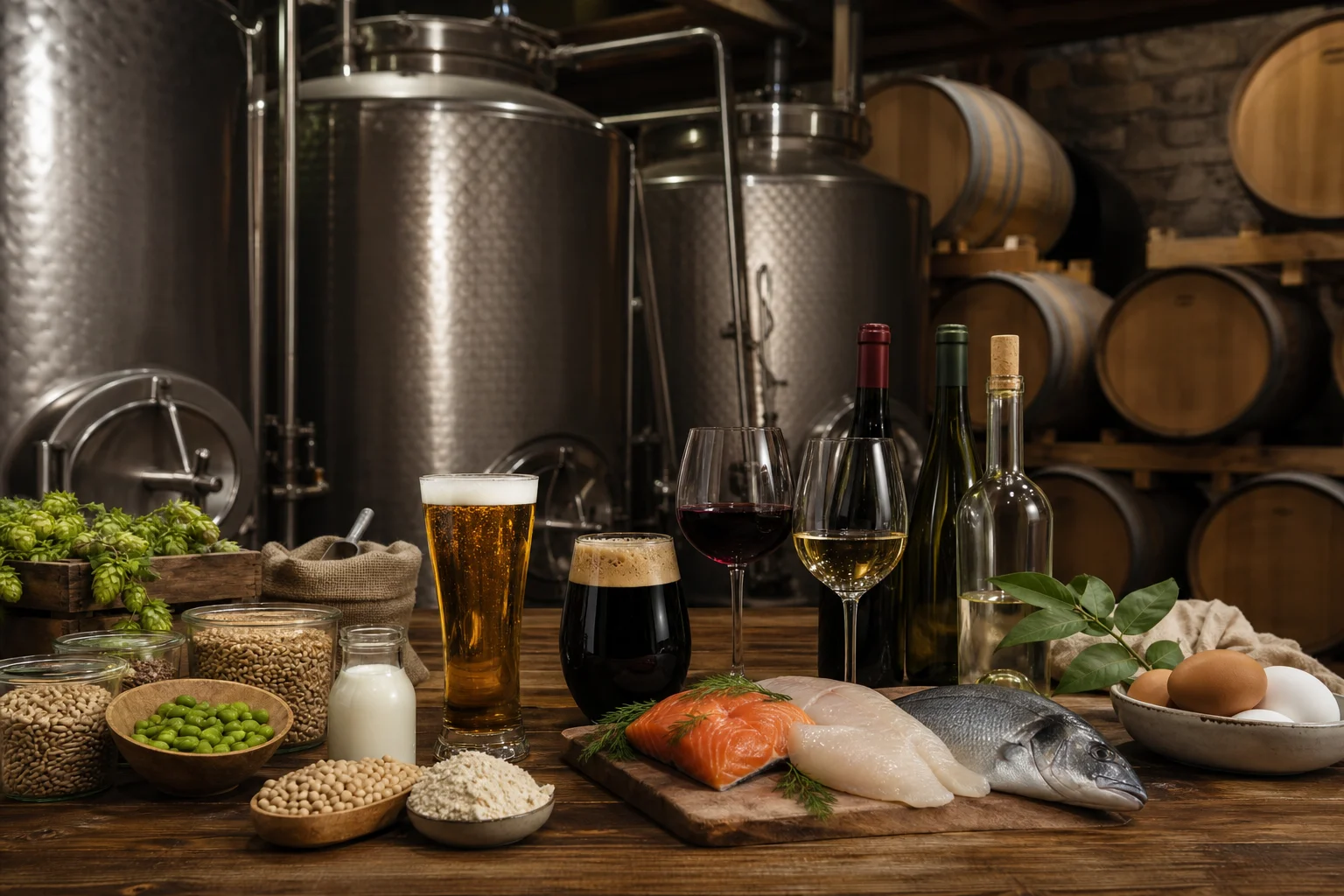
Quick answer: Beer and wine are not automatically vegan just because their obvious ingredients are plants. Producers may use isinglass from fish, gelatin from animal tissue, egg white, or milk casein to clarify a beverage. These fining agents can be removed with the sediment and may not appear on the final label. Vegan certification, an explicit producer statement, or current production documentation is more reliable than the ingredient list alone.

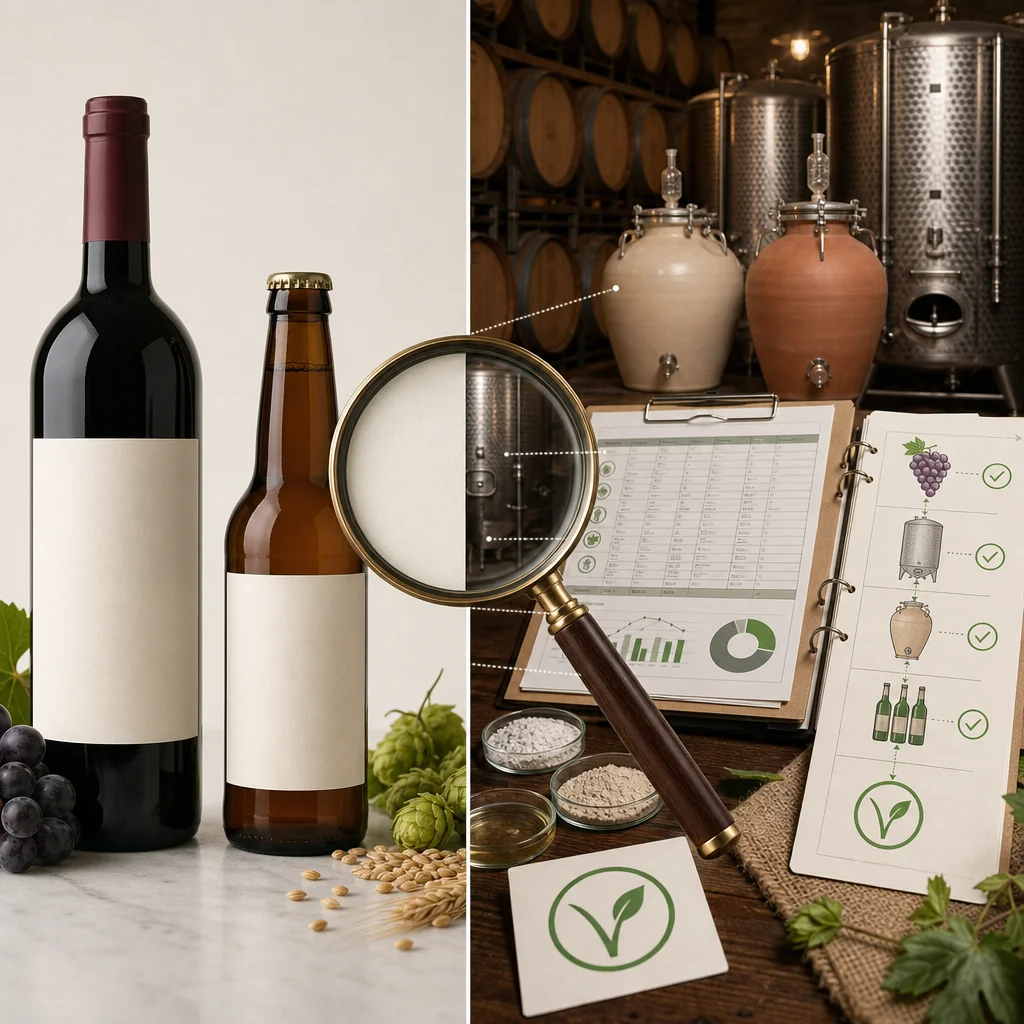
This is a production-method question, not a claim that every alcoholic drink contains animal material. Many producers use plant, mineral, synthetic, or no fining agents. The difficulty is that two visually similar bottles can follow different cellar or brewery processes while disclosing very little about them.
What Fining Does

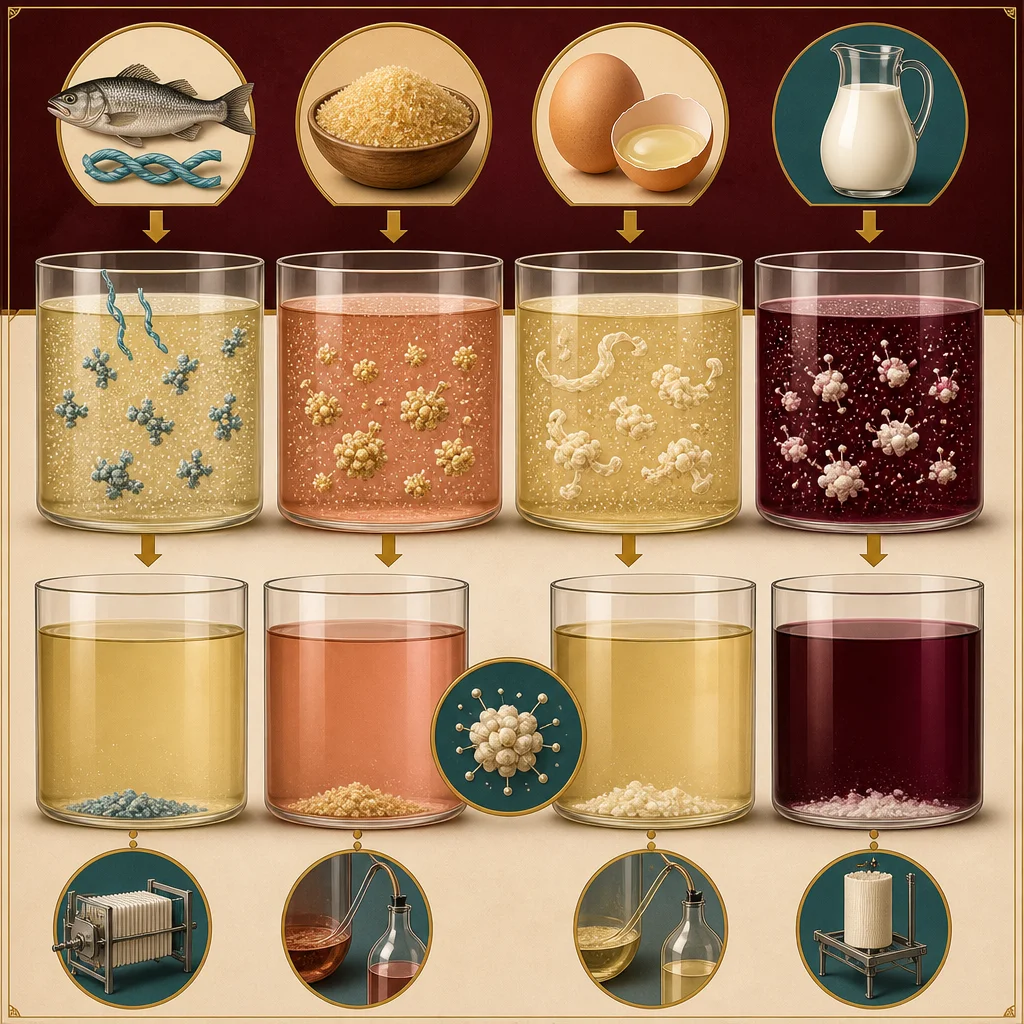
Fresh beer and wine can contain yeast, proteins, tannins, and other suspended particles. Given enough time, some settle naturally. Producers may also add a fining agent that binds or attracts selected particles so they form larger aggregates and can be removed by settling, racking, or filtration.

Fining can be used to:

  • improve clarity and brightness
  • reduce haze-forming proteins
  • soften astringency or bitterness
  • correct color or oxidation problems
  • speed production and improve consistency
  • prepare a beverage for filtration or packaging

The agent's purpose is usually temporary. It performs a technical job and is then removed with the material it captured. That is exactly why an ordinary final-ingredient list may not tell the whole story.

Animal-Derived Fining Agents

Animal-Derived Fining Agents

Isinglass

Isinglass is a collagen-rich material made from fish swim bladders. It has a long history in brewing, especially for clarifying some traditional cask-conditioned ales. It can also be used in wine production.

For vegans and vegetarians who exclude fish-derived processing aids, isinglass makes the production method unsuitable even if little or none is expected to remain in the poured drink.

Gelatin

Gelatin comes from animal collagen, commonly from bovine or porcine tissues. Brewers and winemakers may use it to remove haze, tannins, or other suspended material. "Gelatin-free" is useful but does not rule out isinglass, egg, or casein.

Egg albumin

Egg white can fine red wine by binding excess tannins and reducing harsh astringency. It may be described in technical records as albumin or egg albumen.

Casein

Casein is a milk protein used in some wines to address browning, bitterness, or oxidation-related defects. Potassium caseinate is a related processing form.

Other animal-origin inputs may include chitosan made from crustacean shells, though fungal chitosan alternatives also exist. Honey, lactose, oyster shells, and animal-derived flavors can be intentional beverage ingredients rather than fining agents, so review both formulation and processing.

Vegan Alternatives

Animal finings are not technically necessary for every beverage. Producers can use:

  • bentonite clay
  • silica sol
  • plant proteins from peas or potatoes
  • PVPP, a synthetic polymer used to bind polyphenols
  • activated carbon, depending on the correction needed
  • fungal-origin chitosan
  • filtration, centrifugation, cold stabilization, or extended settling
  • no fining, with the beverage sold as unfined or naturally clarified

Each alternative has different effects and is chosen for a specific problem. "Unfiltered" and "unfined" are not synonyms. A beer can be filtered after animal fining, and a wine can be unfined but filtered.

Likewise, cloudy does not guarantee vegan and crystal-clear does not prove animal fining. Appearance is not a production record.

Why US Labels May Not Tell You

Alcohol labeling in the United States is split across regulators and product categories. For wine, distilled spirits, and malt beverages under TTB jurisdiction, current major-allergen declarations are generally voluntary. The TTB allergen-labeling page explains the interim framework.

The applicable wine-label regulation says that if a producer voluntarily declares one major food allergen, it must declare all major allergens used in production, including fining or processing agents, subject to approved exemptions. That is not the same as requiring every bottle to list every fining agent.

In January 2025, TTB published a proposed mandatory allergen-labeling rule. A proposal is not proof that every label already follows the proposed system. Shoppers should rely on current rules and the actual bottle.

Some beers fall under FDA labeling rules rather than TTB rules, depending on their formulation. That regulatory split is another reason a generic statement about "beer labels" can be misleading.

The EU Labeling Gap Is Different, Not Absent

The EU Labeling Gap Is Different, Not Absent

EU food-information law requires disclosure of specified allergens, but exemptions and residue conditions affect fining agents. Regulation (EU) 1169/2011 includes a fish exemption for fish gelatin or isinglass used as fining agents in beer and wine. Egg- and milk-based wine finings have their own labeling rules and thresholds under wine legislation.

The result is that allergen law can provide useful information without functioning as a vegan production standard. A bottle with no fish declaration may still have used isinglass under an exemption. A vegan certification asks a broader ethical-source question than allergen residue rules.

How to Verify Beer or Wine

1. Look for a credible vegan mark

Certification is the strongest on-package shortcut because it can cover processing aids. Verify that it applies to the exact vintage, flavor, package, and market.

2. Check the producer's technical information

Winery tech sheets and brewery FAQs may say "vegan," "unfined," "no animal products," or name the fining system. Prefer producer documents over a retailer's unverified category filter.

3. Use a current specialist directory

Barnivore compiles producer responses about beer, wine, and liquor. It is a useful starting point, but check the response date and exact product. A community directory is not a permanent certification.

4. Ask about the complete process

Are any animal-derived ingredients or processing aids used for this product, including isinglass, gelatin, egg albumin, casein, animal chitosan, honey, or lactose, and does the answer apply to this vintage and country?

For a brewery, ask whether cask, keg, can, and bottle versions follow the same conditioning process. For wine, ask about the specific vintage because cellar decisions can change with the harvest.

5. Treat "unfined" carefully

An explicit unfined statement resolves the fining question but not every ingredient. A beer may contain lactose or honey. A wine-based drink may contain carmine, gelatin, or flavor carriers elsewhere in the formula.

Allergy Safety Is a Separate Decision

This article addresses vegan and vegetarian production choices. Someone with a fish, egg, or milk allergy needs a stricter medical-risk assessment.

Fining processes are designed to remove the agent, and studies assess whether residual allergenic protein remains. That does not make a vegan directory or an "unfined" marketing statement a substitute for allergen labeling, manufacturer allergen controls, or clinician guidance.

For fish-specific risks in sauces, supplements, and beverages, use the fish allergy dietary guide. Keep ethical sourcing and allergy safety as separate saved rules.

Common Questions

Is all beer vegan?

No. Many beers use no animal inputs, but some use isinglass, gelatin, lactose, honey, or other animal-derived ingredients or aids. Check the exact product and package format.

Is all wine vegan?

No. Grape juice and yeast can become wine without animal inputs, but some winemakers use egg, milk, fish, or gelatin finings.

Does "unfiltered" mean vegan?

No. Unfiltered describes filtration. It does not prove that no animal fining agent was used earlier.

Does a "contains sulfites" label answer the vegan question?

No. Sulfite disclosure addresses a specific labeling requirement. It does not list every processing aid.

Are spirits vegan?

Many plain distilled spirits are made without animal products, but flavored spirits, cream liqueurs, honey products, colorants, and production aids need separate review.

Vintage, Format, and Market Can Change the Answer

Wine production decisions respond to the grapes in a particular harvest. A winery may use no fining in one vintage and a targeted fining treatment in another. A general statement that a wine "is vegan" is strongest when the producer confirms that it applies to the named vintage or uses a standing no-animal-input specification.

Beer can vary by package format. Traditional cask ale may be conditioned with isinglass while a canned or kegged version of a beer is clarified differently. Seasonal releases, contract-brewed batches, and recipes made for another country can also diverge.

This is why database entries should be read as dated evidence. Match the producer, exact product, package, country, and response date. If any field differs, use the listing as a prompt to ask rather than as a permanent verdict.

What Producer Documentation Can Say

The most useful brewery or winery statement excludes animal-derived ingredients and processing aids across the complete process. "No animal products remain in the finished beverage" is not identical. A strict vegan standard cares that an animal aid was used, even if filtration later removed it.

Technical sheets may list bentonite, pea protein, PVPP, or no fining. Certification records can go further by controlling supplier declarations and changes. An allergen statement is valuable for allergy management, but it can follow residue thresholds and legal exemptions that do not match vegan ethics.

When contacting a producer, ask who controls the process. A brand owner may outsource production to several facilities. The answer should cover the facility that made the bottle or can being sold in your market.

IngrediCheck can flag declared animal ingredients in alcoholic beverages and help you keep vegan, vegetarian, and allergy preferences separate, but undisclosed fining agents still require production evidence. Use the vegan ingredient checker or vegetarian ingredient checker, then confirm the exact beer, wine, vintage, and package with the producer or certifier.

Next Label Check

Follow the scanner, hub, and ingredient paths connected to this guide

Get the app for clearer label decisions.

Scan labels, see what fits your food notes, and read the why in plain English.

IngrediCheck app