Label Reading Guides

Crustaceans vs Mollusks vs Shellfish Label Rules Explained

Shellfish is an umbrella term, but crustaceans and mollusks are not labeled the same way everywhere. Compare the species, regional allergen rules, and package checks.

Aug 21, 2026|8 min read
By Sanket Patel|Updated 2026-08-21|8 sources|Editorial standards
Crustaceans vs Mollusks vs Shellfish Label Rules Explained

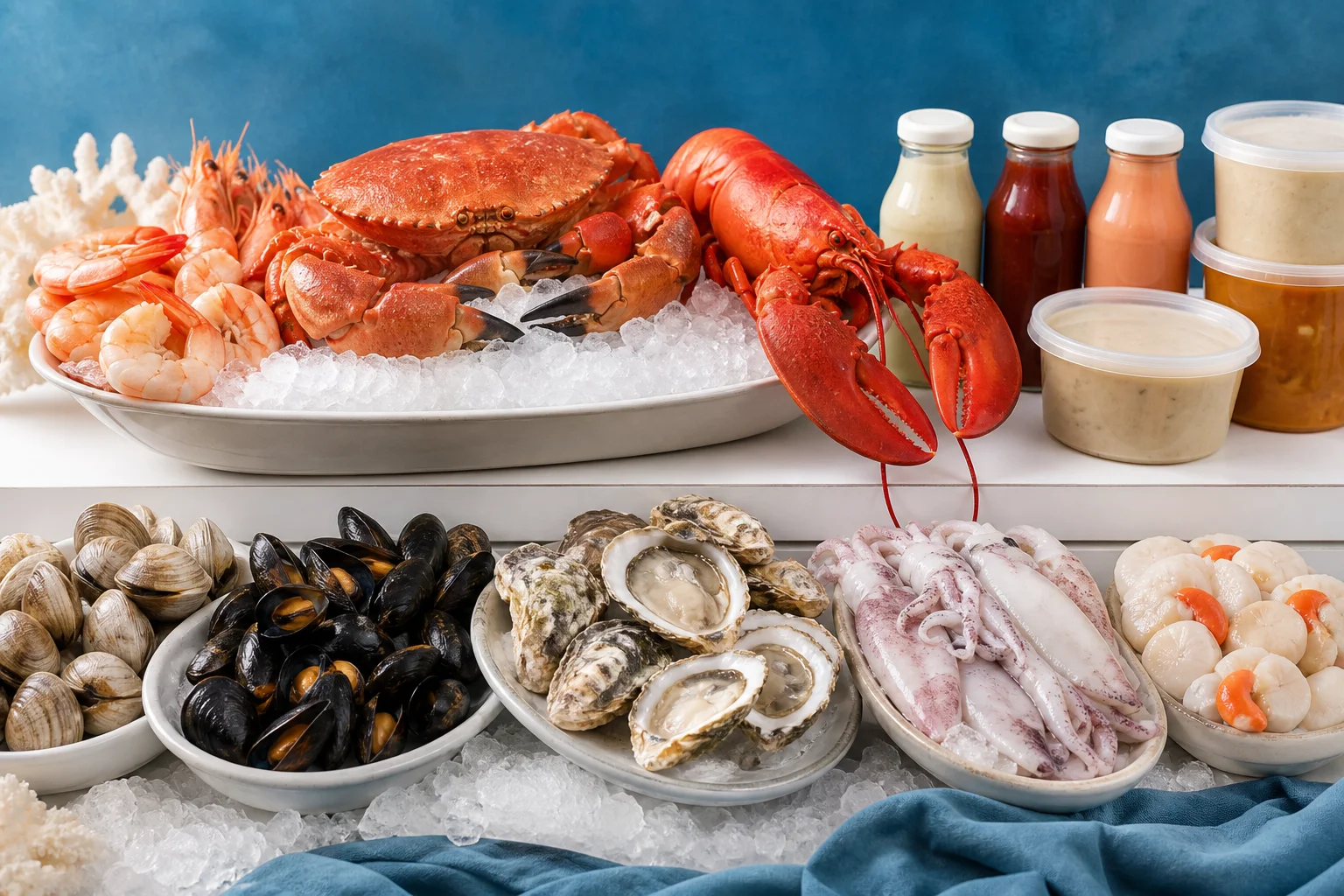
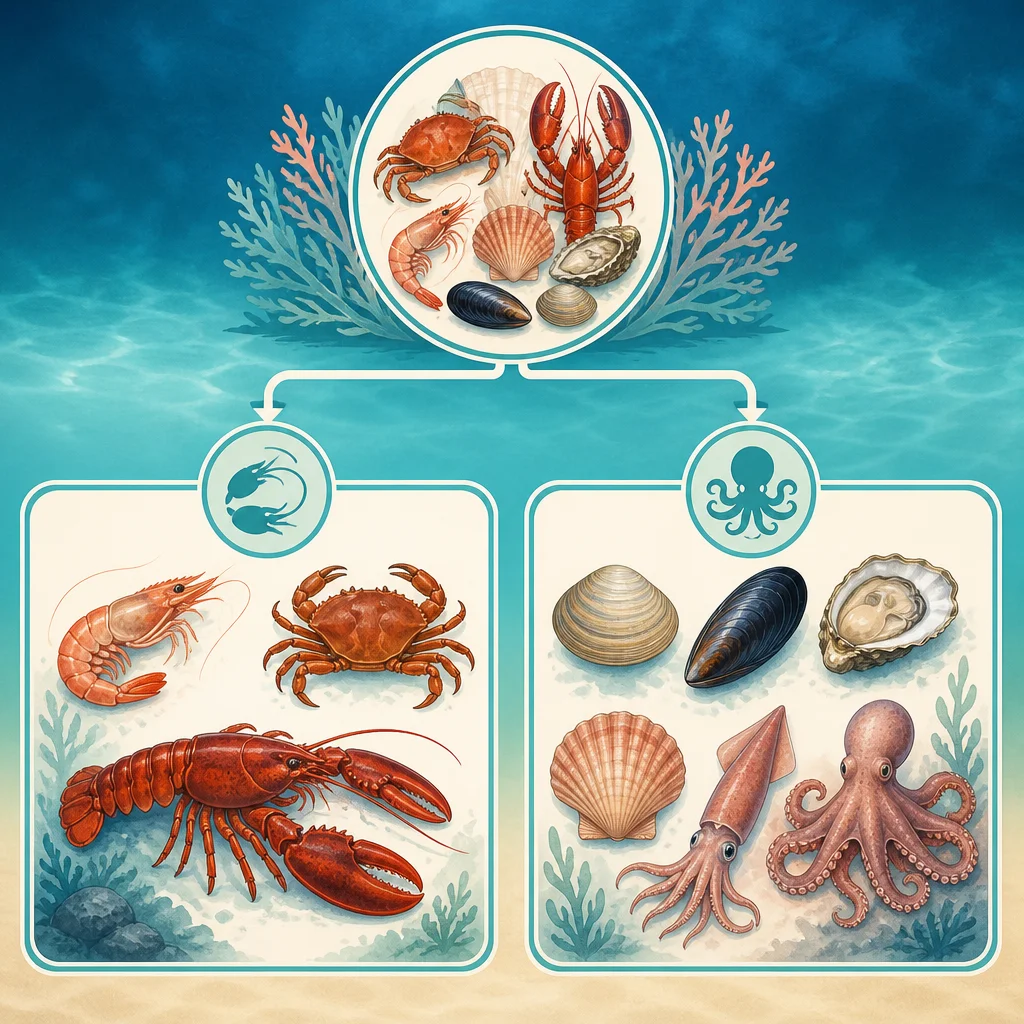
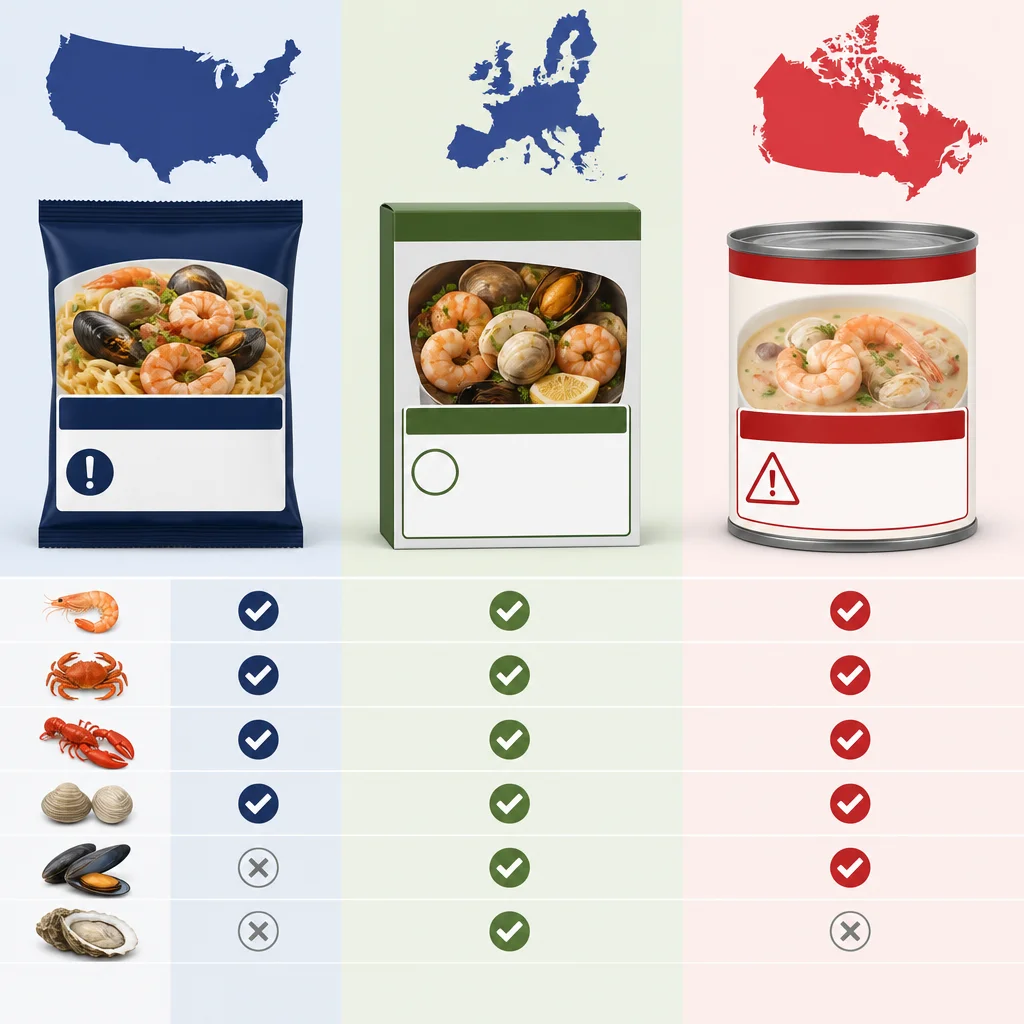
Quick answer: Shellfish is an umbrella term that includes crustaceans and mollusks. Shrimp, crab, lobster, and crayfish are crustaceans. Clams, mussels, oysters, scallops, squid, octopus, and snails are mollusks. The United States major-allergen rule covers crustacean shellfish but not molluscan shellfish, while European Union and Canadian rules explicitly cover both groups.

That regional difference makes a generic shellfish-free check unreliable. A package that complies with United States major-allergen disclosure can contain a mollusk without declaring shellfish in a Contains statement. The mollusk should still appear by its ingredient name when it is an ingredient, but it does not receive the same federal major-allergen treatment as crustacean shellfish.

This comparison was checked against United States, European Union, and Canadian food-labeling sources on August 21, 2026. It explains declaration scope. It does not predict whether one individual will react to a species or whether a product is safe.
Which Animals Belong to Each Group?

Which Animals Belong to Each Group?
GroupCommon examplesTypical packaged-food clues
CrustaceansShrimp, prawn, crab, lobster, crayfish, krillshrimp paste, crab extract, lobster stock, prawn crackers, krill oil
Bivalve mollusksClams, mussels, oysters, scallopsoyster sauce, clam juice, mussel extract, scallop flavor
Cephalopod mollusksSquid, octopus, cuttlefishsquid ink, dried squid, octopus pieces, cuttlefish extract
Gastropod mollusksSnails, whelks, abalone, limpetsescargot, abalone sauce, whelk meat
ShellfishBroad consumer umbrella for crustaceans plus molluskstoo broad to reveal which group or species is present

Fish are not shellfish. Salmon, tuna, cod, anchovy, and other finfish form a separate allergen category in the United States, European Union, and Canada. A profile that says only seafood allergy therefore needs clarification: finfish, crustaceans, mollusks, or a clinician-defined combination.

How the United States Rule Works

The United States list of major food allergens includes crustacean shellfish. FDA guidance identifies crab, lobster, and shrimp as examples and requires the specific type of crustacean shellfish to be declared.

Molluscan shellfish are different. FDA guidance states that molluscan shellfish, such as oysters, clams, mussels, and scallops, are not major food allergens under the federal definition. That leads to two practical consequences:

  1. A crustacean ingredient must receive major-allergen source disclosure.
  2. A mollusk ingredient is still listed as an ingredient, but federal law does not require it to appear in a major-allergen Contains statement merely because it is a mollusk.

For example, a US sauce made with oyster extract can list oyster in the ingredient statement without a Contains: Shellfish line. A shrimp sauce must disclose the crustacean species through the labeling mechanisms required for a major allergen.

This is why scanning only the Contains line is not enough for mollusk avoidance. Read the complete ingredient list every time.

How European Union Rules Differ

European Union Regulation 1169/2011 lists the relevant categories separately in Annex II:

  • crustaceans and products thereof
  • molluscs and products thereof
  • fish and products thereof

When one of these is used as an ingredient, its category must be emphasized in the ingredients information according to the regulation. The separation is useful because a consumer may need to avoid one group without assuming every aquatic animal is the same allergen.

An EU label can therefore provide prominent allergen treatment for oyster, mussel, squid, or snail in a way a US major-allergen statement is not required to do.

How Canada Treats Shellfish

How Canada Treats Shellfish

Canadian priority-allergen rules include crustaceans and molluscs. Canadian labeling guidance also requires the source of those allergens to be declared when applicable.

For cross-border shopping, do not copy a United States assumption onto a Canadian label. Canada and the European Union give mollusks explicit priority-allergen treatment, while the United States federal major-allergen definition does not.

Why `Shellfish-Free` Is Not Specific Enough

Shellfish-free can communicate useful intent, but it does not tell you:

  • whether the manufacturer means crustaceans only or crustaceans plus mollusks
  • which jurisdiction's allergen list was used
  • whether finfish are also excluded
  • whether cross-contact was assessed
  • whether the claim covers every ingredient, flavor, stock, and processing aid
  • whether the person has a clinician-confirmed allergy to one species or several groups

Instead of saving a single umbrella word, record the actual groups and species to avoid. A profile might say shrimp and crab, all crustaceans, bivalve mollusks, all mollusks, or a clinician-defined list.

The Crustacean Shellfish Allergy Guide owns the detailed crustacean ingredient inventory. The Mollusk Shellfish Allergy Guide covers bivalves, cephalopods, and gastropods. The food-allergy ingredient checker is the product-checking route.

Hidden Sources to Check on Labels

Asian sauces and seasonings

Shrimp paste, dried shrimp, oyster sauce, fish sauce blends, seafood powder, clam extract, scallop flavor, and abalone sauce can appear in curries, noodles, soups, kimchi, fried rice, and savory snacks.

Stocks, bouillons, and soup bases

Seafood stock may combine fish, crustaceans, and mollusks. Bisque commonly contains crustaceans, while chowder can contain clams or other mollusks. Read every component of compound ingredients where local rules require it.

Flavor systems

Natural flavor, seafood flavor, crab flavor, and lobster flavor can be difficult to interpret from the name alone. In the United States, allergenic crustacean source disclosure still applies when the major allergen is present under covered circumstances, but a vague flavor name should never be used to infer that mollusks are absent.

Supplements

Krill oil is crustacean-derived. Green-lipped mussel supplements are mollusk-derived. Glucosamine can have shellfish sourcing depending on the product. The exact source and allergen labeling need product-specific review.

Shared preparation

Fryers, grills, steam tables, woks, cutting boards, and utensils can create cross-contact in restaurants and seafood counters. Packaged-food ingredient review does not resolve restaurant preparation risk.

A Reliable Package-Checking Workflow

  1. Define the avoided group. Record finfish, crustaceans, mollusks, and relevant species separately.
  2. Identify the market. United States, European Union, and Canadian labels do not give mollusks identical allergen treatment.
  3. Read the full ingredients. Never use the Contains statement as the only US mollusk check.
  4. Look inside compound ingredients. Sauces, spice pastes, stock, flavors, and seafood blends can contain several species.
  5. Read precautionary language. Apply it through the individual's clinician-approved plan, recognizing that voluntary wording and manufacturing controls vary.
  6. Contact the manufacturer when evidence is incomplete. Ask about the exact product, current formulation, supplier controls, equipment, and species handled.
  7. Recheck every purchase. Recipes and facilities change.

Five Examples That Expose the Regional Difference

US crackers with oyster flavor

Oyster should appear in the ingredients, but it is not federally treated as a major allergen. A shopper who checks only Contains can miss it.

US soup with shrimp

Shrimp is crustacean shellfish and must receive the required source disclosure.

EU pasta sauce with squid ink

Squid is a mollusk, so the mollusc category receives Annex II allergen treatment when used as an ingredient.

Canadian snack with scallop powder

Scallop is a mollusc and falls within Canada's priority-allergen framework.

Seafood restaurant stock

The umbrella description does not reveal whether the stock contains fish, shrimp, crab, clam, mussel, or several groups. Ask for ingredients and preparation details rather than mapping seafood to one allergen.

These examples also show why a retailer's website is supporting evidence, not a substitute for the physical package. Online ingredient and allergen records can lag a reformulation, show a different market, or omit precautionary text. Use the label attached to the exact product, then escalate unresolved questions to the manufacturer.

Cross-Reactivity Is a Clinical Question

Labeling categories are legal disclosure tools, not a map of one person's immune response. Someone allergic to one crustacean may or may not have the same clinical response to every crustacean, and crustacean allergy does not automatically define mollusk or finfish allergy.

Only a qualified clinician should diagnose the allergy, advise testing or food challenges, and define avoidance and emergency plans. Do not broaden or narrow an allergy based only on an app result or a category name.

Name the Group, Then Read for the Region

Crustaceans and mollusks both fit under shellfish, but the umbrella term hides a real labeling split. The United States major-allergen rule covers crustaceans, while European Union and Canadian rules explicitly cover crustaceans and mollusks. A strong check names the avoided group, identifies the product's market, and reads the complete ingredient statement.

IngrediCheck helps you compare a current package with saved crustacean, mollusk, and finfish restrictions, surface named species and hidden seafood ingredients, and identify the regional or manufacturing questions that still need expert confirmation.

Next Label Check

Follow the scanner, hub, and ingredient paths connected to this guide

Get the app for clearer label decisions.

Scan labels, see what fits your food notes, and read the why in plain English.

IngrediCheck app