Dietary Guides

Crustacean Shellfish Allergy Dietary Guide: Shrimp, Crab, Lobster, and Every Hidden Name on Labels

Crustacean shellfish allergy is one of the most common adult-onset food allergies and is typically lifelong. Shrimp, crab, and lobster hide under multiple names, and shellfish-derived ingredients appear in unexpected products.

Jun 6, 2026|10 min read
By Sanket Patel|Updated 2026-06-06|5 sources|Editorial standards
Crustacean Shellfish Allergy Dietary Guide: Shrimp, Crab, Lobster, and Every Hidden Name on Labels

Crustacean shellfish allergy is one of the most common adult-onset food allergies and is typically lifelong once developed. In the United States, it affects roughly 2 percent of adults, making it one of the most prevalent food allergies in the adult population. Unlike many childhood food allergies that children outgrow, crustacean shellfish allergy is rarely outgrown. The immune response to shellfish proteins is strong and persistent.

The challenge for shoppers is that crustacean shellfish appears on labels under many different names. Shrimp alone has more than a dozen aliases. Crab and lobster also have regional and commercial names that do not obviously indicate shellfish. Beyond the obvious seafood products, shellfish-derived ingredients appear in unexpected foods, including sauces, soups, and even some non-food products.

This guide covers everything you need to know about reading labels for crustacean shellfish allergy: the FDA's requirements, the complete list of hidden shellfish names, cross-reactivity risks, and the practical steps you can take to identify shellfish-derived ingredients in packaged food.

What the FDA's Labeling Law Actually Requires

The Food Allergen Labeling and Consumer Protection Act of 2004 (FALCPA) requires that any FDA-regulated packaged food that contains a major food allergen must declare it on the label. Crustacean shellfish is one of the nine major allergens covered under FALCPA, alongside milk, eggs, fish, tree nuts, peanuts, wheat, soy, and sesame.

FALCPA specifically requires that the specific type of crustacean shellfish be declared. The label must specify the exact species, not just the generic category. For example, the label must say "shrimp," "crab," or "lobster," not just "shellfish."

In practice, this means that when a manufacturer uses a crustacean shellfish-derived ingredient, one of two things must appear on the label:

The ingredient list must use the common or usual name of the food source (e.g., "shrimp powder" or "crab extract"), or A "Contains: Shrimp" or "Contains: Crab" statement must appear immediately following or adjacent to the ingredient list.

Both approaches are compliant. Either gives you notice that the product contains a crustacean shellfish-derived ingredient.

Where FALCPA Does Not Apply

FALCPA applies to packaged foods regulated by the FDA. It does not apply to:

Restaurant food and foodservice. No federal law requires restaurants to label allergens. Some states have their own requirements, but at the federal level, you must ask directly. USDA-regulated products. Most meat, poultry, and egg products fall under USDA jurisdiction rather than FDA. These are not covered by FALCPA, though USDA has its own allergen labeling guidance. Alcohol. Beverages regulated by the TTB have separate labeling rules. Some beers and wines use shellfish-derived processing agents. Non-packaged foods. Foods sold loose, in bulk, or without standard packaging may not carry ingredient labels at all.

Mollusks vs. Crustaceans: An Important Distinction

FALCPA specifically covers crustacean shellfish. Mollusks, which include oysters, clams, mussels, and scallops, are NOT covered by FALCPA. The FDA does not classify mollusks as major food allergens. This means that products containing mollusks are not required to declare them under FALCPA.

However, some individuals with crustacean shellfish allergy also react to mollusks. The proteins are different, but cross-reactivity can occur. For individuals with severe shellfish allergy, avoiding both crustaceans and mollusks is a common precaution.
The Complete List of Hidden Crustacean Shellfish Names

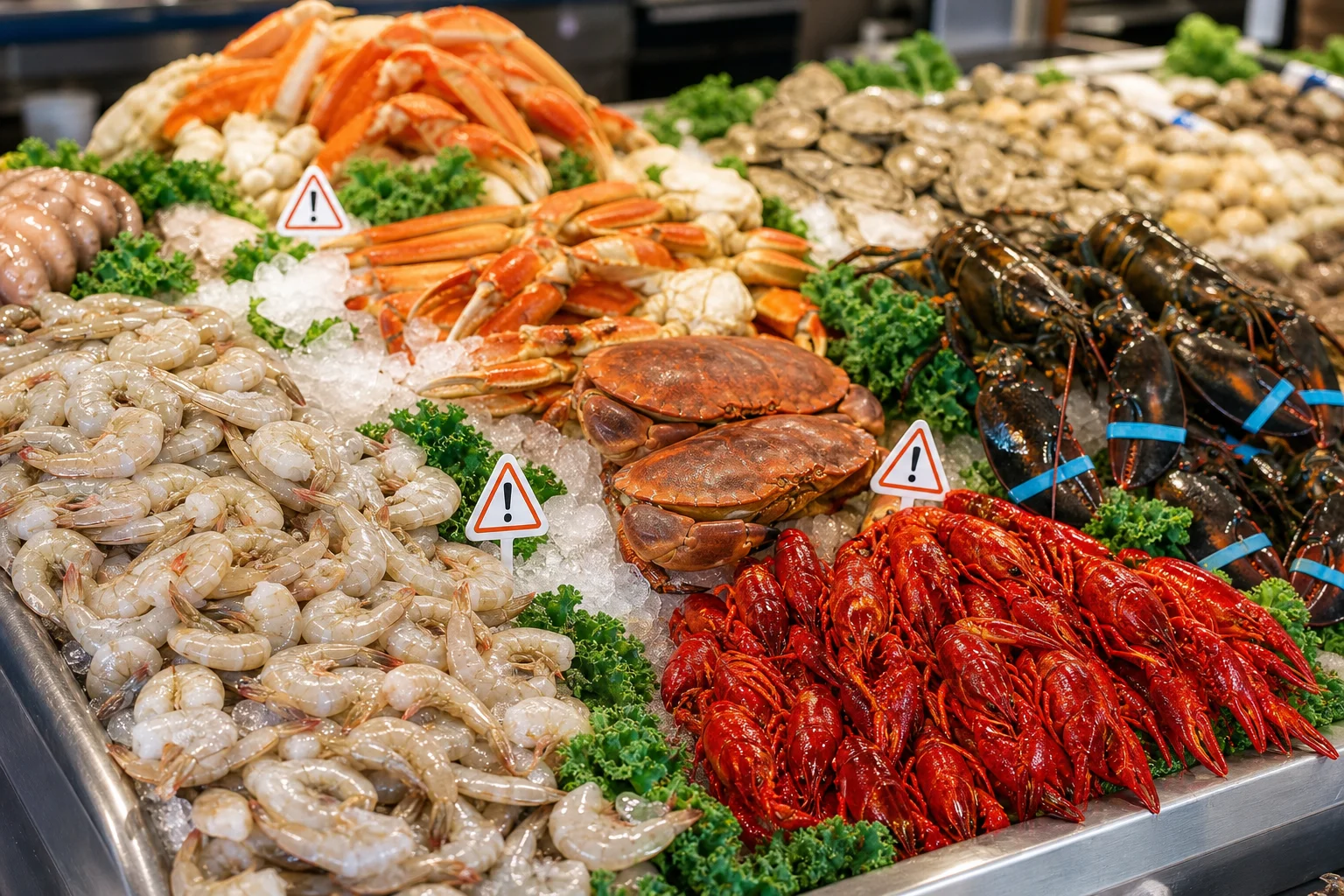
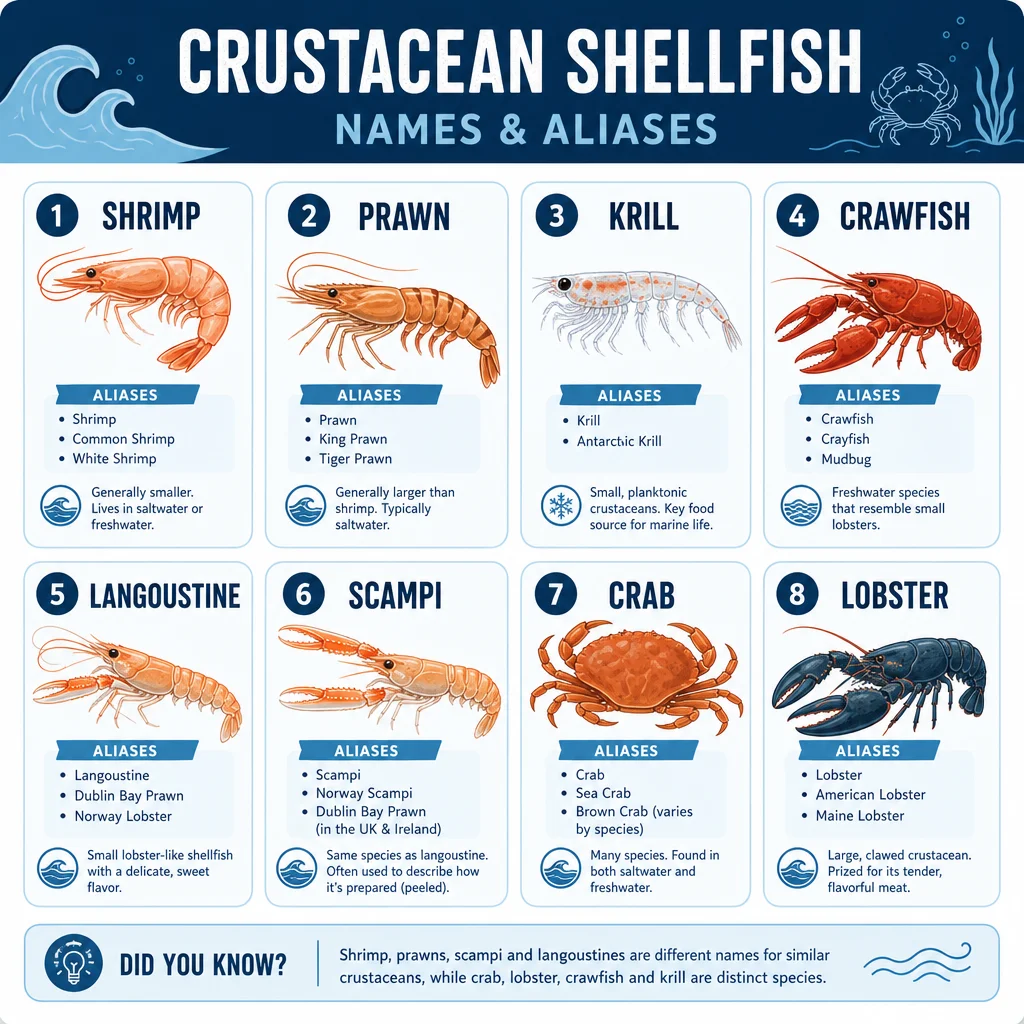
Even on FDA-regulated packaged foods, recognizing crustacean shellfish requires knowing every alias. The following ingredients all indicate crustacean shellfish content:

Shrimp and Prawn Aliases

Shrimp Prawn Krill Krill oil Crawfish Crayfish Crawdad Langoustine Dublin Bay prawn Norway lobster Scampi Tiger prawn White shrimp Brown shrimp Pink shrimp

Crab Aliases

Crab Crab meat Crab extract Crab flavor Imitation crab (surimi)

Lobster Aliases

Lobster Lobster meat Lobster extract Lobster flavor Langoustine Norway lobster Rock lobster Spiny lobster

Other Crustacean Shellfish

Barnacle Copepod Amphipod

Shellfish-Derived Ingredients

Shellfish powder Shellfish extract Shellfish flavor Crustacean extract Glucosamine (often derived from shellfish shells) Chitosan (derived from shellfish shells)

Important Note on Imitation Crab (Surimi)

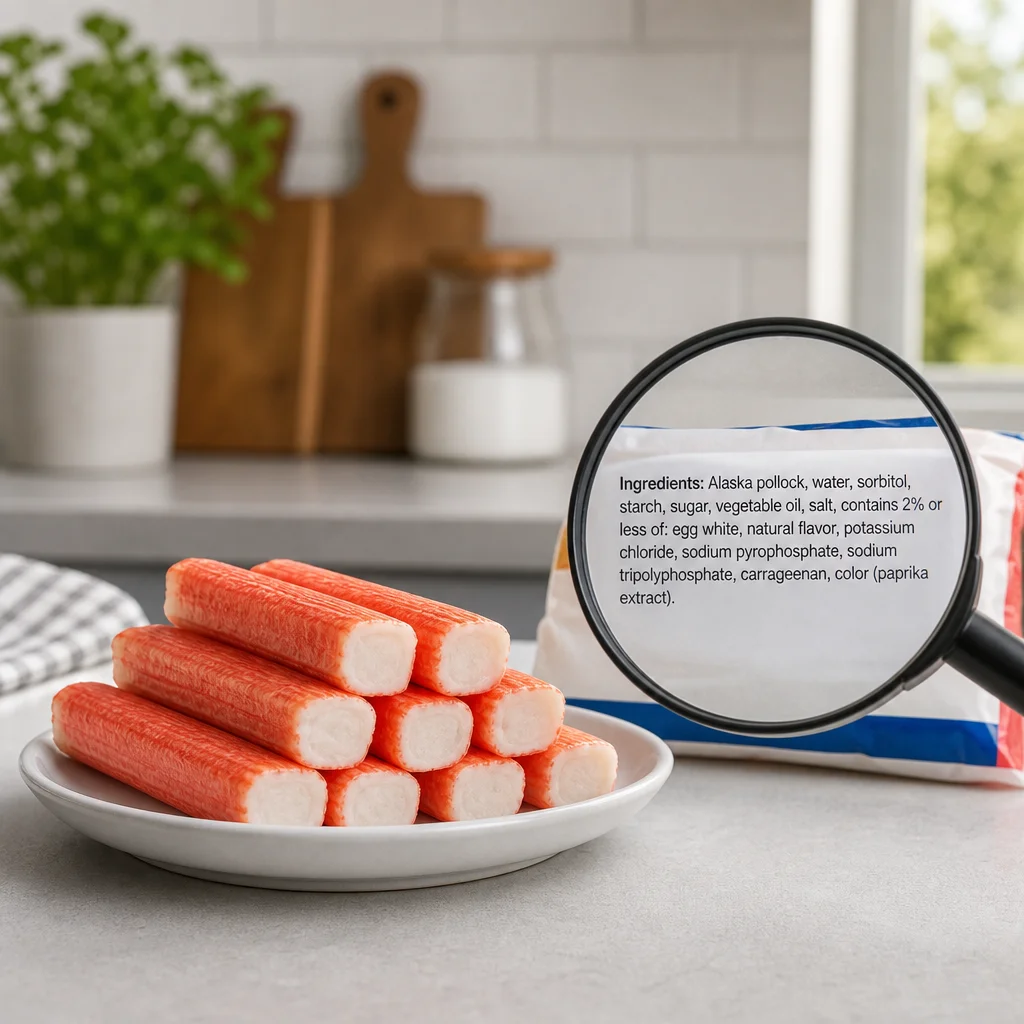
Imitation crab, also known as surimi, is a fish-based product that is processed to resemble crab meat. While the primary ingredient is fish, many brands of surimi contain crab extract or shellfish-derived ingredients for flavoring. Always check the ingredient list and the "Contains" statement for surimi products.

Glucosamine and Chitosan Supplements

Glucosamine, a common supplement for joint health, is often derived from the shells of crustacean shellfish. Chitosan, a fiber supplement, is also derived from shellfish shells. These supplements are not food products and are not covered by FALCPA, but they are worth noting for individuals with shellfish allergy who take supplements.

Where Crustacean Shellfish Unexpectedly Appears in Food

Even careful shoppers can be caught by crustacean shellfish in products where it is not intuitive. These are the categories most likely to contain crustacean shellfish-derived ingredients:

Asian and Southeast Asian Cuisine

Shrimp paste, shrimp sauce, and fish sauce are foundational ingredients in many Asian cuisines. These products are often used in:

Curries and stir-fries Pad Thai and noodle dishes Spring rolls and dumplings Dipping sauces and marinades

Soups and Broths

Shellfish broth, shrimp stock, and crab base are used in:

Bisques and chowders Seafood stews Ramen and pho broths Paella and jambalaya

Sauces and Condiments

Worcestershire sauce (some brands contain anchovies, but some also contain shellfish) Oyster sauce (contains oysters, which are mollusks, but some brands also contain shellfish) Fish sauce (some brands contain shellfish)

Processed Foods

Some processed foods use shellfish-derived ingredients as flavor enhancers:

Potato chips and snack foods (some flavors use shellfish powder) Crackers and savory biscuits Frozen meals and ready-to-eat products

Non-Food Products

Some non-food products contain shellfish-derived ingredients:

Glucosamine supplements (joint health) Chitosan supplements (weight loss and fiber) Some cosmetics and personal care products

Cross-Reactivity Between Crustaceans

Individuals allergic to one type of crustacean shellfish are likely to react to others. The proteins in shrimp, crab, and lobster are similar enough that cross-reactivity is common. Most clinical guidelines recommend avoiding all crustacean shellfish if you are allergic to one type.

Cross-Reactivity with Mollusks

Some individuals with crustacean shellfish allergy also react to mollusks (oysters, clams, mussels, scallops). The proteins are different, but cross-reactivity can occur in a subset of individuals. For individuals with severe shellfish allergy, avoiding both crustaceans and mollusks is a common precaution.
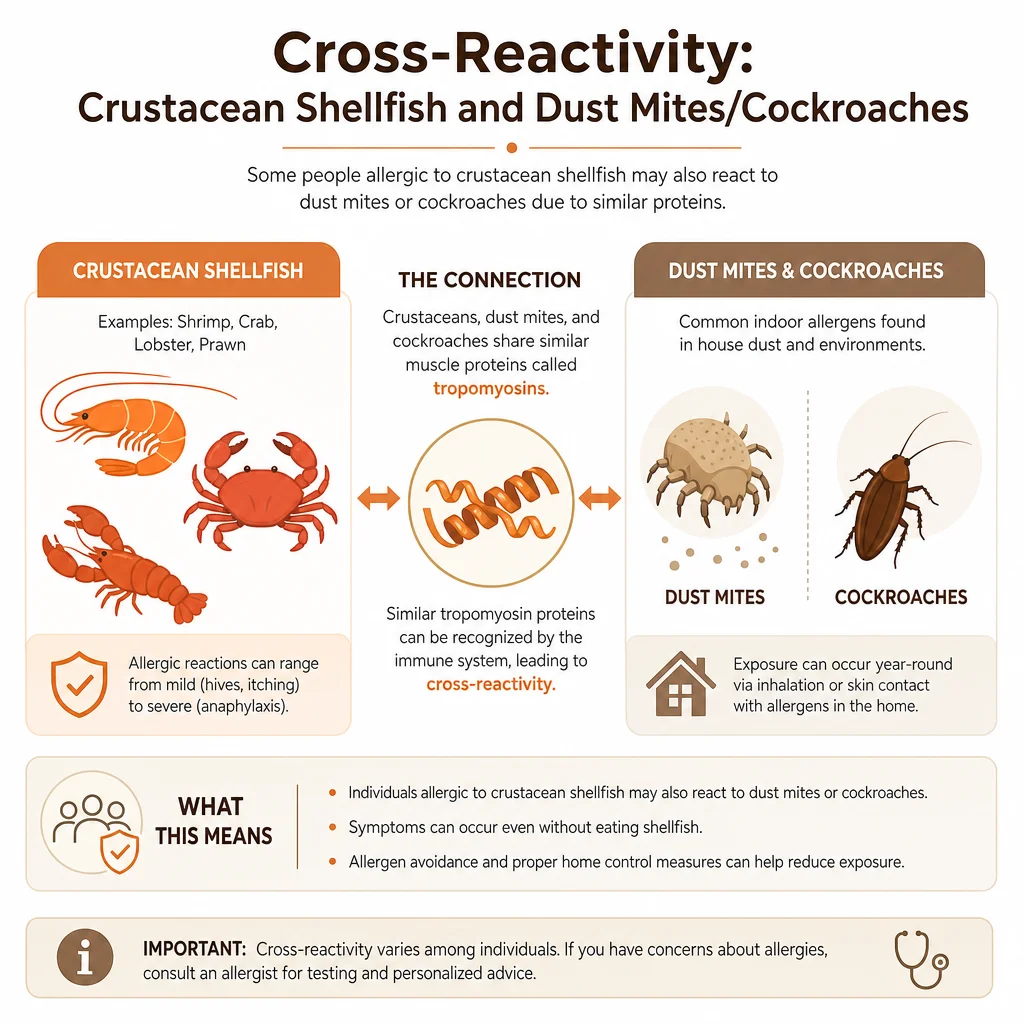
Cross-Reactivity with Dust Mites and Cockroaches

Shellfish share proteins with dust mites and cockroaches. Some individuals with dust mite allergy may also react to shellfish, and vice versa. This is known as cross-reactivity between arthropods.

Inhalation Risk

Shellfish proteins can become airborne during cooking. Boiling, steaming, or frying shellfish can release proteins into the air, which can trigger allergic reactions in sensitive individuals. This is a particular concern in restaurants, seafood markets, and home kitchens.

Reading EU Labels for Crustacean Shellfish

If you consume imported European products or travel within the EU, the labeling rules are different. Under EU Regulation 1169/2011, crustaceans (listed as "crustaceans and products thereof") are one of 14 allergens that must be declared and must be visually distinct from the rest of the ingredient list, typically through bold text, italic text, or contrasting font color.

The EU lists "crustaceans" as a single category, unlike the US which separates crustacean shellfish from fish. This means that on a European product, all crustaceans are grouped together under one allergen declaration.

A Practical Label-Reading Strategy

Crustacean shellfish is one of the nine major food allergens under FALCPA. Any FDA-regulated packaged food that contains crustacean shellfish must declare it either in a "Contains" statement or by using the name of the specific shellfish in the ingredient list.

When scanning a product for crustacean shellfish content:

Check the "Contains" statement first. It is the fastest single-line summary. If it says "Contains: Shrimp," "Contains: Crab," or "Contains: Lobster," the product is not safe. Scan the ingredient list for every known crustacean alias. The words "shrimp," "crab," and "lobster" are the most common declarations. But crustacean shellfish also appears under these names: prawn, krill, crawfish, crayfish, crawdad, langoustine, scampi, Norway lobster, Dublin Bay prawn, and rock lobster. Check for shellfish-derived ingredients. Glucosamine and chitosan are often derived from shellfish shells. If a product lists these ingredients, contact the manufacturer to confirm the source. Check imitation crab products. Surimi (imitation crab) is made from fish but may contain shellfish-derived ingredients for flavoring. Always check the "Contains" statement. Look for precautionary statements. "May contain shellfish" or "Made in a facility that also processes shellfish" appear after the ingredient list or in a separate advisory box. For highly sensitive individuals, these statements warrant avoidance. Be cautious in restaurants. Ask about shellfish content in sauces, broths, and shared cooking surfaces. Cross-contact is a significant risk in restaurants that serve seafood. On imported products, look for bold or contrasting allergen text in the ingredient list. European products use boldface for major allergens including crustaceans.

Using IngrediCheck, you can scan any packaged food and immediately flag every known crustacean shellfish-derived ingredient, regardless of which alias the manufacturer used, including hidden names like langoustine and scampi that do not appear on most consumer allergen reference lists.

For more information on reading labels for other major allergens, see our Peanut Dietary Guide.

Next Label Check

Follow the scanner, hub, and ingredient paths connected to this guide

Get the app for clearer label decisions.

Scan labels, see what fits your food notes, and read the why in plain English.

IngrediCheck app