Dietary Guides

Sesame Allergy Dietary Guide: What the FASTER Act Changed (and the Bakery Loophole)

Sesame became the 9th major US food allergen in 2023 under the FASTER Act. But some bakeries responded by intentionally adding sesame flour to avoid cleaning their production lines, and sesame hides under more aliases than almost any other seed.

Jun 7, 2026|11 min read
By Sanket Patel|Updated 2026-06-07|6 sources|Editorial standards
Sesame Allergy Dietary Guide: What the FASTER Act Changed (and the Bakery Loophole)

Sesame allergy affects an estimated 1.6 million Americans. A 2019 study in JAMA Network Open by Warren and colleagues found that approximately 0.23% of the US population has a confirmed sesame allergy, with rates considerably higher in the Middle East (0.5-0.9%) where sesame is a dietary staple. Unlike milk and egg allergies, which resolve in most children, sesame allergy persists in 70-80% of cases. It is, for the vast majority of those diagnosed, a lifelong condition.

The regulatory landscape for sesame in the United States shifted dramatically on January 1, 2023. The FASTER Act, signed into law in April 2021, made sesame the ninth major food allergen under FALCPA, after a decade of advocacy from the allergy community. The change meant that for the first time, sesame had to appear on US packaged food labels either in the "Contains" statement or by its common name in the ingredient list.

What followed was a series of unintended consequences that have complicated, rather than simplified, life for sesame-allergic consumers.

The FASTER Act and Its Aftermath

Under the FASTER Act, any FDA-regulated packaged food manufactured on or after January 1, 2023, that contains sesame must declare it using the same labeling conventions that apply to the other eight major allergens. A "Contains: Sesame" statement or the word "sesame" must appear in the ingredient list.

The law was designed to close a gap. Before 2023, sesame had to appear in the ingredient list (as any ingredient must) but without the allergen flag. For consumers managing sesame allergy, this meant scanning every line of every label for words like "tahini" and "sesame seed" with no shortcut. FASTER Act labeling was supposed to fix that.

The problem emerged almost immediately. Several major commercial bakeries, faced with the practical challenge of preventing sesame cross-contact in facilities that had used sesame for years, chose a different path: they began intentionally adding sesame flour to products that had never contained sesame before. The sesame flour, added in trace amounts, triggered the labeling obligation without requiring the facilities to implement dedicated sesame-free production lines.

Products from brands including Sara Lee, Thomas', and Entenmann's — all owned by Bimbo Bakeries USA — now carry sesame allergy warnings on bread, bagels, rolls, and buns that were previously sesame-free. The Center for Science in the Public Interest (CSPI) and FARE have both condemned this practice. The FDA acknowledged it in a statement, calling the practice "not consistent with the spirit of the FASTER Act," but as of 2026, it has not been prohibited by regulatory action.

The practical result for consumers: bread products that were safe purchases in 2022 may now contain sesame intentionally. The "Contains: Sesame" flag, which was supposed to make shopping easier, has instead forced consumers to research which brands adopted this practice and which did not. FARE maintains a public-facing list of bakeries that have confirmed they do not add sesame flour.

Every Hidden Name for Sesame on a Food Label

Every Hidden Name for Sesame on a Food Label

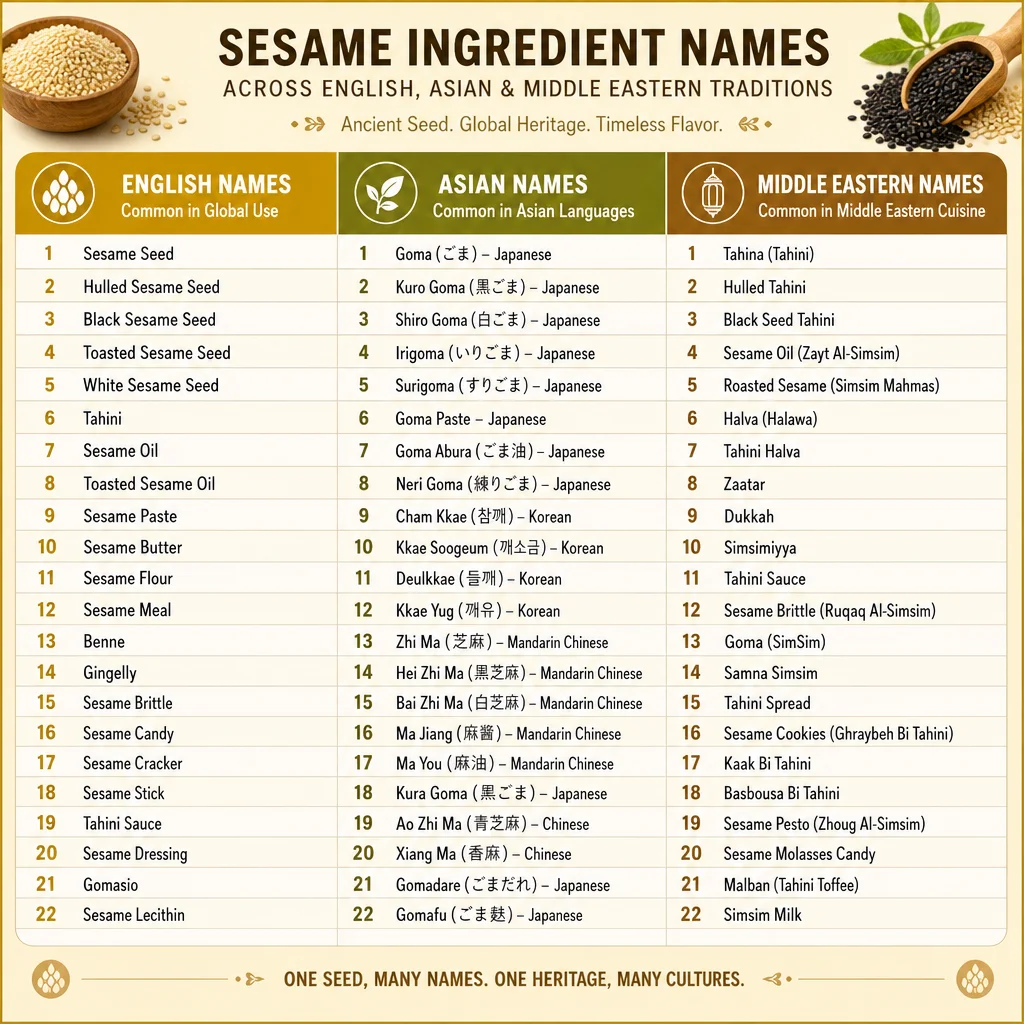
Sesame appears under more names than any other seed allergen. The following are all label terms that indicate the presence of sesame:

English-language names:

Label NameContext
Sesame seedWhole seeds visible on bread, bagels, sushi
Sesame oilPressed from seeds; widespread in Asian cooking
Sesame flourGround seed meal, increasingly added to commercial bread
Sesame pasteConcentrated ground sesame; primary ingredient in tahini
Sesame salt (gomasio)A Japanese dry condiment of toasted ground sesame + salt
Benne / benniseed / benne seedSouthern US, African, and Caribbean names; common in Lowcountry and West African cooking
Gingelly / gingelly oilIndian-English name for sesame oil; found on imported South Asian products
TilHindi/Urdu word for sesame; frequent on Indian grocery product labels
Sim simEast African name for sesame; used in imported East African products

Non-English names frequently appearing on imported products:

Label NameOrigin
AjonjoliSpanish (common in Latin American food labeling)
SésameFrench
GergelimPortuguese (Brazilian products)
ShimaJapanese; often in compound words like shimagoma
Kura goma / shiro gomaJapanese: black sesame / white sesame (separately labeled)
Kuro gomaJapanese: black sesame
Goma / goma aburaJapanese: sesame / sesame oil
Cham kkae / kkaeKorean: sesame / seed (used in sesame oil, perilla context)
Zhi ma / zhi ma jiangMandarin Chinese: sesame / sesame paste
JoonjoliArabic transliteration variant; may appear on Middle Eastern packaging

Processed forms and extracted components:

Label NameNotes
TahiniA paste of ground hulled sesame seeds; staple of Middle Eastern and Mediterranean cooking
TahinaLevantine Arabic variant of tahini; used interchangeably on labels
Halva / halwaSesame-based confection; tahini is the primary ingredient in Middle Eastern varieties (Indian halwa differs — usually semolina-based)
SesamolA phenolic antioxidant component; may appear on supplement or processed food labels
Sesamum indicumBotanical/scientific name; standard INCI name in cosmetics but also used on imported food labels
Sesamin / sesamolinLignan components; primarily supplement ingredients but verify food labels
GomasioJapanese sesame salt (see above)
FurikakeJapanese rice seasoning mix, nearly always contains sesame seeds as a primary component
Za'atarA Middle Eastern spice blend; sesame seeds are a core component in most commercial blends (verify individual brand)
DukkahEgyptian nut and spice blend; sesame seeds are always present
Goma dareJapanese sesame dipping sauce

Where Sesame Hides in Foods You Would Not Expect

Where Sesame Hides in Foods You Would Not Expect

The highest-risk sesame exposure categories are not the ones where you see seeds on top. The seeds are a warning sign. The real danger is in dishes where sesame is structural — blended into the base of the recipe — and therefore invisible.

Hummus and Baba Ghanoush

Tahini is a primary ingredient in most hummus recipes and many baba ghanoush recipes. It is blended into the base, making it indistinguishable from chickpeas or eggplant in appearance. Not every commercial hummus uses tahini (some use olive oil as the fat source), but the overwhelming majority do. In restaurants, hummus ordered without prior allergen discussion should be assumed to contain sesame.

Sushi

Sesame seeds are applied as a garnish or coating on inside-out rolls, spicy tuna rolls, and many specialty rolls. Sesame oil is used as a finishing oil and as a component of spicy mayo and eel sauce. A sushi restaurant is among the highest-risk dining environments for sesame-allergic individuals — sesame is present in the kitchen across multiple stations and in multiple formats. Even rolls with no visible seeds may have been prepared on surfaces that handled sesame in the previous order.

Everything Bagel Seasoning, Burger Buns, and Commercial Bread

Sesame seeds are a defining component of "everything" seasoning blends, and sesame-topped burger buns are the standard at most sit-down burger restaurants. Any bread with visible seeds should prompt immediate label checking. As described above, many commercial bread products now contain intentionally added sesame flour even when no seeds are visible.

Falafel, Veggie Burgers, and Meat Substitutes

Falafel, the Middle Eastern chickpea fritter, frequently contains tahini in the mix. Veggie burgers and plant-based meat alternatives, particularly those from smaller or regional brands, sometimes incorporate tahini or sesame flour as a binder. The rise of chickpea-based products in the plant-based category has increased exposure risk — tahini and chickpeas often travel together in product formulations.

Asian Cuisine Broadly

Sesame oil is a foundational finishing oil in Chinese, Japanese, Korean, Thai, and Vietnamese cooking. It is added at the end of cooking for aroma, not as a visible ingredient. Dishes that do not list sesame in the name — stir-fried vegetables, soups, dumpling fillings, and marinades — are very frequently finished with sesame oil without the practice being obvious from the description. Korean goma (sesame) and Japanese goma dare (sesame dipping sauce) are present across a wide range of preparations.

Granola Bars, Energy Bars, and Cereals

Sesame seeds and sesame paste are used in energy bars, granola bars, and some breakfast cereals. The category is inconsistent — some products rely on nuts, some on seeds, and some on both. Each bar must be checked individually.

Middle Eastern Sweets

Halva is a dense confection made primarily from tahini and sugar. It appears at Middle Eastern bakeries, specialty food shops, and increasingly in mainstream grocery stores as an international product. Baklava, while primarily nut-based, may contain sesame seeds as a garnish or secondary ingredient in regional variations.
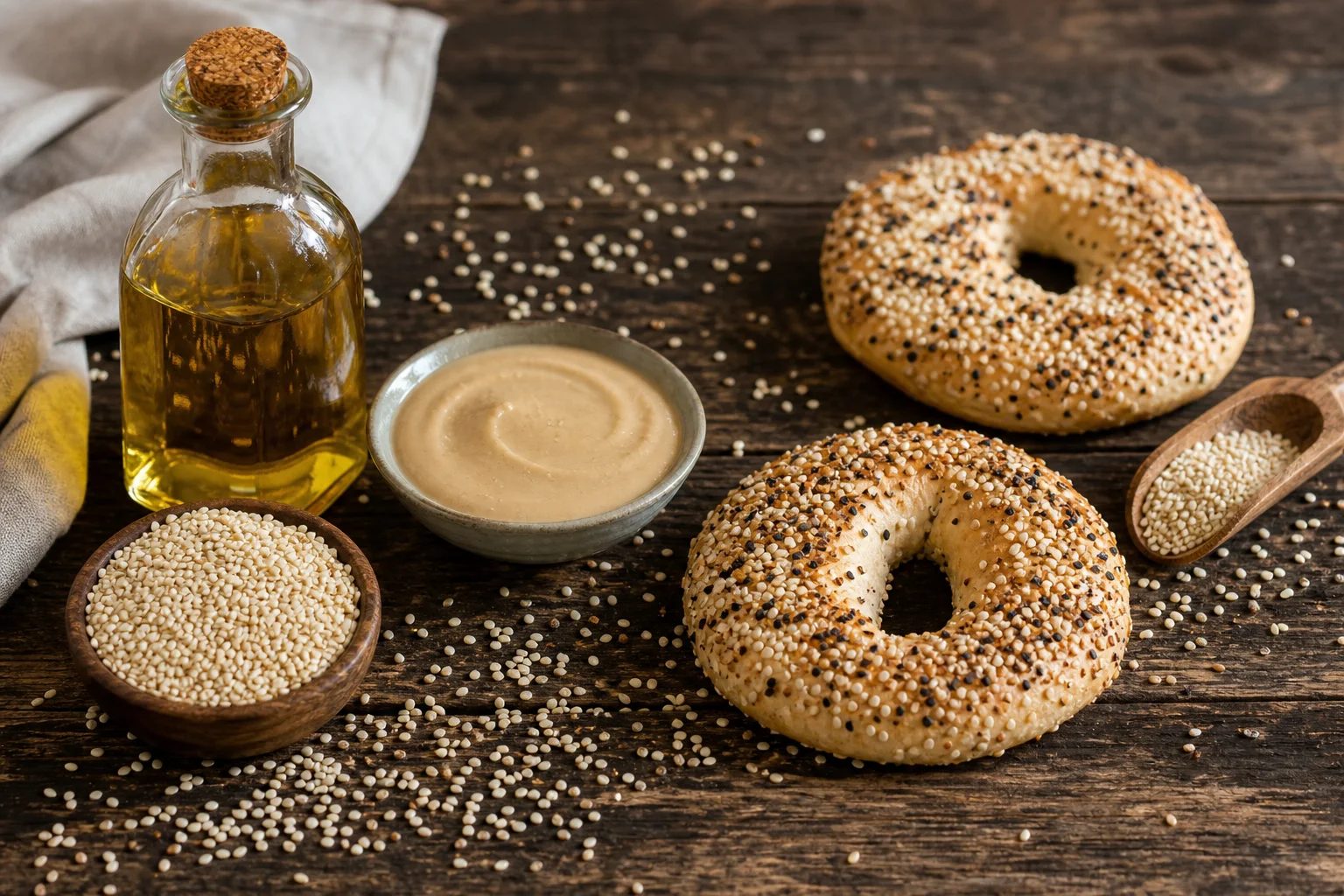
Sesame Oil: Refined vs. Unrefined

The distinction between refined and unrefined sesame oil that applies to other seed oils — peanut and soy — carries the same clinical significance but less regulatory clarity for sesame.

Unrefined sesame oil (cold-pressed, virgin, toasted) retains sesame protein and is fully allergenic. This is the sesame oil used in Asian cooking and the dark, aromatic oil sold in small bottles at Asian grocers and many mainstream supermarkets. It is always dangerous for sesame-allergic individuals.

Highly refined sesame oil undergoes solvent extraction, bleaching, and deodorization that removes virtually all protein. The resulting oil is colorless and primarily used in cosmetics and industrial food manufacturing. The question is whether refined sesame oil triggers reactions in sesame-allergic individuals.

The data is thinner than it is for peanut and soybean oil because sesame oil is not as widely refined for food use in the US market. Clinical guidance from FARE is conservative: sesame-allergic patients should avoid all sesame oil regardless of refining status unless specifically cleared by an allergist. This is a more cautious position than the one taken for refined peanut and soy oil, reflecting the limited challenge data.

Cross-Reactivity with Other Seeds

Sesame is a seed — and the question of whether sesame allergy predicts allergy to other seeds is the most common clinical question patients and parents raise after diagnosis.

The FDA and clinical allergy organizations do not classify seeds as a single allergen category. Sunflower seeds, poppy seeds, flax seeds, chia seeds, and pumpkin seeds are each immunologically distinct from sesame. Cross-reactivity between sesame and other edible seeds is lower than cross-reactivity within the tree nut category. Most sesame-allergic individuals tolerate other seeds without issue.

There are three areas of elevated clinical attention:

Poppy seeds show the highest rate of co-sensitization with sesame (both are contained within similar seed types and appear in similar foods). Positive IgE tests to both are common, though clinical reactivity is less common than sensitization implies.

Peanuts — sesame and peanut allergy co-occur at rates above the general population. This is co-sensitization, not cross-reactivity (peanut is a legume, sesame is a seed; they are botanically unrelated). The practical point: sesame-allergic patients should discuss peanut with their allergist.

Emerging concern — chia seeds. A small number of case reports describe sesame-chia co-reactivity. The evidence base is still preliminary, and chia is not subject to any special allergen labeling requirements. Individual assessment through an allergist is appropriate.

Where FALCPA and FASTER Act Do Not Apply

The same exemptions that apply to all major allergens apply to sesame, as covered in our guide to undeclared allergens in food recalls.

  • Restaurants have no federal sesame disclosure obligation. Sesame oil, tahini, and sesame seeds in restaurant food must be identified through direct communication with kitchen staff.
  • USDA-regulated products — meat, poultry, egg products — must list sesame in the ingredient list but do not use the standardized FDA "Contains" box. Check ingredient lists directly.
  • Alcohol regulated by the TTB was covered by the 2024 TTB allergen rule requiring sesame disclosure when used as a processing ingredient.

EU and International Labeling

The European Union classified sesame as one of its 14 mandatory food allergens under Regulation 1169/2011 — nine years before the United States. EU products carrying sesame must have it visually emphasized in the ingredient list, typically in bold typeface, covering all unpackaged food sold in restaurants and cafeterias as well. Canada's CFIA also lists sesame as a priority allergen. The UK retained the EU allergen framework post-Brexit.

The United States was the last major Western regulatory jurisdiction to add sesame to its mandatory allergen list.

A Practical Label-Reading Strategy

Sesame became the ninth major food allergen in the United States on January 1, 2023, under the FASTER Act. Any FDA-regulated packaged food containing sesame must declare it in a "Contains" statement or by using the word "sesame" in the ingredient list. Sesame appears under more aliases than almost any other seed.

When scanning for sesame:

  1. Check the "Contains" statement for "Sesame."
  2. Scan the ingredient list for every known sesame name. English names: sesame seed, sesame oil, sesame flour, sesame paste, sesame salt (gomasio), benne/benneseed, gingelly/gingelly oil, til. Non-English names found on imported products: ajonjoli (Spanish), sésame (French), gergelim (Portuguese), goma/goma abura (Japanese), kura goma/shiro goma (black/white sesame), cham kkae (Korean), zhi ma/zhi ma jiang (Chinese). Processed forms: tahini, tahina, halva/halwa, sesamol, Sesamum indicum (botanical name), gomasio, furikake, za'atar, dukkah, goma dare.
  3. For bread products, note that some commercial bakeries intentionally add sesame flour to trigger the labeling obligation rather than maintaining sesame-free production lines. If "Contains: Sesame" appears on plain bread, verify whether the brand uses this practice.
  4. On imported products, language-specific sesame terms may appear without the English word "sesame."
  5. In restaurant settings, sesame oil is widespread in Asian and Middle Eastern cooking. Hummus, baba ghanoush, falafel, and sushi are high-risk dishes. A chef card is recommended.

Using IngrediCheck, you can scan any packaged food and immediately flag any sesame-derived ingredient across all 30+ names, in any language.

Next Label Check

Follow the scanner, hub, and ingredient paths connected to this guide

Get the app for clearer label decisions.

Scan labels, see what fits your food notes, and read the why in plain English.

IngrediCheck app