Pasta and Asian Noodles
Standard dried pasta made from durum wheat semolina and water is almost always egg-free. But many other noodle formats routinely contain egg:
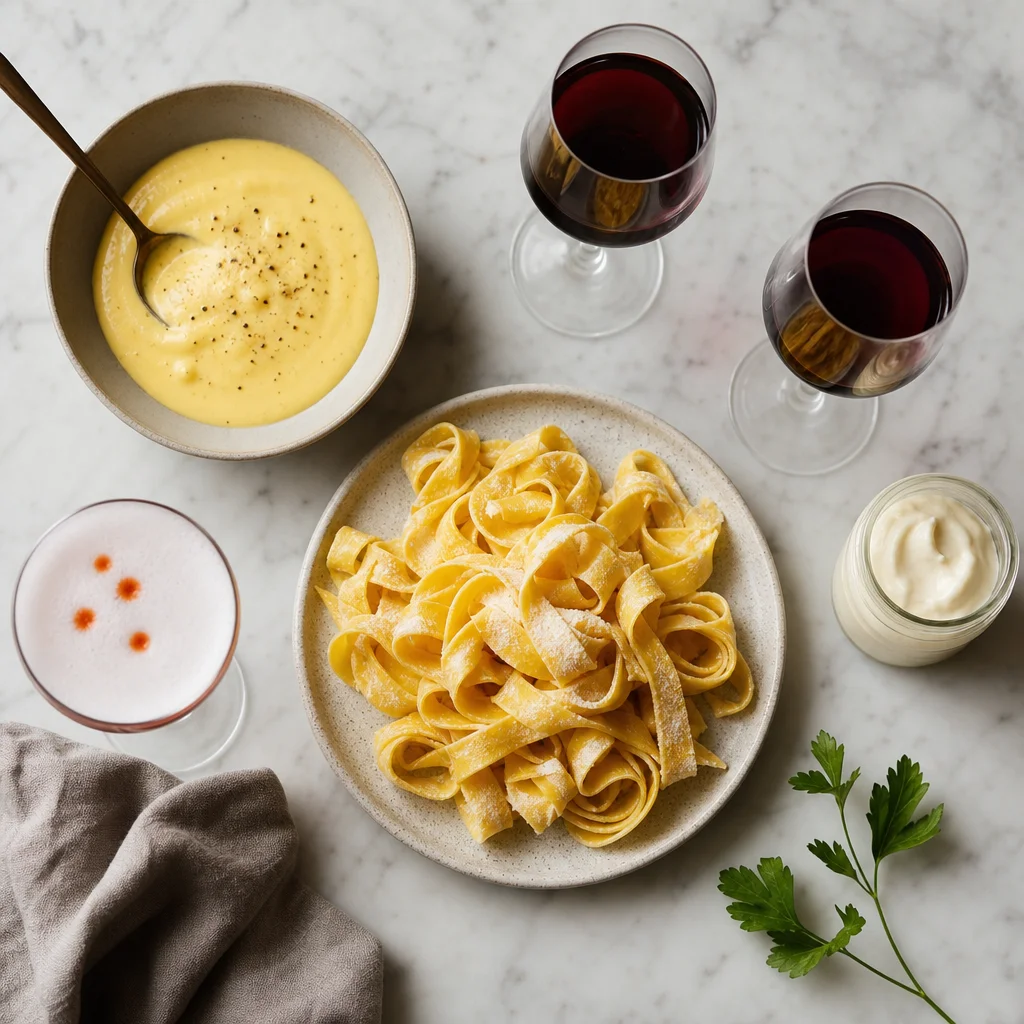
- Fresh pasta and egg pasta ("pasta all'uovo") — always contains egg; legally required to declare it
- Ramen noodles — fresh and restaurant ramen traditionally contain kansui (an alkaline solution) and egg, which give them their yellow color and chewy texture
- Lo mein noodles, chow mein, Hong Kong egg noodles — typically egg-based by definition
- Instant ramen — varies by brand; always check the label
Wine — The Fining Agent Most People Don't Know About
Egg whites are a traditional clarifying agent in winemaking, particularly for red wines. Before bottling, winemakers add egg white to bind tannins and sediment, which then settle out and are filtered. The finished wine typically contains very low residual protein, and most egg-allergic individuals do not react. Highly sensitive individuals, however, may notice reactions.
Until 2024, alcoholic beverages were entirely exempt from FALCPA's allergen labeling requirements — they are regulated by the Alcohol, Tobacco Tax and Trade Bureau (TTB), not the FDA. A TTB final rule that took effect May 26, 2024 now requires wine, beer, and spirits to declare major food allergens, including egg, when they are used as processing aids and may remain detectable in the final product. Wines that use egg white fining and have detectable residual egg protein must now disclose it.
Alternatives to egg white fining — isinglass (fish-derived), bentonite (clay), and casein (milk-derived) — do not contain egg but present their own allergen considerations.
Beer — Craft Brewing and Egg White Clarifiers
Some craft breweries use egg white or isinglass (fish) as fining agents in beer production. This is less common than egg use in wine but worth noting for highly sensitive individuals. The same TTB 2024 rule applies.
Medications and Medical Procedures
Propofol, the widely used intravenous anesthetic, contains egg lecithin as an emulsifier in its formulation. This is clinically significant for egg-allergic patients undergoing anesthesia. Patients with severe egg allergy should inform their anesthesiologist before any procedure involving sedation or general anesthesia.
Parenteral nutrition lipid emulsions (e.g., Intralipid) used in hospital IV nutrition also contain egg lecithin. Some vitamin and supplement capsules use egg-derived ingredients as excipients.
Lysozyme (E1105) is used as a preservative in some aged cheeses (particularly Dutch Edam and Gouda), some wines, and a small number of processed foods. It is derived from egg white.
Vaccines
Influenza (flu) vaccines — many flu vaccine brands are grown in embryonated chicken eggs and contain trace levels of ovalbumin (typically less than 1 microgram per dose). Current CDC ACIP guidelines state that egg-allergic individuals can receive any licensed, recommended influenza vaccine in any setting. The risk of reaction from the ovalbumin traces in standard flu vaccines is considered extremely low. Egg-free alternatives are available: Flucelvax (cell-culture-based) and Flublok (recombinant protein) contain no egg protein.
MMR vaccine (measles-mumps-rubella) is grown in chick embryo fibroblast cell cultures rather than egg itself. The resulting ovalbumin content is extremely low (typically under 1 nanogram per mL). Egg allergy is not a contraindication to MMR vaccination per ACAAI and AAP guidance.
Yellow fever vaccine is grown in embryonated chicken eggs with higher resulting protein content than flu vaccine. Egg allergy is a relative contraindication; allergic individuals should discuss the risk-benefit calculation with their physician.
Cocktails and Beverages
Classic whiskey sours, pisco sours, Ramos gin fizz, and several other cocktails traditionally use raw egg white to create foam. The egg white is explicitly listed in classic recipes but may not be disclosed proactively at a bar. Egg-allergic patrons should ask before ordering any drink described as "foamy" or when a server suggests a cocktail with textural complexity.
Baked Goods — Egg Wash
Many breads, pastries, pretzels, and pies are brushed with egg wash (beaten egg mixed with water) before baking to create a shiny golden crust. The egg protein remains on and in the crust after baking. This is a direct source of exposure that is easy to overlook in bakery settings where the egg wash is applied as a finish rather than listed as a structural ingredient.
Croissants, brioche, and other enriched breads typically also contain egg in the dough itself — not just as a surface glaze.