Dietary Guides

Peanut Allergy Dietary Guide: Hidden Ingredients, Label Rules, and Safe Foods

An estimated 4.6 million US adults have peanut allergy, yet peanuts appear on labels under more than 20 different names — and some products with peanut-derived ingredients are never required to say so.

Jun 6, 2026|11 min read
By Sanket Patel|Updated 2026-06-06|12 sources|Editorial standards
Peanut Allergy Dietary Guide: Hidden Ingredients, Label Rules, and Safe Foods

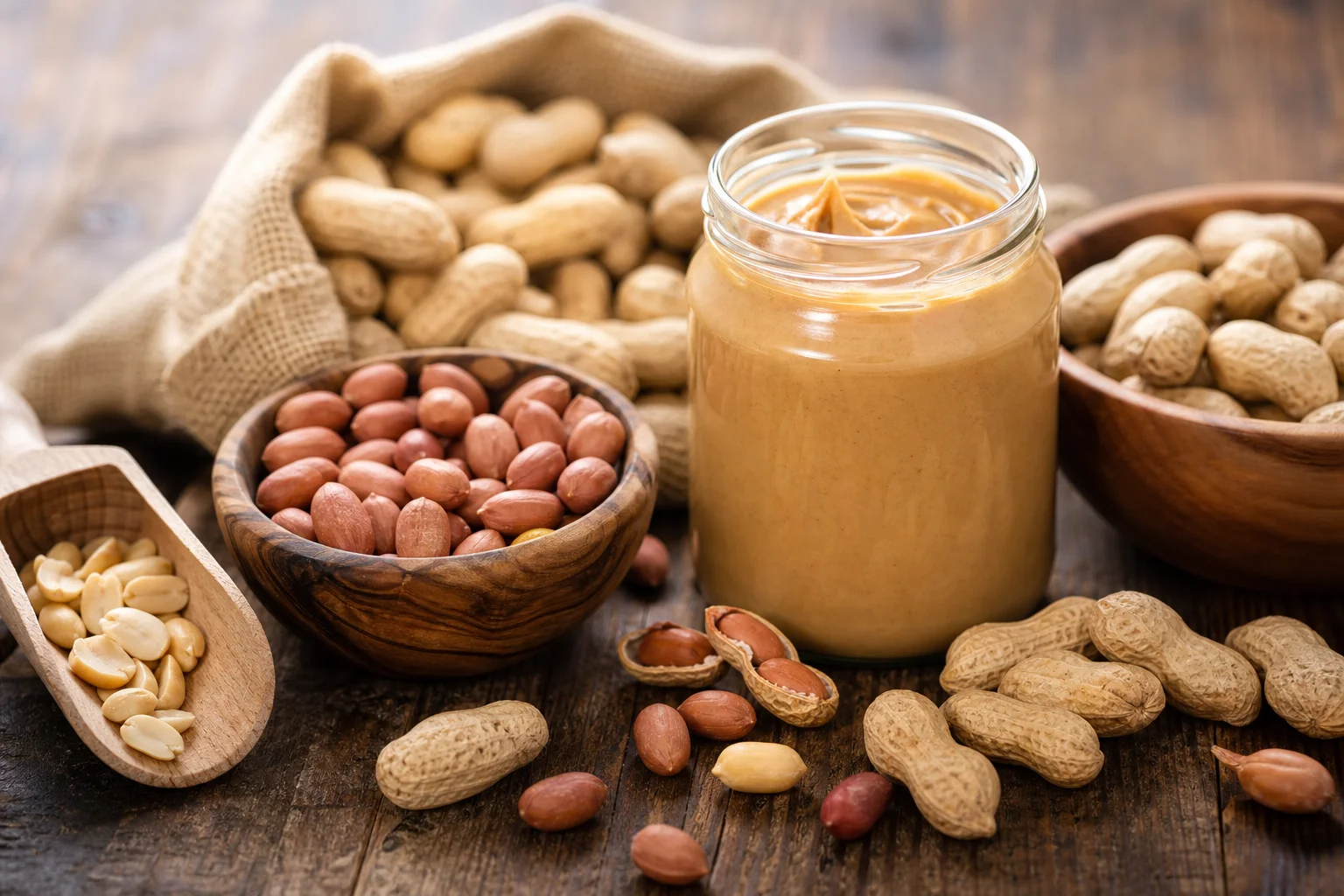
Peanut allergy is one of the most common food allergies in the United States, and one of the most likely to be lifelong. An estimated 4.6 million US adults31501-4/fulltext) have a convincing peanut allergy. In children, the prevalence sits at roughly 2.2 percent, and fewer than 20 percent will outgrow it. For most people diagnosed in childhood, peanut allergy persists for decades.

Avoiding peanuts is not simply a matter of skipping peanut butter. Peanuts appear on ingredient lists under more than 20 different names. Some peanut-derived ingredients are legally exempt from the standard disclosure rules. And a category of foods that many people rely on for safety guidance — products carrying "may contain peanuts" warnings — operates entirely without federal regulation. This guide covers everything you need to navigate ingredient lists with peanut allergy.
What the FDA's Labeling Law Actually Requires

The Food Allergen Labeling and Consumer Protection Act of 2004 (FALCPA) requires that any food regulated by the FDA that contains a major food allergen must declare it on the label. Peanuts are one of the nine major allergens covered under FALCPA, alongside milk, eggs, fish, shellfish, tree nuts, wheat, soy, and sesame.

In practice, this means that when a manufacturer uses a peanut-derived ingredient, one of two things must appear on the label:

  • The ingredient list must use the common or usual name of the food source (e.g., "peanut flour" or "peanut oil"), or
  • A "Contains: Peanuts" statement must appear immediately following or adjacent to the ingredient list.

Both approaches are compliant. Either gives you notice that the product contains a peanut-derived ingredient.

Where FALCPA Does Not Apply

FALCPA applies to packaged foods regulated by the FDA. It does not apply to:

  • Restaurant food and foodservice. No federal law requires restaurants to label allergens. Some states and countries have their own requirements, but at the federal level, you must ask directly.
  • USDA-regulated products. Most meat, poultry, and egg products fall under USDA jurisdiction rather than FDA. These are not covered by FALCPA, though USDA has its own allergen labeling guidance.
  • Alcohol. Beverages regulated by the Alcohol and Tobacco Tax and Trade Bureau (TTB) have separate labeling rules. Flavored malt beverages and some cocktail mixers may contain peanut derivatives without the same disclosure requirement.
  • Cosmetics and drugs. Topical products containing peanut oil (such as some lotions and lip balms) are not covered by the food allergen labeling law. For individuals with contact sensitization, this is worth noting.
  • Non-packaged foods. Foods sold loose, in bulk, or without standard packaging (such as bakery items sold by weight) may not carry ingredient labels at all.

The Complete List of Hidden Peanut Names

The Complete List of Hidden Peanut Names

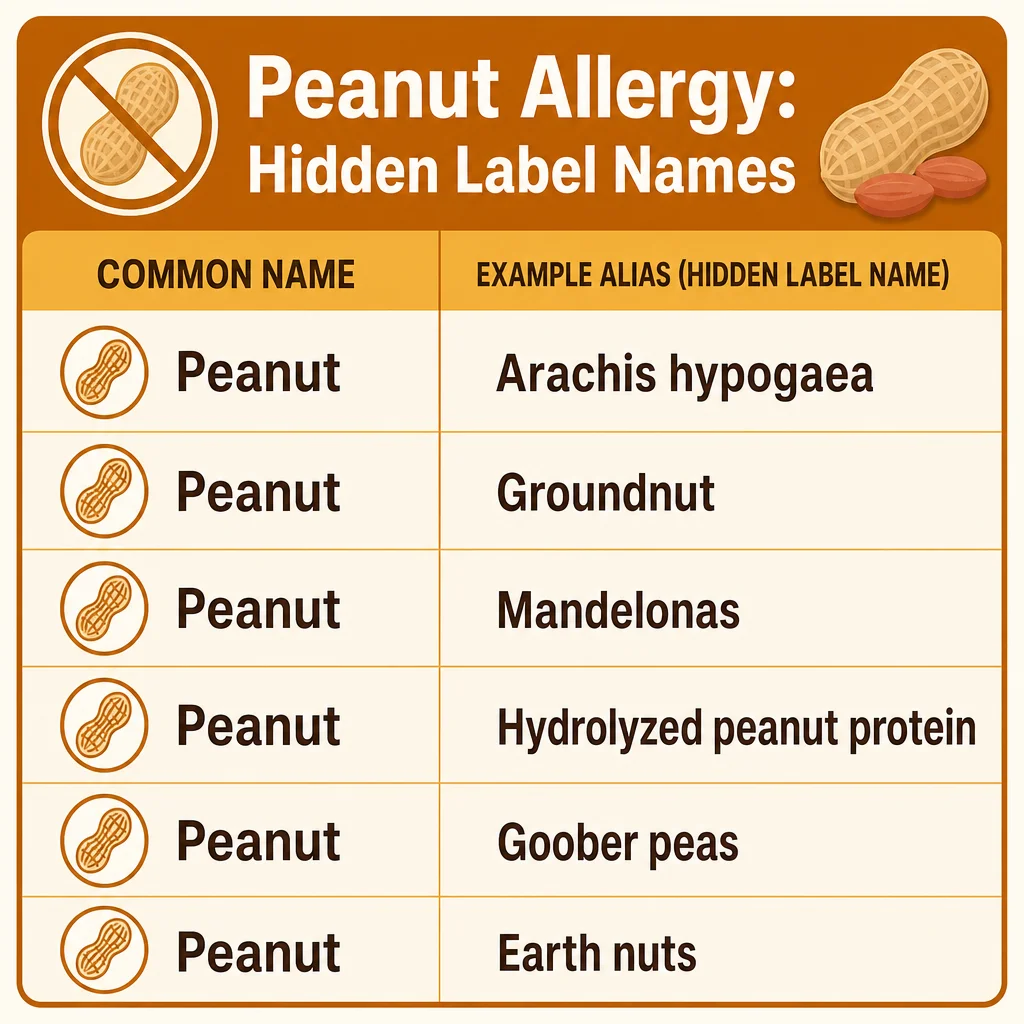
Even on FDA-regulated packaged foods, recognizing peanuts requires knowing every alias. Manufacturers are not required to use the word "peanut" in the ingredient name itself as long as the "Contains" statement is present. In practice, ingredient lists can include any of the following, all of which indicate peanut-derived content:

Label NameNotes
Arachic oilPeanut oil by its botanical name
Arachis oilAnother form of botanical peanut oil naming
Arachis hypogaeaThe scientific species name for the peanut plant
Artificial nutsPeanuts processed or flavored to resemble other nuts
Beer nutsDry-roasted salted peanuts sold under this informal name
Boiled peanutsA common snack form, still a peanut allergen source
Cold-pressed peanut oilContains peanut protein; not exempt from labeling (see oil section below)
Crushed nutsMay refer to peanuts; check the Contains statement
Dry-roasted peanutsA processed form; protein structure changes but allergen remains
Earth nutsAn informal name for peanuts
Expeller-pressed peanut oilContains peanut protein; must be declared
Extruded peanut oilContains peanut protein; must be declared
Goober peas / GoobersColloquial regional US names for peanuts
Ground nuts / groundnutCommon name in UK, Australia, and parts of Africa; same as peanut
Hydrolyzed peanut proteinA protein isolate derived from peanuts
Hypogaeic acidA fatty acid unique to peanut oil
MandelonasPeanuts soaked in almond flavoring and sugar
Mixed nutsMay contain peanuts; check the ingredient list
Monkey nutsPeanuts still in the shell; another UK term
Nu-nutsFlavored peanut products sold as nut substitutes
Nut pieces / nutmeatAmbiguous terms that may indicate peanuts
Peanut butter / paste / flour / sauce / syrup / oilDirect peanut derivatives in various processed forms
Spanish peanuts / Virginia peanutsVarietal names; still peanuts

The most important of these is groundnut, which is the standard term in many countries. An imported product labeled in British or Commonwealth English may list groundnut oil or groundnut paste where a US consumer would expect to see "peanut."

The Peanut Oil Exception You Need to Understand

Peanut oil occupies a special position under FALCPA. Highly refined peanut oil is explicitly exempted from the law's allergen labeling requirement. The FDA's position is that the refining process removes peanut proteins to levels below the threshold for triggering an allergic response in most individuals.

The critical distinction is between refined and unrefined:

Highly refined peanut oil (also called "refined," "bleached," and "deodorized" or RBD peanut oil) strips the oil of most protein content through industrial processing. It does not need to declare peanut on the label and generally does not trigger reactions in peanut-allergic individuals, though individual tolerance varies.

Cold-pressed, expeller-pressed, extruded, and crude peanut oils retain significant peanut protein. These must be declared as a peanut-derived ingredient and are not safe for individuals with peanut allergy.

The problem in practice: most food labels do not specify whether peanut oil is highly refined or not. When a product lists "peanut oil" without qualification, it could mean either. The safest approach, confirmed by FARE and most clinical allergists, is to contact the manufacturer to confirm the refining process before consuming any product that lists "peanut oil."

"Unless you can confirm an oil is highly refined, treat peanut oil the same way you would any other peanut-containing ingredient." — American College of Allergy, Asthma and Immunology guidance

Precautionary Allergen Labels: What "May Contain" Actually Tells You

Products that are not required to contain peanuts sometimes carry voluntary advisory statements like "May contain peanuts," "Processed in a facility that also processes peanuts," or "Manufactured on shared equipment with peanut products."

These statements are not regulated by FALCPA. There is no federal standard for when they must appear, what threshold of contamination risk they represent, or what language must be used. Two manufacturers could use identical equipment cleaning protocols and one might add a "may contain" statement while the other does not.

A 2017 study published in the Journal of Allergy and Clinical Immunology30816-0/fulltext) analyzed products bearing precautionary allergen labels and found that a meaningful proportion did contain detectable peanut protein. The presence of a "may contain" label is not a guarantee that the product actually contains peanuts, but the absence of a label is also not a guarantee of safety.

For individuals with severe or anaphylaxis-risk peanut allergy, most clinical guidance recommends treating precautionary labels as a real warning and avoiding those products, particularly for children or individuals with a history of severe reactions.

Where Peanuts Unexpectedly Appear in Food

Where Peanuts Unexpectedly Appear in Food

Even shoppers who carefully read ingredient lists can be caught by peanuts in products where they are not intuitive. These are the categories most likely to contain peanut ingredients that are not obvious from the product name:

Asian and Southeast Asian Cuisine

Peanut is a foundational ingredient across much of East and Southeast Asian cooking, appearing in dishes that may not be marketed as peanut-containing in restaurant or retail contexts:

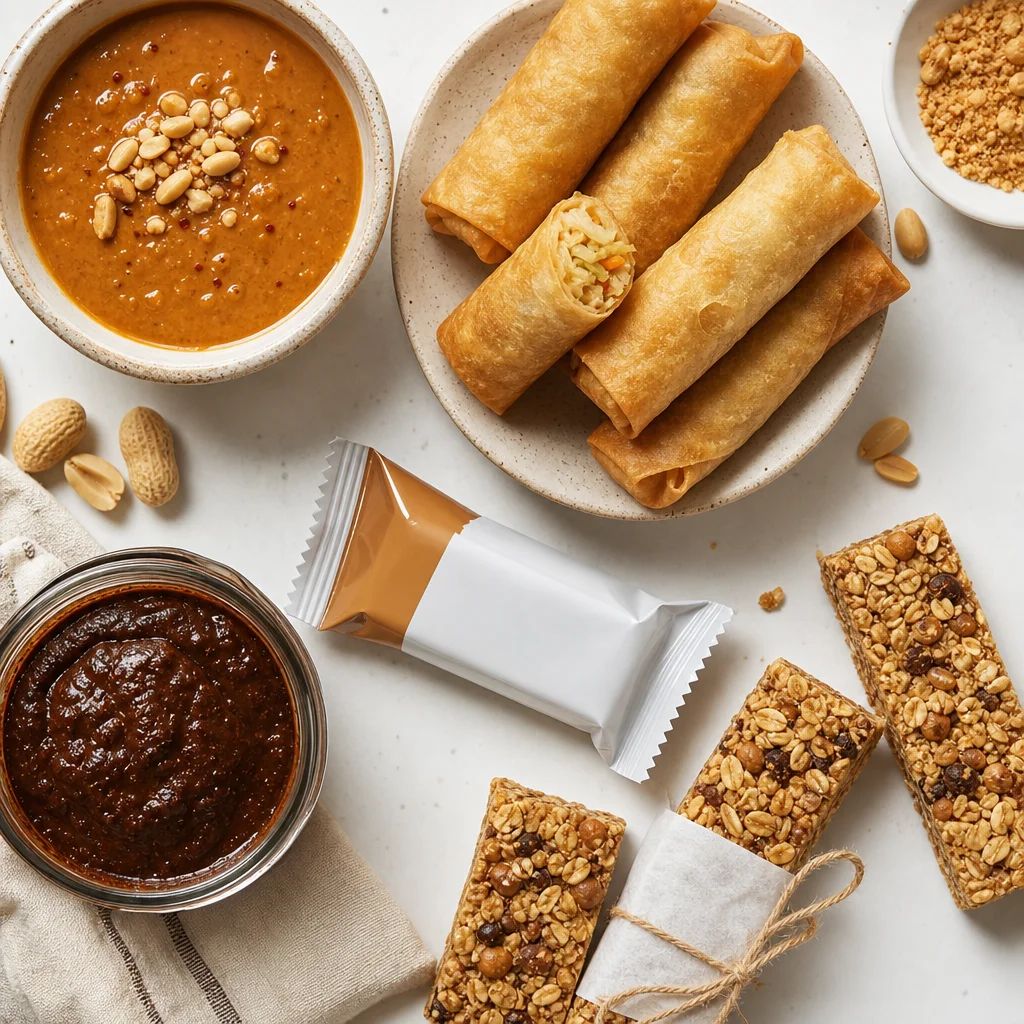
  • Satay sauces and marinades: The peanut sauce served with Indonesian and Thai satay is obvious, but satay-flavored marinades and snacks sold at retail may not prominently feature peanuts on the front label.
  • Hoisin sauce: Many commercial hoisin sauces include peanuts. Not all do, so check labels individually.
  • Pad Thai and similar noodle dishes: Pre-packaged pad thai kits and restaurant versions almost always include peanuts or peanut sauce as a finishing ingredient.
  • Egg rolls and spring rolls: The filling and dipping sauces often contain peanut oil or peanut-based sauce.
  • Some stir-fry sauces: Kung pao, General Tso, and similar prepared sauces sometimes include peanut ingredients.

Confectionery and Baked Goods

  • Nougat: Traditional nougat, used in candy bars including some varieties of Snickers and Toblerone, frequently contains peanuts or is produced on shared equipment.
  • Mole sauce: Mexican mole negro and several other mole varieties include peanuts alongside other seeds and chiles. Restaurant versions especially may not be labeled.
  • Graham cracker crust: Pre-made crusts used in commercial pies and cheesecakes are sometimes produced on equipment shared with peanut products.
  • Glazes and marinades: Commercial poultry and meat glazes, particularly those with Asian or BBQ flavor profiles, may include peanut-derived ingredients.

Less Obvious Packaged Products

  • Some breakfast cereals: Granola and mixed grain cereals often contain peanuts, peanut flour, or are made in facilities handling peanuts.
  • Protein bars and energy bars: Many use peanut protein or peanut butter as a primary ingredient. Even bars not marketed as "peanut" flavors may contain peanut-derived ingredients.
  • Flavored popcorn and snack mixes: Trail mixes, party mixes, and flavored popcorn bags frequently include peanuts alongside other ingredients.
  • Some ice cream and frozen desserts: Particularly in "mix-in" or novelty formats, where peanut butter swirls or peanut pieces appear in flavors not obviously marketed as peanut-related.

Reading EU Labels for Peanut

If you consume imported European products or travel within the EU, the labeling rules are different in one important respect. Under EU Regulation 1169/2011 on Food Information to Consumers, peanuts (listed as "peanuts and products thereof") are one of 14 allergens that must be declared and must be visually distinct from the rest of the ingredient list, typically through bold text, italic text, or contrasting font color.

This means that on a European product, even if the ingredient appears mid-list among many other items, it should stand out visually. Products sold in the UK after Brexit follow the same rule under retained domestic law.

One EU-specific risk: Lupin (also spelled lupine) is one of the 14 EU-mandated allergens but is not a FALCPA-covered allergen in the United States. Lupin flour, often used as a high-protein wheat substitute in pasta and baked goods, has documented cross-reactivity with peanut in some individuals. If you have peanut allergy and consume European products or visit Europe, lupin is worth knowing about. It does not currently appear in the "Contains" statement on US-produced products. For a deeper look at this specific cross-reactivity risk, see Lupin Allergy: The Peanut Cross-Reactor Not on US Labels.

Cross-Contact Risk and What FSMA Requires

Cross-contact (also called cross-contamination in everyday language) refers to the unintentional transfer of peanut protein from one product to another during manufacturing. Under the FDA's Food Safety Modernization Act (FSMA) rules for preventive controls in human food, food manufacturers are required to identify and control allergen cross-contact hazards as part of their food safety plans.

This does not guarantee zero cross-contact in practice. It means that manufacturers subject to FSMA must have documented procedures for preventing cross-contact, validate those procedures, and correct them when monitoring shows a deviation. Whether a manufacturer chooses to add a precautionary label after following those procedures is still a voluntary decision.

For practical purposes, this means:

  • Peanut-free claims on US products are not regulated by a single federal standard (though some manufacturers submit to third-party certification programs like GFFS Seal).
  • "Made in a dedicated peanut-free facility" is a stronger assurance than "may contain" is a warning, but neither has legal teeth.
  • Contacting manufacturers directly and asking about dedicated lines, allergen testing, and cleaning validation protocols provides more useful information than any front-of-pack claim.

A Practical Label-Reading Strategy

Peanut is one of the nine major food allergens under FALCPA. Any FDA-regulated packaged food that contains peanut must declare it either in a "Contains" statement or by using the word "peanut" in the ingredient list.

When scanning a product for peanut content:

  1. Check the "Contains" statement first. It is the fastest single-line summary. If it says "Contains: Peanut," the product is not safe.
  2. Scan the ingredient list for every known peanut alias. The word "peanut" is the most common declaration. But peanut also appears under these names: groundnut, earth nut, goober pea, mandelona, arachis oil, arachis hypogaea (the botanical name), peanut flour, peanut protein, hydrolyzed peanut protein, peanut butter, peanut paste, peanut oil, and cold-pressed peanut oil.
  3. Check the peanut oil refining status. Highly refined peanut oil is exempt from FALCPA allergen labeling because the refining process removes peanut protein, and most peanut-allergic individuals tolerate it. Cold-pressed, expeller-pressed, and unrefined peanut oils are not exempt and must be declared.
  4. Look for precautionary statements. "May contain peanut" or "Made in a facility that also processes peanut" appear after the ingredient list or in a separate advisory box. For highly sensitive individuals, these statements warrant avoidance.
  5. On imported products, look for bold or contrasting allergen text in the ingredient list. European products use boldface for major allergens including peanut.

Using IngrediCheck, you can scan any packaged food and immediately flag every known peanut-derived ingredient, regardless of which alias the manufacturer used, including regional names like groundnut that do not appear on most US allergen reference lists.

Next Label Check

Follow the scanner, hub, and ingredient paths connected to this guide

Get the app for clearer label decisions.

Scan labels, see what fits your food notes, and read the why in plain English.

IngrediCheck app