Lupin Allergy: The Peanut Cross-Reactor Not on US Labels

Lupin flour is gaining traction as a gluten-free, high-protein ingredient. For people with peanut allergies, it carries a hidden risk — and the US does not require it to be labeled as an allergen.

Jun 1, 2026|9 min read
By Sanket Patel|Updated 2026-06-01|5 sources|Editorial standards
Lupin Allergy: The Peanut Cross-Reactor Not on US Labels

A 16-year-old with a longstanding peanut allergy ate a snack bar he had bought from a health food store. Within minutes, he developed throat tightness, hives, and severe breathing difficulty. At the emergency room, he received two doses of epinephrine. His parents reviewed the bar's ingredient list afterward, looking for any trace of peanut. There was none. The only unfamiliar ingredient was a single word: lupin.

His subsequent allergy testing came back positive for lupin immunoglobulin E (IgE) — the specific antibody associated with immediate allergic reactions. The allergist confirmed cross-reactivity between the lupin proteins and the same peanut allergen components that had sensitized him years earlier.

This case, published in the Annals of Allergy, Asthma & Immunology in 2024, is one of several documented instances of severe lupin-triggered reactions in people with peanut allergies who had no idea lupin was in the product — in part because they had never heard of it, and in part because in the United States, lupin is not listed among the major food allergens that manufacturers must declare.

That gap between what European regulators require and what American consumers can reasonably expect to see on a label is the central issue with lupin. It is a gap that has been growing in significance as lupin flour has quietly spread through the food supply.
What Is Lupin?

What Is Lupin?

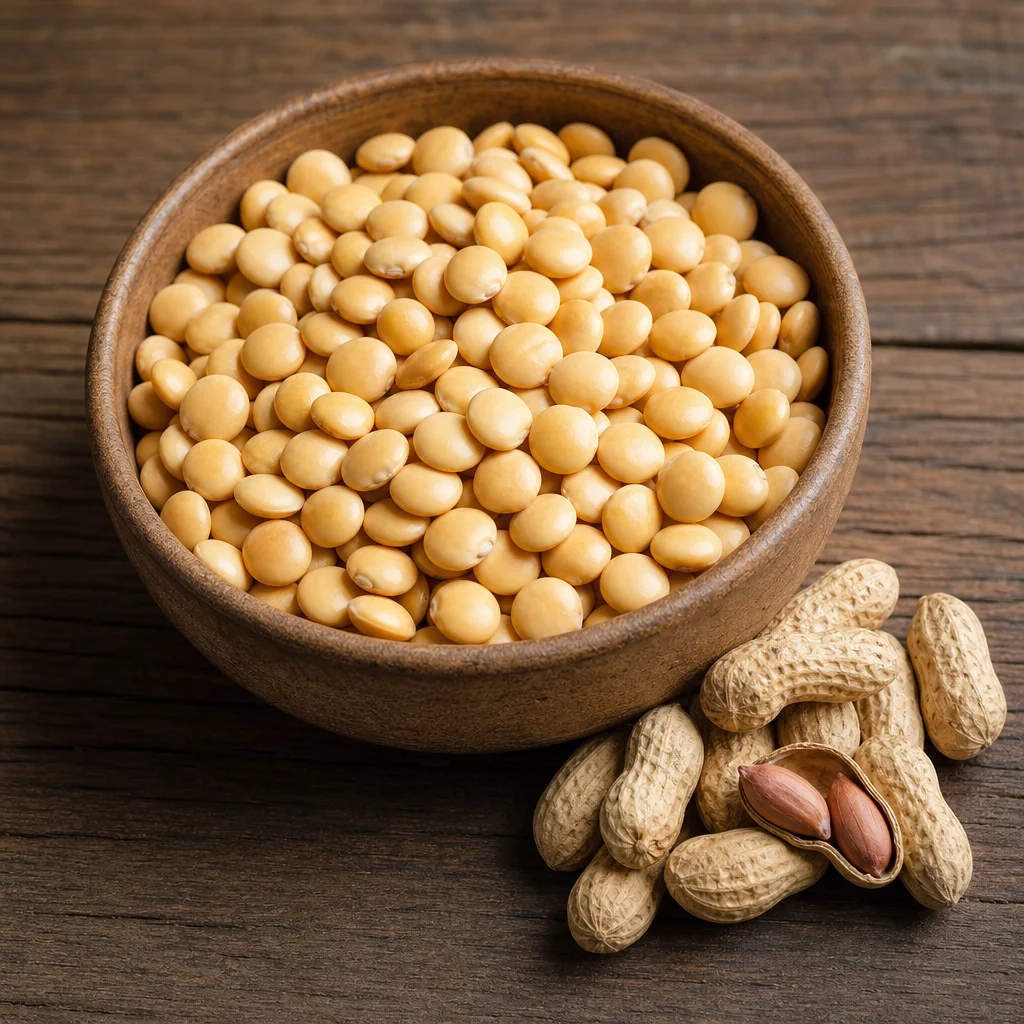
Lupin — sometimes spelled "lupine" — is a legume belonging to the Lupinus genus, closely related to peanuts and soybeans. It has been cultivated for food for thousands of years: pearl lupin (Lupinus mutabilis) has a long history in Andean cuisine, and white lupin (Lupinus albus) has been eaten as a salted snack food throughout the Mediterranean for centuries.

What has changed recently is that modern varieties of lupin — particularly the narrow-leafed Australian sweet lupin (Lupinus angustifolius) — have been developed specifically for food manufacturing. These new varieties are lower in the bitter alkaloid compounds that made traditional lupin less palatable, and they do not require soaking before use. They offer an impressive nutritional profile: roughly 30–40% protein by dry weight, 30% dietary fiber, and very low fat content, around 4–7%.

These properties make lupin attractive as a functional ingredient. It has been added to food products as a flour substitute, a protein booster, a fiber source, and an emulsifier. It entered commercial use in UK bakeries in 1996, in France in 1997, and in Australia in 2001. Its adoption has expanded steadily since, particularly in European artisan breads, pasta, pastries, and gluten-free products.

The Cross-Reactivity Risk with Peanuts

Peanuts and lupin are both legumes, and they share structurally similar storage proteins — the compounds that trigger IgE-mediated allergic responses. Specifically, the peanut allergen components Ara h 1, Ara h 3, and Ara h 8 share structural homology with equivalent proteins in lupin. When someone's immune system is sensitized to peanut, there is a meaningful probability that those antibodies will also recognize lupin proteins.

Research has found that cross-reactivity between peanut allergy and lupin allergy occurs in somewhere between 5% and 37% of peanut-allergic individuals, depending on the study population and testing method used. That is a wide range, reflecting genuine variability. But even at the lower end, it represents a significant risk for a population that already carries epinephrine auto-injectors and navigates menus and ingredient lists with extraordinary care.

The clinical outcomes range from mild reactions — itching, hives, oral symptoms — to anaphylaxis. The severity of peanut allergy does not reliably predict the severity of a lupin reaction. A person with a mild peanut sensitivity can have a severe lupin reaction, and vice versa.

Cross-reactivity can also be primary sensitization through lupin itself. Lupin proteins are capable of sensitizing individuals with no prior peanut allergy. In these cases, lupin is the primary allergen. With its increasing use in food products, new sensitization is possible even in people who have never had a peanut allergy.

A Mandatory Allergen in Europe, Not in the US

A Mandatory Allergen in Europe, Not in the US

This is where the US-EU regulatory divergence becomes directly consequential for consumers.

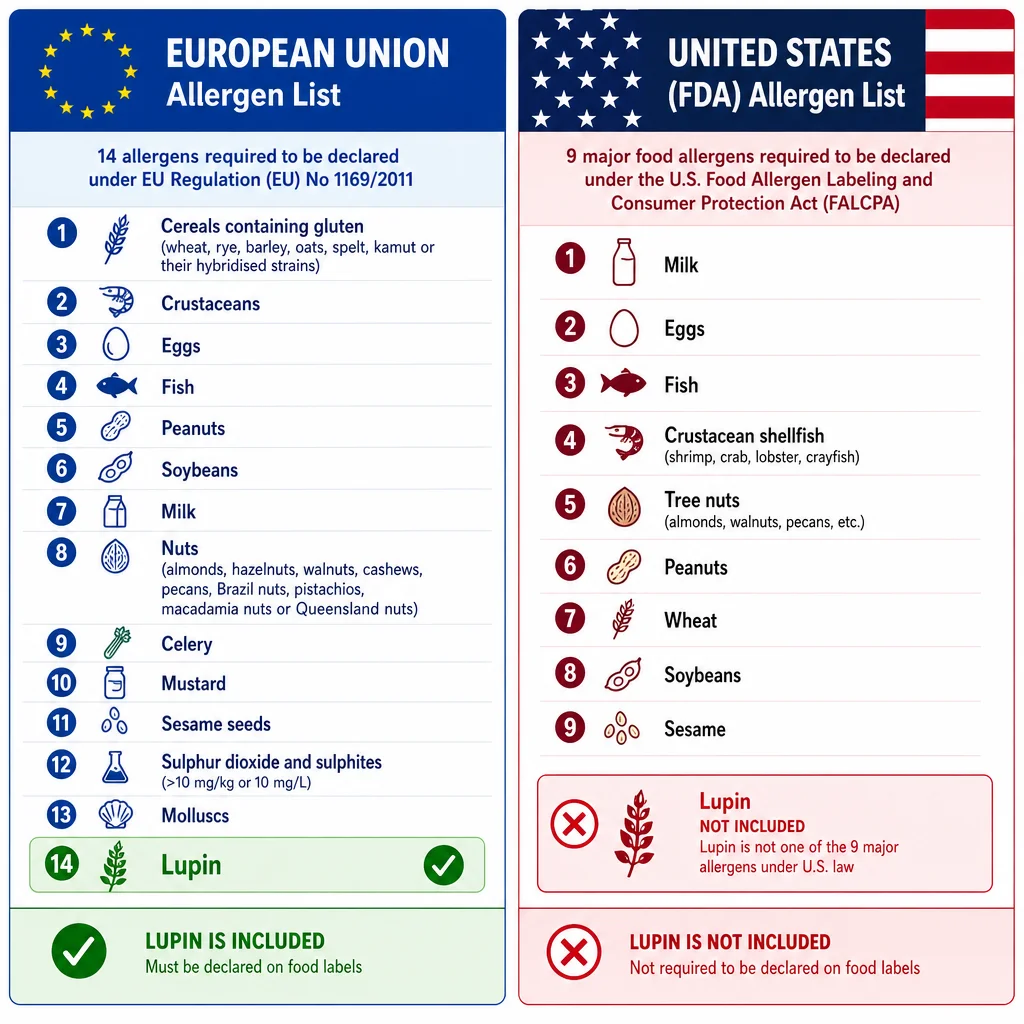
In the European Union, Regulation 1169/2011 requires that 14 major allergens be declared on all food labels whenever present as an ingredient or in a component ingredient. Lupin is on that list. EU food labels must declare lupin — typically with a phrase like "contains lupin" in the summary allergen statement, and with the word highlighted or bolded in the ingredient list. This has been mandatory across EU member states since 2014.

The Australian and New Zealand Food Standards Code added lupin to its mandatory allergen declaration list in 2018, following an earlier voluntary period. Australia is one of the world's largest lupin-producing countries, so regulatory action there was particularly important.

The United States operates under a different framework. The FASTER Act of 2021 designated sesame as the ninth major food allergen, requiring its declaration starting January 1, 2023. That brought the US list to nine major allergens: milk, eggs, fish, crustacean shellfish, tree nuts, wheat, peanuts, soy, and sesame. Lupin is not on the list.

Under US law, lupin may appear in an ingredient list simply as "lupin flour," "lupin flakes," or "lupini" — terms that peanut-allergic consumers may not recognize as a potential cross-reactor. A family managing a severe peanut allergy may scan a label for every legume they know to avoid and completely miss lupin because they have never been told it is a concern.

The FDA has the authority to add allergens to the mandatory declaration list through rulemaking, and advocacy groups have called for lupin to be added. As of 2026, the agency has not taken formal action on lupin.

Where Lupin Hides in the Food Supply

Understanding where lupin appears is the first step to managing exposure. The concentration is heaviest in:

Artisan and commercial bread. Lupin flour can be added to wheat flour in quantities up to 20% without significantly changing the bread's appearance or taste. It boosts the protein and fiber content of the loaf — a selling point for health-focused consumers. A bread labeled "high-protein" or "high-fiber" may be achieving that claim partly through lupin, particularly in European and Australian products.

Pasta. Lupin-enriched pasta is available in health food stores and online. It is often marketed as a high-protein, lower-carbohydrate pasta alternative. The label typically declares it, but someone unfamiliar with lupin's cross-reactivity risk may not recognize the significance.

Gluten-free products. This is a particularly concerning category. People avoiding gluten — those with celiac disease or non-celiac gluten sensitivity — often turn to alternative flours. Lupin flour is gluten-free, and it is increasingly used in gluten-free bread, biscuits, and crackers. A celiac patient who is diligently scanning labels for every gluten-containing ingredient may not know to also watch for lupin.

Sausages and processed meats. Lupin can be used as a filler or texture agent in processed meat products. This is more common in European formulations.

Biscuits, pastries, and cakes. Lupin flour has appeared in these categories in European food markets, usually without consumer attention.

"Lupini beans" as a snack. The pickled and brined form of white lupin is sold as a high-protein snack, particularly in Mediterranean-influenced food shops. The connection to lupin allergy is not always clear from snack packaging.

What Peanut-Allergic Consumers Should Do

Allergists who treat peanut-allergic patients increasingly recommend discussing lupin as part of an updated allergy management plan. Specific steps include:

Ask for lupin testing. If you or your child has a peanut allergy, ask your allergist about testing for lupin-specific IgE. Not everyone needs it, but for patients who travel to Europe, eat at European-style bakeries, or consume health food products, the exposure risk is real enough to warrant testing.

Learn all the names. Lupin appears on labels as: lupin flour, lupin flakes, lupin protein, lupinus, lupine, lupini, lupini beans, or simply lupin. Any of these terms indicates the presence of lupin.

Be particularly careful with European imports. A product made in France, Germany, Italy, or the UK and sold at a specialty food store in the US may contain lupin flour in the bread or pasta. The EU label will declare it, but if the US import was labeled for US sale, it still declares it — check the ingredient list carefully.

Watch gluten-free bakery items. If you have peanut allergy and are also buying gluten-free products, lupin is a realistic cross-contamination concern. Ask the manufacturer directly if lupin flour is used in any of their products or on shared equipment.

Carry epinephrine regardless. This is standard advice for peanut-allergic individuals, but worth restating: a new reaction to an unfamiliar allergen like lupin can be severe, and epinephrine remains the definitive first-line treatment for anaphylaxis.

A Regulatory Gap Worth Watching

The US-EU divergence on lupin is not the only example of allergen labeling differences between major markets, but it is one with direct safety consequences. The EU added lupin based on documented allergy cases and the growing commercial use of lupin flour in European food products — a straightforward precautionary response. The same logic applies to the US food supply, which now imports significant quantities of European-style foods and has its own growing market for lupin-containing health products.

Lupin use is accelerating, not declining. As more consumers seek high-protein, high-fiber alternatives to wheat flour, and as gluten-free product lines expand, lupin will appear in more products, more frequently. The case for mandatory disclosure in the US grows with every new food formulation that incorporates it.

For now, the burden falls on consumers and their healthcare providers. Peanut-allergic individuals who have never been told about lupin cross-reactivity are navigating a partially invisible risk.

Using IngrediCheck, you can scan ingredient lists on any product — whether bought in a US store, ordered online, or brought back from international travel — and identify the presence of lupin under any of its label names, so that peanut-allergic consumers and their families can make fully informed decisions without needing to already know every alias the ingredient travels under.

Next Label Check

Follow the scanner, hub, and ingredient paths connected to this guide

Get the app for clearer label decisions.

Scan labels, see what fits your food notes, and read the why in plain English.

IngrediCheck app