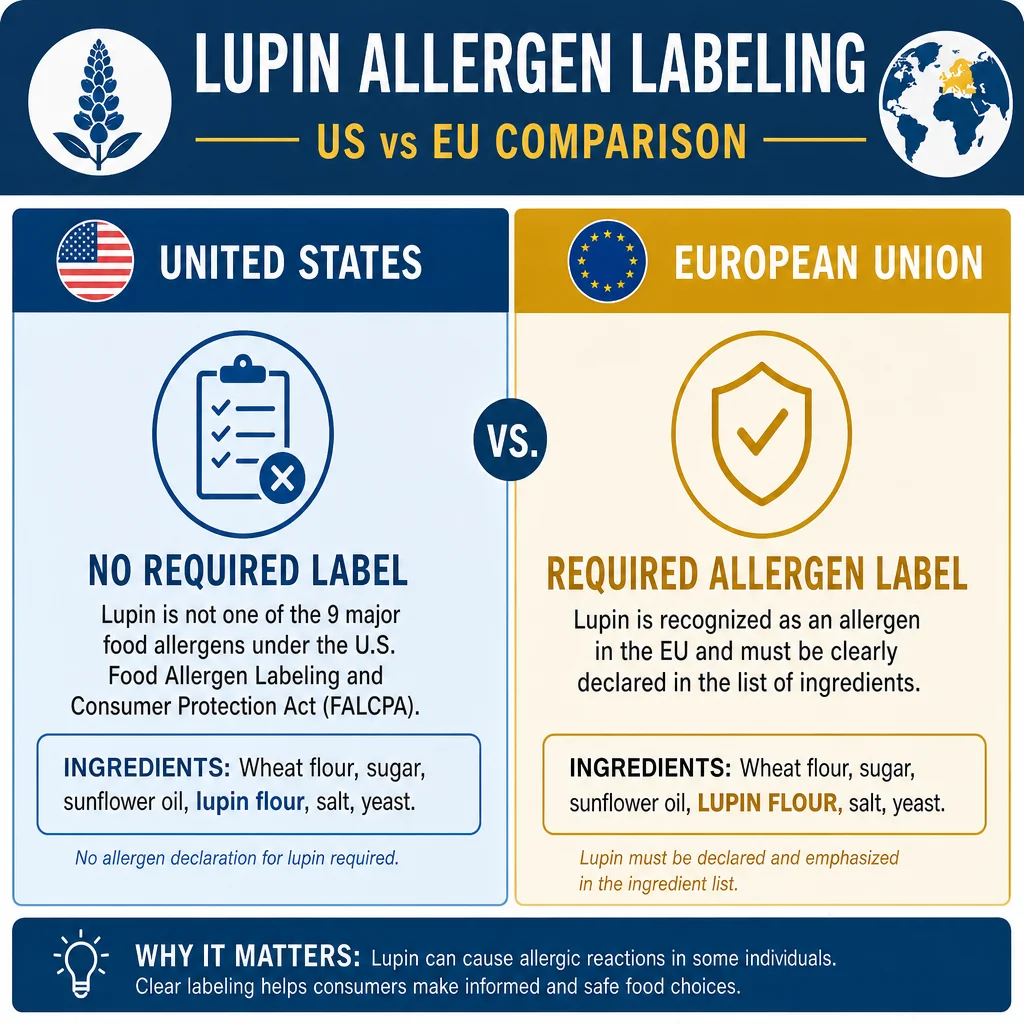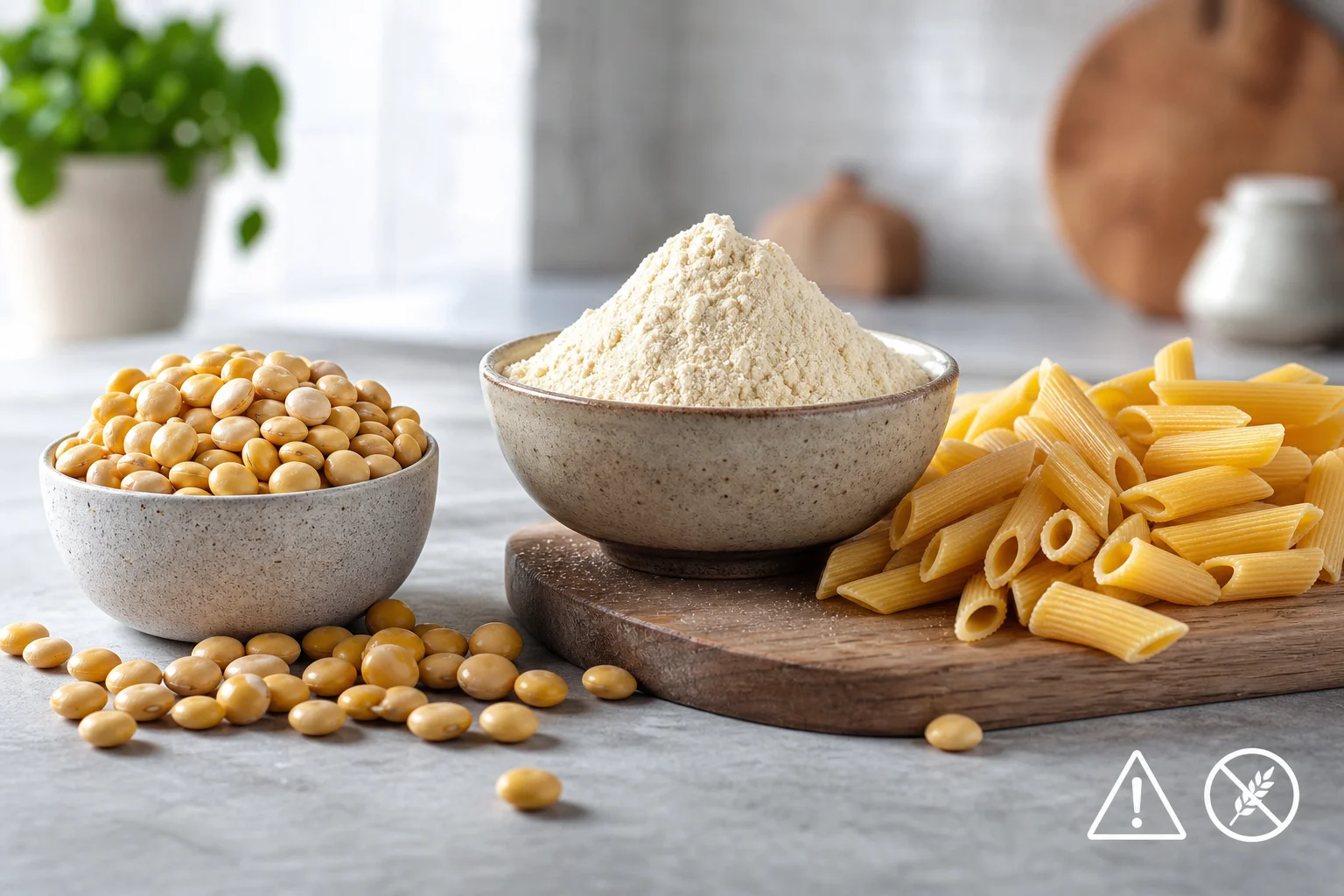
Lupin is one of the most underrecognized food allergens in the United States. It is a major allergen in the European Union, Australia, and Canada, but the FDA does not classify it as one of the nine major food allergens under FALCPA. This means that in the US, food manufacturers are not required to declare lupin on labels. For individuals with lupin allergy, and for those with peanut allergy who may cross-react, this creates a significant risk.
Lupin is a legume, related to peanut and soy. The seeds are ground into flour and used in a growing number of food products, particularly gluten-free pasta, baked goods, and snack foods. Lupin flour is high in protein and fiber, making it an attractive ingredient for manufacturers. But for consumers with lupin allergy, its increasing use in processed foods creates a hidden risk.
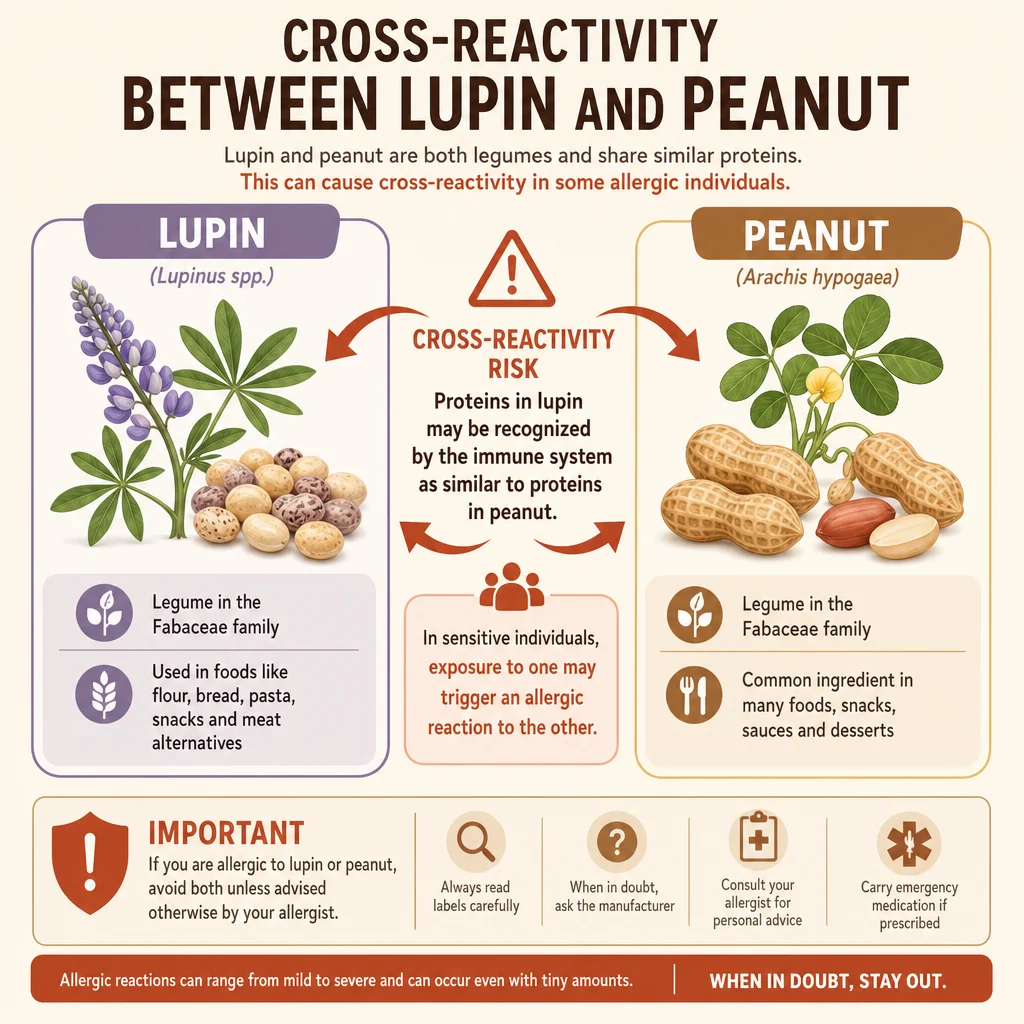
The cross-reactivity between lupin and peanut is well-documented. Studies show that a significant percentage of individuals with peanut allergy will also react to lupin. For individuals with peanut allergy who travel to Europe or consume imported products, the risk of encountering undeclared lupin is a real concern.
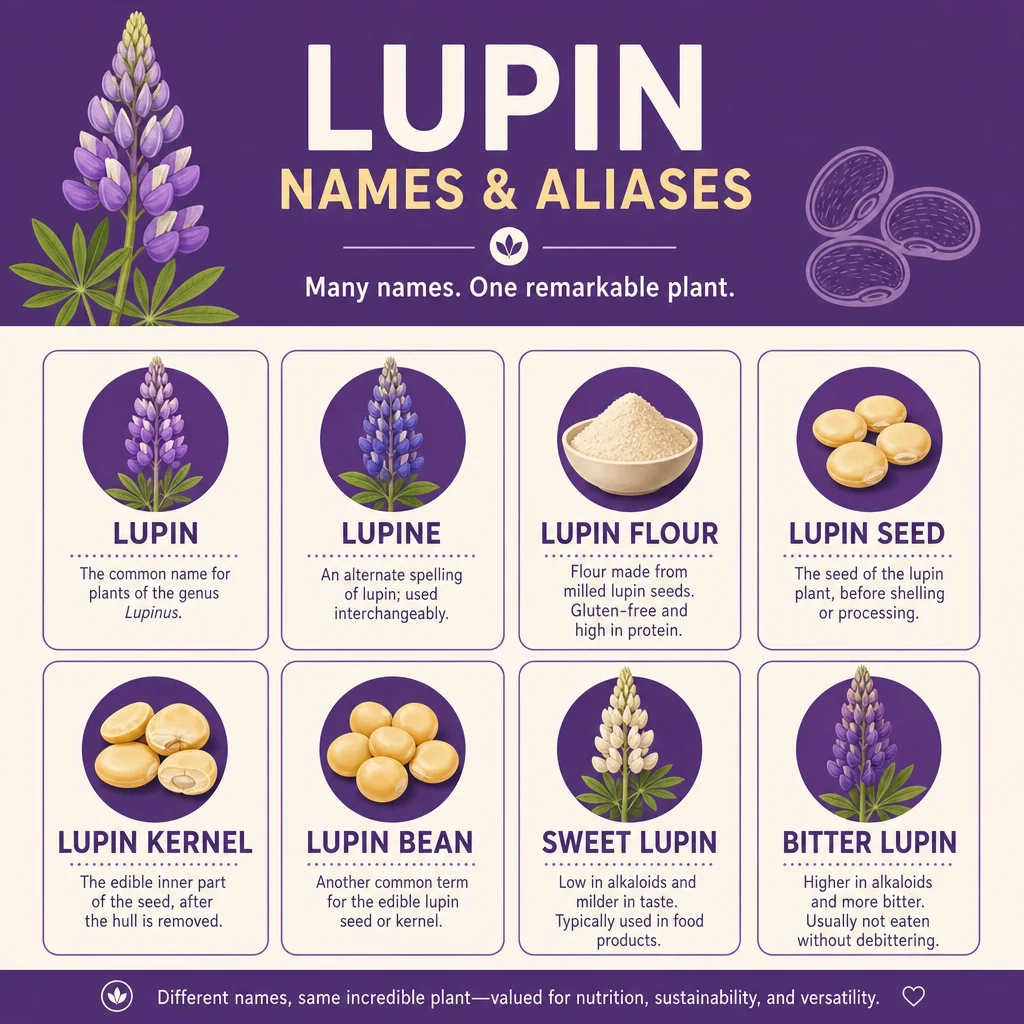
This guide covers everything you need to know about reading labels for lupin: the US labeling gap, the complete list of lupin names, cross-reactivity with peanut, and the practical steps you can take to identify lupin in packaged food.