Deli Meats and Processed Meats
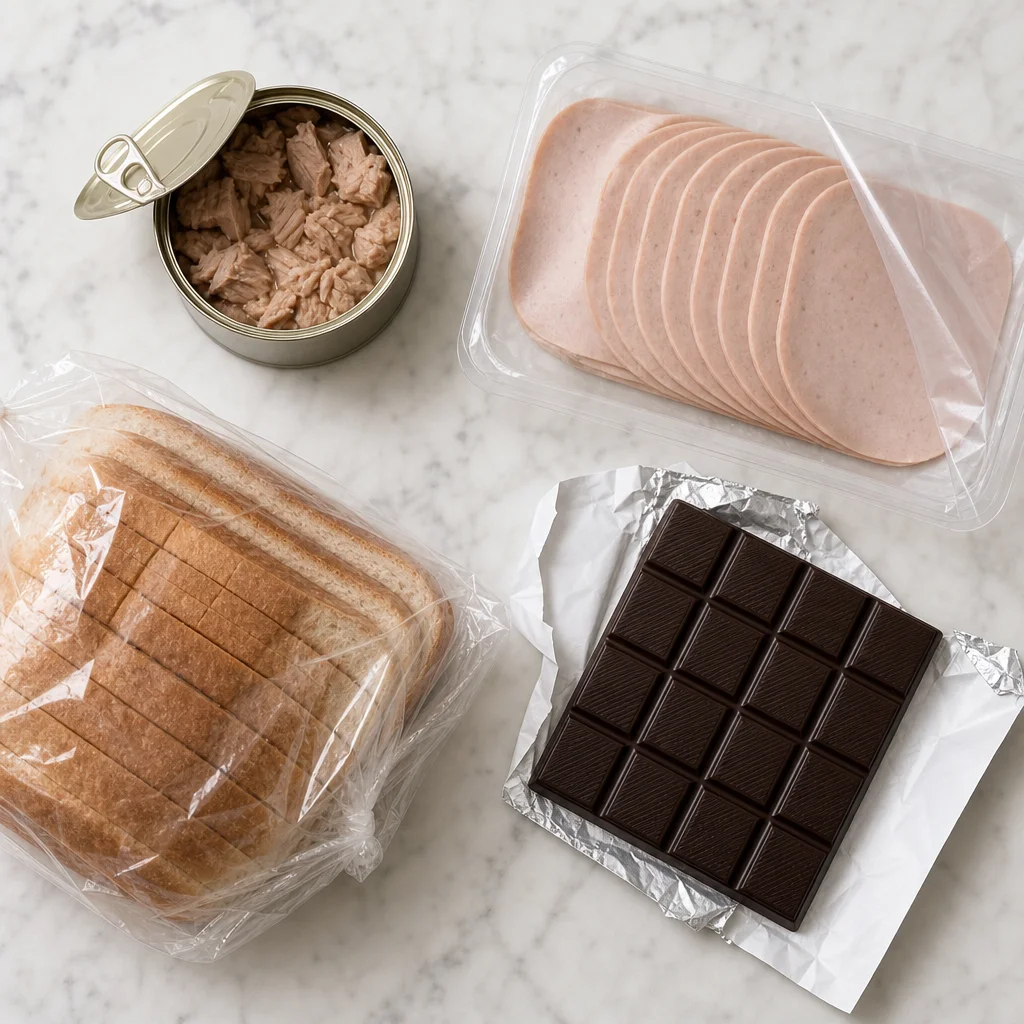
This is the most consistently overlooked soy source. Many deli meats — bologna, hot dogs, sausages, chicken rolls, and luncheon meats — use soy protein concentrate or soy protein isolate as a filler, binder, or extender. The soy protein improves texture, reduces cost, and helps retain moisture.
USDA-regulated meat and poultry products are not covered by FALCPA. They are subject to separate USDA labeling rules that require soy to be declared in the ingredient list, but they do not carry the standardized "Contains: Soy" allergen box that FDA-regulated products do. When reading a deli meat label, scan the ingredient list rather than relying on an allergen summary box.
Canned Tuna
FARE explicitly flags canned tuna as one of the most common unexpected soy sources. The issue is vegetable broth. Many canned tuna brands add "vegetable broth" to retain moisture in the can, and that broth is frequently soy-based — hydrolyzed soy protein is a standard component of commercial vegetable broth used in canning. The declaration "vegetable broth" on the label does not tell you the source; the "Contains: Soy" statement does. Always check it.
Brands and formulations change. A tuna brand that was soy-free in a previous purchase may have reformulated. Check every purchase against the current label.
Baked Goods
Soy flour is widely used in commercial baking as a dough conditioner — it improves bread texture, helps retain moisture, and extends shelf life. It appears in sandwich bread, hamburger buns, hot dog buns, bagels, and many commercial pastry products. Soy lecithin is used separately as an emulsifier. Many commercial bread products contain both.
This makes bakery items a consistent risk category for soy-allergic individuals, including products that are not marketed as having anything to do with soy.
Asian Cuisine
Soy sauce is a fundamental seasoning across Chinese, Japanese, Korean, Vietnamese, Thai, Filipino, and Indonesian cooking. It is used in stir-fries, marinades, dipping sauces, ramen broth, noodle dishes, dumplings, and many preparations where it functions as background seasoning rather than a named ingredient. Even dishes that are not marketed as soy-based may have been seasoned with it at every stage of preparation.
Eating at Asian restaurants with a soy allergy requires a level of communication that verbal reassurance alone typically cannot satisfy. A chef card in the relevant language is the standard recommendation from FARE.
Fast Food
Most major fast food chains use soy in their supply chains extensively. Soy flour appears in buns; soy protein appears in some burger patty formulations; soy lecithin appears in sauces. McDonald's, Burger King, and similar chains publish allergen guides online that show soy as present in most products. The Impossible Burger contains soy protein isolate as a primary ingredient. The Beyond Burger uses pea protein rather than soy, but formulations change — always verify the current label.
Medications and Supplements
Vitamin E capsules and supplements frequently use tocopherols derived from soy. The highly purified tocopherol itself is generally considered safe for soy-allergic individuals, but patients with severe allergy should confirm with their physician or pharmacist. Soy lecithin appears in some oral medications as an excipient.