Label Reading Guides

Does Fruit Juice Concentrate Count as Added Sugar?

Learn when fruit juice concentrate counts as added sugar in the United States, how EU labels differ, and what an ingredient list cannot prove by itself.

Jul 30, 2026|9 min read
By Sanket Patel|Updated 2026-08-28|6 sources|Editorial standards
Does Fruit Juice Concentrate Count as Added Sugar?

Fruit juice concentrate can count as added sugar, but it does not do so automatically in every product. In the United States, the answer depends on how much sugar the concentrate contributes compared with the same volume of 100 percent juice of the same type, plus several defined exceptions. In the European Union, the mandatory nutrition panel reports total sugars rather than a separate added-sugars number, while a with no added sugars claim has its own rule.

That distinction matters because the same ingredient name can appear in a 100 percent juice, a drink reconstructed from concentrate, a yogurt, a cereal bar, or a sauce. The label question is not simply, “Was water removed?” It is, “What role does the concentrate play in this specific food, and what does this market require the label to show?”
The Short Answer by Label Context

Label contextWhat the concentrate may be doingBest label evidence to check
100 percent juice from concentrateRestoring juice after water was removedProduct name, percentage-juice statement, ingredient list
Juice drink or flavored beverageSupplying juice, sweetness, or bothAdded Sugars line in the U.S., percentage juice, ingredient order
Yogurt, cereal bar, sauce, or snackSweetening or adding flavor, color, solids, or fruit characterNutrition panel, ingredient list, claims, manufacturer details
EU product with a no-added-sugars claimConcentrate should not have been added for sweetening propertiesClaim wording, total sugars, ingredient list, naturally occurring sugars statement

The table is a reading framework, not a formula for classifying a product from its name alone. A concentrate can serve more than one technical purpose. The legal calculation also depends on the product and jurisdiction.

What Fruit Juice Concentrate Actually Is

What Fruit Juice Concentrate Actually Is

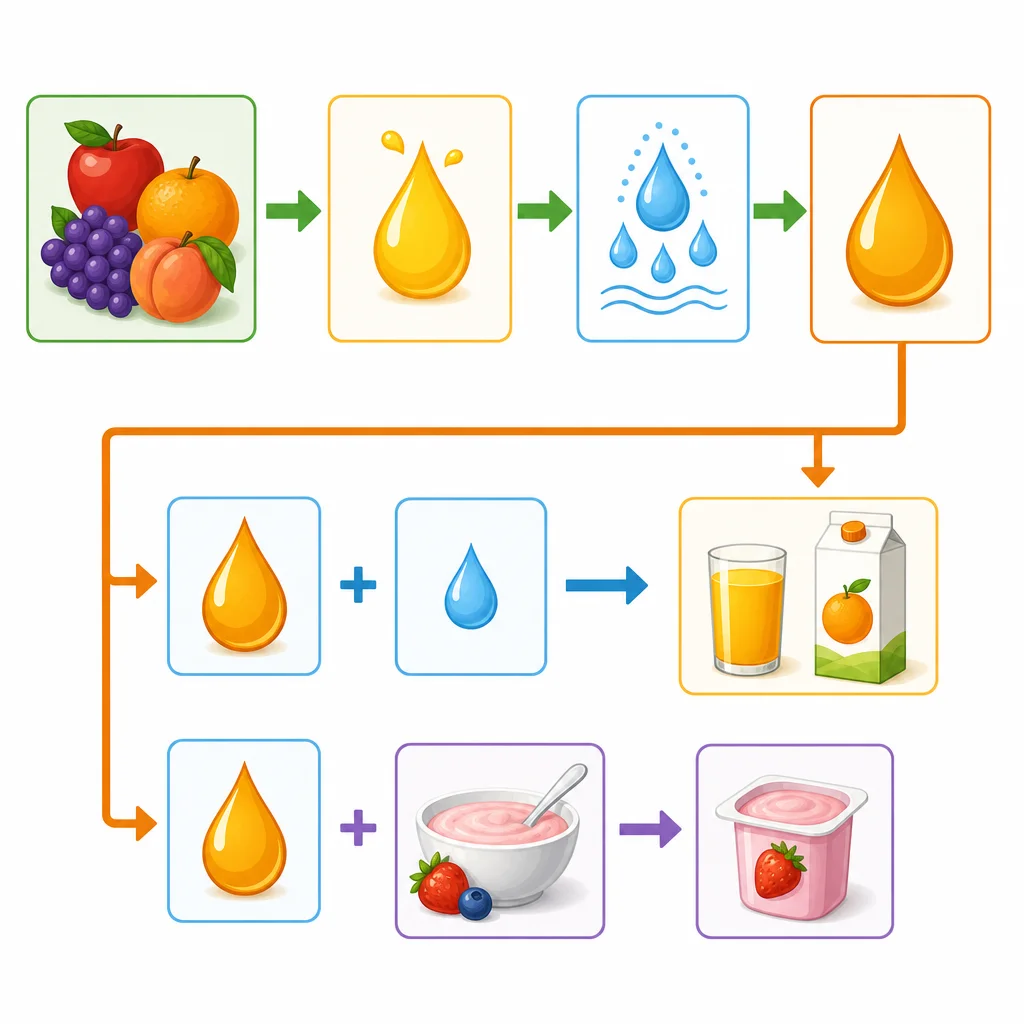
Fruit juice concentrate is juice from which some water has been removed. Concentration makes the material smaller to transport, changes its solids level, and creates an ingredient that can later be diluted or used in another food.

When a manufacturer adds water back to produce ordinary-strength juice, the concentrate can function as the practical starting form of the juice. When a manufacturer adds apple, pear, grape, or another concentrate to a cereal bar, sauce, flavored dairy product, or beverage, the concentrate may also contribute substantial sweetness.

Those uses should not be collapsed into one claim. Removing water increases the sugar concentration per unit of volume, but the finished-food context determines how regulators treat the contribution. It also determines which declarations a shopper sees.

The U.S. Rule Uses a Same-Type Juice Baseline

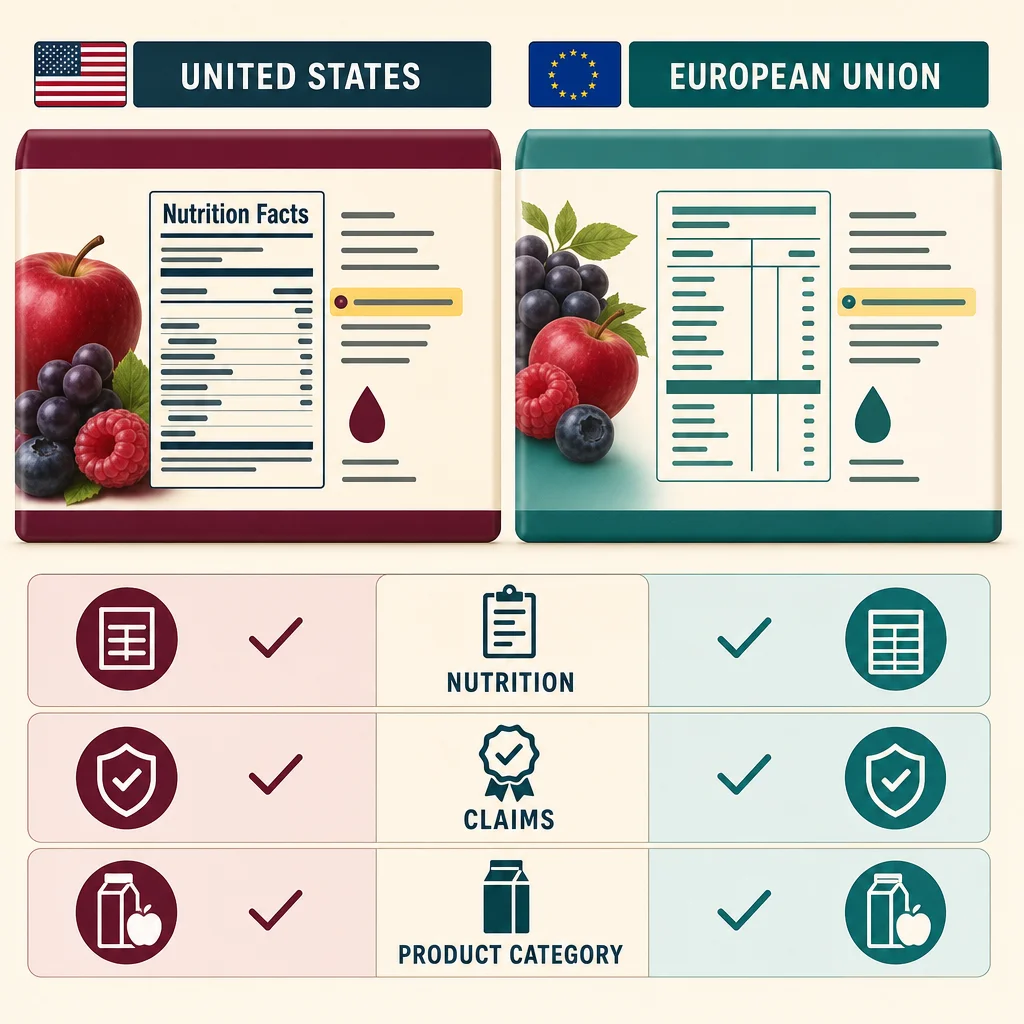
The U.S. Nutrition Facts label has a separate Includes X g Added Sugars line. FDA's rule includes sugars from concentrated fruit or vegetable juice when the concentrate contributes sugar beyond what would be expected from the same volume of 100 percent juice of the same type.

That comparison prevents every reconstructed juice from being treated as though the act of concentration alone created added sugar. It also prevents a manufacturer from using an unusually concentrated juice ingredient as a sweetener in another food without accounting for the excess contribution.

Imagine two simplified cases:

  1. A company removes water from apple juice for transport and later adds the appropriate water back to make 100 percent apple juice. The concentration step is not by itself proof that the finished juice contains added sugars.
  2. A company adds apple juice concentrate to a snack bar as a concentrated sweetening ingredient. The sugars above the same-volume ordinary-juice baseline can fall within the added-sugars calculation.

The actual calculation belongs to the manufacturer because it depends on formulation records, amounts, juice identity, and the rule's exceptions. A consumer generally cannot reconstruct it from ingredient order.

Important U.S. Exceptions

FDA's added-sugars definition has specific exceptions relevant to juice. These include sugars in certain 100 percent fruit or vegetable juices sold directly to consumers, juice concentrates used toward the declared percentage of juice under the beverage rules, and concentrate used only to standardize a juice's soluble solids to the permitted Brix level.

Specified fruit spreads also receive tailored treatment. The details matter because an exception for a defined product or use is not a blanket statement that all juice concentrate is excluded.

This is why simple internet rules such as “juice concentrate is always added sugar” and “fruit sugar never counts as added sugar” are both unreliable. The U.S. rule sits between those extremes.

Ingredient Order Does Not Reveal the Added-Sugar Calculation

U.S. ingredients are generally listed in descending order by weight as they are used to make the food. That helps show whether juice concentrate is a major or minor component, but it does not reveal:

  • how much of its weight is water
  • how concentrated it was when added
  • the ordinary-strength juice baseline used in the calculation
  • how many grams of finished-food sugar it contributed
  • whether a regulatory exception applies

A concentrate near the top of the list deserves attention if you are comparing sweetness across products. It still does not let you calculate the Added Sugars line. The nutrition panel provides the declared finished-food amount per serving.

If several sweetening ingredients appear under different names, the hidden sugar names guide can help you recognize them without pretending they are chemically identical.

The EU Nutrition Panel Answers a Different Question

The EU Nutrition Panel Answers a Different Question

The EU mandatory nutrition declaration includes carbohydrate and of which sugars. It does not require a separate line for added-sugar grams like the U.S. label.

As a result, two packages can provide different kinds of evidence even when the recipes are similar. The U.S. panel distinguishes total sugars from added sugars. The EU panel reports total sugars, while the ingredient list and claims provide context about what was added.

This does not mean added sugars are unregulated in the EU. It means the mandatory display is structured differently. A shopper should not compare a U.S. Added Sugars percentage with the EU of which sugars line as if they were the same measure.

The EU “With No Added Sugars” Claim

EU rules allow a with no added sugars claim only when the product contains no added monosaccharides or disaccharides and no other food used for its sweetening properties. If sugars occur naturally in the food, the label should also state that the product contains naturally occurring sugars.

The phrase food used for its sweetening properties is important for concentrate. A manufacturer cannot necessarily preserve the claim merely by choosing a fruit-derived ingredient instead of crystalline sugar. The role of that ingredient in the recipe matters.

At the same time, the presence of concentrate does not let a shopper rule on claim compliance without context. A juice concentrate can be part of reconstructing juice or serve another permitted role. Product category, amount, technical purpose, and the complete recipe all matter.

“No Added Sugar” Does Not Mean Sugar-Free

A no-added-sugar product can still contain substantial naturally occurring sugars. Fruit, milk, and other ingredients contribute sugars even when the manufacturer adds no ingredient for sweetening.

The reverse distinction also matters. Sugar-free, reduced sugar, and no added sugar are separate claims with different conditions. The Sugar-Free and No Added Sugar Scanner guide explains how to keep those claims separate when comparing products.

For a practical comparison:

  • read the serving size first
  • compare total sugars per serving
  • in the United States, check included added sugars
  • read the complete ingredient list for juice concentrates and other sweeteners
  • note the product category and percentage-juice statement
  • interpret claims under the rules for the market where the food is sold

Concentrate Is Not HFCS

Fruit juice concentrate is not high-fructose corn syrup. They have different raw materials, identities, and label names. Both can contribute sweetness, which is why they may appear in the same shopping workflow, but one should not be used as an alias for the other.

The HFCS label-name guide owns the corn-syrup question. Use this article for the narrower concentrate classification issue.

A Five-Step Label Check

  1. Identify the food. A 100 percent juice, juice drink, yogurt, bar, sauce, and jam do not share one classification path.
  2. Read the concentrate name. Note whether the source fruit is identified and whether multiple concentrates appear.
  3. Use the market's nutrition panel. Check Added Sugars in the United States or total sugars on an EU label.
  4. Read claims literally. No added sugar is not sugar-free, and made with real fruit is not a sugar calculation.
  5. Ask for context when the decision matters. A manufacturer can explain whether concentrate restores juice strength, standardizes the product, or serves as a sweetening ingredient.

This approach is more dependable than trying to assign one universal status to every ingredient containing the words juice concentrate.

Fruit juice concentrate is a context-sensitive label term, not a universal verdict. IngrediCheck can flag concentrate names and related sweeteners, keep them separate from HFCS, and help shoppers compare the ingredient list with the correct nutrition-panel and claim evidence.

Frequently Asked Questions

Does fruit juice concentrate always count as added sugar in the United States?

No. FDA rules count sugars from concentrated fruit or vegetable juice as added sugars when the concentrate contributes more sugars than the same volume of 100 percent juice of the same type. The rule also has defined exceptions, including certain 100 percent juices, juice concentrates used toward the declared juice percentage, Brix standardization, and specified fruit spreads.

Does the EU nutrition label show added sugar grams?

No. The mandatory EU nutrition declaration reports total sugars, not a separate added-sugars line. Ingredient wording and regulated claims such as with no added sugars provide different information and must be read separately.

Can a product use fruit juice concentrate and still say no added sugar?

It depends on the market and why the concentrate was used. In the EU, a no-added-sugars claim is not allowed if a food was added for its sweetening properties. In the United States, the ingredient must be evaluated under FDA's specific added-sugars calculation and claim rules.

Can the ingredient list show how many grams of sugar came from concentrate?

Usually not. Ingredient order shows predominance by weight before processing, not the grams of sugar contributed by each ingredient. Use the nutrition panel, serving size, product category, and any regulated claims together.

Next Label Check

Follow the scanner, hub, and ingredient paths connected to this guide

Get the app for clearer label decisions.

Scan labels, see what fits your food notes, and read the why in plain English.

IngrediCheck app
