Label Reading Guides

Protein Isolate vs Concentrate vs Hydrolysate: Label Guide

Learn what isolate, concentrate, and hydrolysate reveal about protein processing, what varies by source, and why none of the terms erases allergen identity.

Jul 28, 2026|10 min read
By Sanket Patel|Updated 2026-08-26|7 sources|Editorial standards
Protein Isolate vs Concentrate vs Hydrolysate: Label Guide

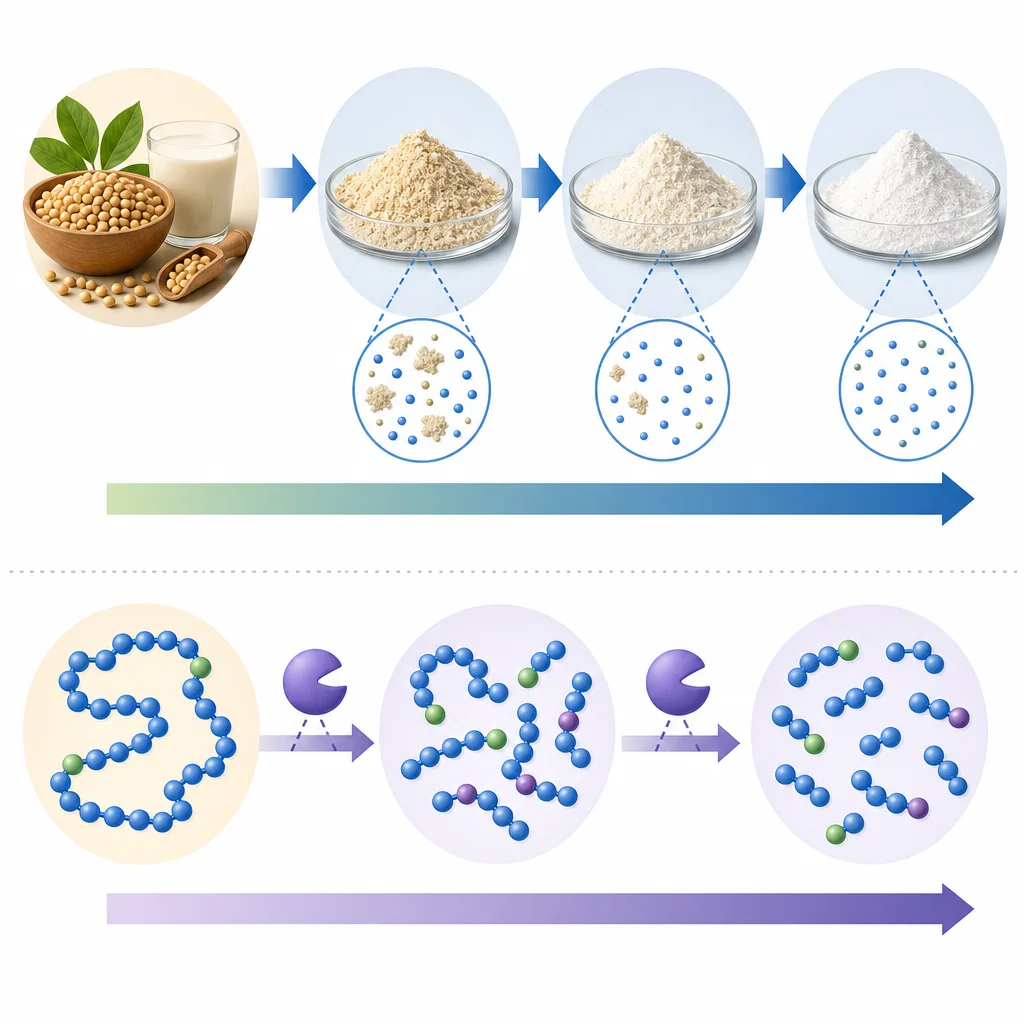
Concentrate, isolate, and hydrolysate do not form one simple best-to-worst ladder. Concentrate and isolate mainly describe how much non-protein material has been removed. Hydrolysate describes protein chains that have been split into smaller fragments. A protein can be concentrated, isolated, hydrolyzed, or both isolated and hydrolyzed.

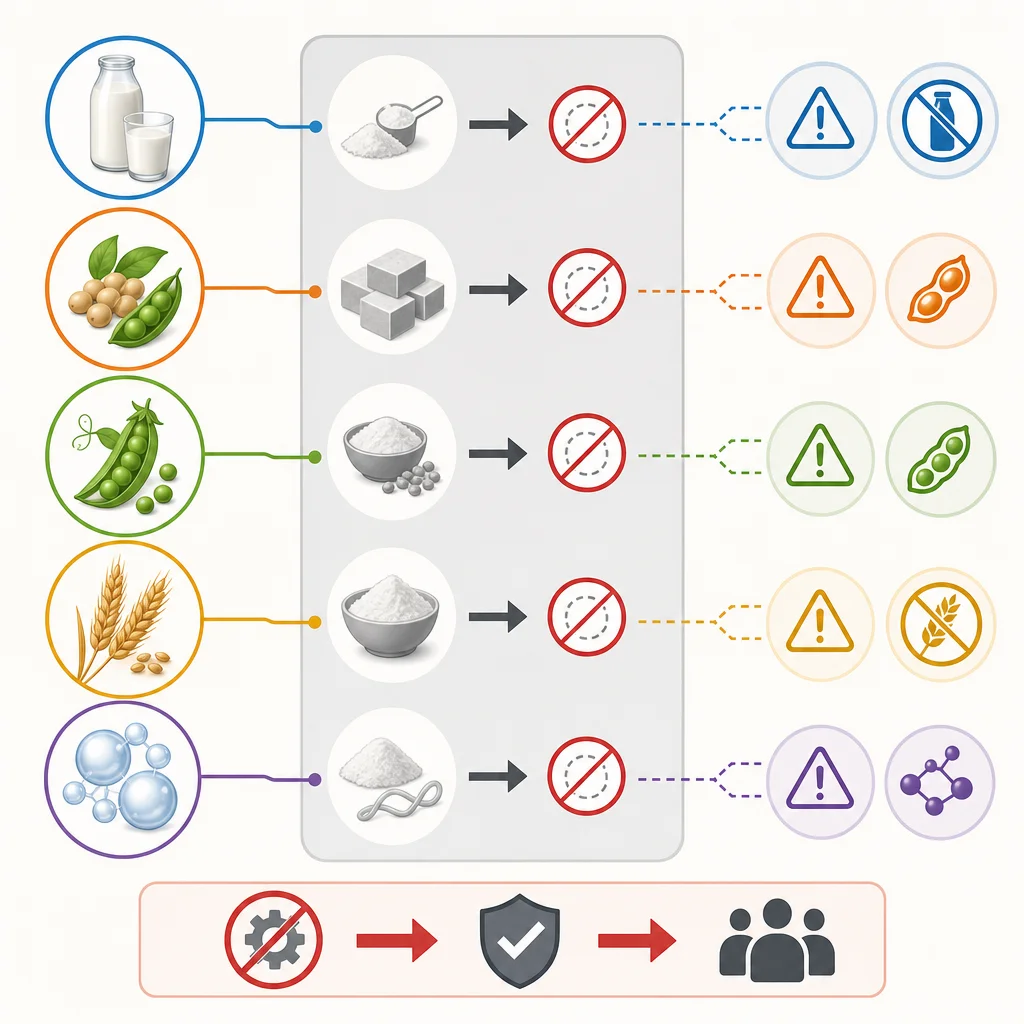
The source word remains the most important label clue: whey means milk, soy means soy, pea means pea, and wheat means wheat. Extra processing can change composition, solubility, taste, and digestibility. It does not automatically remove allergen status, lactose, every carbohydrate, or every dietary concern.

Three Terms, Two Different Questions

TermMain question answeredTypical process ideaWhat it does not prove
ConcentrateHow far was the protein fraction enriched?Remove some water, fat, carbohydrate, fiber, or mineralsOne universal protein percentage across every source
IsolateWas the protein fraction purified more extensively?Additional separation removes more non-protein materialAllergen-free, lactose-free, or nutritionally superior
Hydrolysate or hydrolyzed proteinWere protein chains broken into smaller peptides?Enzymes, acid, or another controlled hydrolysis stepComplete digestion, zero allergenicity, or a particular peptide size

Concentrate and isolate are primarily fractionation terms. Hydrolysate is primarily a protein-chain treatment term. Comparing them as if they were three grades on one scale produces bad label advice.

What “Concentrate” Usually Signals

A protein concentrate starts with a food source and removes part of the non-protein material. The retained fraction contains more protein than the starting food, but it can also retain meaningful amounts of carbohydrate, fat, fiber, ash, lactose, or flavor compounds depending on the source and process.

For soy, Codex provides a particularly clear benchmark. CXS 175-1989 defines soy protein concentrate as containing at least 65% but less than 90% protein on a dry-weight basis, excluding added vitamins, minerals, amino acids, and additives. That is a soy-product standard, not a universal legal definition for pea, rice, fava, or every retail supplement.

U.S. 21 CFR 184.1979c defines whey protein concentrate as the substance obtained by removing enough non-protein constituents from whey so that the finished dry product contains at least 25% protein. The threshold is dramatically different from Codex soy concentrate because the ingredients and standards are different.

This contrast is the central lesson: always attach the processing term to its source. Whey protein concentrate and soy protein concentrate are not expected to share one purity range.

What “Isolate” Usually Signals

What “Isolate” Usually Signals

An isolate generally undergoes more extensive separation so protein makes up a larger share of the dry ingredient. For Codex soy products, isolate begins at 90% protein on a dry basis. A plant protein supplier may use wet extraction, pH adjustment, filtration, washing, precipitation, centrifugation, or drying to reach its specification.

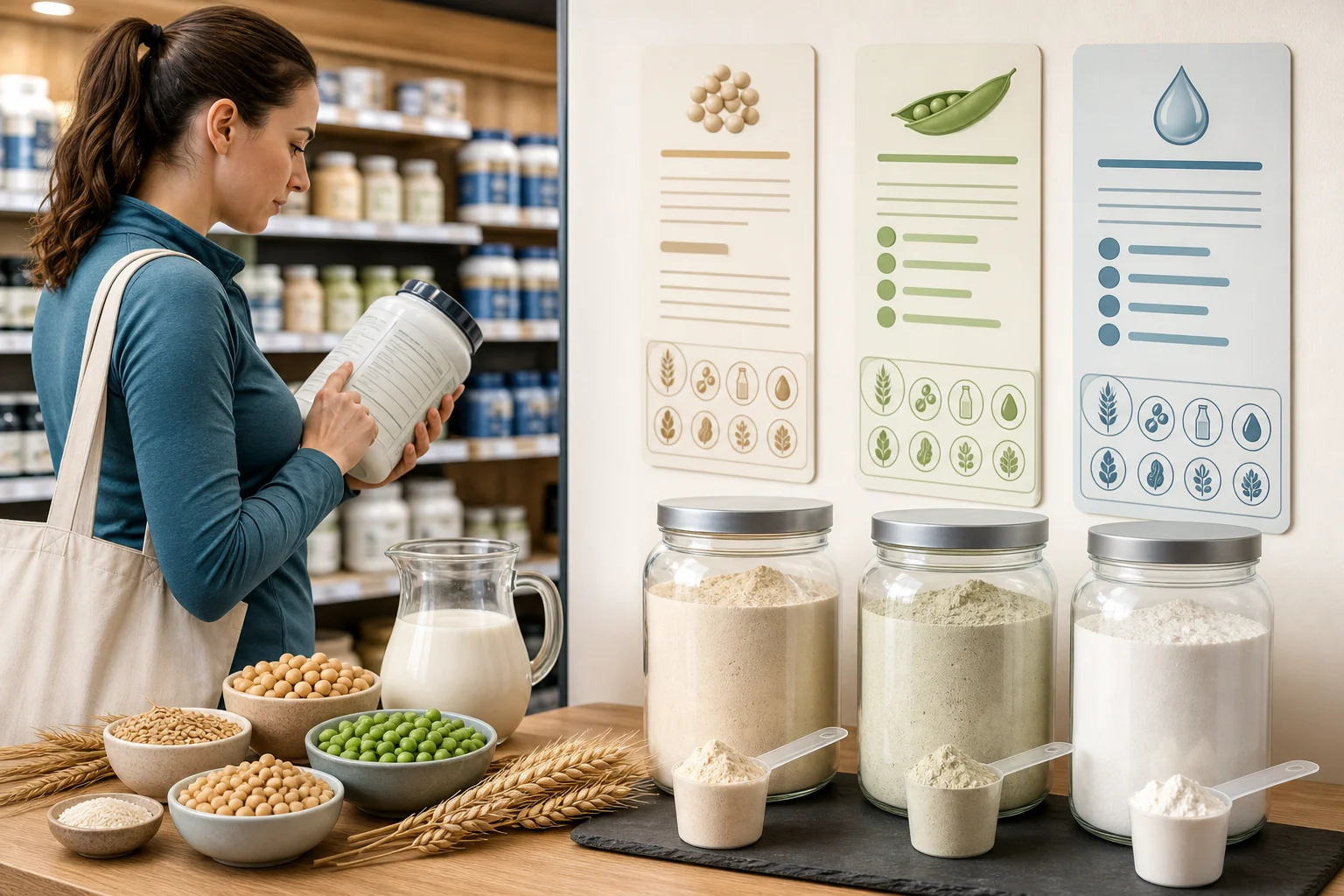
The retail product is a second layer. A tub whose first ingredient is whey protein isolate may also contain flavors, sweeteners, gums, lecithin, minerals, enzymes, or another protein. The Nutrition Facts panel reports the formulated product per serving, not the laboratory purity of the isolate before blending.

Isolate can matter for texture and composition. Whey isolate often contains less lactose and fat than whey concentrate. Soy isolate contains less of some non-protein soybean material than soy concentrate. Pea isolate is more protein-dense than whole pea flour. None of those tendencies proves zero.

Isolate also does not mean synthetic. It means a fraction was isolated from a source. The source can be dairy, legume, grain, potato, seed, or another biological material.
What “Hydrolysate” Means

Proteins are chains of amino acids folded into larger structures. Hydrolysis cuts some of the bonds connecting those amino acids, creating shorter peptides and free amino acids. Manufacturers may use enzymes, acids, heat, or combinations under controlled conditions.

The degree of hydrolysis matters, but an ordinary retail ingredient name rarely provides it. Partially hydrolyzed whey protein, extensively hydrolyzed casein, and hydrolyzed soy protein can represent very different peptide distributions and intended uses.

Hydrolysis can change:

  • solubility in water or acidic beverages
  • bitterness and flavor
  • foaming and emulsification
  • digestion speed
  • behavior in infant or medical formulas
  • free amino acid and peptide composition

It does not necessarily increase the percentage of protein. A concentrate can be hydrolyzed, and an isolate can be hydrolyzed. Some labels accurately combine both ideas, such as hydrolyzed whey protein isolate.

U.S. 21 CFR 102.22 requires protein hydrolysate names to identify the food source. Acceptable examples include hydrolyzed wheat gluten, hydrolyzed soy protein, and hydrolyzed casein. The vague names hydrolyzed protein and hydrolyzed vegetable protein are not acceptable under that rule because they fail to identify the source.

Allergen Identity Usually Survives the Processing Word

Milk, soy, wheat, and several other sources are major allergens in the United States. FDA's food-allergy overview emphasizes ingredient and allergen controls for the nine major allergens.

Do not assume:

  • whey isolate is safe for milk allergy
  • soy isolate is safe for soy allergy
  • hydrolyzed wheat protein is safe for wheat allergy
  • pea hydrolysate is safe for someone with diagnosed pea allergy
  • a clear protein drink is dairy-free because it looks like juice

Hydrolysis may reduce the ability of a particular protein preparation to trigger reactions, but the result depends on the source, enzymes, degree of hydrolysis, residual peptides, dose, and individual. Specialized infant formulas and clinical products use defined evidence and manufacturing controls. The word hydrolyzed on an ordinary snack or supplement does not import those conclusions.

U.S. 21 U.S.C. 343(w) governs major-allergen source disclosure, subject to statutory exemptions and petition or notification routes. In the EU, Regulation 1169/2011 requires listed allergen sources to be emphasized, again subject to specific named exemptions. Processing is not a general exemption.

The pea protein and peanut-allergy guide shows why a concentrated legume protein deserves source-specific review without assuming that peanut allergy automatically equals pea allergy.

Lactose, Carbohydrate, and “Purity” Claims

Whey protein isolate generally removes more lactose than whey protein concentrate, but isolate is not a regulated synonym for lactose-free. A flavored powder can also add milk-derived ingredients or carbohydrate after the isolate is produced.

Use four pieces of evidence together:

  1. the exact protein-source name
  2. the full ingredient list and Contains statement
  3. the Nutrition Facts values per serving
  4. a specific lactose-free, allergen, or certification claim when relevant

Protein grams divided by serving weight can be a rough formula comparison, but it is not a purity assay. Serving weight includes every added ingredient, and rounding rules affect declared grams.

The same caution applies to plant protein. An isolate may contain less starch or fiber than a concentrate without being free of either. A concentrate may be the better functional choice in one food because retained material improves texture. More isolated does not automatically mean more nutritious, safer, or better for the reader's goal.

Source Matters More Than the Generic Term

Source Matters More Than the Generic Term
Label exampleSource clueMain follow-up question
Whey protein isolateMilkMilk allergy, lactose, and total formula
Soy protein concentrateSoySoy disclosure and protein percentage standard
Pea protein isolatePeaPea reaction history and cross-contact controls
Hydrolyzed wheat proteinWheatWheat allergen and gluten-related requirements
Collagen hydrolysateUsually animal tissueSpecies source and dietary-certification rules
Fermentation-derived whey proteinWhey protein made through precision fermentationMilk-allergen labeling plus production-source claim

The precision-fermentation label guide covers the last case. A protein made by microorganisms may be compositionally designed to match a milk protein and can still require milk-allergen disclosure.

A Practical Protein-Label Workflow

  1. Read the complete ingredient name. Capture source plus processing term, such as whey protein isolate or hydrolyzed soy protein.
  2. Separate fractionation from hydrolysis. Concentrate and isolate describe enrichment; hydrolyzed describes smaller protein fragments.
  3. Check the applicable source standard. Do not transfer Codex soy percentages to whey, pea, rice, or a finished protein powder.
  4. Read allergen disclosure independently. Processing words do not erase milk, soy, or wheat by default.
  5. Use Nutrition Facts for the finished product. Compare protein grams, serving size, carbohydrate, fat, sodium, and the complete formula.
  6. Treat zero claims as separate evidence. Lactose-free, gluten-free, vegan, and allergen-free claims have different meanings and proof requirements.
  7. Ask for specifications when necessary. Degree of hydrolysis, residual lactose, source organism, and cross-contact controls may not fit on the label.

Concentrate, isolate, and hydrolysate describe useful but limited parts of protein processing. IngrediCheck helps surface the full source-and-process name, apply saved allergen and dietary rules, and keep a polished front claim from replacing the evidence in the ingredient list.

Frequently Asked Questions

Is protein isolate always higher in protein than concentrate?

Within a defined ingredient standard, isolate usually represents more removal of non-protein material and a higher protein fraction. The words are not one universal percentage system across every source and market, so compare the governing standard, specification, and Nutrition Facts rather than assuming one threshold fits all proteins.

Is hydrolyzed protein the same as isolate?

No. Isolate describes separation and concentration of the protein fraction. Hydrolyzed describes cleavage of protein chains into smaller peptides or amino acids. A protein can be both isolated and hydrolyzed, so the terms answer different processing questions.

Does hydrolyzed protein remove the allergen?

Not automatically. Hydrolysis can reduce the size of protein fragments, but ordinary food labels do not prove that every allergenic epitope was removed. Major-allergen source disclosure can still apply, and a hydrolyzed ingredient should not be treated as allergen-free without product-specific clinical and regulatory evidence.

Does whey protein isolate mean lactose-free?

No. Isolating whey protein usually removes much of the lactose, fat, and minerals, but the ingredient name does not establish zero lactose. Check the product's nutrition, allergen statement, lactose claim, specifications, and any certification relevant to your decision.

Next Label Check

Follow the scanner, hub, and ingredient paths connected to this guide

Get the app for clearer label decisions.

Scan labels, see what fits your food notes, and read the why in plain English.

IngrediCheck app