Ingredient Deep Dives

Pea Protein and Peanut Allergy: What Labels Can Tell You

Learn what pea-peanut cross-reactivity evidence actually shows, where concentrated pea protein appears, and why major-allergen statements may not highlight it.

Aug 23, 2026|9 min read
By Sanket Patel|Updated 2026-08-23|8 sources|Editorial standards
Pea Protein and Peanut Allergy: What Labels Can Tell You

Pea protein has moved from a niche supplement ingredient into plant-based burgers, dairy alternatives, nutrition bars, cereals, pasta, and meal replacements. That growth creates a new label question for households managing peanut allergy: if peanuts and peas are both legumes, can pea protein cause a reaction?

Documented reactions and clinically relevant pea-peanut cross-reactivity exist. Peanut allergy, however, does not automatically mean pea allergy. Labels can reveal whether pea protein is intentionally present, but they cannot predict an individual's reaction or replace an allergy evaluation.
The Evidence-Based Answer

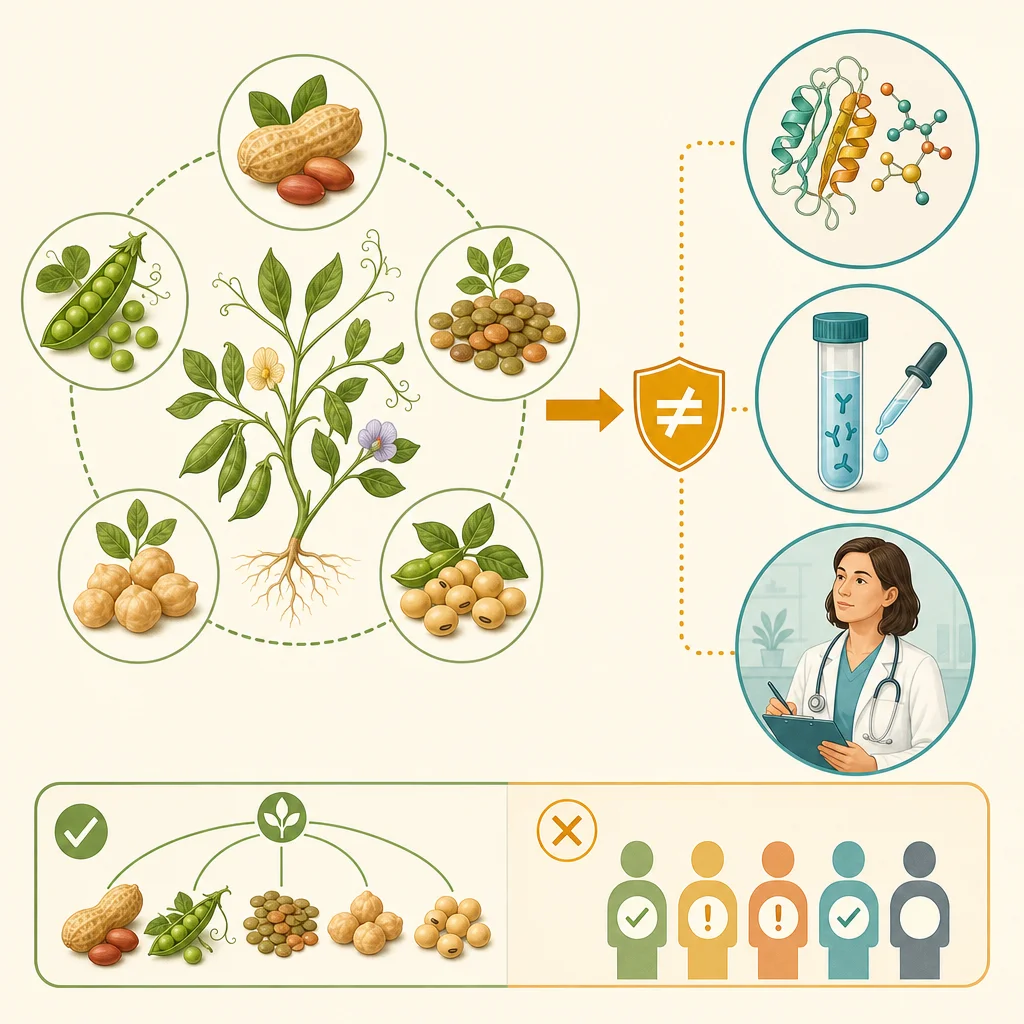
Most people with peanut allergy should not be described as allergic to every legume. Peanut, pea, chickpea, lentil, soy, and lupin belong to the same broad plant family, but botanical relationship is not the same thing as clinical cross-allergy.

Some proteins in pea resemble proteins in peanut closely enough that the same IgE antibodies can bind to both. This is called immunologic cross-reactivity. A laboratory result showing that binding is possible is not, on its own, proof that eating pea will cause symptoms.

Clinical reports show that pea reactions can be real and severe. A small study of three patients with pea anaphylaxis identified cross-reactive vicilin proteins in pea and peanut. Later pediatric case reports documented reactions to pea protein that was not obvious from the front of the package. These reports establish possibility, not a prevalence rate for everyone with peanut allergy.

The safest summary is:

  • peanut allergy does not automatically establish pea allergy
  • some peanut-allergic people can also react to pea
  • concentrated pea protein may create a different exposure from an ordinary serving of whole peas
  • a person's prior tolerance to peas is useful history, but it should be interpreted in context when a concentrated isolate is new

Why Concentrated Pea Protein Changes the Question

Whole green peas contain water, carbohydrate, fiber, and protein. Pea protein ingredients remove much of the other material and concentrate the protein fraction. Labels may use names such as pea protein, pea protein isolate, pea protein concentrate, yellow pea protein, or hydrolyzed pea protein.

Health Canada's pea-protein guidance explains that some people with peanut allergy may react to pea-derived ingredients, while the expected risk of a severe reaction is low. It also highlights protein concentration as a reason pea protein deserves attention beyond casual assumptions about whole peas.

Concentration does not make pea protein inherently unsafe. It means the exposure is not identical. A bite of a protein bar or a serving of plant-based meat can deliver pea protein in a compact form and in a product where the shopper may not expect legumes.

Cross-Reactivity Is Not the Same as Co-Allergy

Cross-Reactivity Is Not the Same as Co-Allergy

Three different ideas often get combined:

  1. Botanical relationship: peanut and pea are legumes.
  2. Sensitization: a skin test or blood test detects IgE binding to a pea component.
  3. Clinical allergy: eating pea causes reproducible allergic symptoms.

A person can show sensitization without reacting when the food is eaten. A person can also have separate allergies to peanut and pea without the relationship being predictable from family membership alone. Clinical history remains essential.

The published evidence base is still limited. The case series are valuable because they identify a real hazard and possible protein mechanism, but they are too small and selected to tell us how common pea allergy is among all peanut-allergic people. Claims such as “all peanut-allergic children should avoid pea” go beyond the evidence.

What Labels Must Say in the United States

The U.S. has nine major food allergens: milk, egg, fish, crustacean shellfish, tree nuts, peanuts, wheat, soy, and sesame. Pea is not on that list.

When pea protein is intentionally used as an ingredient in an FDA-regulated packaged food, it generally appears in the ingredient list under its common or usual name. It does not receive a peanut-style “Contains” disclosure solely because it is pea.

This creates an important shopping habit. Someone checking only bold allergens or the Contains statement can miss pea protein even when the product is properly labeled. The ingredient list is the relevant source.

A “Contains: peanuts” statement concerns peanut. Its absence does not mean the food lacks pea protein, and the presence of pea protein does not permit a manufacturer to label the product as containing peanut unless peanut itself triggers that declaration.

Canada, the EU, and the UK Also Treat Pea Separately

Canada does not classify pea as a priority allergen. Health Canada says pea protein should be identified when it is a primary ingredient in a prepackaged food, but it does not receive the priority-allergen system's special treatment.

The European Union's Annex II allergen list names peanuts and lupin but not pea. The United Kingdom's retained allergen framework likewise covers peanut and lupin, not every legume.

In all three markets, that means a shopper should inspect the ordinary ingredients rather than expecting pea to be bolded or repeated in a special allergen statement. Imported products can use local terminology, so exact presentation may differ.

Pea Is Not the Same Label Case as Lupin

Lupin is another legume that illustrates why country-specific lists matter. EU and UK rules name lupin as a regulated allergen, so it receives emphasis there. U.S. major-allergen law does not give lupin that same special status. Pea is not named in either system's special list.

That difference does not rank the clinical severity of the foods. It tells manufacturers which ingredients receive special label treatment. A severe pea allergy can exist even when pea is not bolded, just as a shopper can encounter different treatment of lupin on opposite sides of the Atlantic.

The practical response is to search for the actual ingredient, not for a general “legume” warning. The lupin allergy guide covers that ingredient's separate cross-reactivity and regulatory questions without combining them with pea-protein intent.

Foods Most Likely to Use Pea Protein

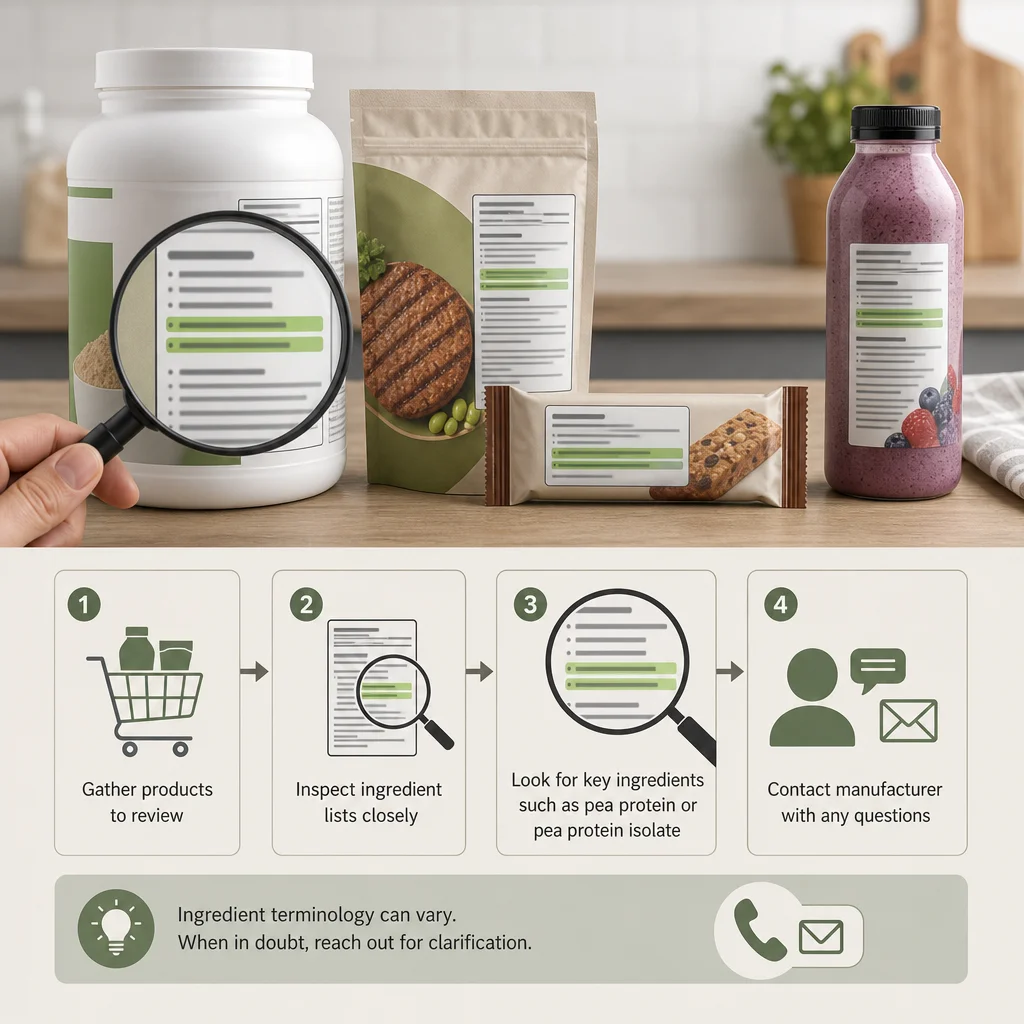
Pea protein is attractive to manufacturers because it can add protein, body, binding, and texture without using milk or soy. It commonly appears in:

  • plant-based burgers, sausages, nuggets, and deli slices
  • dairy-free milk, yogurt, cheese, and frozen desserts
  • protein powders and ready-to-drink shakes
  • nutrition bars, energy bites, and meal replacements
  • high-protein cereals, granola, and oatmeal
  • gluten-free bread, wraps, muffins, and baking mixes
  • protein-enriched pasta and noodles
  • soups, sauces, and savory snack coatings
  • blended plant-protein ingredients

Front-of-package terms such as plant based, dairy free, soy free, clean protein, or high protein do not identify the specific protein source. A product marketed as an alternative to one allergen can introduce another ingredient that matters to a different household.

Pea Ingredient Names Worth Recognizing

Pea Ingredient Names Worth Recognizing

Search for the explicit names first:

  • pea protein
  • pea protein isolate
  • pea protein concentrate
  • yellow pea protein
  • field pea protein
  • hydrolyzed pea protein
  • pea flour
  • pea fiber
  • pea starch

These ingredients do not all contain the same protein concentration. Pea starch and pea fiber are not interchangeable with pea protein isolate. The risk for an individual with pea allergy can depend on residual protein and processing, which ordinary labels may not quantify.

Generic terms require care. “Plant protein blend” should normally be followed by the component ingredients, but dense labels and composite ingredients can be hard to parse. When the exact protein source is not clear and pea changes the decision, contact the manufacturer.

What a Label Cannot Tell You

A label can show that pea protein is present. It cannot tell you:

  • whether a peanut-allergic person is clinically allergic to pea
  • whether prior tolerance to a small amount of whole pea predicts tolerance to an isolate
  • how much pea protein is in a serving when the company does not disclose it
  • whether a positive laboratory test would correspond to symptoms
  • whether an unsupervised first exposure is appropriate for a particular person

If someone has reacted to pea, has an unclear history, or has never eaten concentrated pea protein, that uncertainty belongs with an allergist. Do not use a new protein bar as a home food challenge.

A Practical Shopping Checklist

  1. Read ingredients, not only the Contains statement. Pea is not a named major or priority allergen in the four systems reviewed here.
  2. Search for concentrated forms. Pea protein isolate, concentrate, hydrolysate, and yellow pea protein deserve a deliberate check.
  3. Notice the product category. Plant-based meat, dairy alternatives, protein powders, and nutrition bars are common sources.
  4. Separate pea from peanut. A peanut-free label does not mean pea-free, and pea protein does not mean the product contains peanut.
  5. Use prior history carefully. Record whether whole peas and pea-protein products have been eaten without symptoms, but let an allergist interpret uncertain or conflicting evidence.
  6. Ask specific manufacturer questions. Confirm the source of a plant-protein blend and whether pea protein is used when the ingredient list is unclear.
  7. Follow the established emergency plan. Anyone with diagnosed food allergy should continue using the response plan provided by their clinical team.

Pea protein deserves a careful but proportionate label check. IngrediCheck can help identify pea protein, pea isolate, and related pea terms in a product's full ingredient list, even when they are not repeated in a major-allergen statement.

Frequently Asked Questions

Does peanut allergy mean someone is allergic to peas?

No. Peanut and pea are related legumes, and clinical cross-reactivity can occur, but peanut allergy does not automatically establish pea allergy. Individual history and evaluation matter.

Why can pea protein be more concerning than whole peas?

Pea protein and pea protein isolate concentrate protein compared with an ordinary serving of whole peas. A concentrated exposure may matter to someone who has reacted to pea or whose pea tolerance is uncertain.

Is pea a major food allergen on US labels?

No. Pea is not one of the nine US major food allergens. It should still appear in the ordinary ingredient list when intentionally used, but it does not receive a peanut-style Contains disclosure solely because it is pea.

Where does pea protein appear on labels?

Look in plant-based meat and dairy alternatives, protein powders, nutrition bars, meal replacements, gluten-free baked foods, cereals, pasta, soups, and blended protein products.

Next Label Check

Follow the scanner, hub, and ingredient paths connected to this guide

Get the app for clearer label decisions.

Scan labels, see what fits your food notes, and read the why in plain English.

IngrediCheck app