People with Dairy Allergies
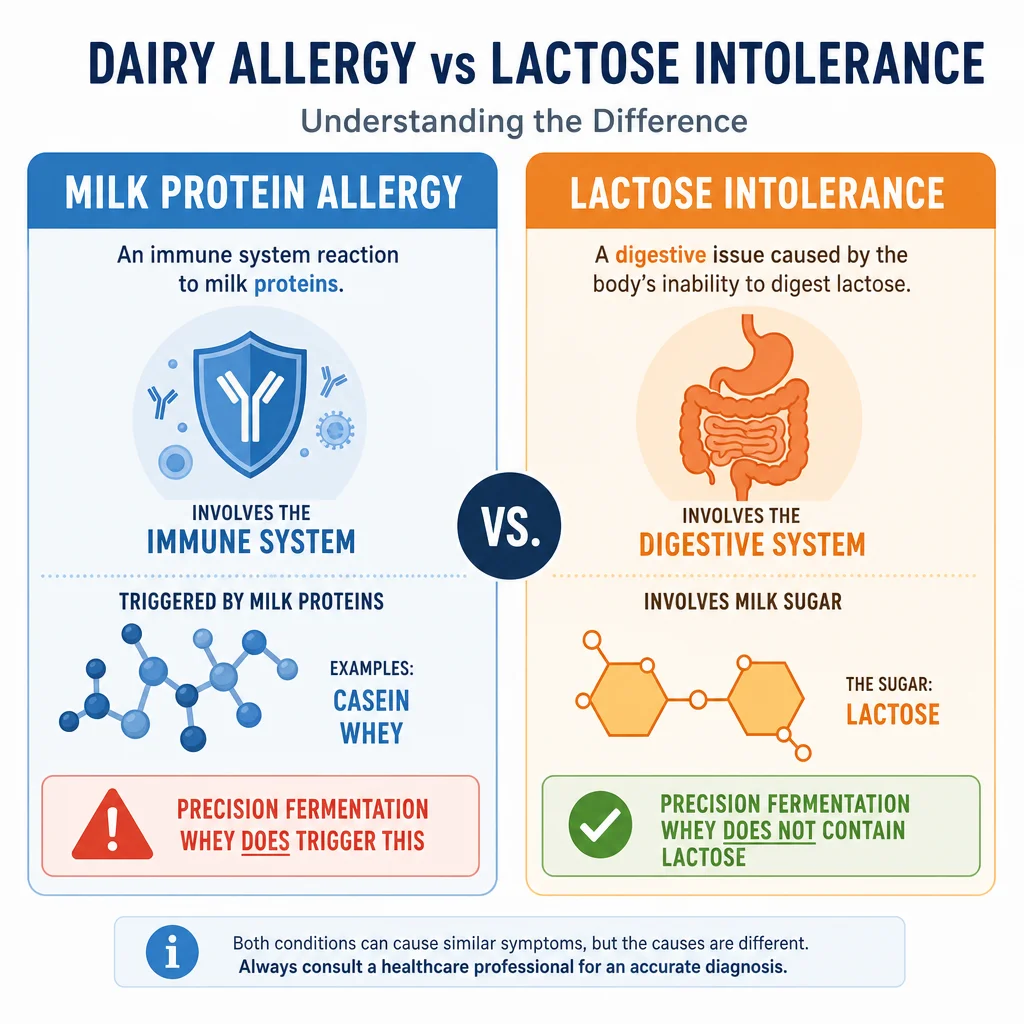
This is the group with the most direct safety concern. Precision fermentation whey and casein are structurally identical to their conventional dairy counterparts. The allergy is to the protein structure, not to lactose or any other component, and that structure is exactly what precision fermentation replicates.
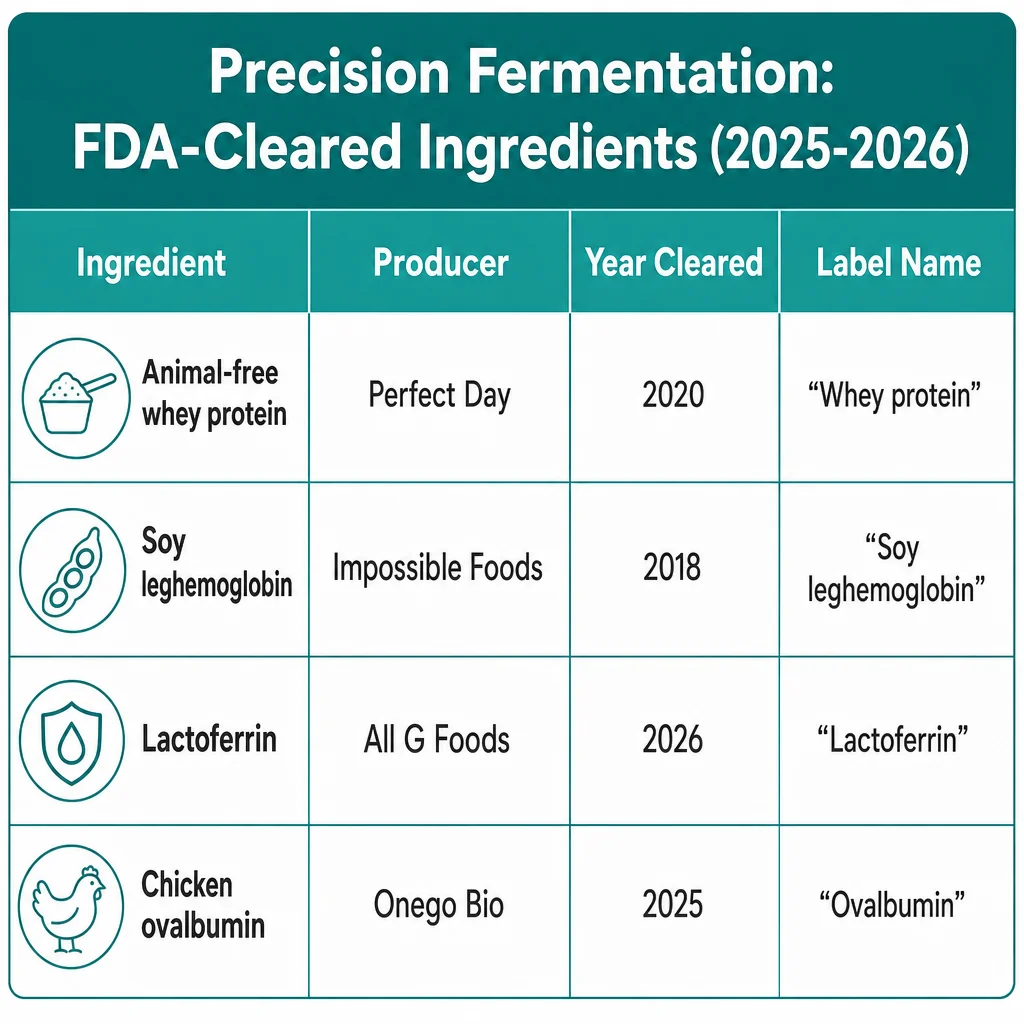
Perfect Day's own guidance states plainly: "Our protein is a milk allergen." Under the Food Allergen Labeling and Consumer Protection Act (FALCPA), any product containing precision fermentation whey or casein must declare "milk" in its allergen statement, even though no cow was involved. The legal label will say "Contains: Milk." That designation is accurate and protective.
One important note: precision fermentation dairy proteins contain no lactose. For people who are lactose intolerant (rather than allergic to milk proteins), these ingredients present no issue. The distinction matters because lactose intolerance and milk protein allergy are often conflated.
People with Egg Allergies
Onego Bio's Bioalbumen is ovalbumin, the main protein in egg whites and the primary allergen responsible for egg allergy reactions. It will trigger reactions in people with egg allergy just as conventional egg whites would. Products using it will be required to declare "egg" in allergen labeling under FALCPA.
Vegans
The picture here is less clear-cut. Precision fermentation proteins are not derived from animals. No animals are harmed or used in production, and the final product contains no animal cells or animal-derived material beyond the molecular structure.
However, most major vegan certification bodies do not certify products containing animal-identical proteins made via precision fermentation. Brave Robot ice cream, one of the first consumer products using Perfect Day whey, was explicitly marketed as "animal-free" rather than "vegan certified" for this reason. The protein is functionally and chemically identical to milk protein, even if its origin is a fungus in a bioreactor.
For vegans whose concern is animal welfare, precision fermentation proteins arguably align with those values. For vegans who follow a broader plant-based philosophy that excludes all animal-identical molecules, these proteins fall outside what most certification frameworks currently approve. Checking both the ingredient list and any certification badges on the package gives the most complete picture.
People Tracking Bioengineered Foods
Here is a significant labeling gap. Under the USDA's National Bioengineered Food Disclosure Standard, products must disclose bioengineered content only if the food contains detectable modified genetic material. Most precision fermentation proteins are highly purified during processing, removing the host organism's DNA. The final ingredient may contain no detectable modified genetic material even though it was produced by a genetically engineered microbe.
This means a product using precision fermentation whey may carry no "Bioengineered" symbol, even though the ingredient would not exist without genetic engineering. The Center for Food Safety has challenged this gap in court, but no rule change has resulted yet. Impossible Foods is an exception: its packaging does carry the Bioengineered symbol, in part because its soy leghemoglobin retains some detectable DNA.