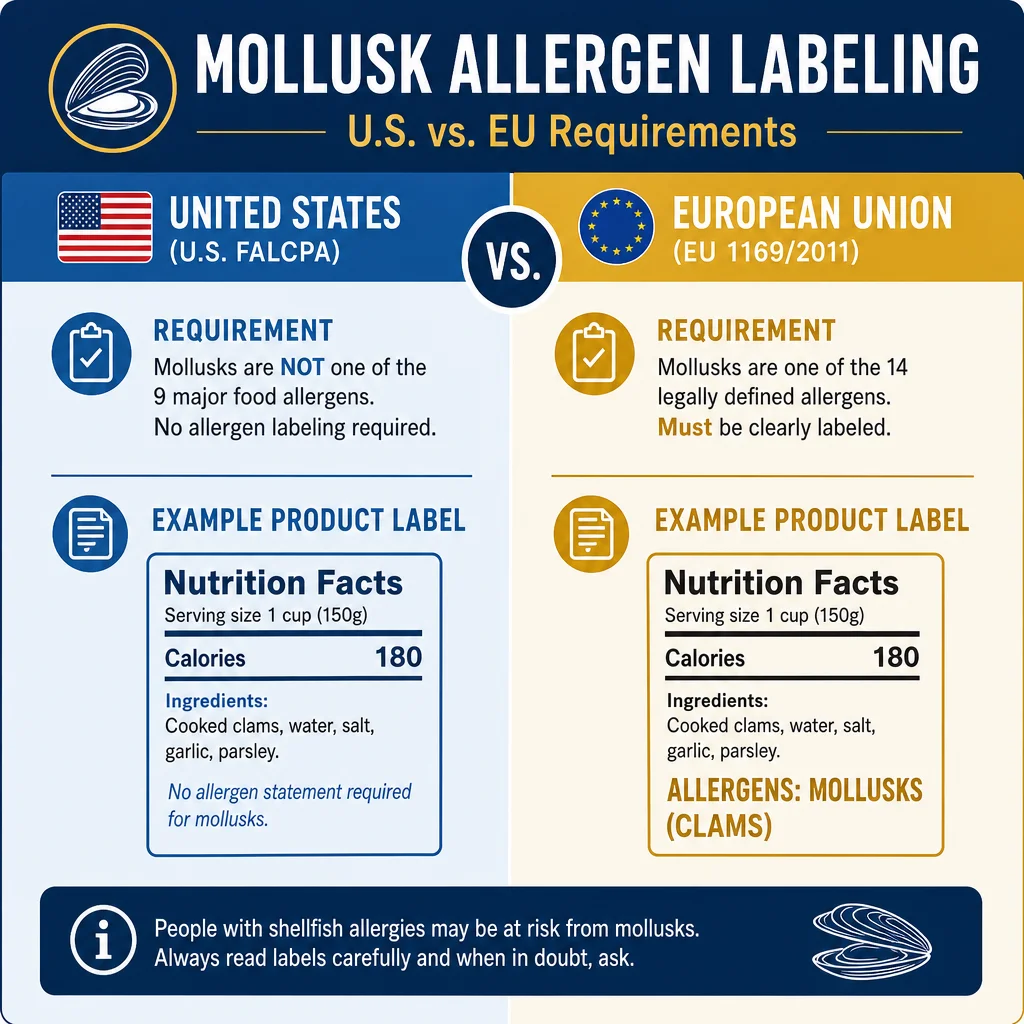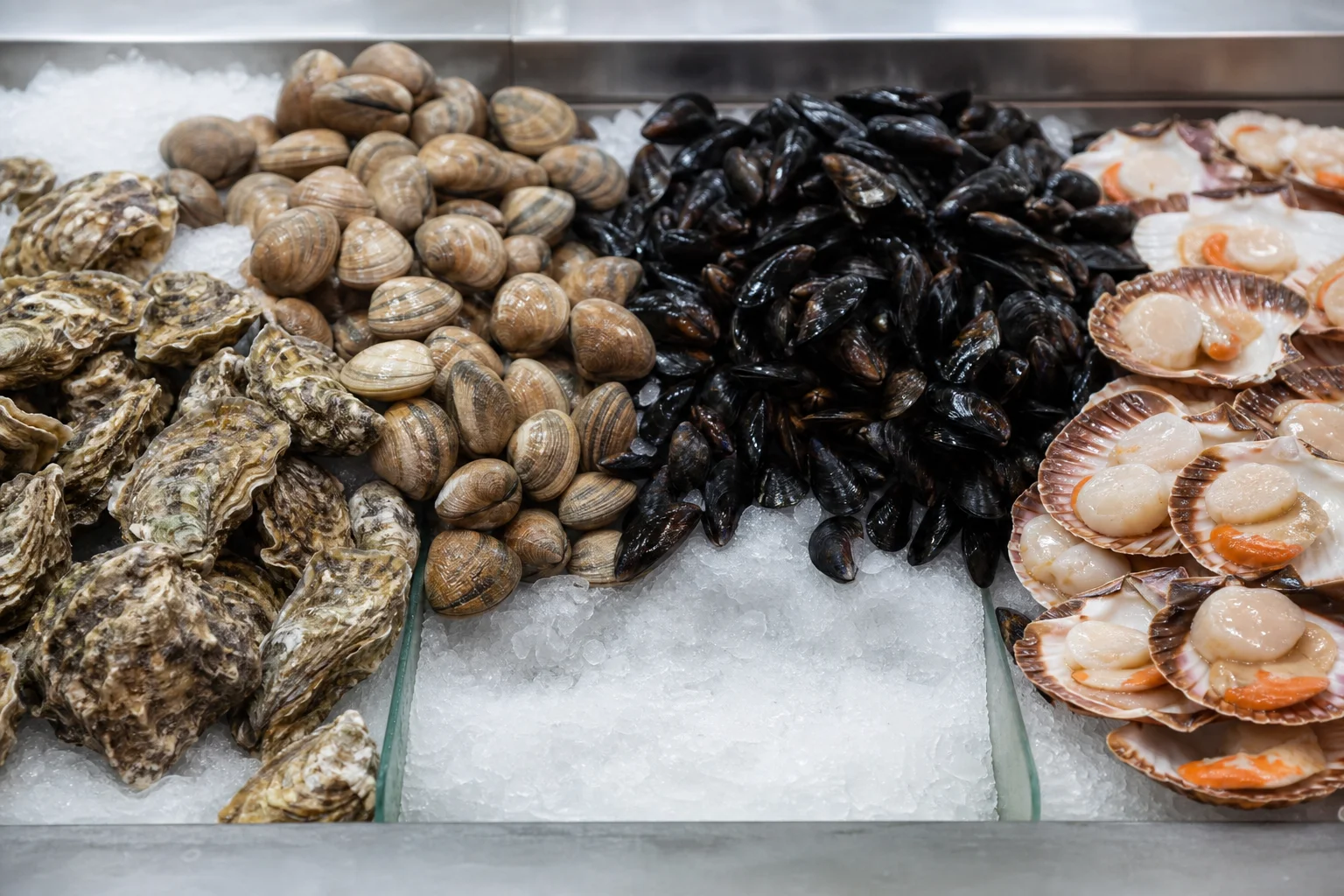
Mollusk allergy is a significant but often overlooked food allergy in the United States. Unlike crustacean shellfish, which are classified as major allergens under FALCPA, mollusks are not covered by the same labeling requirements. This creates a dangerous gap: manufacturers are not required to declare mollusks on food labels, even though mollusks can cause severe allergic reactions in sensitive individuals.
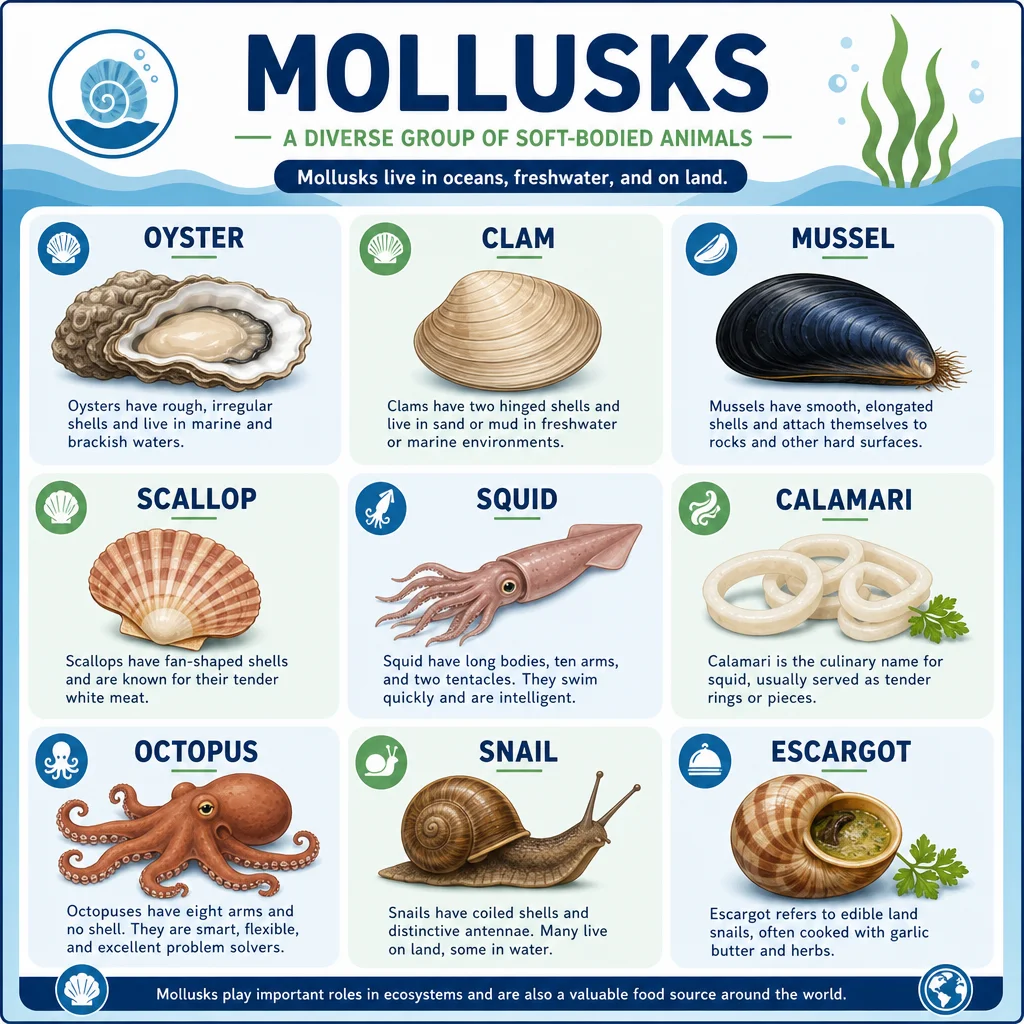
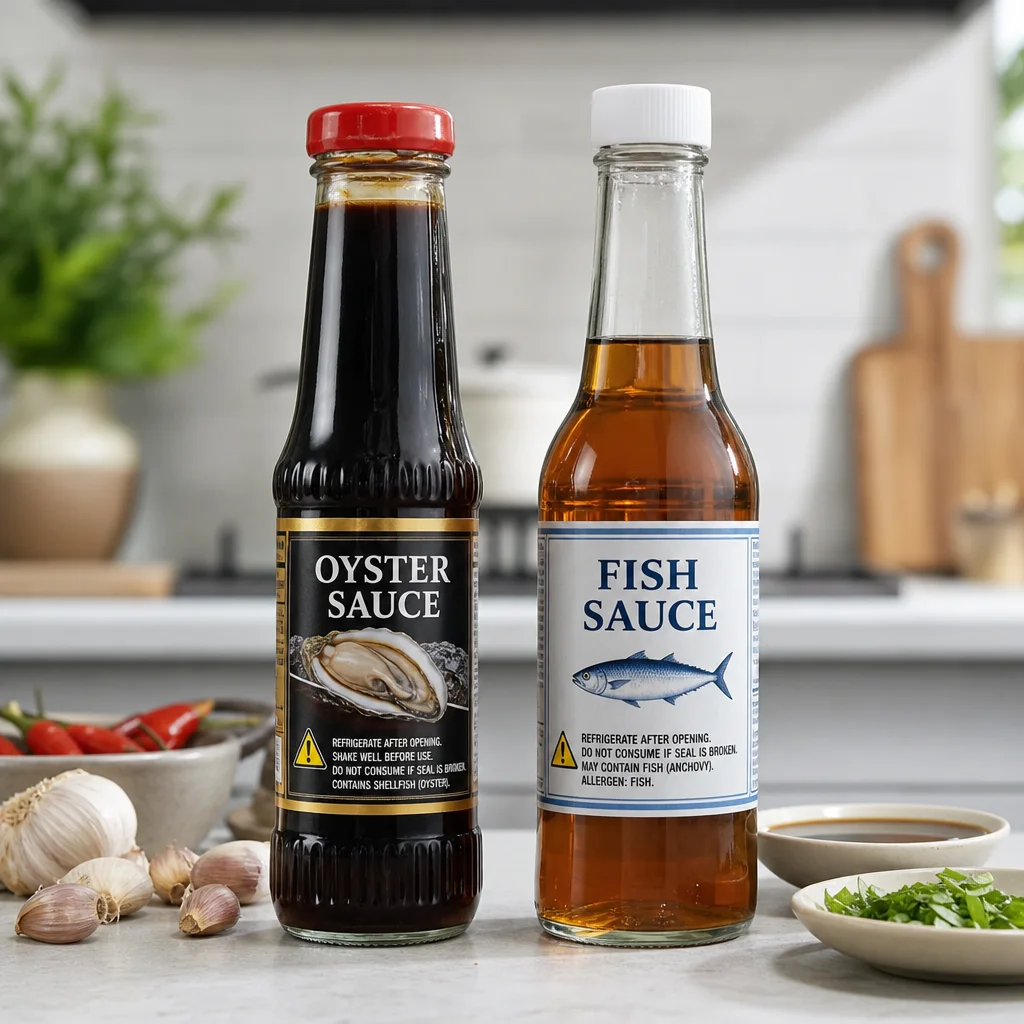
Mollusks include oysters, clams, mussels, scallops, squid, octopus, snails, and slugs. For individuals with mollusk allergy, avoiding these foods is complicated by the fact that mollusks appear in unexpected products. Oyster sauce, clam juice, and fish sauce are common ingredients in Asian cuisine. Some processed foods use mollusk-derived ingredients as flavor enhancers. And because mollusks are not classified as major allergens, there is no "Contains: Mollusks" requirement to alert consumers.
This guide covers everything you need to know about reading labels for mollusk allergy: the US labeling gap, the complete list of mollusk names, cross-reactivity with crustaceans, and the practical steps you can take to identify mollusk-derived ingredients in food.