Label Reading Guides

Whole30 Compliant Snacks: Store-Bought Options and Label Checks

Which store-bought snacks fit the Original Whole30, which are out under the Pancake Rule, and the label checks that matter now that oils, carrageenan and sulfites are allowed.

Nov 24, 2026|9 min read
By Sanket Patel|Updated 2026-11-24|10 sources|Editorial standards
Whole30 Compliant Snacks: Store-Bought Options and Label Checks

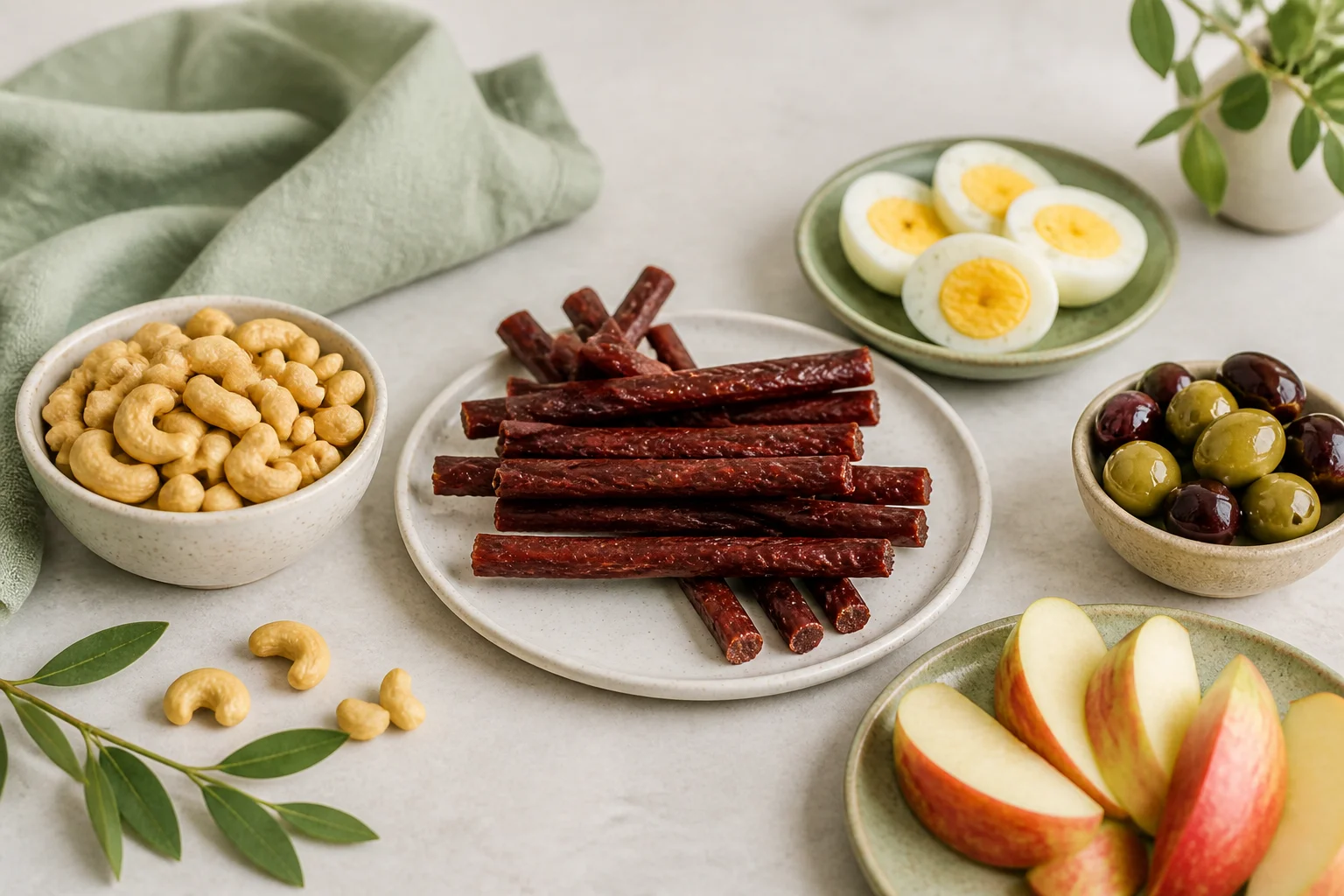
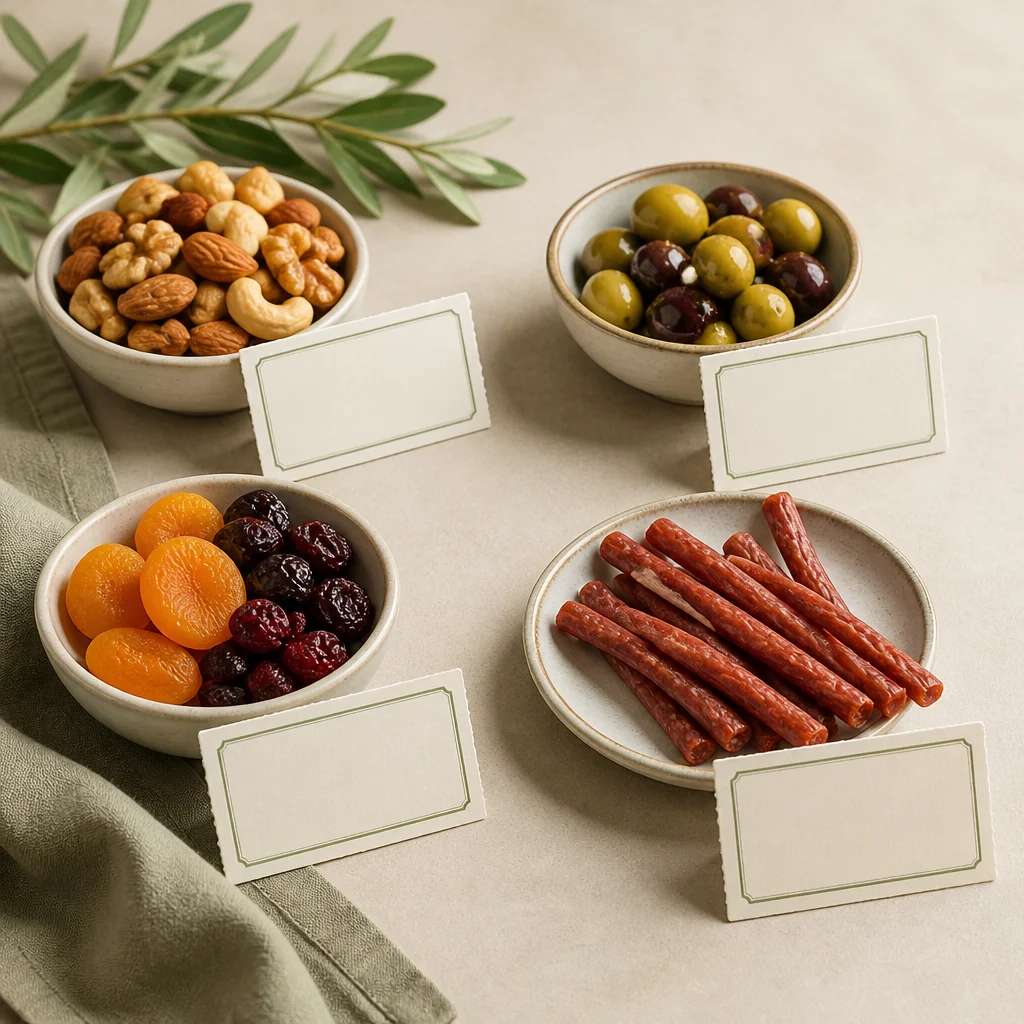
A store-bought snack fits the Original Whole30 when its ingredient list has no added sugar or sweetener, no grains, no legumes, no dairy other than ghee and no alcohol, and when the food itself is not a starchy chip, cracker, cookie or other baked-good replica. In practice that leaves sugar-free meat sticks, plain nuts and seeds, many fruit-and-nut bars, unsweetened dried fruit, olives, pickles without sugar and a few other grab-and-go options.

Two things make this harder than it sounds. Most snack aisles are built around exactly the foods the program removes. And a lot of the Whole30 advice still circulating online predates the program's 2024 rule changes, so it tells you to avoid ingredients that are now allowed.

This guide works from Whole30's own published rules and its official "Can I have" guide, both checked on November 24, 2026. We did not taste-test products or audit manufacturers. Recipes change between batches and flavors, so treat every product mentioned here as a starting point and read the label on the package in your hand.

What changed in 2024 (and why old lists mislead you)

Whole30 updated its program rules in 2024. Three changes matter for snack shopping:

  • Cooking oils. All cooking oils are now permitted, whatever their source. Canola, sunflower and safflower oil were always allowed; the change brought back oils derived from grains or legumes, such as corn, soybean, peanut and rice bran oil. A snack is no longer out just because it lists sunflower or soybean oil.
  • Carrageenan. The thickener common in non-dairy milks and deli meats is no longer eliminated.
  • Added sulfites. Sulfites in dried fruit, mustard and similar products are no longer eliminated.

MSG was allowed even earlier, in December 2021. Whole30's Can I have guide names corn starch (a grain derivative) and soy lecithin (a soy derivative) as additives that are out, and its Approved product guidelines add grain derivatives such as wheat, corn and rice bran, germ and starch. Natural flavors, citric acid, ascorbic acid and xanthan gum are all listed as compatible.

If a list tells you to put back a meat stick because of celery powder, or a bag of dried apricots because of sulfur dioxide, it is working from the old rules. If you avoid sulfites or carrageenan for a medical reason, keep avoiding them. That is a personal restriction, separate from the program.

The rules that still decide most snack labels

The rules that still decide most snack labels

Four rules from the Original Whole30 Program Rules do most of the work in the snack aisle.

Added sugar is judged by the ingredient list

Whole30 is explicit that the grams of sugar on the Nutrition Facts panel do not decide compliance. The ingredient list does. Any form of sugar, real or artificial, puts a product out for the elimination phase. The FDA's added sugars guidance explains why the panel can be misleading here: sugar naturally present in fruit counts toward total sugars, while added sugars are tracked separately.

The program's own list of excluded sweeteners includes agave nectar, brown sugar, cane sugar, coconut sugar, date syrup, high-fructose corn syrup, honey, maple syrup, molasses, monk fruit extract, stevia, saccharin, sucralose, aspartame, erythritol and xylitol. On snack labels you will also meet dextrose, which is a sugar (the trace dextrose in iodized table salt is a stated exception), and plenty of other aliases covered in our guide to hidden names for sugar. Fruit and 100% fruit juice are the exceptions: they can sweeten a compliant product.

Grains and legumes are out, but not their oils

Wheat, oats, rice, corn and pseudo-grains such as quinoa and buckwheat are out. So are beans, lentils, chickpeas, peanuts and soy foods and ingredients such as soy flour, soy protein and soy lecithin. Cooking oils are the exception: since 2024, soybean, corn, peanut and rice bran oil are permitted. That catches snacks you might not expect: peanut-based bars, roasted chickpea snacks, rice-based crisps and anything bound with oats. Green beans and most peas are the exceptions.

Dairy is out, ghee is the exception

Watch for milk powder, whey, casein and cheese seasonings on savory snacks.

The Pancake Rule removes chips and baked-good replicas

This is the rule that surprises people most. Whole30's Pancake Rule removes baked goods, treats and "foods with no brakes," even when every ingredient is compatible. The program names potato, sweet potato, tortilla, plantain, cassava and taro chips specifically. Grain-free crackers, cookies and similar recreations are out too. A clean ingredient list does not rescue them.

Store-bought snacks that usually work, and what to check

Store-bought snacks that usually work, and what to check

These categories are where compliant snacks are easiest to find. Each comes with the label detail that most often disqualifies a specific product.

Meat sticks and jerky

Meat sticks are one of the most reliable grab-and-go options, but many sticks and jerky products include sugar, brown sugar, honey or dextrose in the seasoning or cure. Soy sauce in teriyaki-style jerky is out as well. Celery powder and other curing agents are fine: Whole30 says it is not concerned with how a meat is cured, only with whether sugar was added.

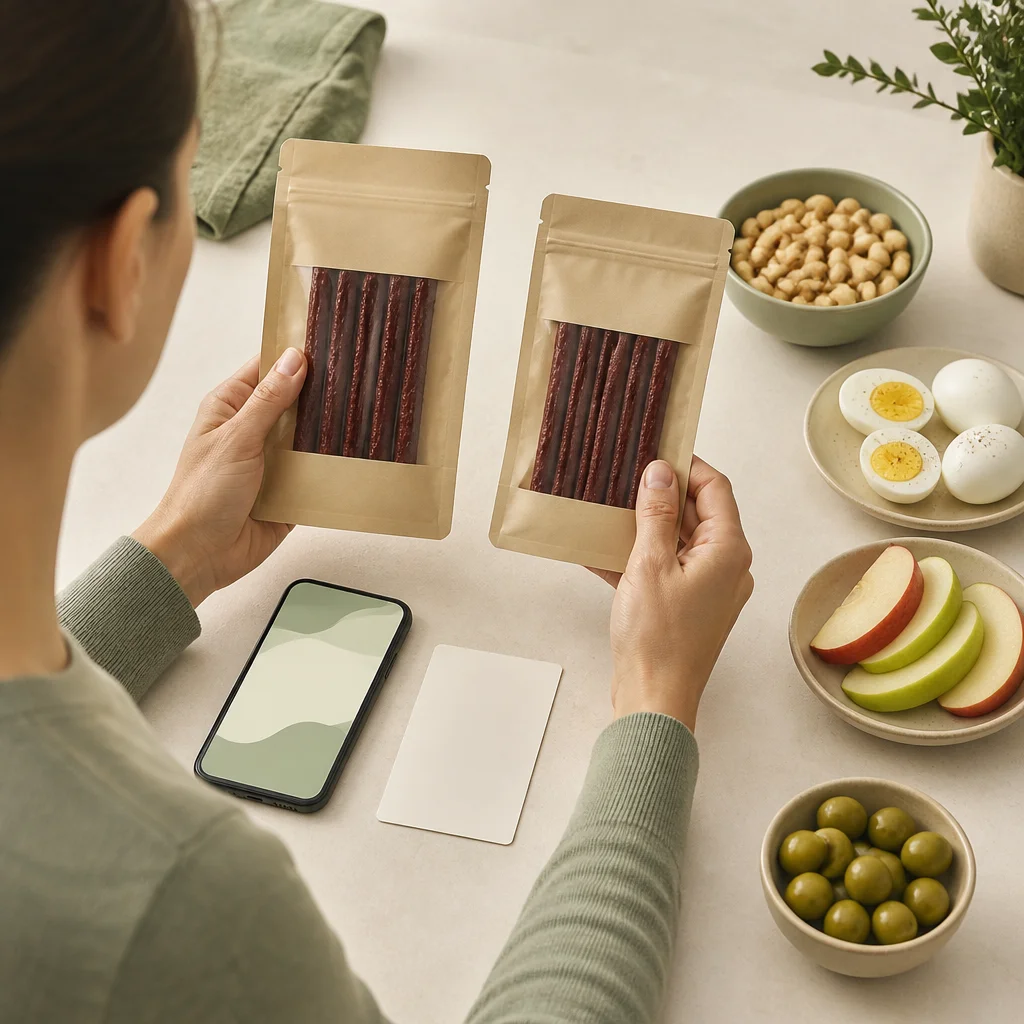
Whole30 lists Chomps snack sticks among its Whole30 Approved partners. For any other brand, read the ingredient list of the exact flavor.

Nuts and seeds

Plain, roasted or salted almonds, cashews, walnuts, pecans, pistachios, macadamias and pumpkin or sunflower seeds fit the program. The usual disqualifier is the coating: honey-roasted, candied, maple or "sweet and spicy" varieties often contain sugar. Peanuts are legumes, so mixed nuts that include them are out. Roasting oil is no longer a concern after the 2024 change.

Karma Nuts appears in Whole30's partner listings. Nut and seed butters without added sugar also work; check jars for sugar, honey or a peanut blend.

Fruit-and-nut bars

Whole30's guide marks both Larabar and RXBAR as "read your labels." Most varieties are acceptable, but some flavors contain peanut butter, oats, buckwheat flour or added sugar. Chocolate chips are a frequent disqualifier because they contain sugar. Whole30 only allows 100% cacao.

The program also adds a behavioral note: use these bars as emergency food or fuel for activity, not as a daily dessert, especially if cutting cravings is one of your goals.

Fruit, dried fruit and fruit pouches

Fresh fruit needs no label check. Dried fruit does: some dried fruit, particularly tart fruit such as cranberries, is sold sweetened with sugar, while other packs list only the fruit. The ingredient list tells you which one you have. Sulfites are now fine. Unsweetened applesauce and fruit pouches can work too: fruit, fruit juice and compatible additives such as ascorbic or citric acid are fine, while any added sweetener is not. Whole30 lists 100% fruit popsicles as "yes, with context."

Savory jars and cups

Olives, most dill pickles, salsa, guacamole cups and compatible mayo-based dips can all fit. Sweet pickles such as bread-and-butter styles contain sugar. Many salsas and dips are clean, but check for sugar and for cheese or yogurt. Citric acid and ferrous gluconate in canned olives are compatible.

Deli meat, bacon and eggs

Hard-boiled eggs are among the simplest options. Deli meat and bacon need a check for sugar, dextrose or honey in the cure. Whole30 notes that sugar-free bacon is available and names Whole30 Approved options in its guide. Carrageenan in deli meat no longer rules a product out.
Snacks that are out no matter what the label says

Some products fail the program even with a clean ingredient list:

  • Starchy chips, including potato, sweet potato, tortilla, plantain, cassava and taro chips, even grain-free ones.
  • Crackers, cookies, muffins and brownies made from almond, coconut or cassava flour.
  • Protein bars and shakes built on whey, soy or sweeteners. Whole30 allows protein powders only from compatible sources, such as 100% pea, collagen or hemp protein, with no added sweeteners.
  • Dark chocolate, even at high percentages, because it contains sugar.
  • Rice cakes, popcorn and corn snacks, because rice and corn are grains.

What the Whole30 Approved seal tells you

The Whole30 Approved label means Whole30 has reviewed a product line against its rules and vetted the company behind it. Its product guidelines require no added sugar, alcohol, grains, legumes or dairy, no replicated baked goods or chips, and compatible ingredients throughout, including pre-made components such as mustard or bacon. Animal protein products must also meet Whole30's animal welfare standards.

The seal is the quickest shortcut on the shelf, and Whole30 says you can skip reading the label when you see it. Two limits are worth keeping in mind. Not every compatible product carries the seal, so its absence means "check the label," not "not allowed." And a brand being an approved partner does not mean every product it sells is approved: look for the seal on the specific package.

A label-reading checklist for the snack aisle

Use this order on any product without the Whole30 Approved seal:

  1. Ask the Pancake Rule question first. Is it a starchy chip, cracker, cookie or baked-good replica? If so, put it back without reading further.
  2. Scan the ingredient list for any sweetener. Look for sugar, dextrose, honey, maple, agave, coconut sugar, date syrup, monk fruit, stevia, erythritol and other sugar alcohols. Fruit and 100% fruit juice are fine.
  3. Look for grains and legumes. Oats, rice, corn starch, quinoa, buckwheat, peanuts, chickpeas, soy flour and soy lecithin are out. Cooking oils from these plants are fine.
  4. Check for dairy. Milk powder, whey, casein, butter (other than ghee) and cheese seasonings are out.
  5. Check for alcohol in flavorings or glazes. Alcohol-based botanical extracts such as vanilla are an allowed exception.
  6. Ignore the outdated red flags. Since 2024, any cooking oil, carrageenan and added sulfites are allowed; MSG has been allowed since 2021, and natural flavors are compatible.
  7. Check the exact flavor. Bar and jerky lines often mix compliant and non-compliant flavors under one brand.
  8. Keep personal restrictions separate. If you also avoid an allergen or an additive for medical reasons, check for it on its own, regardless of Whole30's rules.

Make the January snack check faster

Whole30 snack shopping comes down to a few questions asked of every label: any sweetener, any grain or legume, any dairy, and is it a starchy chip or baked-good replica. The hard part is asking them quickly, flavor by flavor, in a crowded aisle.

IngrediCheck can help with the ingredient side of that check. Save Whole30's eliminated ingredients in your Food Notes, then scan a barcode or photograph the ingredient label. The app checks the available ingredient information against your notes and explains a Matched, Unmatched or Uncertain result in plain English. It cannot apply the Pancake Rule for you, and automated results can be incomplete, so keep the chip question and a final look at the package in your own hands.

Frequently Asked Questions

What store-bought snacks are Whole30 compliant?

Snacks whose ingredient list has no added sugar or sweetener, grains, legumes, dairy (ghee excepted) or alcohol, and that are not starchy chips, crackers, cookies or other baked-good replicas. Common fits include sugar-free meat sticks, plain or salted nuts and seeds, many fruit-and-nut bars, unsweetened dried fruit, olives, and hard-boiled eggs. Check each flavor's current label.

Are Larabars and RXBARs Whole30 compliant?

Some flavors are. Whole30 lists both as read-your-labels items: some flavors contain peanut butter, oats, buckwheat flour or added sugar, which are out on the Original Whole30. Whole30 also suggests treating these bars as on-the-go or emergency food rather than a treat.

Are chips allowed on Whole30 if the ingredients are compliant?

No. Under the Pancake Rule, potato, sweet potato, tortilla, plantain, cassava and taro chips are out during elimination even when every ingredient is technically compatible.

Are seed oils, carrageenan and sulfites still banned on Whole30?

No. Whole30 changed its rules in 2024. All cooking oils are now permitted regardless of source, and carrageenan and added sulfites are no longer eliminated. MSG has been allowed since December 2021. Older Whole30 lists that still exclude these are out of date.

Does the sugar number on the Nutrition Facts panel decide if a snack is Whole30?

No. Whole30 judges added sugar by the ingredient list, not the grams on the nutrition panel. A product with sugar listed as an ingredient is out; fruit and 100% fruit juice used as a sweetener are allowed.

Get the app for clearer label decisions.

Scan labels, see what fits your food notes, and read the why in plain English.

IngrediCheck app