Dietary Guides

Paleo Dietary Guide: Seed Oils, Legume Derivatives, Grain Starch, and Hidden Processed Ingredients

An encyclopedic guide to the Paleo diet covering grain derivatives (maltodextrin, modified starch, dextrose) hiding in packaged food, legume-derived gums and proteins, seed oils in dressings and snacks, how to identify truly Paleo-compliant labels, and where Paleo and Whole30 differ.

Jun 11, 2026|12 min read
By Sanket Patel|Updated 2026-06-11|6 sources|Editorial standards
Paleo Dietary Guide: Seed Oils, Legume Derivatives, Grain Starch, and Hidden Processed Ingredients

What Is the Paleo Diet?

The Paleo diet, also called the Paleolithic diet, ancestral diet, or Stone Age diet, is built on the premise that the human genome evolved over hundreds of thousands of years under nutritional conditions that predate agriculture. Grains, legumes, and dairy became dietary staples only roughly 10,000 years ago, after the agricultural revolution. The Paleo hypothesis, popularized in scientific circles by gastroenterologist Walter Voegtlin in the 1970s and later formalized by researcher Loren Cordain, proposes that the modern prevalence of metabolic conditions such as type 2 diabetes, cardiovascular disease, and obesity corresponds to a mismatch between contemporary diets and ancestral physiology.

Research published in Diabetologia found that a Paleolithic diet improved glucose tolerance more than a Mediterranean-like diet in individuals with ischemic heart disease, suggesting metabolic benefits from removing grains and dairy. Later observational and intervention studies have explored effects on insulin sensitivity, inflammatory markers, and lipid profiles, with generally favorable but sometimes mixed results.

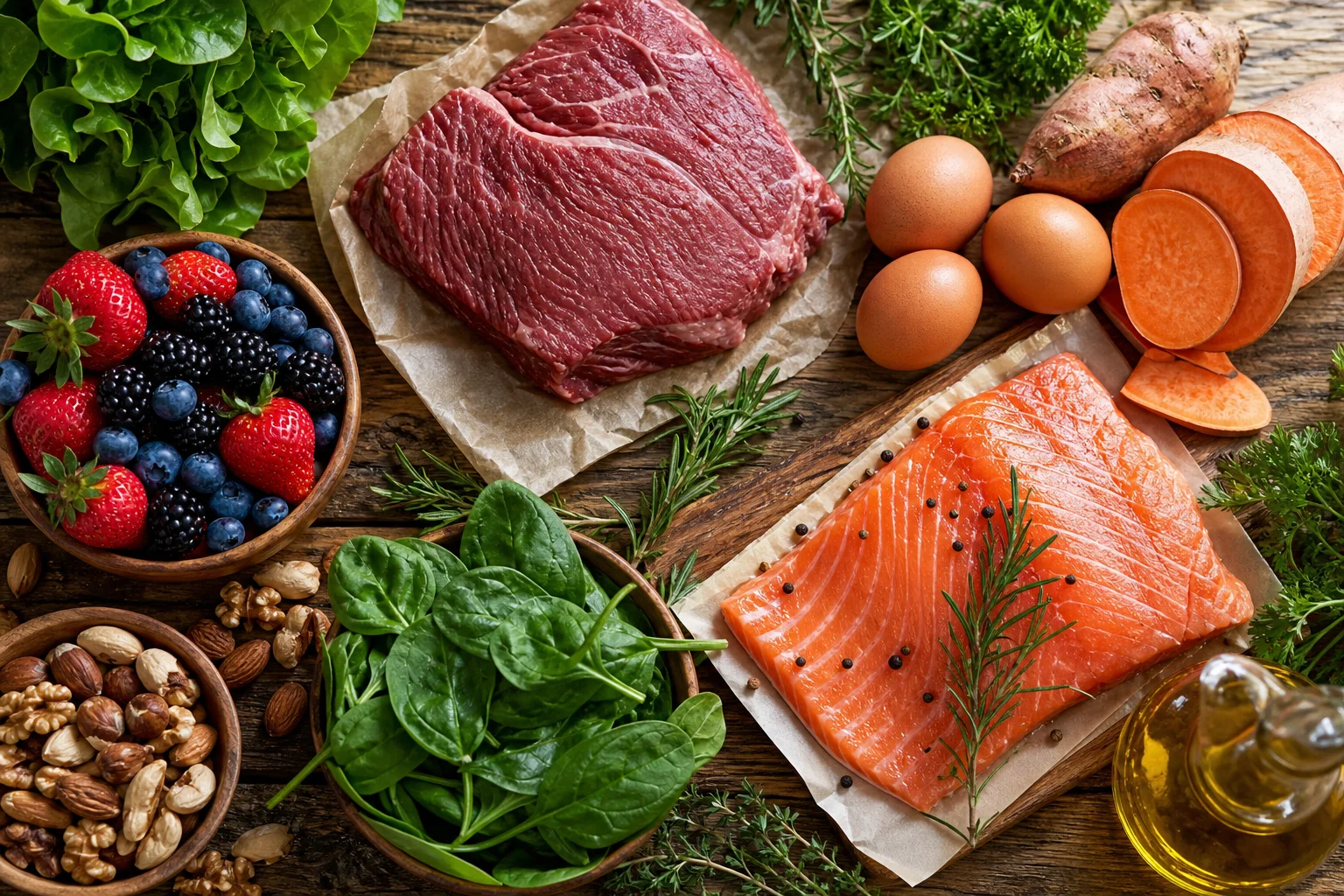
The core logic of Paleo is not about recreating prehistoric meals exactly. Most adherents eat modern versions of ancestral food categories: pasture-raised meat, wild-caught fish, eggs, vegetables, fruits, nuts, seeds, and natural fats such as olive oil, coconut oil, and animal fat. What the framework systematically removes are food categories introduced primarily through agriculture, industrialization, and modern food processing.

What the Paleo Diet Actually Bans

The list of excluded categories is longer than most people anticipate, and many of the exclusions extend well beyond obvious foods like bread and pasta.

Grains and all grain derivatives. Wheat, rye, barley, oats, corn, rice, millet, sorghum, and spelt are excluded entirely, as are all products derived from them. This means flour of any kind, including whole wheat, white, almond-wheat blends, and rice flour used as a thickener. It includes starch derivatives: corn starch, wheat starch, modified food starch, and tapioca starch sourced from a non-Paleo base. Fermented grain products such as miso made from barley and vinegar distilled from grain are also excluded by strict interpretations.

Legumes and legume derivatives. All beans, lentils, peas, peanuts, soybeans, chickpeas, and their derivatives fall outside the Paleo framework. This extends to soybean oil, soy protein isolate, soy lecithin, pea protein, pea starch, peanut oil, and gums derived from legume seeds: guar gum (from guar beans), locust bean gum (also called carob bean gum, from carob seeds), and fenugreek gum. Carob powder, sometimes marketed as a chocolate alternative, comes from the carob pod and is excluded by most Paleo definitions.

Dairy products. Milk, cream, butter, cheese, yogurt, whey protein, casein, lactose, and milk solids are all excluded from strict Paleo. Some practitioners allow ghee on the grounds that clarification removes milk proteins and lactose, but this is a personal choice, not a standard Paleo position. Whey protein and casein, which appear in many protein supplements and processed snacks, are non-Paleo.

Industrial seed and vegetable oils. Canola oil (rapeseed oil), soybean oil, sunflower oil, safflower oil, corn oil, cottonseed oil, peanut oil, grapeseed oil, and rice bran oil are excluded. The rationale centers on their high omega-6 polyunsaturated fatty acid content and the industrial processing required to extract them: solvent extraction with hexane, degumming, bleaching, and deodorization. Research has documented that modern Western diets carry an omega-6 to omega-3 ratio far above ancestral estimates, largely due to ubiquitous seed oil use. Paleo practitioners use olive oil, avocado oil, coconut oil, and animal fats instead.

Refined and added sugars. White sugar, cane sugar, high-fructose corn syrup, corn syrup, agave syrup, brown rice syrup, barley malt syrup, and sugar alcohols such as sorbitol, maltitol, and xylitol are excluded or strongly discouraged. Some Paleo versions permit small amounts of raw honey or pure maple syrup on the grounds that these existed in ancestral diets, but strict interpretations exclude them too.

Processed salt and additives. Some Paleo frameworks distinguish between unrefined sea salt or mineral-rich salts and highly processed table salt, which is iodized and contains anti-caking agents. More broadly, artificial preservatives, artificial colors, artificial flavors, MSG, and artificial sweeteners (aspartame, sucralose, acesulfame potassium, saccharin) are excluded as products of industrial food chemistry.

Alcohol. Beer and grain-based spirits are excluded both because of their grain origin and their processing. Wine is controversial: some practitioners accept it occasionally, while strict Paleo excludes all alcohol.

Pseudo-grains. Quinoa, amaranth, and buckwheat are seeds rather than true grains botanically, but their nutritional profiles and uses closely mirror grains. Most Paleo practitioners exclude them.

The Hidden Ingredient Problem

The Hidden Ingredient Problem

The challenge with Paleo compliance and packaged food is that the excluded ingredients appear in products that seem entirely unrelated to grains, legumes, dairy, or seed oils. Understanding where each category hides is the practical core of label reading.

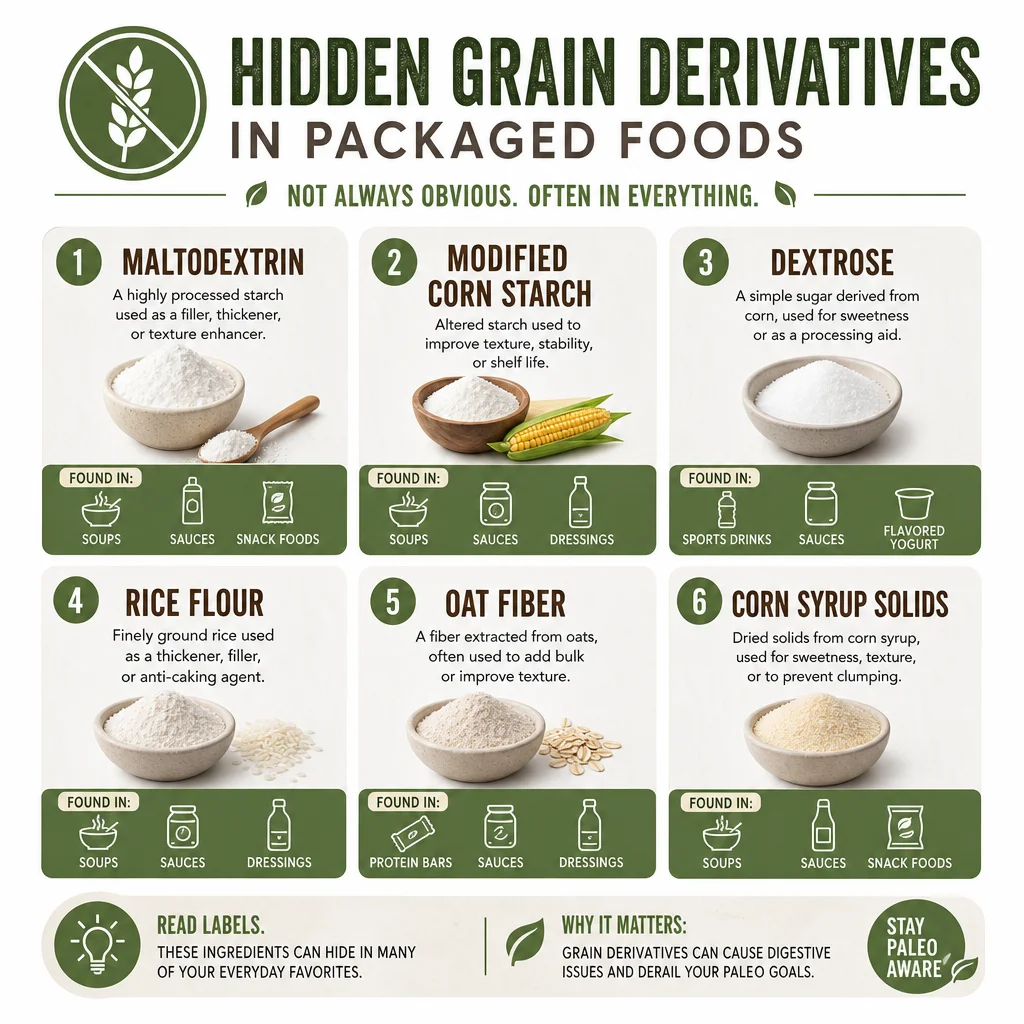
Grain derivatives in unexpected places. Maltodextrin is a highly processed carbohydrate derived most often from corn starch or wheat starch. It appears in protein powders, pre-workout supplements, electrolyte drinks, spice blends, coffee creamers, jerky marinades, and dried fruit coatings. It is used as a cheap filler and anti-caking agent. Modified corn starch and modified food starch appear in canned soups, gravies, condiment sauces, low-fat salad dressings, and even some brands of canned coconut milk as a thickener. Dextrose, a simple sugar derived from corn, is used to balance flavors in sausages, hot dogs, deli meats, bacon cures, and many snack seasonings. Rice flour turns up as a coating or filler in gluten-free products, which are marketed as healthier alternatives but remain non-Paleo. Oat fiber appears in some fiber-enriched protein bars and snack products. Corn syrup solids are used in flavored nuts, trail mix coatings, and powdered beverage mixes.

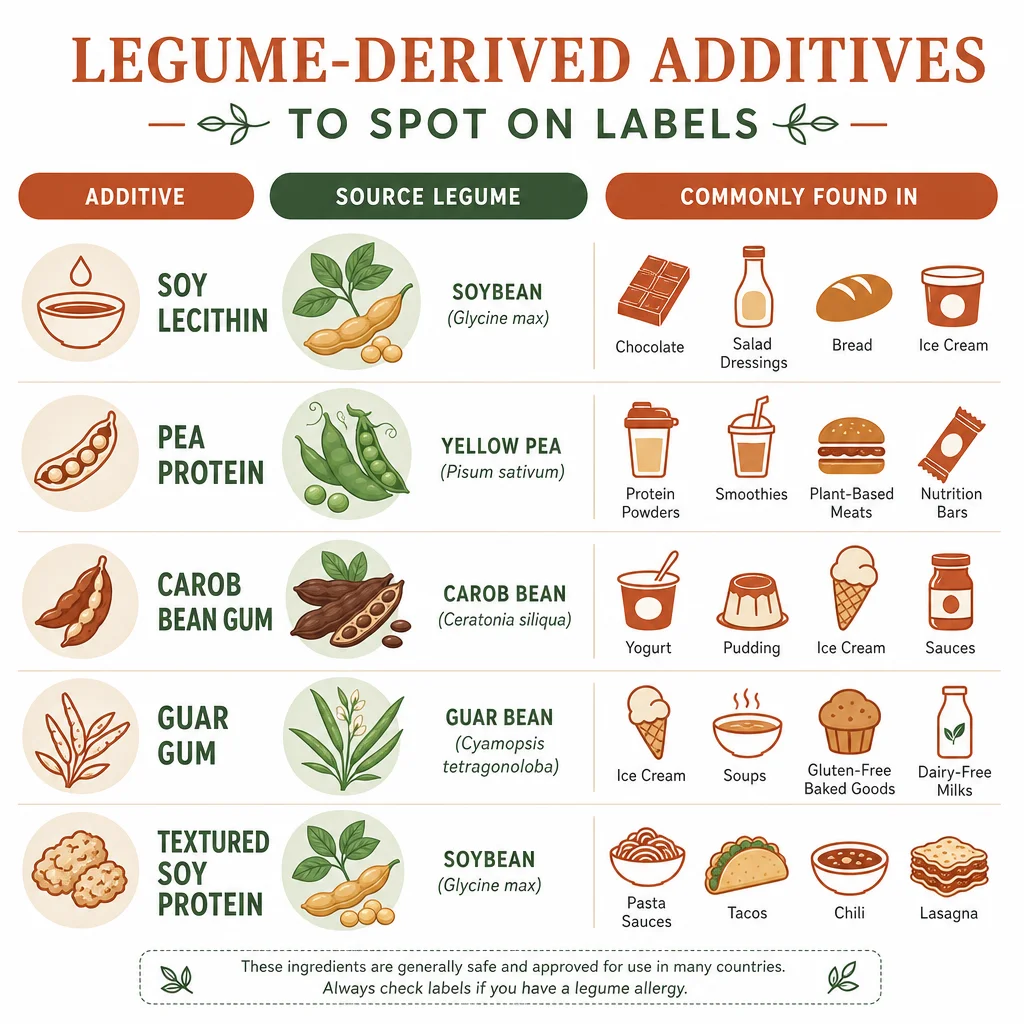
Legume derivatives in unexpected places. Soy lecithin is one of the most widespread additives in processed food. It appears in chocolate products, nut butters, mayonnaises, salad dressings, crackers, protein bars, supplements, and even some spice blends. It is used as an emulsifier. Pea protein has become increasingly common as a dairy-free protein source and appears in plant-based meat alternatives, protein bars, meal replacement shakes, and some soups. Guar gum, derived from guar beans, appears in ice cream, dairy-free yogurt alternatives, salad dressings, sauces, and gluten-free baked goods. Locust bean gum appears in similar products, especially ice cream and processed cheese alternatives. Carob is used in candy coatings, carob chips sold as chocolate alternatives, and some health food snack bars.

Seed oils in unexpected places. Canola oil and soybean oil are the most common cooking and carrier oils in packaged food. They appear in mayonnaise, most commercial salad dressings, hummus (which is also non-Paleo for its chickpea base), roasted nuts, canned fish packed in vegetable oil, crackers, cookies, protein bars, and canned bean products. Sunflower oil and safflower oil appear in snack foods, popcorn, potato chips, and cooking sprays. Peanut oil is used in some Asian-inspired sauces and restaurant-style fried products. Cottonseed oil appears in some shortenings and commercially fried snacks. Reading the oils in a product is often the fastest way to disqualify it.

Dairy derivatives in unexpected places. Whey protein appears in protein powders, protein bars, and many meal replacement products. Casein and caseinates appear in some non-dairy coffee creamers, which use milk protein despite the "non-dairy" label, a labeling quirk that has caused widespread confusion. Lactose appears as a filler in some pharmaceutical tablets and supplement capsules, and occasionally in processed meat seasonings. Milk solids appear in dark chocolate products, some potato chip seasonings, and savory snack coatings.

Hidden sugars. Beyond obvious sugar listings, dextrose, maltose, sucrose, and glucose syrup are grain-derived sugars appearing in cured and processed meats, sausage casings, condiments, and packaged sauces. Caramel color, often derived from corn, is used in cola drinks, some soy sauces, and Worcestershire sauce.

Additives and flavoring agents. Natural flavors is a broad FDA category that can legally include flavoring compounds derived from grains, dairy, or legumes. Unless a product is certified Paleo or explicitly states its natural flavors are grain-free and dairy-free, the term provides no assurance. Yeast extract, a concentrated glutamate flavoring, is not Paleo-disqualifying on its own (yeast is permitted by most Paleo frameworks), but it often appears alongside non-Paleo ingredients in bouillon cubes, canned soups, and Worcestershire sauce. Carrageenan, a seaweed-derived thickener, is not strictly non-Paleo but is excluded by Whole30 and debated within Paleo communities for its potential effects on gut inflammation.

US vs EU Labeling: What's Different

US vs EU Labeling: What's Different

Label reading for Paleo compliance looks different in the United States and the European Union due to distinct regulatory frameworks governing food ingredient declarations.

In the United States, the FDA requires all ingredients to be listed in descending order by weight under 21 CFR 101.4. However, sub-ingredients of compound ingredients (such as the contents of a spice blend or a seasoning mix) may be listed collectively rather than individually if the compound ingredient constitutes less than 2% of the final product. This means that seed oils, maltodextrin, or dairy derivatives within a minor compound ingredient can be effectively invisible on an American label. "Natural flavors" is a particularly opaque FDA category: it covers any flavoring substance derived from a natural source, including grain, dairy, or legume sources, with no further breakdown required.

In the European Union, Regulation (EU) No 1169/2011 requires full ingredient declaration and mandates that the 14 major allergens (including cereals containing gluten, soybeans, milk, peanuts, sesame, and nuts) be highlighted within the ingredient list, typically in bold or a different typeface. This makes spotting soy lecithin or milk derivatives somewhat easier on EU-labelled products. The EU also requires that refined oils be named specifically: "refined rapeseed oil" or "sunflower oil" rather than the catch-all "vegetable oil" that appears on many American products, which makes identifying non-Paleo oils more straightforward in European markets.

A notable difference involves the labeling of modified starches. In the EU, modified starch declarations must specify the botanical origin when that origin is one of the 14 allergens, so "modified wheat starch" must be declared as such. In the US, "modified food starch" without source identification is permissible, making it impossible to know whether the starch is corn-, wheat-, or potato-based without contacting the manufacturer.

Both jurisdictions allow "natural flavors" or equivalent terms to obscure derivative ingredients. Neither system was designed with ancestral diet frameworks in mind, so Paleo compliance requires reading past the regulatory labeling framework and examining each ingredient on its own terms.

A Practical Label-Reading Strategy

A Practical Label-Reading Strategy

Strictly Avoid

Any product containing the following ingredients is non-Paleo and should be rejected without further investigation:

Wheat flour, whole wheat flour, rice flour, oat flour, corn flour, barley flour, rye flour, wheat starch, corn starch, modified corn starch, modified food starch (any listed source), maltodextrin, dextrose, glucose syrup, high-fructose corn syrup, corn syrup, barley malt, oat fiber, rice bran, wheat bran, soy protein isolate, soy protein concentrate, pea protein, soy lecithin, sunflower lecithin derived from soybean, soybean oil, canola oil, rapeseed oil, sunflower oil, safflower oil, corn oil, cottonseed oil, peanut oil, grapeseed oil, rice bran oil, whey protein, whey powder, casein, sodium caseinate, calcium caseinate, milk solids, lactose, butter (in strict Paleo), cream powder, cheese powder, carob, locust bean gum, guar gum, pea starch, chickpea flour, lentil protein.

Also strictly avoid: artificial sweeteners (aspartame, acesulfame K, sucralose, saccharin, neotame, advantame), artificial colors (Red 40, Yellow 5, Blue 1, etc.), and artificial preservatives (BHA, BHT, TBHQ, sodium benzoate, potassium sorbate in some strict interpretations). Also strictly avoid: dark chocolate (almost always contains soy lecithin and/or dairy).

Generally Safe

These ingredients are typically Paleo-compliant on their own terms:

Olive oil, extra virgin olive oil, avocado oil, coconut oil, ghee (depending on personal interpretation), grass-fed beef tallow, lard, duck fat, sea salt, black pepper and other single-ingredient spices without fillers, apple cider vinegar, wine vinegar, coconut aminos, arrowroot starch (a tuber-derived starch used as a thickener), tapioca starch, pure honey, pure maple syrup (depending on personal strictness), coconut sugar (in modest amounts), almond flour, cassava flour, tigernut flour, nutritional yeast (debated but generally accepted), gelatin and collagen peptides from animal sources, xanthan gum, carrageenan, natural flavors.

Ignore on Labels

These terms appear on labels and marketing materials but have no bearing on Paleo compliance:

"Gluten-free": rice flour, potato starch, and pea protein are all gluten-free but non-Paleo. "All-natural": no legal definition under FDA or EU frameworks that ensures Paleo compliance. "Non-GMO": addresses genetic modification, not whether an ingredient is grain, legume, or dairy-derived. "Organic": confirms pesticide-reduction standards, not ancestral diet compatibility. "Vegan" or "plant-based": these certifications actively exclude animal products, which Paleo includes, and they do not ensure legume- or grain-free formulations. "No artificial preservatives": applies only to a narrow category of additives and says nothing about seed oils, grains, or legumes.

Packaged food labels were not designed with any ancestral diet framework in mind, and the gap between what a product appears to be and what it actually contains can be substantial. For those managing Paleo restrictions alongside other conditions such as autoimmune protocols or food intolerances, the label reading task compounds quickly. IngrediCheck scans product barcodes and ingredient lists to flag non-Paleo ingredients automatically, making it faster to identify seed oils, grain derivatives, and legume-sourced additives in any packaged product. Learn more about how the app handles overlapping dietary needs in the AIP Dietary Guide, which shares significant overlap with strict Paleo in its exclusion list.
Next Label Check

Follow the scanner, hub, and ingredient paths connected to this guide

Get the app for clearer label decisions.

Scan labels, see what fits your food notes, and read the why in plain English.

IngrediCheck app