Dietary Guides

Ketogenic Dietary Guide: Hidden Carbs, Maltodextrin, Sugar Alcohols, and Net Carb Label Reading

An encyclopedic guide to the ketogenic diet covering hidden carbohydrate sources in processed food, the net carb calculation, sugar alcohol glycemic impacts, maltodextrin in seasonings, how to read keto labels, and common traps in "keto-friendly" products.

Jun 11, 2026|12 min read
By Sanket Patel|Updated 2026-06-11|6 sources|Editorial standards
Ketogenic Dietary Guide: Hidden Carbs, Maltodextrin, Sugar Alcohols, and Net Carb Label Reading

What Is the Ketogenic Diet?

The ketogenic diet is a high-fat, very-low-carbohydrate eating pattern designed to shift the body's primary fuel source from glucose to ketone bodies. When carbohydrate intake is sufficiently low, the liver begins converting fatty acids into ketones, which the brain and muscles use as an alternative energy source. This metabolic state is called nutritional ketosis.

The diet was first developed in the 1920s at the Mayo Clinic as a treatment for drug-resistant epilepsy in children. Neurologists observed that fasting reduced seizures, and the ketogenic diet was formulated as a way to mimic the metabolic effects of fasting while still allowing adequate caloric intake. It remains a medically supervised treatment for epilepsy today, particularly in pediatric cases where medications have failed.

Over the following decades, the diet attracted attention from researchers studying metabolic syndrome, type 2 diabetes, and weight management. The mechanism for weight loss involves several overlapping factors: reduced insulin secretion (because carbohydrates are the primary trigger for insulin release), appetite suppression attributed to ketone body production, and the metabolic cost of converting dietary fat and protein into usable energy. A 2014 review published in the International Journal of Environmental Research and Public Health described the ketogenic diet as demonstrably effective for short-term weight loss while noting that long-term adherence remains the primary clinical challenge.

The scientific rationale hinges on carbohydrate restriction tight enough to deplete liver glycogen stores and force the metabolic switch to fat oxidation. Consuming even a modest amount of carbohydrates above an individual's threshold can interrupt ketosis within hours, which is why ingredient-level label literacy is not merely helpful but foundational to the diet's success.
What the Ketogenic Diet Actually Bans

The ketogenic diet excludes any ingredient or food that contributes meaningfully to blood glucose or interferes with ketosis. That goes well beyond the obvious categories of bread, pasta, and sugar.

All grains and grain derivatives are off the table. This includes wheat flour, white flour, whole wheat flour, semolina, spelt, rye flour, barley, oat flour, oat bran, corn flour, cornmeal, rice flour, brown rice flour, buckwheat flour, millet flour, sorghum flour, and amaranth flour. It also includes any starch derived from these grains: wheat starch, corn starch, modified corn starch, modified food starch (when the source is a grain), rice starch, and tapioca starch (derived from cassava). These starches appear in products far removed from obvious grain foods, including sauces, gravies, dairy alternatives, canned soups, spice blends, and processed meats.

Sugars in all their forms are excluded. Sucrose, glucose, fructose, dextrose, maltose, lactose (in significant quantities), corn syrup, high-fructose corn syrup, corn syrup solids, glucose syrup, invert sugar, brown sugar, raw sugar, turbinado sugar, coconut sugar, date sugar, agave nectar, honey, maple syrup, molasses, treacle, barley malt syrup, rice syrup, and fruit juice concentrates all raise blood glucose and must be avoided. The sugar content of ingredient lists is easy to miss because manufacturers often use multiple forms simultaneously, each appearing low on the ingredient list individually while the combined total is substantial.

Starchy vegetables are restricted. Potatoes, sweet potatoes, yams, parsnips, corn, peas (in larger amounts), beets, and carrots (in significant quantities) all carry enough digestible carbohydrate to disrupt ketosis depending on the serving size. Processed versions of these vegetables, including potato starch, potato flour, dried potato, and corn-derived ingredients, appear frequently in snack foods, coatings, and binding agents.

Most fruits are excluded. Bananas, apples, oranges, grapes, mangoes, pineapple, watermelon, dates, raisins, and dried fruit in general carry high sugar loads. Fruit juice, fruit juice concentrate, and dried fruit powders are used as sweeteners in products marketed as "natural" or "no added sugar," and each can carry a significant glycemic load. Even small amounts of date paste or apple concentrate in a condiment can push the carbohydrate content of a serving into territory that risks knocking someone out of ketosis.

Legumes are largely off-limits. Lentils, chickpeas, black beans, kidney beans, navy beans, pinto beans, soybeans in whole or flour form, and peanuts (technically a legume) all contain enough digestible starch and carbohydrate to be problematic. Soy flour and chickpea flour appear in gluten-free products and are sometimes mistakenly considered keto-friendly because they are grain-free.

Most dairy products with added sugars are excluded. Flavored yogurts, sweetened condensed milk, ice cream, and chocolate milk are obvious. Less obvious are lactose-heavy dairy products like regular milk in large amounts, low-fat yogurt (which often has added fruit and sugar), and coffee creamers that use corn syrup as a primary ingredient.

Alcohol-derived carbohydrates matter in mixed drinks and flavored spirits. Beer is high in fermentable carbohydrates. Sweet wines, liqueurs, and pre-mixed cocktails contain substantial sugar. Even some vodkas and flavored spirits contain added sucrose or glucose syrup.

The Hidden Ingredient Problem

The Hidden Ingredient Problem

The most challenging aspect of keto label reading is not identifying obvious sugars. It is recognizing the dozens of carbohydrate-containing ingredients listed under technical, regulatory, or obscure names.

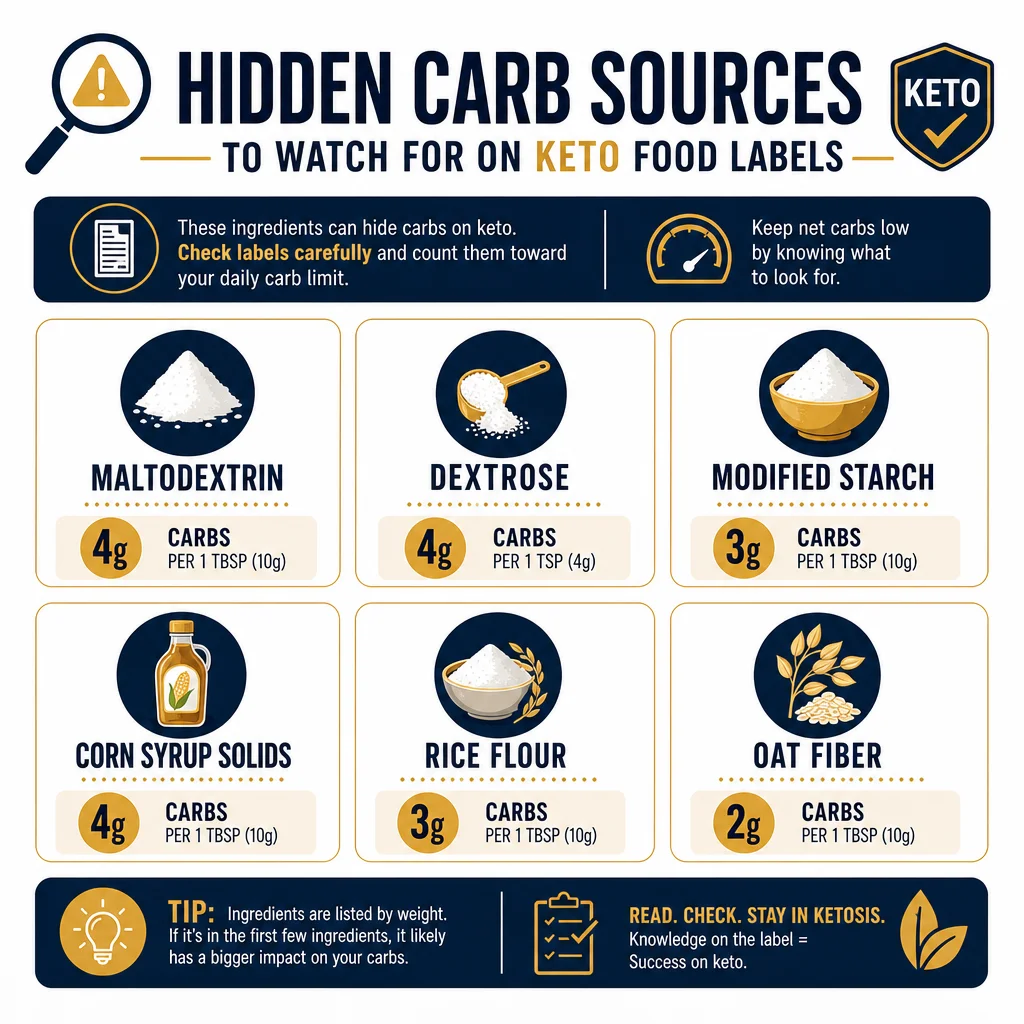
Maltodextrin is perhaps the most problematic. It is a highly processed starch derivative, typically made from corn, rice, or potato, that is used as a bulking agent, flow aid, and mild sweetener. Its glycemic index is higher than table sugar, meaning it raises blood glucose rapidly and potently. Maltodextrin appears in: protein powders (as a filler and texture agent), pre-workout supplements, seasoning blends and spice mixes, sugar-free drink mixes, salad dressings, instant gravies, powdered creamer, and most packaged "keto-friendly" snack bars. Manufacturers use it because it is cheap, improves texture, and can extend shelf life. Despite having a glycemic index of 85 to 110 (compared to glucose at 100), it is sometimes listed after the nutrition facts in a quantity that remains technically below the threshold for a per-serving disclosure, allowing the front label to claim "0g sugar."

Dextrose is glucose in its powdered form. It is used as a fast-acting sweetener in energy gels, cured meats (hot dogs, sausages, and deli meats use dextrose as a fermentation substrate and flavor enhancer), baked goods, and candy coatings. The dextrose used in cured meat rarely appears on the front of the package. It hides mid-list in the ingredients on the back.

Modified corn starch and modified food starch function as thickeners in canned soups, yogurts, gravies, jarred pasta sauces, puddings, and frozen meals. "Modified" refers to a physical or chemical treatment to alter the starch's cooking behavior, not to genetic modification. The carbohydrate contribution per serving is real and counts toward daily totals.

Rice flour is used as an anti-caking agent in shredded cheese products, a fact that surprises many keto followers who assume that cheese is always carbohydrate-free. Shredded and pre-grated cheeses sold in bags frequently contain rice flour, potato starch, or cellulose to prevent clumping. Block cheese grated at home does not contain these additives.

Oat fiber is marketed heavily in keto baking products as a low-net-carb ingredient because it is almost entirely fiber. However, some oat fiber products are minimally processed and retain more digestible starch than pure fiber products. The quality varies significantly by brand, and some individuals report glycemic responses from oat fiber that bulk fiber products do not cause.

Tapioca starch and tapioca syrup appear in an expanding range of "natural" processed foods, including grain-free crackers, dairy-free cheese, and organic fruit snacks. Tapioca starch is derived from cassava and behaves similarly to corn starch in terms of glycemic impact.

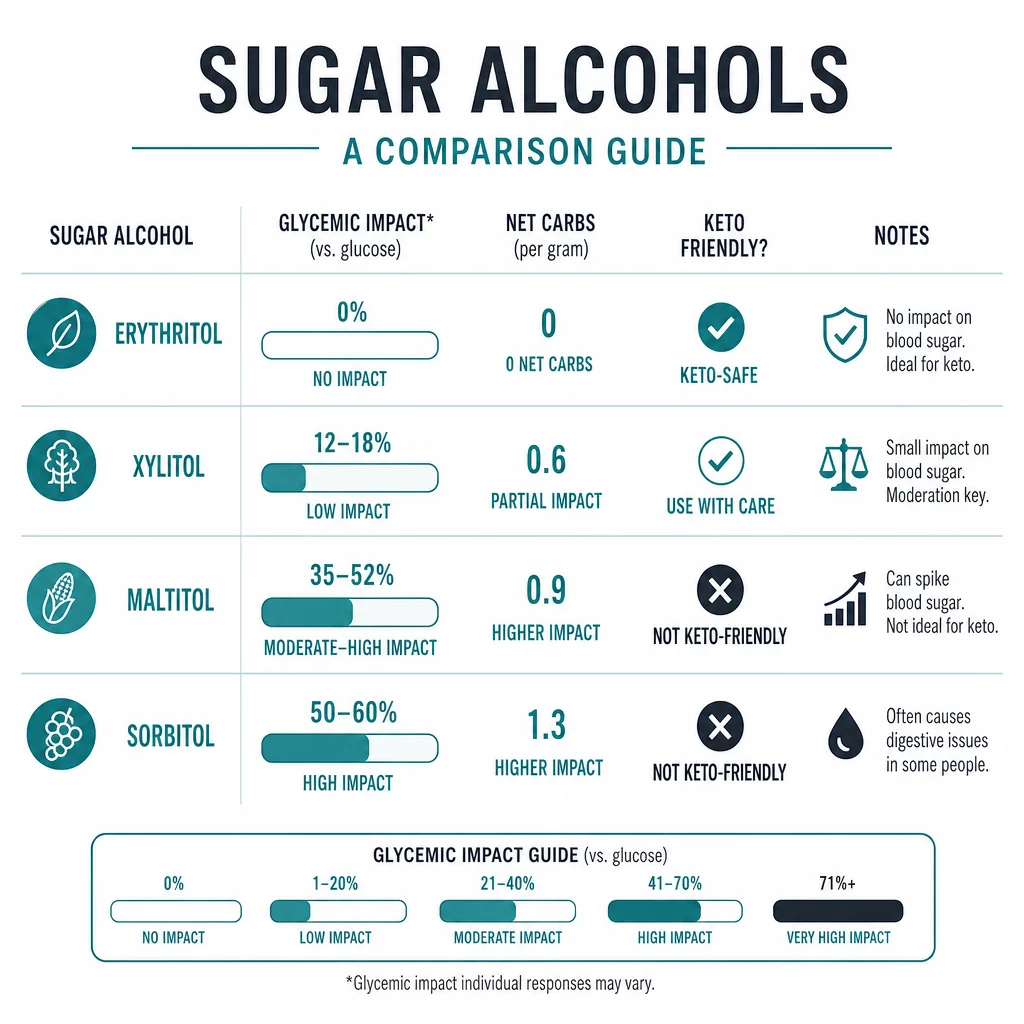
Sugar alcohols require careful individual assessment. Erythritol is produced by fermenting glucose with yeast; it has a negligible glycemic index and is absorbed in the small intestine and excreted largely unchanged. It is broadly considered keto-safe and is excluded from net carb calculations by most practitioners. Xylitol has a low but non-zero glycemic index and is absorbed more slowly than sucrose; many keto followers subtract it from net carbs but those who are more sensitive may notice a response. Maltitol is the problematic outlier. Despite being classified as a sugar alcohol, its glycemic index is approximately 35, meaning it causes a meaningful blood glucose and insulin response. It is used extensively in "sugar-free" chocolates, candies, and protein bars because it mimics the texture of sugar well and is inexpensive. Sorbitol has a glycemic index of approximately 9 and is found in sugar-free gum, mints, and some cough syrups. It counts as a partial carbohydrate for keto purposes.

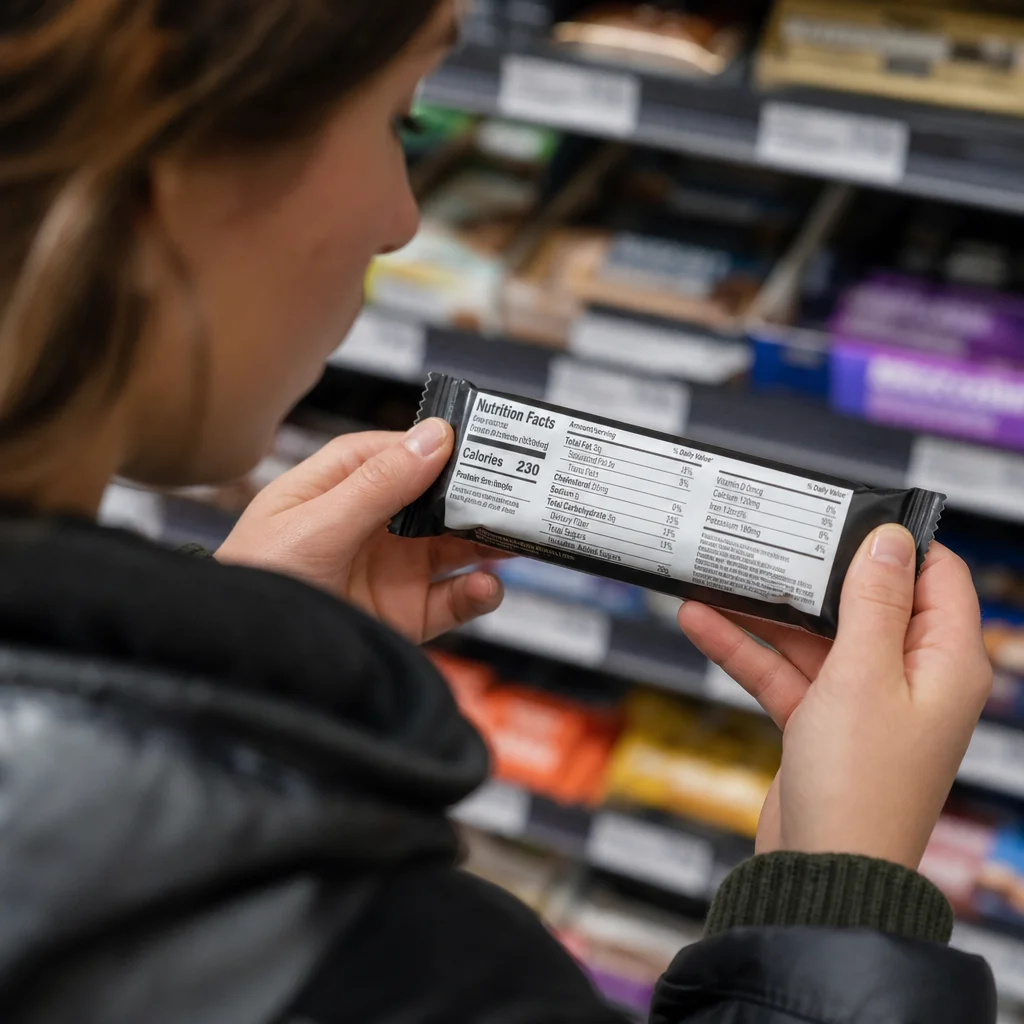
Net carb claims on packaging are not regulated in either the United States or the European Union. Manufacturers calculate and display net carbs however they choose. The common formula is total carbohydrates minus dietary fiber minus sugar alcohols. But this calculation is only accurate for sugar alcohols with genuinely negligible glycemic impact. A product that subtracts maltitol from its net carb count is presenting a misleading figure. A protein bar advertised as "3g net carbs" but containing 20g of maltitol may deliver a glycemic response equivalent to consuming significantly more digestible carbohydrate.

Hidden sugars in condiments and sauces catch keto followers frequently. Ketchup typically contains 4-5g of sugar per tablespoon, primarily from corn syrup or high-fructose corn syrup. Barbecue sauce often contains 10-15g of sugar per two-tablespoon serving. Teriyaki sauce is one of the highest-sugar condiments, with many commercial versions delivering over 10g of sugar per tablespoon from a combination of sugar, mirin (a sweet rice wine), and glucose syrup. Sweet chili sauce, honey mustard, most hoisin sauces, and many bottled marinades carry comparable sugar loads.

Starch fillers in processed meats are widely underestimated. Ground meat products (sausages, burger patties, meatballs) frequently use breadcrumbs, oat flour, or potato starch as binders. Pre-seasoned meats and marinated products may contain sugar-based glazes or cornstarch-thickened marinades.

US vs EU Labeling: What's Different

US vs EU Labeling: What's Different

Keto followers living in or shopping from different regions encounter genuinely different labeling conventions that affect how net carbs are calculated.

In the United States, the FDA requires the nutrition facts panel to list total carbohydrates, dietary fiber, total sugars, and added sugars as separate line items. However, sugar alcohols are listed only voluntarily unless the product makes a claim about sugar alcohols or no-sugar content. This means a product can contain significant maltitol without it appearing as a distinct line on the label. The total carbohydrate figure will capture it, but a consumer relying only on a "net carbs" front-of-pack claim might not notice. The FDA also does not regulate the term "net carbs," "net carbohydrates," or "impact carbs," meaning manufacturers use these terms freely with their own preferred calculations.

In the European Union, food labeling is governed primarily by Regulation (EU) No. 1169/2011 on the provision of food information to consumers. EU labels express carbohydrates as "carbohydrate" with a sub-entry for "of which sugars." Sugar alcohols (referred to in EU regulation as "polyols") are listed as a sub-entry of carbohydrates when present, which makes them more consistently visible than on US labels. However, the EU does not regulate "net carbs" terminology either, and manufacturers selling into the EU keto market use the same type of forward-of-pack marketing claims without regulatory standardization.

A meaningful practical difference involves fiber classification. In the US, some non-digestible carbohydrates like certain soluble fibers and resistant starches have historically been classified inconsistently across product categories. The FDA has been progressively tightening its definition of dietary fiber since 2016, but some legacy fiber ingredients that were previously subtracted in net carb calculations may now count as partial carbohydrates under updated guidance. EU fiber definitions under EFSA are similarly evolving but follow slightly different criteria.

For ingredients like chicory root inulin, soluble corn fiber, and acacia fiber (all common in keto-marketed products), the regulatory treatment as fiber is broadly consistent across both regions, but individual product net carb claims should still be verified against the total carbohydrate figure on the panel itself.

A Practical Label-Reading Strategy

A Practical Label-Reading Strategy

Strictly Avoid

Any ingredient in this list disqualifies a product for strict keto:

  • Wheat flour, white flour, whole wheat flour, rice flour, oat flour, corn flour, barley flour, rye flour, buckwheat flour, chickpea flour, soy flour
  • Corn starch, modified corn starch, modified food starch, potato starch, tapioca starch, arrowroot starch, wheat starch
  • Sucrose, glucose, dextrose, fructose, maltose, corn syrup, high-fructose corn syrup, corn syrup solids, glucose syrup, invert sugar
  • Honey, maple syrup, agave nectar, molasses, brown rice syrup, barley malt syrup, date paste, date syrup
  • Maltodextrin (in any meaningful quantity)
  • Maltitol, maltitol syrup (sugar alcohol with significant glycemic index)
  • Fruit juice concentrate, dried fruit, raisins
  • Xylitol (partial glycemic impact; unreliable for strict keto)
  • Sorbitol (partial glycemic impact)
  • Oat fiber (digestible starch content varies and cannot be assessed from a label)
  • Resistant tapioca starch (marketed as keto-friendly but carries carbohydrate load)
  • Lactose-heavy dairy (milk, regular yogurt) (lactose is a disaccharide that contributes carbs; portion cannot be assessed from ingredient list alone)
  • Balsamic vinegar, teriyaki, commercial marinades (high sugar per serving, reliably non-compliant)

Generally Safe

These ingredients are broadly compatible with keto when the nutrition panel confirms low total carbohydrates:

  • Erythritol (negligible glycemic index; safe to subtract from net carbs)
  • Stevia, monk fruit extract, allulose (non-caloric or near-zero glycemic sweeteners)
  • Cellulose, microcrystalline cellulose (non-digestible fiber used as anti-caking agent)
  • Guar gum, xanthan gum, locust bean gum (thickeners with negligible glycemic impact)
  • Salt, citric acid, natural flavors (low-carb flavor and preservation agents)
  • Cream, butter, full-fat sour cream, hard cheese from a block
  • Vinegar (white, apple cider, red wine; negligible carbohydrate)
  • Soluble corn fiber / chicory inulin (well-documented low glycemic impact)

Ignore on Labels

These front-of-pack terms carry no regulatory meaning for keto compliance:

  • "Net carbs" (unregulated; always verify against the full nutrition panel)
  • "Keto-friendly" (no legal definition; can be applied to any product)
  • "Low sugar" (US regulatory meaning is below 5g per serving; EU meaning differs)
  • "No added sugar" (does not mean no carbohydrates; fruit juice concentrates count as natural sugar)
  • "Natural sweetener" (includes agave, honey, date syrup, and coconut sugar, all of which raise blood glucose)
  • "Grain-free" (does not mean low-carb; chickpea flour and tapioca starch are grain-free)
  • "Diabetic-friendly" (no regulatory definition; products with this claim may still contain maltitol)

Given how thoroughly carbohydrate-containing ingredients are embedded into processed food under technical names, manual label reading for every product is genuinely time-consuming. IngrediCheck was built specifically to reduce this burden: scanning a barcode surfaces every ingredient flag relevant to a user's dietary profile, including maltodextrin, modified starch, and sugar alcohol types, in seconds. For those also managing blood sugar concerns alongside ketogenic eating, the app cross-references both sets of restrictions simultaneously, flagging ingredients like maltitol that are problematic from both a keto and a glycemic perspective. The time saved across a week of grocery shopping adds up quickly, and the ingredient-level detail goes far beyond what any summary nutrition panel provides.

Get the app for clearer label decisions.

Scan labels, see what fits your food notes, and read the why in plain English.

IngrediCheck app