Dietary Guides

Diabetes Dietary Guide: Hidden Sugars, Glycemic Claims, and the Sugar-Free Label Trap

An encyclopedic guide to diabetes dietary management covering all three types, 60+ sugar aliases on labels, FDA glycemic and sugar-free claim rules, maltodextrin's hidden glycemic impact, sugar alcohols, net carb calculation, and alcohol risks.

Jun 9, 2026|14 min read
By Sanket Patel|Updated 2026-06-09|10 sources|Editorial standards
Diabetes Dietary Guide: Hidden Sugars, Glycemic Claims, and the Sugar-Free Label Trap

More than 40 million Americans have diabetes, and another 115 million have prediabetes, many without knowing it. For people managing any form of the condition, food labels are not just informative: they are clinical tools. Yet the labels are riddled with terminology designed for marketing rather than metabolic clarity. A product labeled "sugar-free" can still spike blood glucose faster than table sugar. A "low-GI" claim is entirely unregulated. And over 60 different names for sugar appear on ingredient lists worldwide.

This guide decodes all of it.

The Three Types and Why They Matter for Label Reading

Type 1 diabetes is an autoimmune condition in which the pancreatic beta cells are destroyed, requiring lifelong insulin. For Type 1 management, the label-reading priority is total carbohydrates per serving, every gram of carbohydrate requires an insulin dose calculation. No foods are strictly forbidden, but all carbohydrates must be accounted for precisely.

Type 2 diabetes involves insulin resistance and progressive beta cell dysfunction, strongly linked to diet, obesity, and physical inactivity. It accounts for 90 to 95 percent of all cases. The label-reading priorities shift to both total carbohydrates and the quality of those carbohydrates, specifically their speed of absorption.

Gestational diabetes develops during pregnancy and typically resolves postpartum, but women with gestational diabetes have approximately seven times the lifetime risk of developing Type 2 diabetes. Dietary management focuses on controlled carbohydrate distribution across meals and avoiding large carbohydrate loads in a single sitting.

All three share one label-reading challenge: identifying carbohydrates that raise blood glucose rapidly, regardless of how they are listed on the label.

The Glycemic Index and Why GL Matters More

The Glycemic Index and Why GL Matters More

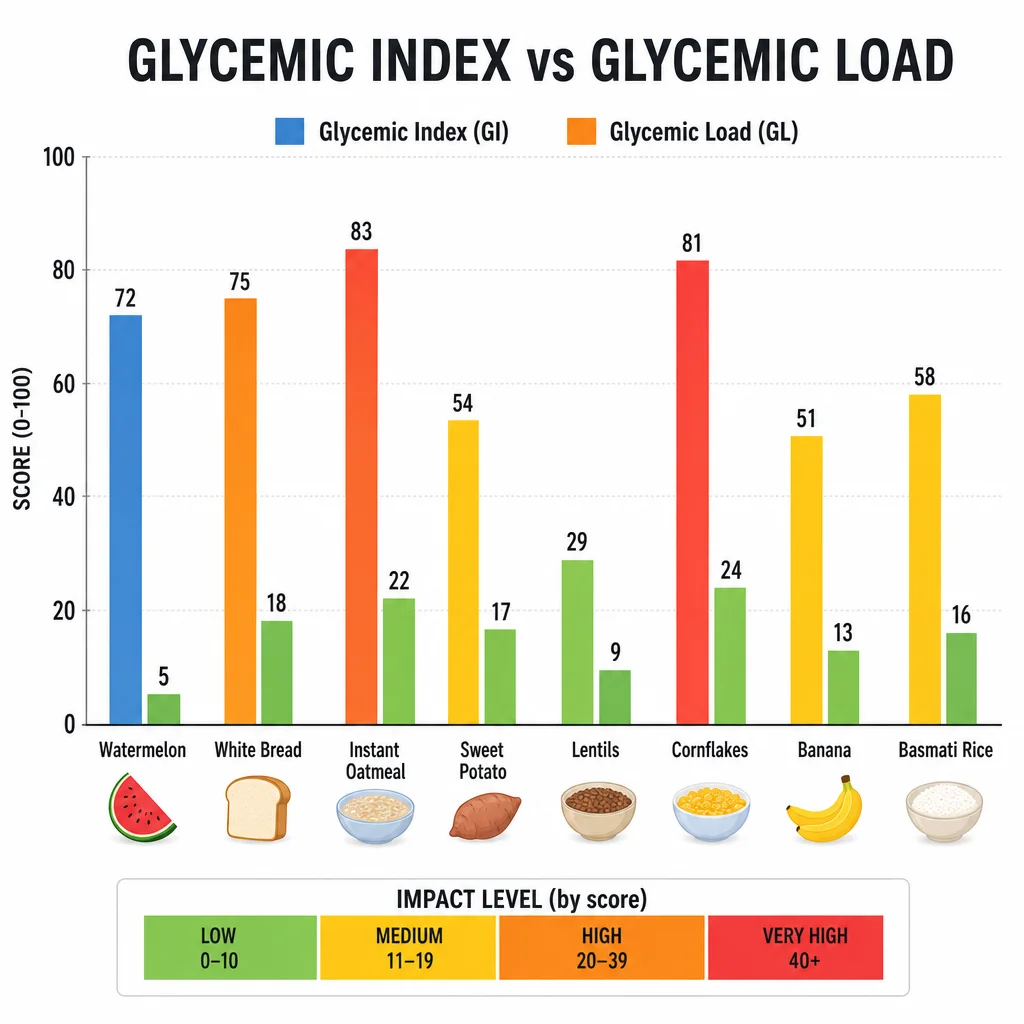
The glycemic index (GI) ranks foods on a scale of 0 to 100 based on how quickly they raise blood glucose compared to pure glucose. Foods below 55 are considered low GI; 56 to 69 is medium; 70 and above is high.

GI has a practical blind spot. It measures the response to a standardized 50-gram carbohydrate portion, not a realistic serving. This is where glycemic load (GL) becomes more useful.

GL = GI ร— grams of carbohydrate per serving รท 100

Watermelon has a GI of 80, which sounds alarming. But a standard 120-gram serving contains only about 6 grams of carbohydrates, giving a GL of roughly 4.8, quite low. By contrast, a bowl of instant oatmeal (GI 83) at 200 grams delivers approximately 28 grams of carbohydrates, giving a GL around 23. The glycemic impact is dramatically different.

Is "Low GI" a regulated label claim? No. In both the US and EU, glycemic index labeling is entirely voluntary and unregulated. The FDA has not defined GI for regulatory purposes, and statements about GI are not classified as nutrient content claims or health claims. Any product can print "low GI" without verification. The only independent verification comes from third-party certification programs such as the Glycemic Index Foundation in Australia.

On the Nutrition Facts panel, you can approximate a food's glycemic load without any GI data: total carbohydrates minus dietary fiber gives you net digestible carbohydrates. Divide by 10 to get a rough per-serving GL.

60+ Names for Sugar on Food Labels

Over 68 percent of barcoded food products in the US contain added sweeteners, even those labeled "natural" or "healthy." Manufacturers routinely list multiple sugar forms to dilute their position in the ingredient list, the ingredient appearing first is the greatest by weight, so using six different sugar names at lower individual amounts keeps each one further down the list.

Here is the complete reference list by category:

"-ose" monosaccharides and disaccharides: glucose, dextrose, fructose, sucrose, maltose, lactose, galactose, trehalose

Syrups: high-fructose corn syrup (HFCS), corn syrup, rice syrup, malt syrup, golden syrup, agave nectar (70 to 90 percent fructose, higher than HFCS), barley malt syrup, tapioca syrup, sorghum syrup, carob syrup, date syrup, maple syrup, molasses, invert sugar syrup, glucose syrup

Concentrated natural forms: evaporated cane juice, fruit juice concentrate (apple, grape, pear), white grape juice concentrate, beet juice concentrate, coconut nectar, date paste

Solid/granulated forms: cane sugar, beet sugar, brown sugar, raw sugar, turbinado, demerara, muscovado, sucanat, panela, rapadura, jaggery, coconut sugar, palm sugar, date sugar, confectioner's sugar, castor sugar

Chemical/industrial variants: invert sugar, caramel, corn syrup solids, dextrin, maltodextrin (see next section), modified food starch

Since January 2020, FDA has required US manufacturers to list "Added Sugars" as a separate line on the Nutrition Facts panel. This is the most reliable single data point for diabetes label reading. The American Heart Association recommends women limit added sugars to 25 grams per day and men to 36 grams. Many flavored yogurts, protein bars, granolas, and breakfast cereals exceed the daily limit in a single serving.
The Maltodextrin Loophole

The Maltodextrin Loophole

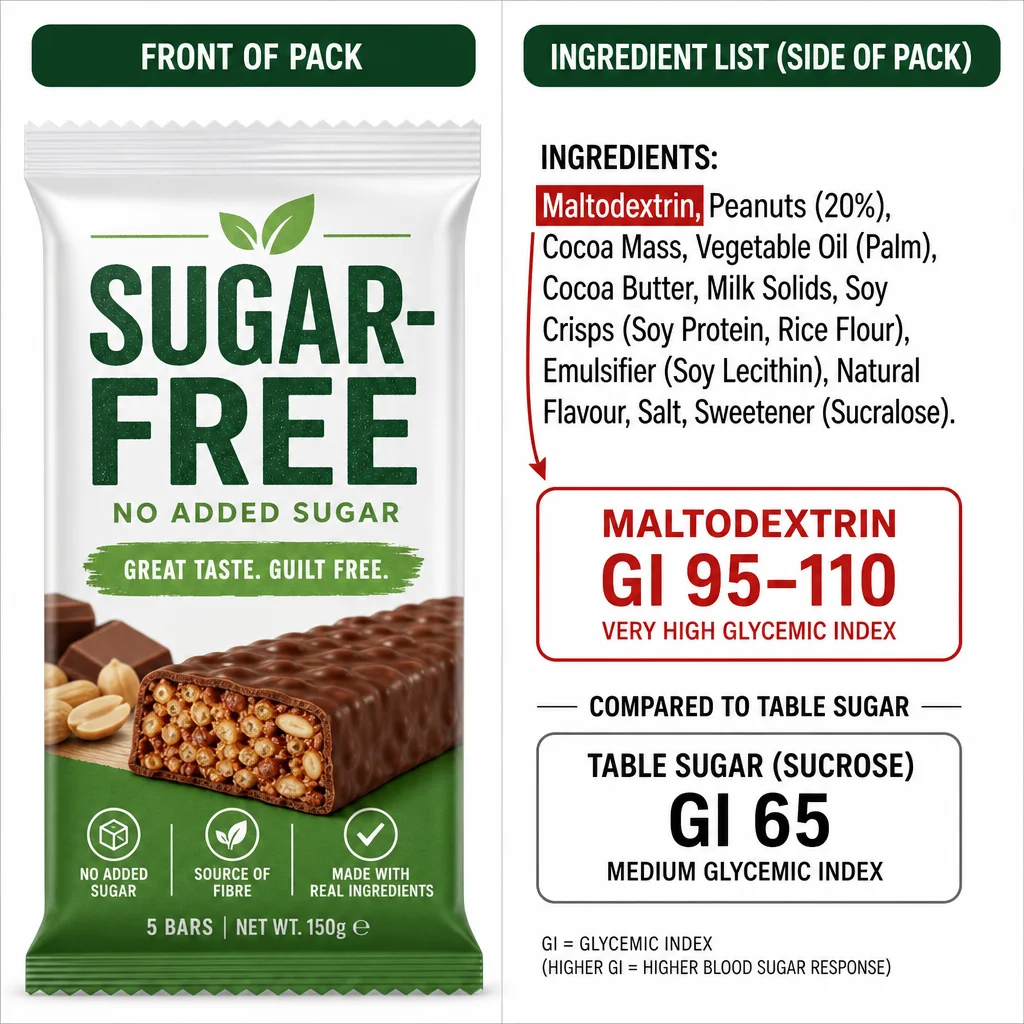
Maltodextrin is where "sugar-free" labeling becomes genuinely dangerous for people with diabetes.

Maltodextrin is produced from the partial hydrolysis of corn, wheat, rice, or tapioca starch. It is used as a thickener, filler, preservative, and carbohydrate source in an enormous range of processed foods. Its glycemic index ranges from 95 to 110, higher than table sugar (GI 65) and approaching pure glucose (GI 100).

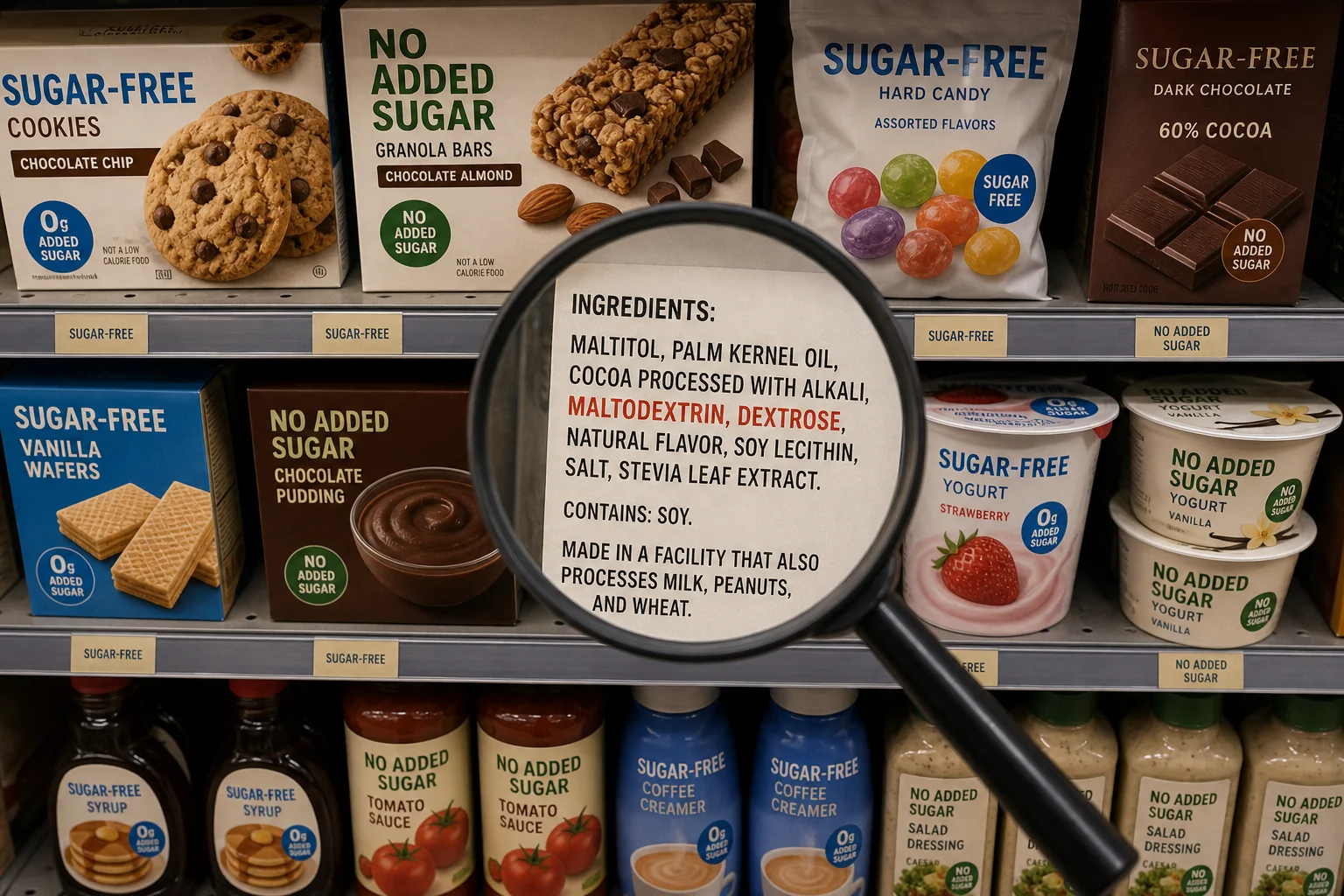
The critical regulatory gap: Because maltodextrin is not technically classified as "sugar," it does not appear in the "Added Sugars" line on the Nutrition Facts panel. A product can be legally labeled "sugar-free" while containing substantial quantities of maltodextrin that spike blood glucose faster than a spoonful of table sugar.

Maltodextrin appears in: salad dressings, canned soups, yogurts, protein powders, sugar-free Jell-O and puddings, energy drinks, cereals, baked goods, nutrition bars, and meal replacement shakes. It is also the primary bulking agent in Splenda.

For practical purposes: treat any ingredient list containing maltodextrin, dextrin, modified corn starch, or corn syrup solids as carrying a hidden high-glycemic load, regardless of what the sugar lines say.

What FDA Sugar Claims Actually Mean

The FDA's legal definitions under 21 CFR 101.60 are precise and often counterintuitive:

Sugar-Free / Zero Sugar: less than 0.5 grams of sugars (natural and added combined) per serving. May still contain sugar alcohols, maltodextrin, or other high-GI carbohydrates.

No Added Sugar: no sugar or sugar-containing ingredient was added during processing. The product may still contain naturally occurring sugars such as lactose in dairy or fructose in fruit, plus it may contain maltodextrin, which is not considered an added sugar.

Unsweetened: no added sugar, no sugar alcohols, and no low-calorie sweeteners. This is the strictest of the three terms.

Reduced / Less Sugar: at least 25 percent less sugar per serving than the regular reference version.

Lightly Sweetened: completely unregulated. There is no FDA definition for this term. It carries no nutritional meaning whatsoever.

The practical takeaway: "sugar-free" and "no added sugar" are not the same thing, and neither guarantees a low glycemic impact. Always check both the Nutrition Facts panel and the ingredient list.

FDA-Approved Artificial Sweeteners

For people with diabetes, high-intensity sweeteners offer sweetness without the glycemic impact. The FDA has approved six:

Saccharin (~300x sweeter than sugar): approved 1958, ADI 15 mg/kg body weight/day. Removed from the US carcinogen list in 2000.

Aspartame (~200x): ADI 50 mg/kg body weight/day. Contains phenylalanine, contraindicated for phenylketonuria (PKU). In 2023, WHO's IARC classified aspartame as "possibly carcinogenic" (Group 2B), the same category as pickled vegetables. The WHO's safety committee (JECFA) simultaneously maintained the existing ADI as safe at current consumption levels.

Acesulfame potassium (Ace-K) (~200x): ADI 15 mg/kg body weight/day. Often combined with aspartame.

Sucralose (~600x): ADI 5 mg/kg body weight/day. Derived from sugar but not metabolized; passes through the body unchanged.

Neotame (~7,000x): ADI 0.3 mg/kg body weight/day. Structurally related to aspartame but safe for PKU.

Advantame (~20,000x): the newest approved sweetener (2014). ADI 32.8 mg/kg body weight/day.

Two additional sweeteners are sold under FDA's GRAS (Generally Recognized as Safe) framework: steviol glycosides (from stevia leaf, 200-400x sweet) and monk fruit extract (150-250x sweet). Neither has an established ADI; the FDA has not objected to their GRAS status.

Sugar alcohols (sorbitol, xylitol, erythritol, maltitol, mannitol, isomalt) are partially absorbed and generally lower-GI than sugar, with one exception. Maltitol has a glycemic index of approximately 35 to 40 and should not be treated as glycemically negligible. Erythritol has a GI of zero and is not metabolized.

Fiber, Net Carbs, and What's Actually Regulated

"Net carbs" is a consumer concept with no official FDA definition. The standard consumer calculation is: Total Carbohydrates minus Dietary Fiber minus Sugar Alcohols.

But the sugar alcohol deduction requires nuance:

  • Erythritol: subtract fully (GI zero)
  • Xylitol, sorbitol, mannitol: subtract partially (~50%)
  • Maltitol: subtract only 50%, it still has meaningful glycemic impact
  • Isomalt: subtract partially

Because "net carbs" is unregulated, manufacturers may subtract all sugar alcohols including maltitol at full value, understating the true glycemic impact. A keto bar labeled "3g net carbs" could realistically deliver twice that in blood glucose impact if its alcohol is primarily maltitol.

FDA dietary fiber counts toward reducing the net carb calculation only if the fiber source meets the agency's post-2016 definition: it must have a demonstrated physiological benefit. Approved isolated fibers include beta-glucan, psyllium husk, pectin, inulin, galactooligosaccharides, and resistant dextrin (Fibersol-2). Regular maltodextrin does NOT qualify as dietary fiber, even though its name resembles resistant dextrin.

Surprising High-Glycemic Foods

Several foods appear healthy but carry significant glycemic loads:

Rice cakes (plain): GI 82. Nearly pure starch with minimal fiber buffer, higher GI than white bread. Pretzels: GI 83. Cornflakes: GI 81, even without added sugar. Instant oatmeal: GI 83, compared to steel-cut oats at 42 to 55. Baked russet potato: GI 85 to 111 depending on preparation (boiled then cooled = lower due to resistant starch formation). Whole wheat bread: GI 69 to 74, only modestly lower than white bread.

The cooking method modifier matters significantly. Pasta cooked al dente has a GI around 45; overcooked pasta can reach 65. Cooled and reheated potatoes or rice form resistant starch, lowering their glycemic impact compared to freshly cooked versions.

Alcohol and Diabetes

Alcohol and Diabetes

Alcohol interferes with blood glucose regulation through a specific mechanism. The liver has two competing priorities: releasing glucose from glycogen to maintain blood sugar between meals, and metabolizing alcohol. When alcohol is present, the liver prioritizes alcohol detoxification and neglects glucose release. The result is hypoglycemia, which can persist for up to 24 hours after drinking.

The danger: symptoms of hypoglycemia (confusion, unsteadiness, slurred speech) closely mimic intoxication. Others may mistake a dangerous hypoglycemic episode for drunkenness.

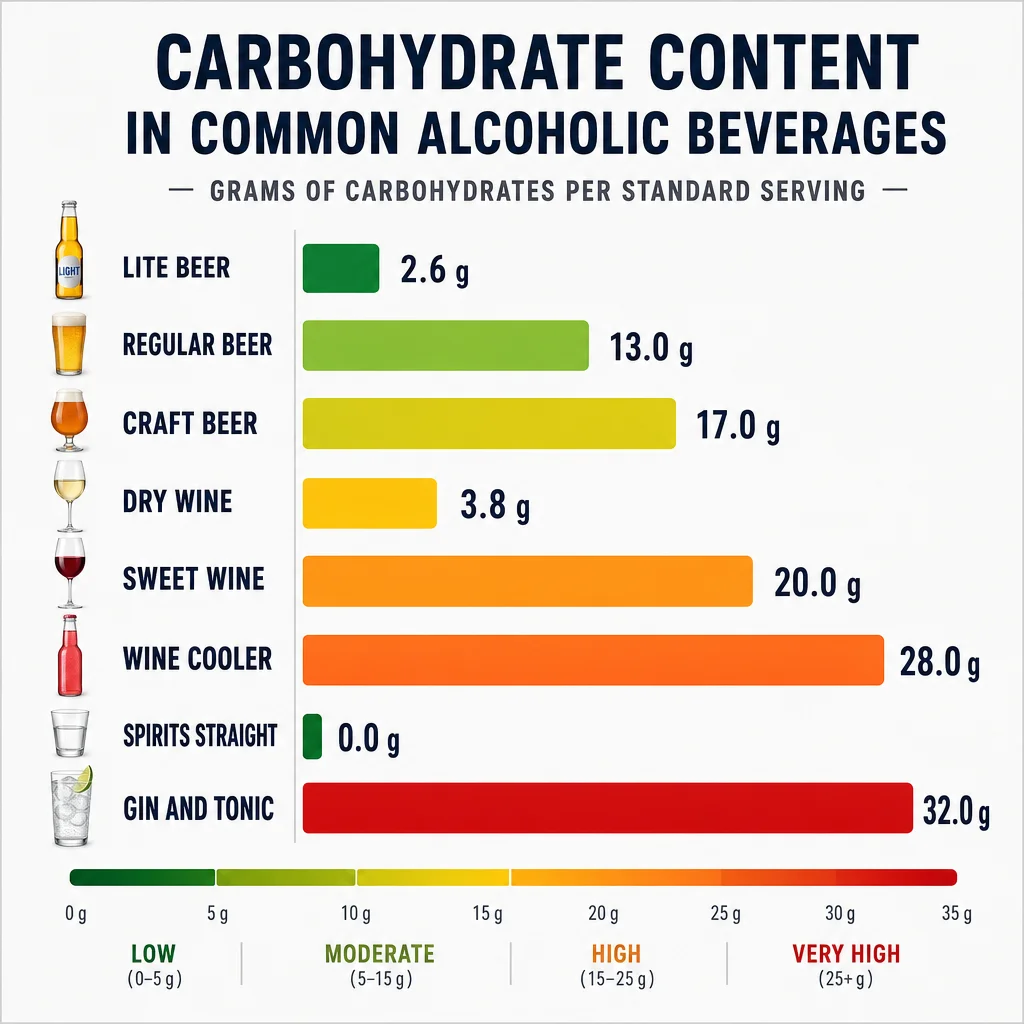
Key carbohydrate loads in common beverages:

  • Lite beer (12 oz): approximately 5 grams
  • Regular beer (12 oz): approximately 12 grams
  • Dark or craft beer: up to 25 grams
  • Dry red or white wine (5 oz): 3 to 4 grams
  • Sweet or dessert wine (5 oz): 12 to 20 grams
  • Wine coolers (12 oz): up to 30 grams
  • Spirits (vodka, rum, gin, tequila straight): 0 grams, but mixers add significant sugar

Tonic water contains 26 grams of sugar per 8 ounces, a gin and tonic is not a low-sugar drink. The ADA recommends no more than 1 to 2 drinks per day for people with diabetes and advises never drinking on an empty stomach.

A Practical Label-Reading Strategy

This section is designed to work as a standalone reference when reading food labels.

Ingredients and Additives to Avoid

The following ingredients have a significant blood glucose impact and should be flagged when managing diabetes, regardless of front-of-pack claims:

High-GI carbohydrates and hidden sugars (strict avoidance)

  • Maltodextrin (GI 95-110; not counted as "Added Sugar" on US labels)
  • Dextrose / glucose / glucose syrup
  • Corn syrup / corn syrup solids
  • High-fructose corn syrup (HFCS)
  • Rice syrup / brown rice syrup
  • Tapioca syrup / tapioca starch
  • Modified corn starch / modified food starch
  • Dextrin

Added sugar aliases (strict avoidance)

  • Sucrose / cane sugar / beet sugar / invert sugar
  • Fructose / crystalline fructose
  • Agave nectar / agave syrup (70-90% fructose)
  • Fruit juice concentrate (apple, grape, pear, date)
  • Evaporated cane juice
  • Barley malt syrup / malt syrup / malt extract
  • Caramel / caramel color (may contain sugar)
  • Coconut sugar / palm sugar / date sugar (high GI despite "natural" framing)

Sugar alcohols requiring caution (limit, monitor blood glucose)

  • Maltitol / maltitol syrup (GI ~35-40; highest GI among sugar alcohols)
  • Sorbitol (GI ~9; partially absorbed, can still impact blood glucose)
  • Xylitol (GI ~7; minor blood glucose effect)

Misleading label claims to disregard

  • "Sugar-free" (permits maltodextrin and high-GI starches)
  • "No added sugar" (permits naturally occurring sugars and maltodextrin)
  • "Diabetic-friendly" / "suitable for diabetics" (unregulated by FDA)
  • "Low GI" (unregulated in the US and EU; no verification required)
  • "Net carbs" (unregulated; manufacturers may deduct maltitol at full value)

Safe sweeteners with minimal glycemic impact

  • Erythritol (GI 0)
  • Sucralose / Splenda
  • Stevia / steviol glycosides
  • Monk fruit extract / luo han guo
  • Aspartame (GI 0; avoid if you have PKU)
  • Allulose (not metabolized; FDA exempts it from "Total Sugars" declaration)

Step-by-step checklist:

  1. Read the Serving Size first. Every number on the Nutrition Facts panel is per serving, not per package. A bag of crackers labeled as "two servings" doubles every value shown. Always multiply by realistic consumption.
  1. Find the Total Carbohydrates line. This is your starting point for insulin dosing (Type 1) and glycemic load estimation (Type 2). Do not rely on the sugar line alone, it excludes maltodextrin, modified starch, and other high-GI carbohydrates.
  1. Check the Added Sugars line. Mandatory since January 2020 on US labels. Target under 6 grams per serving for snacks; under 25 grams total daily (women) or 36 grams (men).
  1. Calculate net digestible carbs. Subtract Dietary Fiber from Total Carbohydrates. If sugar alcohols are present, subtract erythritol fully but subtract only 50 percent for maltitol, sorbitol, and xylitol.
  1. Verify "sugar-free" claims against the ingredient list. A product labeled sugar-free can legally contain maltodextrin (GI 95 to 110). If maltodextrin appears in the first five ingredients, the product carries significant glycemic impact despite the claim.
  1. Count sugar aliases collectively. Ingredients are listed in descending order by weight. Manufacturers often use six or more different sugar forms so each appears lower on the list individually. Count every alias from the avoid list above as sugar.
  1. Distrust "diabetic-friendly" labeling. The FDA has not defined this term. There is no required carbohydrate, glycemic, or nutritional threshold. Evaluate the Nutrition Facts panel directly.

IngrediCheck can scan ingredient lists and flag all sugar aliases, identify high-GI carbohydrate derivatives like maltodextrin and glucose syrup, and alert you to unregulated claims like "diabetic-friendly" so you can make informed decisions at the grocery store.

If you also manage high blood pressure alongside diabetes, a common combination, the Hypertension Dietary Guide covers how sodium hides on labels and what FDA's voluntary reduction targets mean in practice.

Next Label Check

Follow the scanner, hub, and ingredient paths connected to this guide

Get the app for clearer label decisions.

Scan labels, see what fits your food notes, and read the why in plain English.

IngrediCheck app