This section is designed to work as a standalone reference for identifying pro-inflammatory and anti-inflammatory ingredients on food labels.
Ingredients and Additives to Avoid
The following ingredients measurably increase inflammatory biomarkers and should be avoided or minimized when following an anti-inflammatory dietary approach:
Trans fats (strict avoidance, raises CRP by up to 73%)
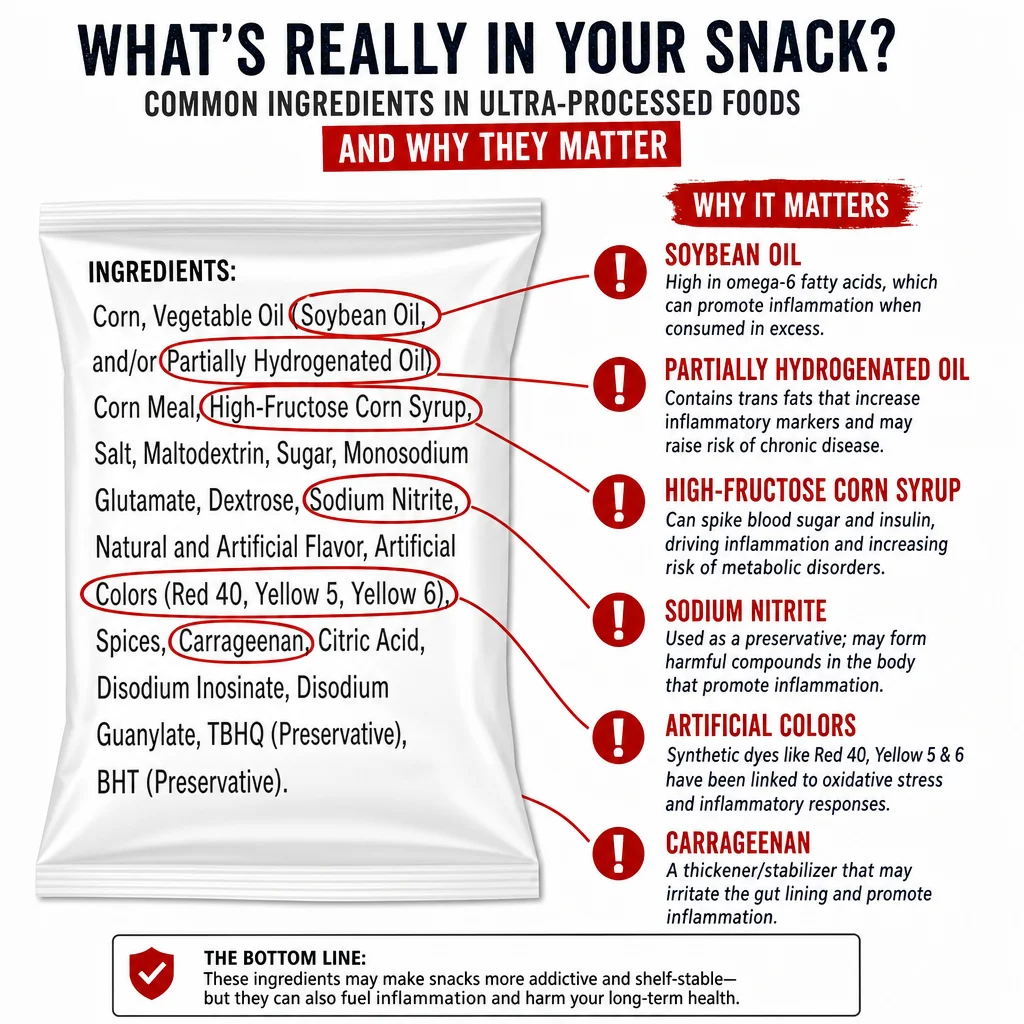
- Partially hydrogenated oil / partially hydrogenated vegetable oil (any type)
- Partially hydrogenated soybean / cottonseed / corn / palm oil
- Vegetable shortening (verify label for PHOs)
- Hydrogenated fat (verify it is "fully" not "partially" hydrogenated)
High omega-6 oils that worsen the ratio when used in excess
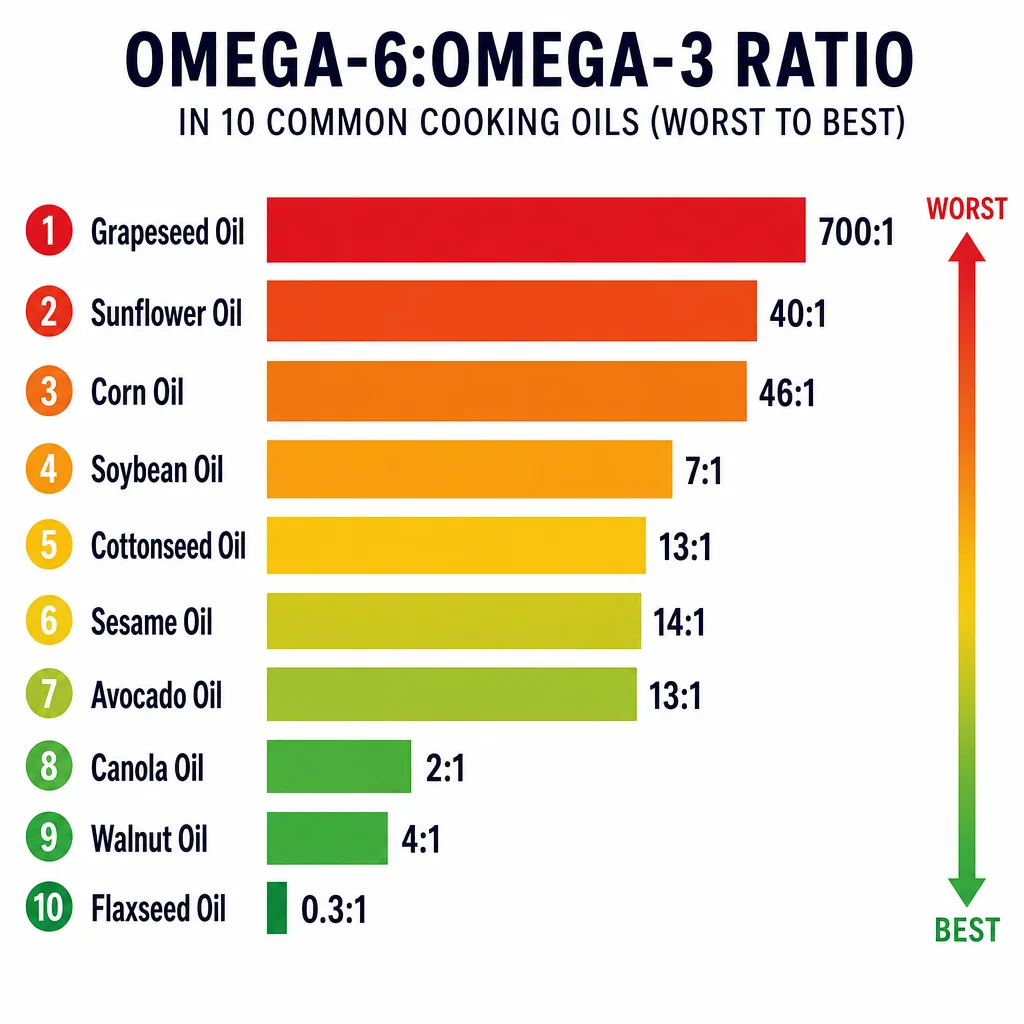
- Soybean oil (omega-6:omega-3 ratio ~7:1 to 8:1)
- Corn oil (ratio ~46:1)
- Sunflower oil (ratio ~40:1 for standard; high-oleic variant is better)
- Safflower oil (ratio ~133:1 for standard; high-oleic variant is better)
- Cottonseed oil (ratio ~13:1)
- Grapeseed oil (ratio ~696:1)
- "Vegetable oil" (unspecified; typically high omega-6 soybean or corn oil)
Refined sugar and refined carbohydrates (promote inflammatory glycation)
- Added sugars in any form (see Diabetes guide for full sugar alias list)
- High-fructose corn syrup
- Refined white flour / enriched flour (high GI, low fiber)
- Maltodextrin
Additives with documented pro-inflammatory effects
- Sodium nitrate (E251) / sodium nitrite (E250), found in cured meats; associated with elevated CRP
- Carrageenan (E407), used as a thickener in dairy analogs and processed foods; animal studies show intestinal inflammation; human evidence is contested
- Artificial food dyes (Red 40 / Allura Red E129, Yellow 5 / Tartrazine E102, Yellow 6 / Sunset Yellow E110), associated with inflammatory responses in some studies, particularly in individuals with sensitivity
- Propylene glycol (E1520), solvent in flavorings; limited but emerging evidence for gut microbiome disruption
- BHA (E320) / BHT (E321), antioxidant preservatives; some studies show NF-kB activation at high doses
Processed meat ingredients (associated with systemic inflammation)
- Sodium nitrate / nitrite in processed meats (hot dogs, bacon, salami, ham)
- High saturated fat from pork fat, lard, beef fat in processed meat products
Misleading claims to disregard
- "Anti-inflammatory" (unregulated in US and EU; no defined standard)
- "Clean label" (no regulatory definition)
- "Natural" (unregulated by FDA for most food categories)
- "Superfood" (no regulatory definition)
- "Rich in antioxidants" (unregulated as a marketing claim; does not guarantee anti-inflammatory effect)
Anti-inflammatory ingredients to prioritize
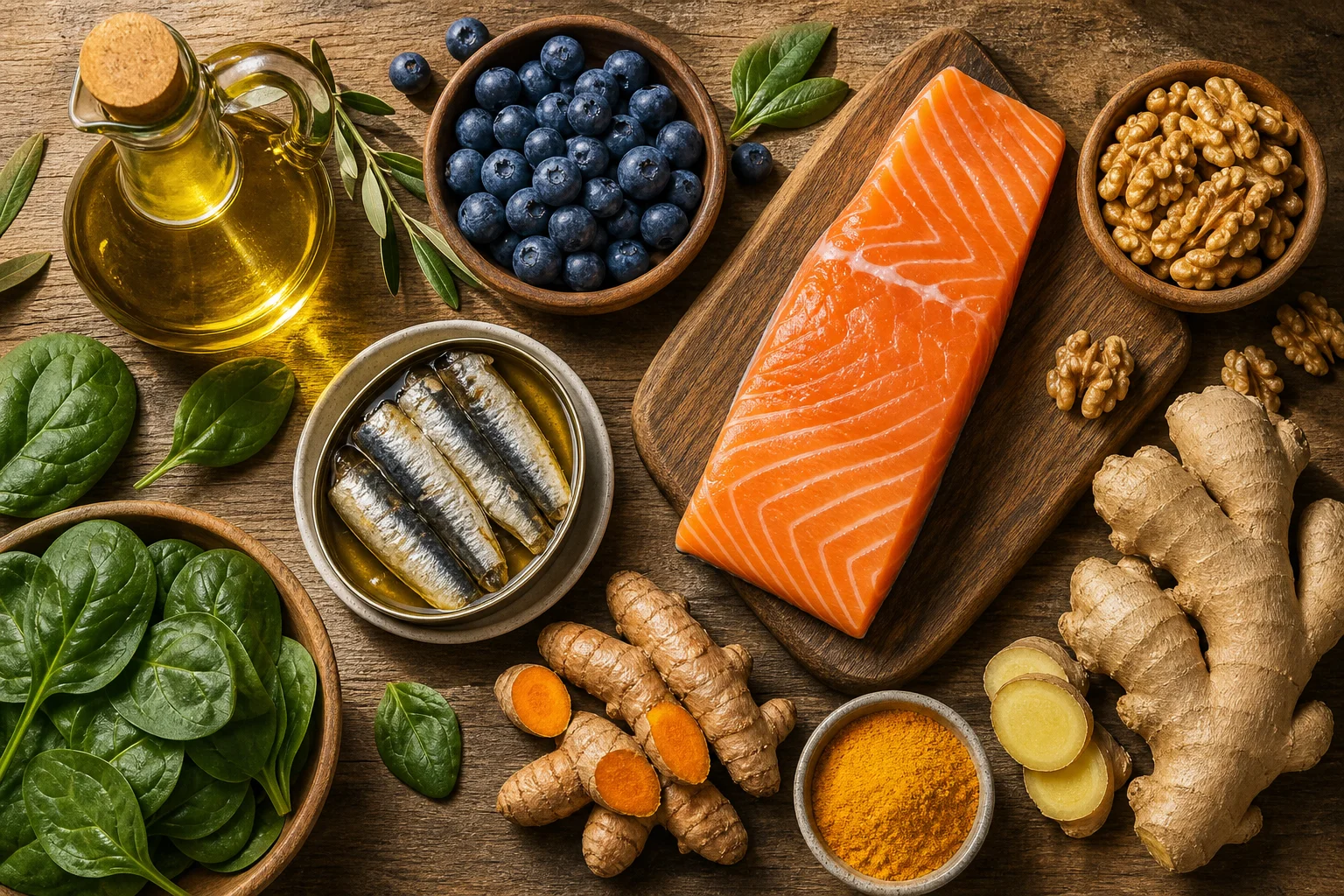
- Extra-virgin olive oil (oleocanthal has ibuprofen-like COX inhibition; polyphenols reduce CRP)
- Fatty fish ingredients (salmon, sardines, mackerel, anchovies, herring), EPA and DHA
- Walnut oil / flaxseed oil (ALA omega-3)
- Turmeric with black pepper / piperine (only relevant in therapeutic doses with bioavailability enhancer)
- Ginger (gingerols inhibit COX-2 and 5-LOX)
- Green tea extract / EGCG (epigallocatechin gallate)
- Quercetin (found in capers, red onion, apples)
- Resveratrol (found in grape skin, red wine, at low doses)
- Lycopene from tomato products (tomato paste is the most concentrated dietary source)
Step-by-step checklist:
- Check for partially hydrogenated oils in the ingredient list. This is the highest-priority inflammatory ingredient in processed food, trans fats raise CRP independently of all other dietary factors.
- Identify the primary cooking oil. The first oil listed is the dominant fat. Soybean, corn, sunflower, and cottonseed oil as primary ingredients indicate a high omega-6 product. Extra-virgin olive oil, canola oil, avocado oil, and walnut oil are preferable.
- Count added sugar aliases. Refined sugar raises CRP via AGE formation and insulin-driven inflammatory signaling. Use the full sugar alias list from the Diabetes guide to identify all added sugar forms.
- Scan for sodium nitrate and nitrite. These are the most consistently pro-inflammatory additives in processed meats. They appear as sodium nitrate (E251), sodium nitrite (E250), or in cured meats labeled "celery powder" or "celery juice" (which are concentrated nitrate sources not subject to the same labeling rules as synthetic nitrates).
- Assess the product category. Ultra-processed foods, regardless of specific ingredients, are consistently associated with higher inflammatory markers in epidemiological studies. Products with more than five highly processed ingredients warrant scrutiny even if no individual ingredient is on the avoid list.
- Ignore "anti-inflammatory" label claims. This term is not regulated. Evaluate the actual ingredient list and Nutrition Facts panel.
IngrediCheck can identify pro-inflammatory additives, flag high omega-6 oils, detect hidden trans fats, and distinguish regulated health claims from unregulated marketing language like "anti-inflammatory."
For a deeper look at how trans fats hide on labels and how cardiovascular disease evidence shapes dietary guidance, the Heart Health Dietary Guide covers the 0g trans fat loophole and the PREDIMED trial findings in full.