Gluten intolerance is one of the most discussed, debated, and misunderstood food-related conditions. The medical term is non-celiac gluten sensitivity (NCGS), a condition in which individuals experience real, reproducible symptoms after eating gluten-containing foods, but they do not have celiac disease or wheat allergy. The precise mechanism remains unclear, and the diagnosis is one of exclusion. This guide provides an encyclopedic reference to the biochemistry, pathophysiology, taxonomy of wheat-related disorders, diagnostic criteria, regulatory landscape, and practical management of gluten intolerance.
Dietary Guides
Gluten Intolerance Dietary Guide: Wheat Starch, Maltodextrin, and the FALCPA Loophole
An encyclopedic guide to gluten intolerance and non-celiac gluten sensitivity covering protein biochemistry, wheat-related disorders taxonomy, innate immune activation, FODMAP vs gluten debate, detailed labeling rules, and practical strategies.
Jun 9, 2026|12 min read
Start from the cluster
Try it yourself
Does this conflict with Gluten?
The Biochemistry of Gluten
Gluten is not a single protein. It is a complex mixture of hundreds of related proteins found in wheat, barley, rye, and their hybrids. The two main classes are gliadins and glutenins.
Gliadins are monomeric proteins, smaller in size, ranging from approximately 28,000 to 50,000 amino acids in molecular weight. They are soluble in alcohol and are responsible for the extensibility of dough. Gliadins are further divided into alpha, beta, gamma, and omega types based on their electrophoretic mobility and amino acid sequences. Alpha-gliadins contain the immunogenic peptides that trigger the adaptive immune response in celiac disease.
Glutenins are polymeric proteins, much larger than gliadins, ranging from 500,000 to over 10 million amino acids in molecular weight. They are insoluble in alcohol and are responsible for the elasticity and strength of dough. Glutenins form a mesh-like network through intermolecular disulfide bonds, creating the structure that allows bread to rise and hold its shape.
When water is added to flour, the gliadins and glutenins interact to form gluten, a viscoelastic network that traps gas bubbles produced by yeast during fermentation. This network is what gives wheat bread its characteristic chewy texture and airy crumb. For people with gluten-related disorders, this same network of proteins triggers a cascade of immune and inflammatory responses.
The Taxonomy of Wheat-Related Disorders
Wheat-related disorders can be classified into three broad categories: autoimmune, allergic, and non-allergic/non-autoimmune. Understanding where gluten intolerance fits within this taxonomy is essential for proper diagnosis and management.
Autoimmune: Celiac disease is the primary autoimmune disorder triggered by gluten. It involves a T-cell-mediated immune response to gliadin peptides, leading to villous atrophy, crypt hyperplasia, and increased intraepithelial lymphocytes in the small intestine. It is associated with specific HLA genotypes (HLA-DQ2 and HLA-DQ8) and autoantibodies (tissue transglutaminase, endomysial, and deamidated gliadin peptide antibodies).
Allergic: Wheat allergy is an IgE-mediated hypersensitivity reaction to wheat proteins. It can manifest as immediate reactions (urticaria, anaphylaxis), baker's asthma (respiratory allergy to wheat flour), or wheat-dependent exercise-induced anaphylaxis. Unlike celiac disease, wheat allergy can be triggered by any wheat protein, not just gluten.
Non-allergic, non-autoimmune: Non-celiac gluten sensitivity (NCGS) falls into this category. It is characterized by intestinal and extraintestinal symptoms triggered by gluten ingestion, in the absence of celiac disease or wheat allergy. The pathophysiology is not fully understood, and there are no specific biomarkers.
A fourth category is increasingly recognized: non-celiac wheat sensitivity (NCWS) or wheat sensitivity. Some researchers argue that the trigger may not be gluten at all, but other components of wheat such as amylase-trypsin inhibitors (ATIs) or FODMAPs (fermentable oligosaccharides, specifically fructans). This is a major area of ongoing research and debate.
The Pathophysiology of Non-Celiac Gluten Sensitivity
The mechanism of NCGS is not fully understood, but several hypotheses have been proposed based on clinical and laboratory studies.
Innate immune activation: Unlike celiac disease, which involves the adaptive immune system, NCGS may be driven by the innate immune system. Studies have shown that individuals with NCGS produce an abnormally high number of inflammatory proteins and a low number of regulatory T cells after gluten exposure. This inflammatory response may cause symptoms without the intestinal damage seen in celiac disease.
Increased intestinal permeability: Gliadin has been shown to increase intestinal permeability by releasing zonulin, a protein that regulates tight junctions between intestinal cells. This "leaky gut" effect may allow gluten peptides and other substances to pass through the intestinal barrier and trigger immune responses. However, this effect is also seen in healthy individuals, so its role in NCGS is unclear.
Amylase-trypsin inhibitors (ATIs): ATIs are non-gluten proteins in wheat that can activate the innate immune system through Toll-like receptor 4 (TLR4). A study published in Gastroenterology found that ATIs can promote intestinal inflammation and may be a trigger for symptoms in some people who believe they are reacting to gluten. This suggests that the term "non-celiac wheat sensitivity" may be more accurate than "non-celiac gluten sensitivity" for a subset of patients.
FODMAPs: Wheat is high in fructans, a type of fermentable oligosaccharide. Some studies suggest that the symptoms attributed to NCGS may actually be caused by FODMAPs, particularly in people with underlying irritable bowel syndrome. This is a major point of debate in the research community.
A review in The Lancet concluded that while approximately 10% of adults worldwide self-report gluten or wheat sensitivity, controlled challenge studies suggest that only 16-30% of these individuals have symptoms specifically triggered by gluten. The review also noted that fermentable carbohydrates and nocebo effects contribute considerably to symptom generation in many cases.
Prevalence and Clinical Features
The prevalence of NCGS is unknown but is suspected to be higher than that of celiac disease, which affects approximately 1% of the population. According to Harvard Health, between 1% and 3% of the population may have NCGS.
Symptoms of NCGS are diverse and can be intestinal or extraintestinal. Common intestinal symptoms include bloating, abdominal pain, diarrhea, constipation, and nausea. Extraintestinal symptoms include fatigue, brain fog, headache, joint pain, depression, anxiety, and skin rashes such as eczema or dermatitis herpetiformis-like lesions. These symptoms typically appear hours to days after eating gluten and improve on a gluten-free diet.
Interestingly, some studies have reported associations between NCGS and other conditions. A review in MDPI noted associations with Hashimoto's thyroiditis, rheumatologic disorders, fibromyalgia, and nickel allergies. Women with NCGS may also have a higher prevalence of gynecological symptoms such as recurrent vaginitis and menstrual irregularities. Osteopenia or osteoporosis affects up to 40% of NCGS patients, often in the context of low BMI and insufficient calcium intake.
Diagnosis: A Process of Exclusion
There is no definitive biomarker or test for NCGS. Diagnosis requires a systematic process of exclusion.
Step 1: Celiac disease must be ruled out. This involves serological testing for tissue transglutaminase IgA antibodies (tTG-IgA), with total IgA measured to rule out IgA deficiency. If serology is positive or equivocal, an intestinal biopsy with histological examination is performed to assess villous atrophy.
Step 2: Wheat allergy must be ruled out. This involves skin prick tests, specific IgE measurements to wheat proteins, and, in some cases, oral food challenges.
Step 3: If both celiac disease and wheat allergy are excluded, and the patient's symptoms improve on a gluten-free diet, NCGS is the likely diagnosis. The Salerno Expert Criteria, published in 2015, provide a standardized approach: a clinical response to a gluten-free diet followed by a double-blind placebo-controlled gluten challenge to confirm symptom reproducibility.
Step 4: Differential diagnosis must also consider other conditions that can mimic NCGS, including irritable bowel syndrome, inflammatory bowel disease, small intestinal bacterial overgrowth (SIBO), and pancreatic insufficiency.
Where Gluten Hides: A Comprehensive Ingredient List
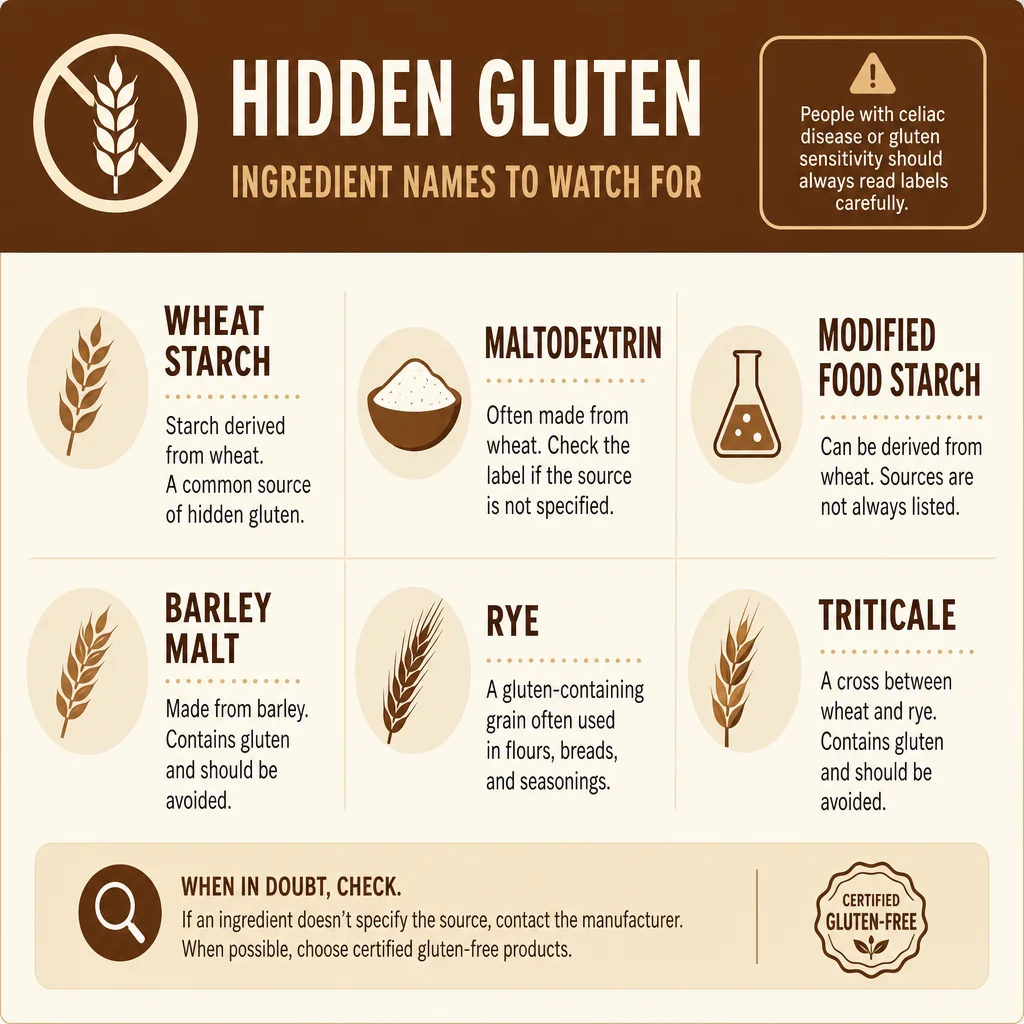
Gluten is found in wheat, barley, rye, and their derivatives. It can also be hidden in many processed foods under names that are not obvious.
Grains and grain products containing gluten:
- Wheat, including all varieties: spelt, kamut, farro, durum, bulgur, semolina, couscous, einkorn, emmer, freekeh
- Barley and barley malt, malt extract, malt flavoring, malt vinegar, malt syrup
- Rye, triticale, and hybrids
- Brewer's yeast (often grown on malted barley)
- Wheat starch, modified wheat starch, wheat bran, wheat germ, wheatgrass
Hidden gluten ingredients:
- Maltodextrin (usually corn-based in the US, but can be wheat-derived in other countries)
- Dextrin and dextrinization products
- Modified food starch (may be wheat-derived unless specified otherwise)
- Hydrolyzed wheat protein, hydrolyzed vegetable protein (if wheat-based)
- Wheat germ, wheatgrass, and wheat-derived oils
- Semolina, durum flour, graham flour, atta flour
- Seitan, which is pure wheat gluten
- Soy sauce, teriyaki sauce, hoisin sauce, oyster sauce, and many Asian sauces (unless explicitly labeled gluten-free)
- Imitation meat and seafood products
- Soups, sauces, and gravies thickened with wheat flour
- Salad dressings, marinades, and seasoning blends
- Communion wafers and some religious foods
- Some medications and supplements that use gluten as a binding agent
Foods where gluten is commonly hidden:
Processed meats can contain wheat fillers or binders. Hot dogs, sausages, deli meats, and meatloaf may include gluten-containing ingredients.
Soups and sauces are frequently thickened with wheat flour or contain soy sauce. Even cream-based soups may use a roux made from butter and wheat flour.
Seasoning blends and spice mixes sometimes contain wheat flour as an anti-caking agent or maltodextrin as a carrier.
Confectionery and candy can use wheat starch or barley malt. Licorice, some chocolates, and candy coatings are common culprits.
Imitation seafood like surimi, used in crab sticks, often contains wheat starch as a binder.
Beverages including beer, malt beverages, and some flavored coffees and teas may contain barley malt or wheat-derived flavorings.
According to Schär, there are many hidden sources of gluten in everyday foods, and learning to read labels carefully is the most important skill for managing the condition.
Gluten-Free Labeling: FDA Rules, the 20 PPM Threshold, and Third-Party Certification
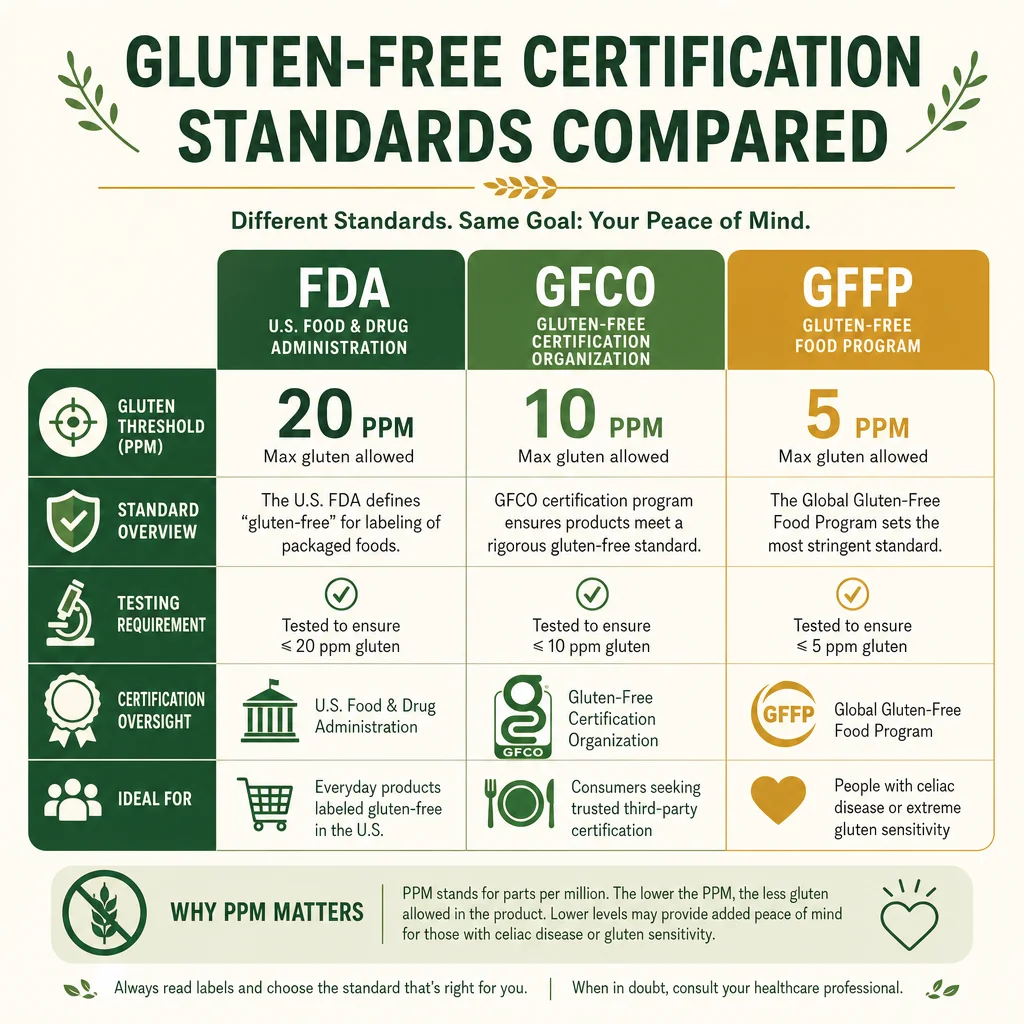
In the United States, the FDA regulates gluten-free labeling under the Food Allergen Labeling and Consumer Protection Act. A product labeled "gluten-free" must contain less than 20 parts per million of gluten. This threshold was chosen because it was the lowest level reliably detectable by validated testing methods at the time of rulemaking, and because clinical studies suggest that most people with celiac disease can tolerate this amount without intestinal damage.
However, the 20 ppm threshold is not zero. For some individuals with extreme sensitivity, even trace amounts below this threshold can trigger symptoms. This is why third-party certification programs exist:
- GFCO (Gluten-Free Certification Organization): requires products to test below 10 ppm
- GFFP (Gluten-Free Food Program): certifies products to below 5 ppm
- CSA (Celiac Support Association): requires below 5 ppm
- National Celiac Association: endorses the GFFP standard
According to Gluten-Free Food Program, these stricter standards exist because the 20 ppm threshold was originally an analytical threshold based on testing capabilities, not a clinical threshold based on the most sensitive patients. The FDA does not pre-approve gluten-free labels. Oversight occurs through inspections, complaints, and post-market enforcement. Only third-party certification provides independent verification before a product reaches the market.
The FALCPA Loophole and Wheat Starch
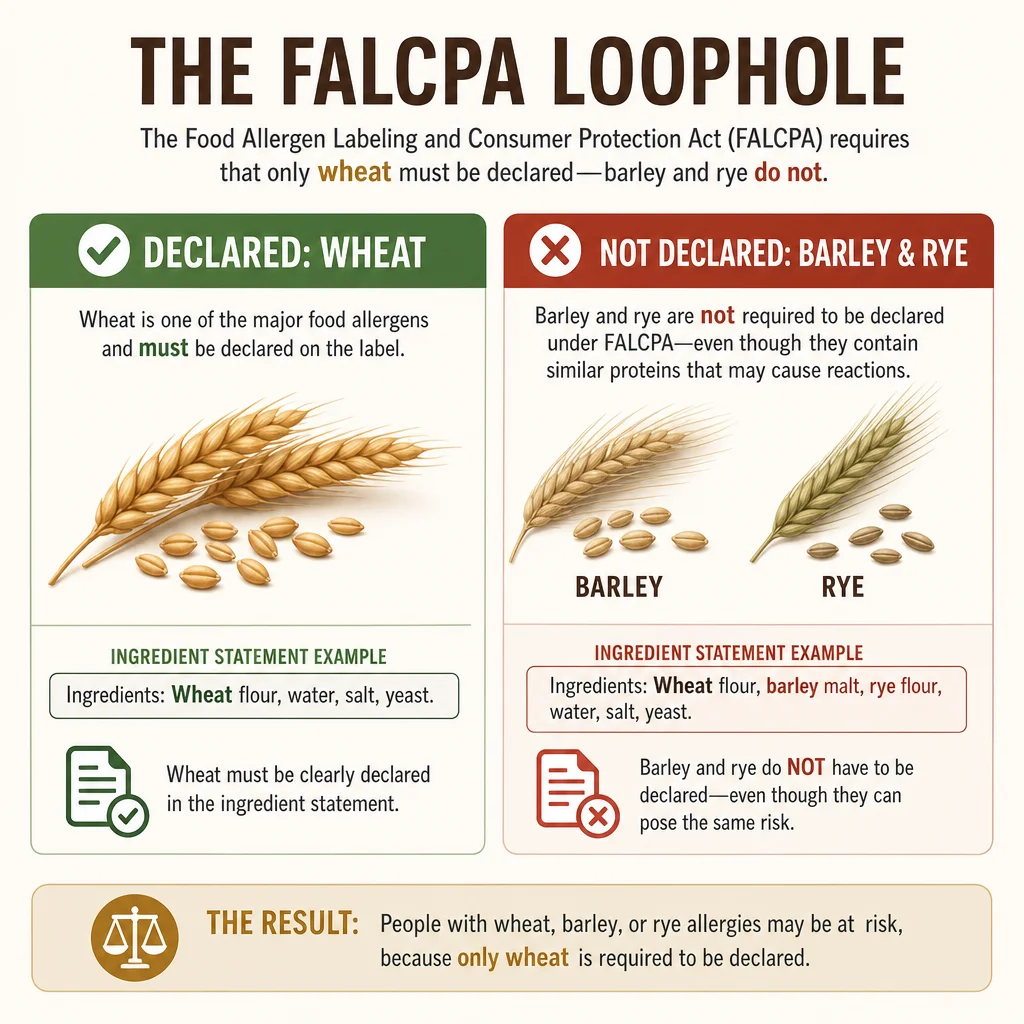
The Food Allergen Labeling and Consumer Protection Act requires that wheat be declared clearly in allergen labeling. However, there is a significant loophole that affects people with gluten intolerance. The act only mandates disclosure of wheat, not barley or rye. Barley malt and rye can appear in ingredient lists without any allergen warning, making them easy to miss.
Wheat starch is another gray area. When highly processed, most gluten is removed. In the EU, specially produced wheat starch with gluten levels below 20 ppm is allowed in gluten-free products. In the US, the FDA permits wheat starch in gluten-free products if the final product contains less than 20 ppm of gluten. However, some people with gluten intolerance react to wheat starch even at low levels, and the term "wheat starch" on a label can be confusing because it contains the word "wheat."
Maltodextrin is a common food additive that is usually derived from corn in the United States, but can be wheat-derived in other countries. In the US, maltodextrin is considered gluten-free regardless of source because processing removes the gluten protein. However, in the EU and Australia, wheat-derived maltodextrin must be labeled as such, creating a difference that travelers should be aware of.
Oats and Cross-Contact Risk
Oats are naturally gluten-free, but they are frequently contaminated with wheat, barley, or rye during growing, harvesting, and processing. For people with gluten intolerance, uncontaminated oats are generally safe, but cross-contact is a real risk. Look for oats labeled as "certified gluten-free" to ensure they have been processed in a dedicated facility. Some individuals with gluten sensitivity also react to avenin, the protein in oats, though this is less common.
A Practical Label-Reading Strategy
This section is designed to be a standalone, actionable checklist for reading food labels when you have gluten intolerance. Follow these steps every time you shop, and use this list as a reference when scanning ingredients with an ingredient checker or app.
Step 1: Check for the wheat allergen warning
In the United States, look for "Contains: Wheat" in the allergen statement. If this is present, the product contains wheat and is not safe. In the EU, wheat, barley, and rye must all be highlighted in the ingredient list.
Step 2: Scan the ingredient list for gluten-containing grains
Look for any of the following ingredients, which indicate gluten is present:
- Wheat, spelt, kamut, farro, durum, bulgur, semolina, couscous, einkorn, emmer, freekeh
- Barley, barley malt, malt extract, malt flavoring, malt vinegar, malt syrup
- Rye, triticale
- Wheat starch, modified wheat starch, wheat bran, wheat germ, wheatgrass
- Brewer's yeast (unless labeled gluten-free)
- Seitan, vital wheat gluten
Step 3: Check for hidden gluten additives
The following ingredients may contain gluten or be derived from gluten-containing grains:
- Maltodextrin (if wheat-derived, especially in EU or Australian products)
- Dextrin
- Modified food starch (unless specified as corn-based)
- Hydrolyzed wheat protein, hydrolyzed vegetable protein
- Soy sauce, teriyaki sauce, hoisin sauce, oyster sauce (unless labeled gluten-free)
- Seasoning blends, soup bases, and gravy mixes
- Imitation meat and seafood
- Communion wafers
Step 4: Verify gluten-free claims
A product labeled "gluten-free" in the US should contain less than 20 ppm. For stricter standards, look for third-party certification marks such as:
- GFCO (Gluten-Free Certification Organization): below 10 ppm
- GFFP (Gluten-Free Food Program): below 5 ppm
- CSA (Celiac Support Association): below 5 ppm
Be cautious of vague phrases like "naturally gluten-free" or "made with gluten-free ingredients" without a certification or clear testing disclosure. "Made with gluten-free ingredients" does not guarantee the final product is free from cross-contact.
Step 5: Check for cross-contact warnings
Look for statements like "May contain wheat," "Produced in a facility that processes wheat," or "Made on shared equipment with wheat products." These are voluntary and indicate possible cross-contact. For gluten intolerance, the risk is lower than for celiac disease, but highly sensitive individuals should avoid these products.
Step 6: Understand wheat starch and maltodextrin
Wheat starch in gluten-free products has been processed to remove gluten and must meet the 20 ppm standard. If you are extremely sensitive, avoid products containing wheat starch. Maltodextrin in the US is generally corn-derived and considered gluten-free, but in other countries it may be wheat-derived. If you are traveling or buying imported products, verify the source.
Step 7: Build a safe shopping list
Focus on the following naturally gluten-free categories:
- Plain rice, quinoa, buckwheat, millet, amaranth, teff, sorghum, corn, polenta
- Fresh vegetables and fruits
- Plain meat, poultry, and fish (without marinades or coatings)
- Eggs and most dairy products
- Plain nuts, seeds, and legumes
- Oils, vinegar (except malt vinegar), and most condiments made with simple ingredients
Using IngrediCheck, you can scan any product label and instantly identify gluten-containing grains, hidden gluten additives, wheat starch, maltodextrin, and cross-contact risks. This takes the guesswork out of grocery shopping and helps you avoid the ingredients that trigger your symptoms.
For more information on wheat-derived ingredients, see our Wheat Allergy Dietary Guide.
Related Guides
- Celiac Label-Reading Checklist: Hidden Sources You Can't Miss
- Wheat Allergy Dietary Guide: Gluten, Wheat Starch, and the FALCPA Loophole
- FODMAP Intolerance Dietary Guide: Oligosaccharides, Polyols, and the Monash Method
- Beyond Bread: Hidden Gluten in Unexpected Foods
- Lactose Intolerance Dietary Guide: Hidden Dairy Names, Lactose-Free Labels, and the EU-US Divide
- Fructose Intolerance Dietary Guide: HFCS, Hidden Fructose, and Fruit That Fools Your Gut
On this page
Sources
Source lists are maintained with our editorial policy.
- The Lancet - Non-Coeliac Gluten Sensitivity
- PMC - Non-Celiac Gluten Sensitivity: A Review
- PMC - Recent Advances in Understanding Non-Celiac Gluten Sensitivity
- MDPI - Non-Coeliac Wheat Sensitivity
- Harvard Health - Non-Celiac Gluten Sensitivity
- Gluten-Free Food Program - Gluten-Free Labels Explained
- Nutritional Outlook - Gluten Threshold Testing
- BIDMC - Third Party Certification of Gluten-Free Foods
- Gluten-Free Food Program - Why Certify to 5ppm
- Schär - Gluten Free Guide to Reading Food Labels
Next Label Check
Follow the scanner, hub, and ingredient paths connected to this guide
Scanner workflows
Gluten-free scannerScanner workflow
Gluten-Free Barcode Scanner
Scan barcodes and labels for gluten clues, hidden wheat, barley, rye, malt, and celiac-relevant ingredient risks with IngrediCheck's gluten-free workflow.
Low FODMAP scannerScanner workflow
Low FODMAP Ingredient Checker
Scan labels for low FODMAP grocery clues, IBS trigger ingredients, sweeteners, fibers, and related digestive-health guides.
Topic hubs
Topic hub
Gluten-Free Label Reading
Find IngrediCheck's gluten-free topic hub covering hidden gluten, celiac-safe label reading, and ingredient-level guidance.
Topic hub
Ingredient Safety
Explore IngrediCheck's ingredient safety hub for additives, contaminants, preservatives, and evidence-based label guidance.
Topic hub
Low FODMAP Label Reading
Use IngrediCheck's low FODMAP hub to spot ingredient triggers, interpret labels faster, and shop with more confidence for IBS.
Related articles
Dietary GuidesArticle
Celiac Disease Dietary Guide: The 20 PPM Rule, FALCPA Gaps, and Hidden Gluten Sources
An encyclopedic guide to celiac disease dietary management covering the HLA-DQ2/DQ8 autoimmune mechanism, FDA's 20 ppm gluten-free threshold and its analytical basis, the barley/rye FALCPA labeling gap, hidden gluten in oats and medications, EU 'very low gluten' category, GFCO's stricter 10 ppm seal, cross-contamination risks, and refractory celiac disease.
Dietary GuidesArticle
Fructose Intolerance Dietary Guide: HFCS, Hidden Fructose, and Fruit That Fools Your Gut
An encyclopedic guide to fructose intolerance and malabsorption covering molecular biology, genetic forms, GLUT5 transporter, detailed food content tables, regulatory context, and practical label-reading strategies.
Dietary GuidesArticle
Histamine Intolerance Dietary Guide: DAO Deficiency, Fermented Foods, and the Migraine Connection
An encyclopedic guide to histamine intolerance covering DAO and HNMT enzyme biochemistry, AOC1 gene polymorphisms, histamine content tables, mast cell activation, diagnostic criteria, and practical label-reading strategies.
Get the app for clearer label decisions.
Scan labels, see what fits your food notes, and read the why in plain English.