Histamine intolerance is one of the most complex and poorly understood food-related conditions. It is not a true allergy, yet it produces allergic-like symptoms. It is not a classic enzyme deficiency, yet it behaves like one. The condition arises from an imbalance between the histamine consumed in food and the body's capacity to degrade it, primarily through the enzyme diamine oxidase (DAO). This guide provides an encyclopedic reference to the biochemistry, genetics, epidemiology, clinical features, diagnosis, and management of histamine intolerance.
Dietary Guides
Histamine Intolerance Dietary Guide: DAO Deficiency, Fermented Foods, and the Migraine Connection
An encyclopedic guide to histamine intolerance covering DAO and HNMT enzyme biochemistry, AOC1 gene polymorphisms, histamine content tables, mast cell activation, diagnostic criteria, and practical label-reading strategies.
Jun 9, 2026|12 min read
Start from the cluster
Try it yourself
Does this conflict with Histamine?
The Biochemistry of Histamine
Histamine is a biogenic amine, a small molecule with powerful physiological effects. It is synthesized from the amino acid histidine by the enzyme histidine decarboxylase and is stored in mast cells, basophils, and enterochromaffin-like cells throughout the body. Histamine plays essential roles in immune responses, gastric acid secretion, neurotransmission, and regulation of the sleep-wake cycle.
The body contains four types of histamine receptors (H1, H2, H3, and H4), each with distinct tissue distributions and functions. H1 receptors mediate allergic responses, vascular permeability, and smooth muscle contraction. H2 receptors stimulate gastric acid secretion. H3 receptors regulate neurotransmitter release in the central nervous system. H4 receptors are involved in immune cell chemotaxis.
When histamine is released or ingested, it must be rapidly degraded to prevent excessive stimulation of these receptors. The body employs two primary enzymes for this purpose.
The Two Enzymes That Degrade Histamine
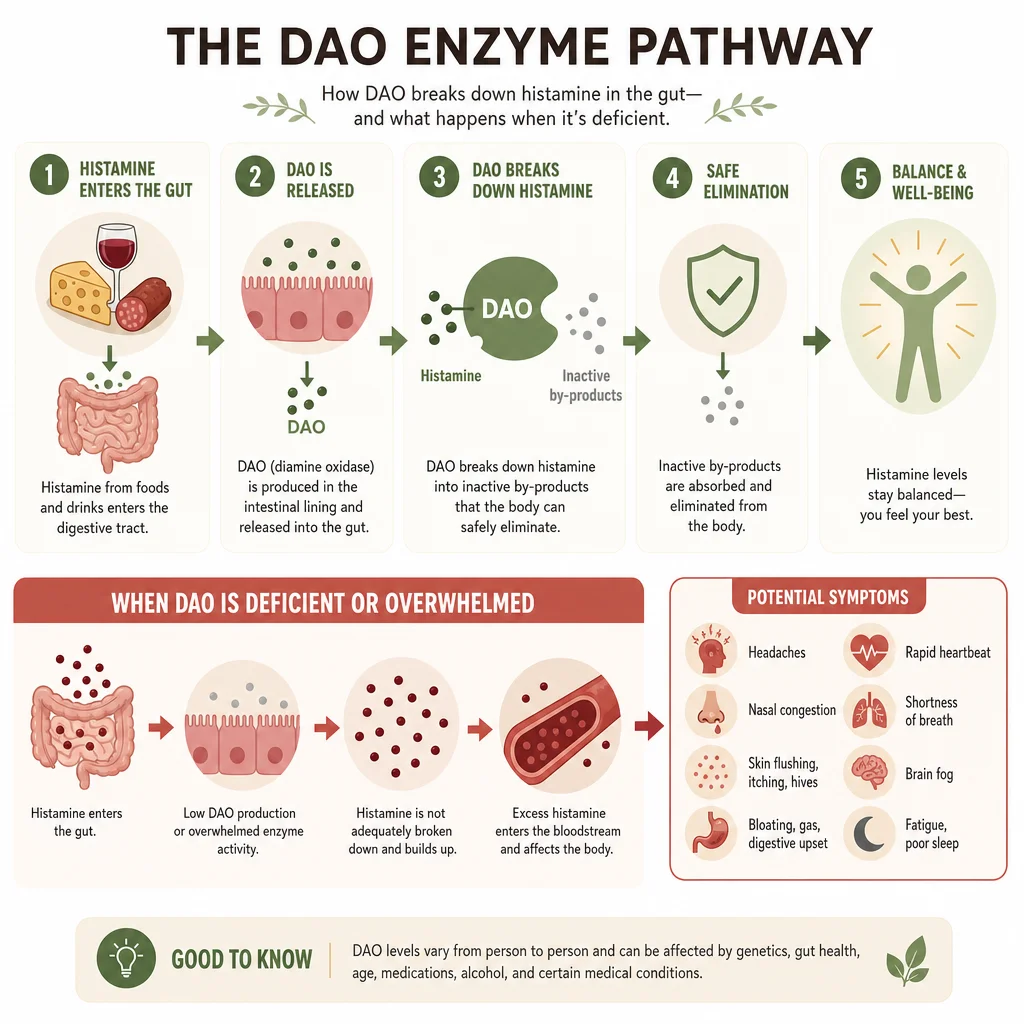
Diamine oxidase (DAO), also known as amine oxidase copper-containing 1 (AOC1), is the main enzyme responsible for breaking down extracellular histamine, particularly histamine ingested with food. DAO is synthesized by mature enterocytes in the upper intestinal villi and is secreted into the intestinal lumen and bloodstream. It catalyzes the oxidative deamination of histamine to imidazole acetaldehyde, which is then converted to imidazole acetic acid and excreted.
Histamine N-methyltransferase (HNMT) is the second enzyme, responsible for intracellular histamine degradation. HNMT methylates histamine to N-methylhistamine using S-adenosylmethionine as a methyl donor. This occurs primarily in the central nervous system, liver, and kidneys. HNMT handles histamine produced by the body's own cells, while DAO handles histamine from dietary sources.
Histamine intolerance occurs when the activity of one or both enzymes is insufficient relative to the histamine load. DAO deficiency is the most common and best-studied mechanism.
The Genetics of DAO Deficiency
The AOC1 gene, located on chromosome 7q34-q36, encodes the DAO enzyme. Multiple single-nucleotide polymorphisms (SNPs) in this gene have been associated with reduced DAO activity and increased susceptibility to histamine intolerance.
The most relevant SNPs in Caucasian populations are:
- rs10156191 (c.47C>T): The T allele is associated with reduced DAO expression and activity
- rs1049742 (c.995C>T): Associated with decreased DAO enzyme activity
- rs10449793 (c.1990C>G): Associated with reduced DAO activity
- rs2052129 (c.691G>T): Located in the promoter region, associated with decreased transcriptional activity
A study published in PMC examining healthy newborns found that 66% of the population carried at least one variant associated with reduced DAO activity. This suggests that genetic predisposition to DAO deficiency is extremely common, though not everyone with these variants develops clinical symptoms.
According to Gene Food, the T allele of rs10156191 is associated with reduced DAO expression rather than changes in catalytic activity. This means that individuals carrying this variant produce less DAO enzyme, leaving them with lower capacity to degrade dietary histamine.
The HNMT gene also contains functionally relevant variants. The Thr105Ile polymorphism (rs11558538) results in a 30-50% reduction in HNMT enzyme activity. This variant is more common in people with aspirin intolerance and may compound the effects of DAO deficiency.
Prevalence and Epidemiology
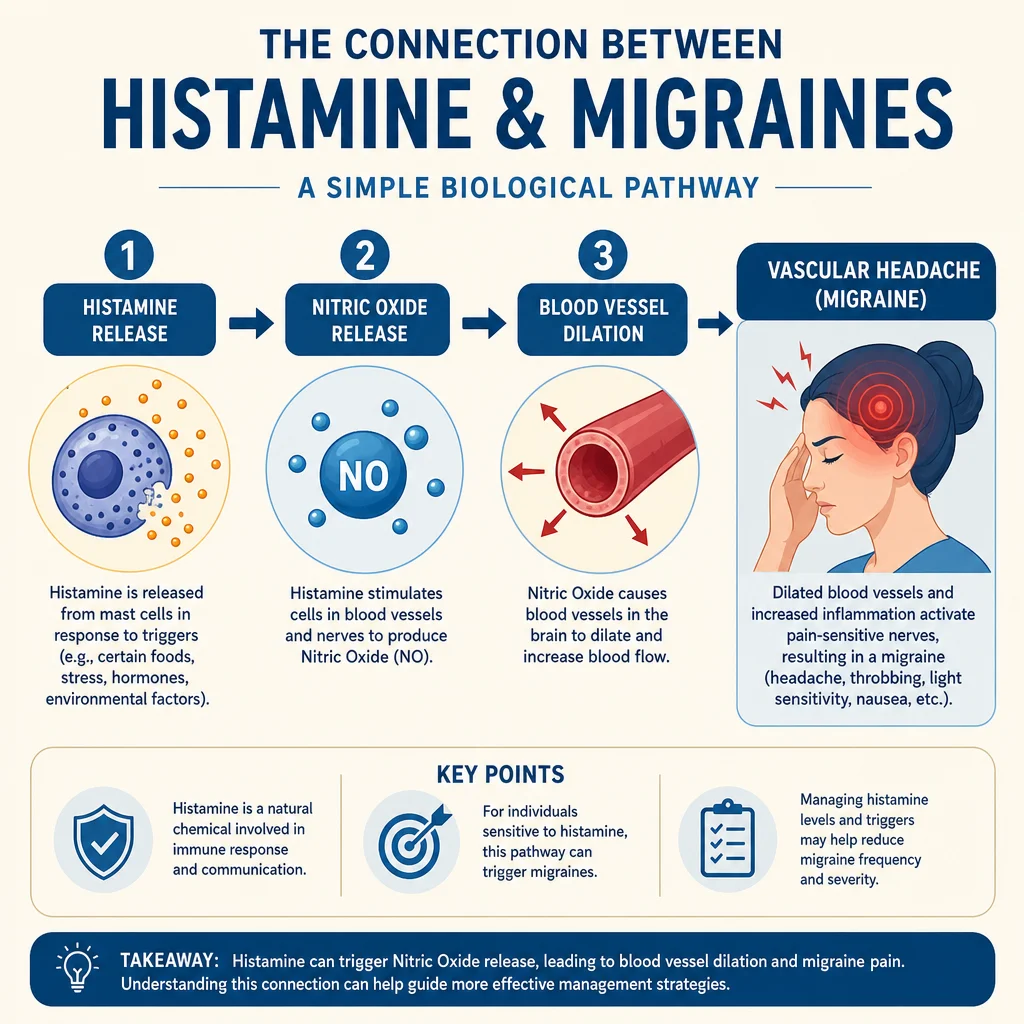
Histamine intolerance is estimated to affect 1-3% of the population, though some sources suggest it may be as high as 3-6%. The condition is significantly more common in women, with some studies reporting that up to 80% of affected patients are female. This female predominance may be related to hormonal influences on DAO activity, as estrogen can inhibit DAO function.
A comprehensive review in PMC analyzed symptoms in 133 patients diagnosed with histamine intolerance. The most frequent manifestations were gastrointestinal: abdominal distension in 92% of patients, postprandial fullness, diarrhea, abdominal pain, and constipation in 55-73%. Nervous and cardiovascular symptoms such as dizziness, headaches, and palpitations were the second most common category. Dermatological and respiratory symptoms followed. Remarkably, 97% of patients had combinations of three or more symptoms involving different organs, with an average of 11 symptoms per patient.
High-Histamine Foods and Histamine Liberators
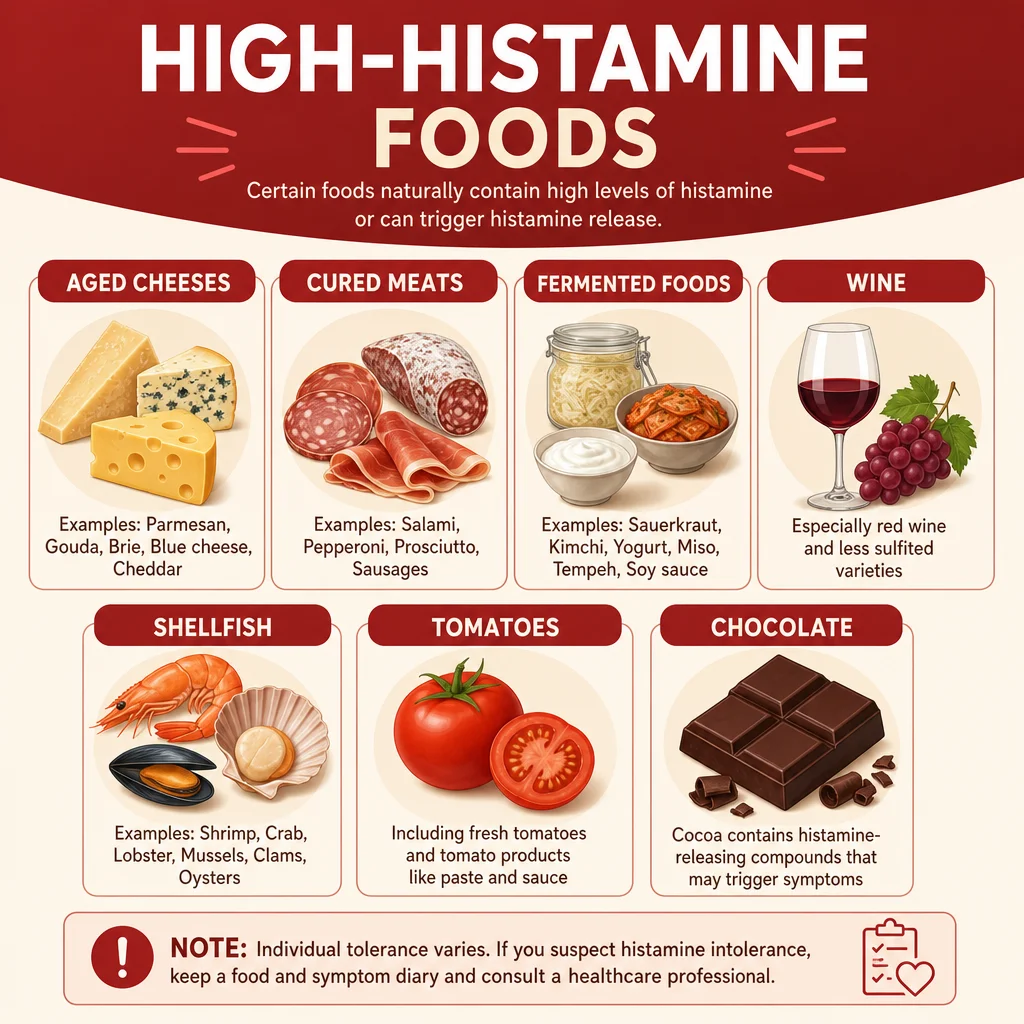
The histamine content of food increases with aging, fermentation, and bacterial activity. Histamine is produced by the decarboxylation of histidine by bacteria such as Morganella morganii, Klebsiella pneumoniae, and various lactic acid bacteria. This means that freshness is the most important determinant of histamine levels.
High-histamine foods:
| Food Category | Examples | Approximate Histamine Content |
|---|---|---|
| Aged cheeses | Parmesan, cheddar, gouda, blue cheese, camembert, emmental | 50-2000 mg/kg |
| Cured meats | Salami, pepperoni, ham, bacon, sausage, deli meats | 50-1000 mg/kg |
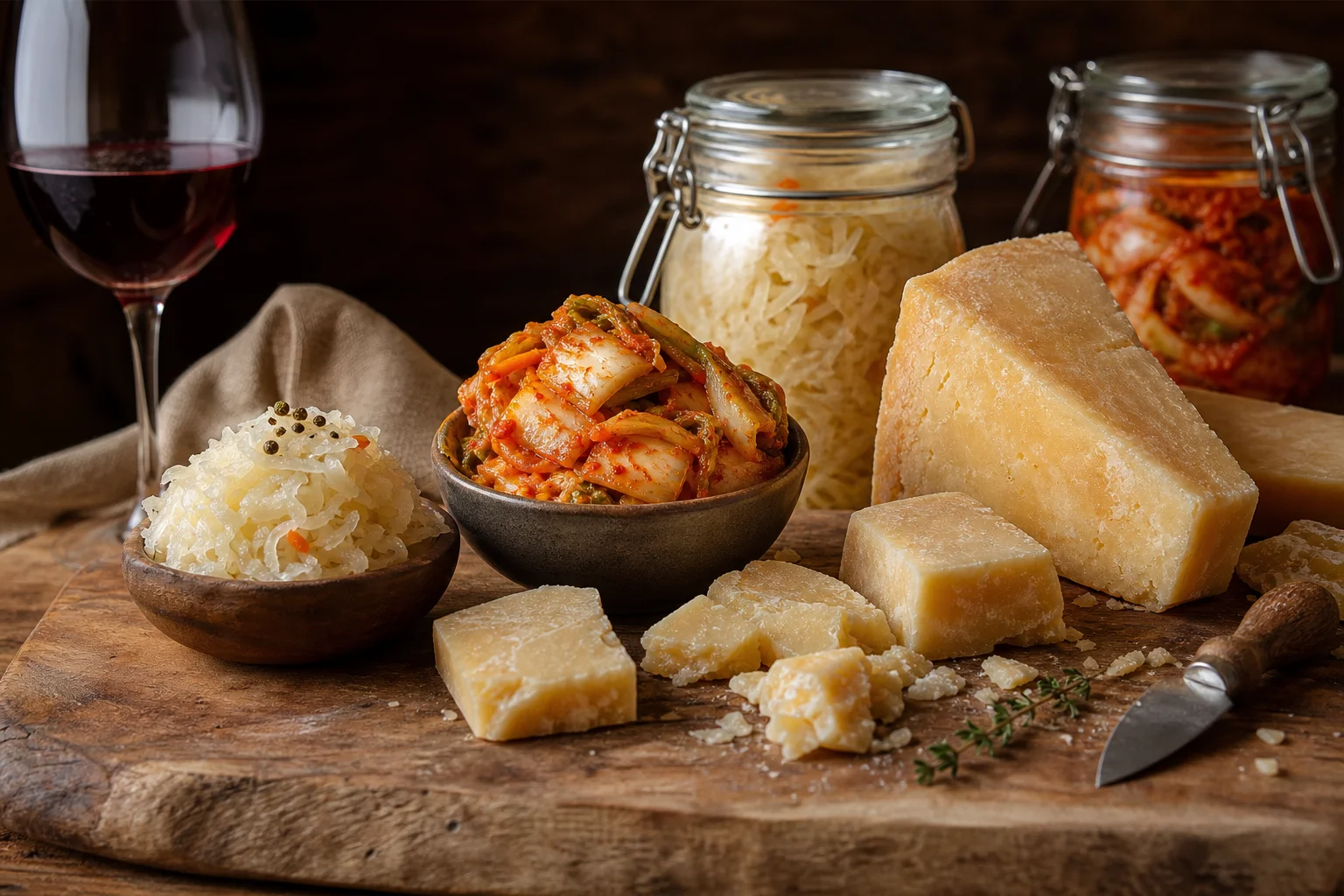
| Fermented foods | Sauerkraut, kimchi, miso, tempeh, soy sauce | 10-500 mg/kg |
| Fish (canned/smoked) | Tuna, sardines, mackerel, herring, smoked salmon | 50-3000 mg/kg |
| Alcoholic beverages | Red wine, white wine, beer, champagne | 0.5-10 mg/L |
| Vegetables | Tomatoes, spinach, eggplant, avocado | 5-50 mg/kg |
| Fruits | Strawberries, citrus, bananas, grapes, pineapple | 5-30 mg/kg |
| Nuts and seeds | Peanuts, walnuts, cashews, sesame | 5-50 mg/kg |
| Chocolate and cocoa | Dark chocolate, cocoa powder | 5-30 mg/kg |
Freshly caught fish contains almost no histamine, but histamine accumulates rapidly if the fish is not properly chilled. This is why scombroid poisoning (histamine fish poisoning) occurs from improperly stored tuna, mackerel, and mahi-mahi.
Histamine liberators (foods that trigger histamine release from mast cells):
- Shellfish, crustaceans, and some fish
- Tomatoes, spinach, eggplant, pumpkin
- Citrus fruits, strawberries, pineapple
- Chocolate and cocoa
- Nuts, especially peanuts and walnuts
- Alcohol, especially wine and beer
- Food additives including benzoates, sulfites, and artificial colors
Foods generally low in histamine:
- Freshly cooked meat, poultry, and fish (not leftovers)
- Eggs
- Fresh vegetables except those listed above
- Most fresh fruits except citrus, strawberries, and pineapple
- Grains: rice, oats, quinoa, corn, millet
- Dairy alternatives: coconut milk, oat milk, almond milk
- Oils and fats: olive oil, coconut oil, fresh butter
- Herbal teas and water
The Benenden Health guide notes that boiling meat instead of grilling or frying can decrease histamine levels, while lamb and chicken are naturally lower in histamine than beef or pork.
Diagnosis and Testing
Diagnosing histamine intolerance is challenging because there are no universally accepted biomarkers and symptoms overlap with many other conditions.
Blood tests for DAO activity:
Serum DAO levels can be measured by enzyme-linked immunosorbent assay (ELISA). A DAO level below 10 U/mL has been proposed as a diagnostic threshold, though this is not definitive. According to News Medical, serum DAO has poor reproducibility, fluctuates daily, and is not validated as a standalone diagnostic test. It is most useful when combined with clinical history and dietary response.
Elimination diet:
The elimination diet remains the gold standard. The patient avoids high-histamine foods for 4-8 weeks, then reintroduces them systematically. Improvement of at least two typical symptoms suggests the diagnosis. A food and symptom diary is essential during this process.
Genetic testing:
Testing for AOC1 and HNMT variants can provide supportive evidence of reduced histamine degradation capacity, but it is not diagnostic on its own because many carriers are asymptomatic.
Provocation tests:
Histamine provocation under medical supervision can confirm sensitivity, but these tests carry risks of severe reactions and should only be performed by experienced clinicians.
Differential diagnosis:
Before diagnosing histamine intolerance, other conditions must be excluded. These include true IgE-mediated food allergies, mast cell activation syndrome (MCAS), celiac disease, inflammatory bowel disease, and other gastrointestinal disorders. According to NMI Portal, these conditions must be carefully investigated before a diagnosis of histamine intolerance can be made.
The Role of the Gut Microbiome
Emerging research suggests that gut bacteria play a significant role in histamine intolerance. Certain bacteria, including Enterococcus faecalis, Lactobacillus gasseri, Morganella morganii, and Proteus mirabilis, can produce histamine in the gut. When these bacteria are overrepresented, they may add to the histamine load from food, overwhelming an already compromised DAO system.
Conversely, some probiotic strains may help by degrading histamine or outcompeting histamine-producing bacteria. However, not all probiotics are beneficial. Some strains, particularly those used in fermented foods, are themselves histamine producers. Working with a healthcare provider to select appropriate strains is important.
Medications and Lifestyle Factors That Worsen DAO Activity
Several medications can reduce DAO activity or increase histamine release, making symptoms worse even if dietary histamine is controlled. These include:
- Non-steroidal anti-inflammatory drugs (NSAIDs)
- Some antidepressants (amitriptyline, clomipramine)
- H2 receptor antagonists (cimetidine, ranitidine)
- Certain antibiotics
- Metoclopramide
- Verapamil
Alcohol not only contains histamine but also inhibits DAO activity, making it a double trigger. Hormonal fluctuations, particularly around menstruation, can affect histamine tolerance. Some women report worse symptoms during the luteal phase of their cycle, when estrogen levels are higher and DAO activity may be lower. Stress, sleep deprivation, and illness can further reduce tolerance by increasing gut permeability and altering immune responses.
A Practical Label-Reading Strategy
This section is designed to be a standalone, actionable checklist for reading food labels when you have histamine intolerance. Follow these steps every time you shop, and use this list as a reference when scanning ingredients with an ingredient checker or app.
Step 1: Check for fermented and aged ingredients
The following ingredients indicate high histamine content or histamine-producing processes:
- Aged, cured, or fermented products: aged cheese, cured meats, fermented soy (miso, tempeh, soy sauce), sauerkraut, kimchi, vinegar
- Fish and seafood: canned fish, smoked fish, dried fish, fish sauce, shrimp paste, shellfish
- Wine, beer, champagne, cider, and other alcoholic beverages
- Chocolate, cocoa, and cacao products
- Vinegar and vinegar-derived ingredients: balsamic vinegar, wine vinegar, malt vinegar, vinegar powder, citric acid (sometimes derived from fermented sources)
- Yeast extract, autolyzed yeast, hydrolyzed yeast
- Fermented additives and flavorings
Step 2: Identify histamine liberators and additives
The following ingredients can trigger histamine release from mast cells or worsen symptoms:
- Benzoates: sodium benzoate, potassium benzoate, calcium benzoate
- Sulfites and sulfur dioxide
- Artificial food colors and dyes
- MSG (monosodium glutamate) and glutamates
- Nitrates and nitrites in cured meats
- Shellfish and crustaceans (even fresh)
- Citrus-derived ingredients, strawberry, pineapple, and tomato extracts
Step 3: Assess freshness and storage
Histamine increases over time, even in refrigerated foods. Check sell-by dates and choose the freshest options. Avoid leftovers that are more than 24 hours old, especially meat and fish. Frozen foods are generally safer than refrigerated foods because freezing halts histamine production.
Step 4: Be cautious with "probiotic" and "fermented" marketing
Products marketed as probiotic, fermented, or gut-healthy often contain live bacteria that may produce histamine. Kefir, kombucha, probiotic yogurt, and fermented supplements are common triggers. Not all probiotics are histamine-producing, but without knowing the specific strains, it is safer to avoid these products unless cleared by a healthcare provider.
Step 5: Build a safe shopping list
Focus on the following low-histamine categories when filling your cart:
- Freshly cooked or frozen meat, poultry, and fish
- Eggs prepared simply
- Fresh vegetables (except tomatoes, spinach, eggplant, and avocado)
- Fresh fruits (except citrus, strawberries, pineapple, papaya, and grapes)
- Plain grains: rice, oats, quinoa, millet, buckwheat
- Fresh dairy alternatives without added flavors or fermented cultures
- Olive oil, coconut oil, and fresh butter
- Water and herbal teas such as peppermint or ginger
Step 6: Use a consistent tracking method
Because histamine tolerance varies by day and by overall health status, keep a simple food and symptom diary. Note what you ate, the time, any medications or supplements, stress levels, and the symptoms that followed. This pattern recognition is often more valuable than any single test.
Using IngrediCheck, you can scan any product label and instantly identify histamine-related ingredients, fermented additives, histamine liberators, and preservatives that may trigger your symptoms. This takes the guesswork out of grocery shopping and helps you build a diet that supports your digestive and neurological health.
For tools to help identify low-histamine foods, see our Low-Histamine Ingredient Checker.
Related Guides
- Low-Histamine Ingredient Checker
- FODMAP Intolerance Dietary Guide: Oligosaccharides, Polyols, and the Monash Method
- Lactose Intolerance Dietary Guide: Hidden Dairy Names, Lactose-Free Labels, and the EU-US Divide
- Sulphite Allergy Dietary Guide: The 10 PPM Rule, E-Numbers, and Common Sources
- Gluten Intolerance Dietary Guide: Wheat Starch, Maltodextrin, and the FALCPA Loophole
- Fructose Intolerance Dietary Guide: HFCS, Hidden Fructose, and Fruit That Fools Your Gut
On this page
Sources
Source lists are maintained with our editorial policy.
- MDPI - Evidence for Dietary Management of Histamine Intolerance
- PMC - Histamine Intolerance: The Current State of the Art
- PMC - AOC1 Gene Variants in Healthy Newborns
- Allergy UK - Histamine Intolerance
- AAAI - Histamine Intolerance: Fact or Fiction
- News Medical - Histamine Intolerance: A Real Condition or Misdiagnosed
- NMI Portal - Diagnosis of Histamine Intolerance
- Synlab - DAO Activity Test
- Benenden Health - Foods to Avoid with Histamine Intolerance
- Gene Food - AOC1 / DAO Gene
Next Label Check
Follow the scanner, hub, and ingredient paths connected to this guide
Scanner workflows
Low-histamine scannerScanner workflow
Low-Histamine Ingredient Checker App
Flag fermented, aged, cured, preserved, and personally avoided ingredient patterns with IngrediCheck's low-histamine scanner.
Low FODMAP scannerScanner workflow
Low FODMAP Ingredient Checker
Scan labels for low FODMAP grocery clues, IBS trigger ingredients, sweeteners, fibers, and related digestive-health guides.
Gluten-free scannerScanner workflow
Gluten-Free Barcode Scanner
Scan barcodes and labels for gluten clues, hidden wheat, barley, rye, malt, and celiac-relevant ingredient risks with IngrediCheck's gluten-free workflow.
Topic hubs
Topic hub
Ingredient Safety
Explore IngrediCheck's ingredient safety hub for additives, contaminants, preservatives, and evidence-based label guidance.
Topic hub
Gluten-Free Label Reading
Find IngrediCheck's gluten-free topic hub covering hidden gluten, celiac-safe label reading, and ingredient-level guidance.
Topic hub
Low FODMAP Label Reading
Use IngrediCheck's low FODMAP hub to spot ingredient triggers, interpret labels faster, and shop with more confidence for IBS.
Related articles
Dietary GuidesArticle
Fructose Intolerance Dietary Guide: HFCS, Hidden Fructose, and Fruit That Fools Your Gut
An encyclopedic guide to fructose intolerance and malabsorption covering molecular biology, genetic forms, GLUT5 transporter, detailed food content tables, regulatory context, and practical label-reading strategies.
Dietary GuidesArticle
Lactose Intolerance Dietary Guide: Hidden Dairy Names, Lactose-Free Labels, and the EU-US Divide
An encyclopedic guide to lactose intolerance covering genetics, molecular biology, global prevalence, diagnostic methods, hidden dairy ingredients, regulatory differences, and actionable label-reading strategies.
Dietary GuidesArticle
Nightshades Dietary Guide: Solanine, Hidden Spices, and the Truth About Inflammation
An encyclopedic guide to nightshade vegetables covering the full Solanaceae family, solanine and glycoalkaloid safety thresholds, the arthritis-inflammation claim examined against the evidence, and every hidden nightshade source in spices and processed foods.
Get the app for clearer label decisions.
Scan labels, see what fits your food notes, and read the why in plain English.