Dietary Guides

Sulphite Allergy Dietary Guide: The 10 PPM Rule, E-Numbers, and Common Sources

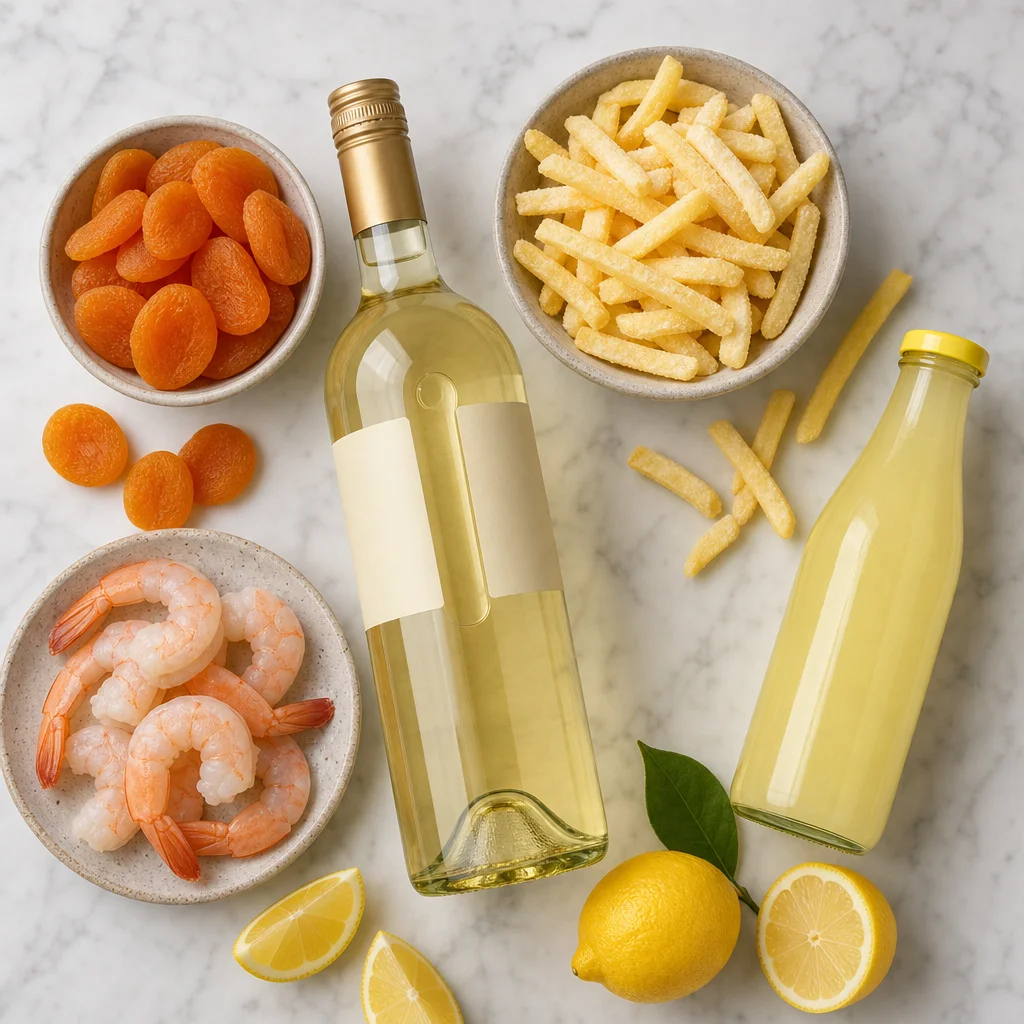
Sulphites are not a true allergy but a non-IgE sensitivity that causes bronchoconstriction in 3-10% of asthmatics. The FDA requires labeling at 10 ppm, but sulphites hide in dried fruit, wine, frozen potatoes, shrimp, and bottled lemon juice under names most shoppers never recognize.

Jun 8, 2026|11 min read
By Sanket Patel|Updated 2026-06-08|8 sources|Editorial standards
Sulphite Allergy Dietary Guide: The 10 PPM Rule, E-Numbers, and Common Sources

Sulphites occupy a distinct category in food safety: they provoke a non-IgE mediated intolerance reaction, not a true allergy. There is no allergic antibody involved. The immune system is not the target. This makes sulphites different from the major allergens covered by FALCPA — the Food Allergen Labeling and Consumer Protection Act does not cover them. Instead, they are regulated under a separate set of FDA rules that were written in response to a public health crisis in the 1980s, when sulphites applied to fresh produce at salad bars caused at least 13 deaths.

The distinction between sulphite sensitivity and a food allergy carries practical implications. Allergy testing — skin prick and IgE blood tests — does not detect sulphite sensitivity. The diagnosis is made by oral food challenge under controlled conditions, or by a clear pattern of symptoms associated with high-sulphite foods. There is no epinephrine auto-injector protocol for sulphite reactions, though severe bronchospasm may require emergency bronchodilator treatment. You cannot get a blood test for sulphite sensitivity. You learn it by living through it.

Who Is Affected

The strongest risk factor for sulphite sensitivity is asthma. Between 3% and 10% of people with asthma are sulphite-sensitive, with steroid-dependent asthmatics at the highest end of that range. Among the general non-asthmatic population, sulphite sensitivity is estimated at approximately 1%, though the difficulty of diagnosis makes precise prevalence figures elusive.

The mechanism behind sulphite sensitivity is not fully understood, but the dominant theory involves an enzyme deficiency. Sulphite oxidase, the enzyme that converts sulphite to sulphate for excretion, is present at reduced activity in some individuals. Ingested sulphites that cannot be cleared efficiently accumulate in the bloodstream, and when they reach the lungs, they release sulfur dioxide gas, which directly irritates the airways and triggers bronchoconstriction.

This explains the clinical profile: the most common sulphite reaction is not hives or swelling, but wheezing, chest tightness, and difficulty breathing. Gastrointestinal symptoms (abdominal pain, nausea, diarrhea) are also reported. Skin symptoms are less common. Anaphylactoid reactions — reactions that look like anaphylaxis but involve no IgE antibodies — have been documented in severe cases.

The FDA 10 PPM Labeling Rule

Sulphites are regulated under 21 CFR 101.100, not under FALCPA. The rule requires that any food containing sulphites at 10 parts per million (10 mg/kg) or higher must declare the presence of sulphites on the label. The declaration identifies the specific sulphiting agent used: "contains sulfites" is insufficient; the label must name the compound.

The 10 ppm threshold means that foods with sulphite concentrations below 10 ppm, or foods where sulphites are used as a processing aid and substantially removed, may legally contain sulphites without declaring them. This creates an exposure gap for highly sensitive individuals — a food can test at 8 ppm, be legally label-free, and still provoke a reaction in a person whose personal threshold is very low.

The 10 ppm threshold applies to the food as consumed, not as manufactured. If sulphites are used during processing and levels drop below 10 ppm in the finished product, the declaration requirement does not trigger.

The 1986 FDA Fresh Produce Ban

The current regulatory framework exists because of events that no food safety authority wanted to see repeated. In the early 1980s, sulphites were heavily applied to fresh fruits and vegetables at salad bars and grocery store produce sections to prevent browning and maintain visual freshness. The practice was unlabeled and invisible to consumers.

Between 1980 and 1986, the FDA documented 13 deaths and hundreds of severe adverse reactions attributed to sulphites on fresh produce. In 1986, the agency banned the use of sulphites on raw fruits and vegetables. This was the first time the FDA had banned a food additive based on acute reactions rather than chronic toxicity data.

The ban remains in effect. Fresh produce in the United States cannot legally be treated with sulphites. But the ban applies only to raw fruits and vegetables served or sold fresh to consumers. Processed, frozen, dried, and canned produce is not covered by the ban, and these are precisely the categories with the highest sulphite levels today. The most notorious sulphite exposure of the 1980s — the salad bar — is now legal only if sulphite-free. But the dried apricot in a trail mix and the frozen French fry in a restaurant basket are fully legal sources of sulphites, so long as the 10 ppm labeling threshold is observed.

Every Name for Sulphites on a Food Label

Every Name for Sulphites on a Food Label

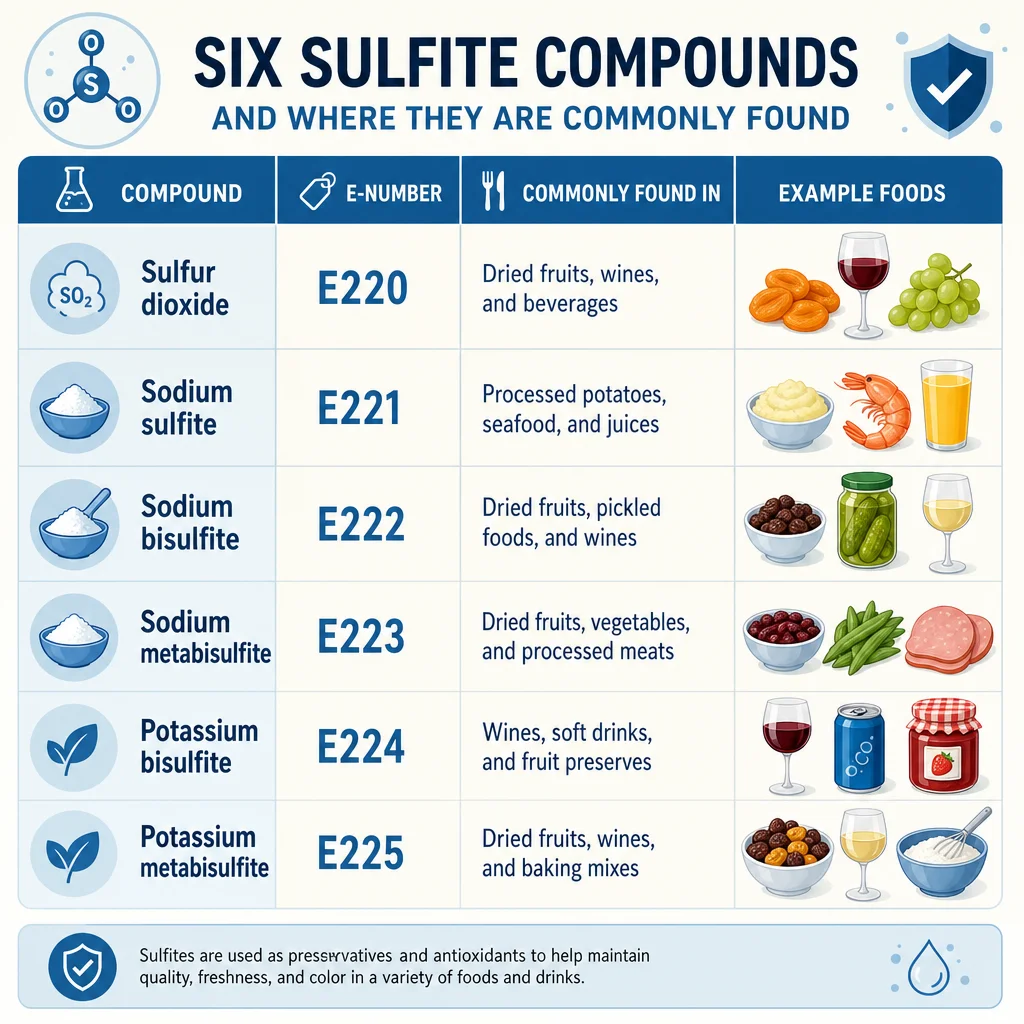
Unlike a food allergen, which appears on the label under its food source (e.g., "egg," "milk"), sulphites appear under the name of the specific chemical agent. There are six compounds. The label must name the one actually used.

US label names:

Label NameE-Number (EU)Notes
Sulfur dioxideE220A gas; used as a fumigant
Sodium sulfiteE221
Sodium bisulfiteE222
Sodium metabisulfiteE223The most commonly used form in food processing
Potassium bisulfiteE224
Potassium metabisulfiteE225
Calcium sulfiteE226
Calcium bisulfiteE227
Potassium bisulfite (alternate listing)E228Yes, E224 and E228 both refer to potassium bisulfite — same compound, two numbers, depends on regulatory context. Do not rely on E-number memorization alone; cross-check the ingredient text.

Label language to look for:

What the Label SaysMeaning
"Sulfiting agents" / "Sulphiting agents"Collective term; must be followed by the specific compound in the ingredient list
"Contains sulfites"The blanket declaration often found on wine labels
"Sulphur dioxide"The UK/Commonwealth spelling; same compound as sulfur dioxide (E220)
"Sulfites (as a preservative)"Declaration on imported products; specifies purpose
"Metabisulfite"The abbreviated form; insufficient without the cation (sodium/potassium) but the abbreviation itself is the flag

Ingredients that may contain sulphites without the word "sulfite" appearing:

IngredientSulphite Risk
Caramel color (E150b, E150d)Class II and IV caramel colors use sulphite compounds in production. Sulfur dioxide is tightly bound to the color molecule and is typically below the 10 ppm threshold in finished products. For most sulphite-sensitive individuals, caramel color does not provoke a reaction, but individuals with extreme sensitivity should be aware of the association.
Sulfated polysaccharides (carrageenan, agar)Not relevant. The "sulfated" in sulfated polysaccharides refers to sulfate groups bound to the sugar polymer — it is not the same as sulfite and is not a sulphite sensitivity concern.

Foods With the Highest Sulphite Concentrations

Foods With the Highest Sulphite Concentrations

Dried Fruit

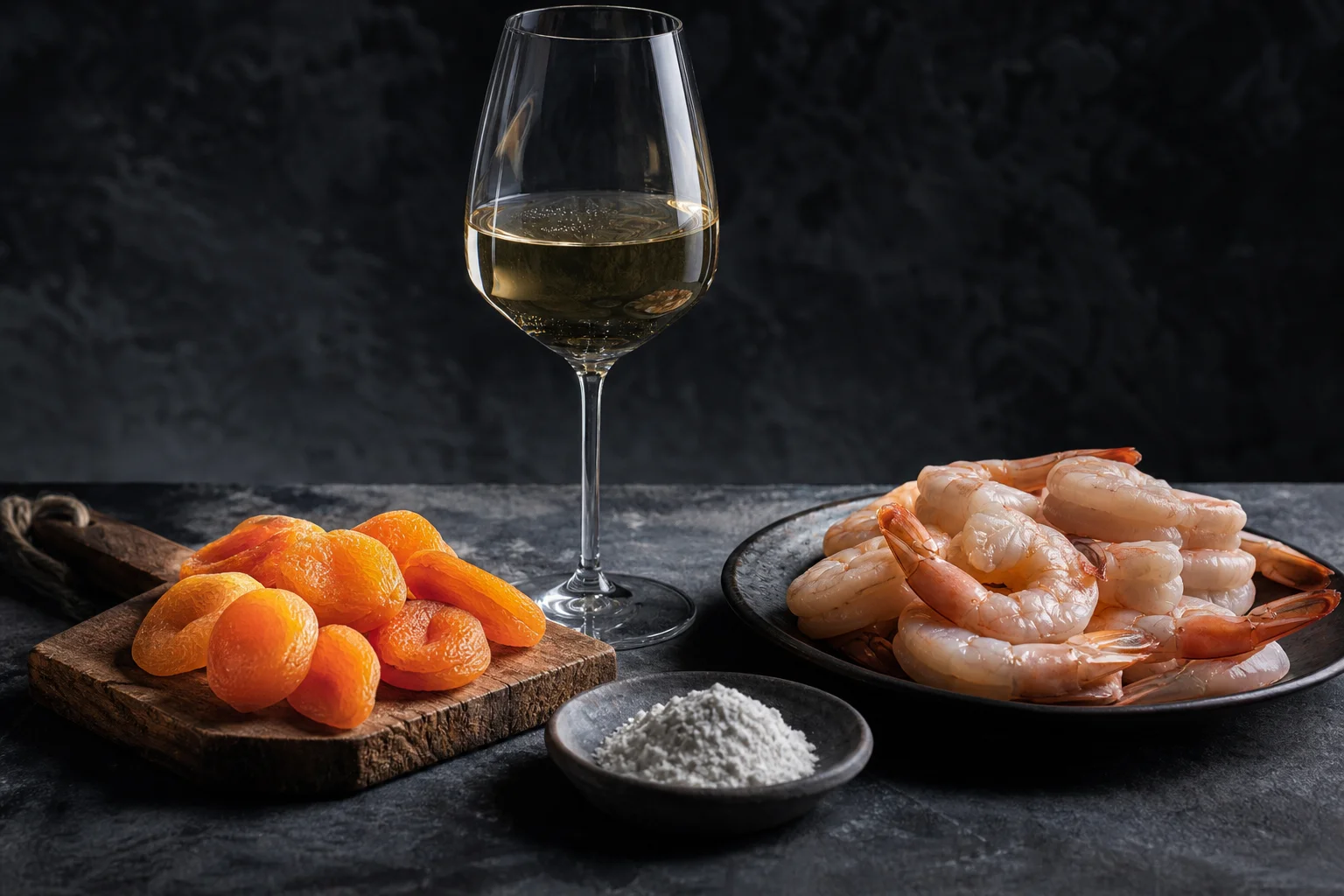
This is the highest-sulphite food category. Sulfur dioxide is used to preserve color and prevent browning in dried apricots, golden raisins, dried peaches, dried pears, dried apples, dried pineapple, and dried mango. The mechanism is straightforward: sulfur dioxide inhibits enzymatic browning by inactivating polyphenol oxidase, the enzyme that turns cut fruit brown. Without sulphites, dried apricots turn dark brown within hours of drying.

Light-colored dried fruits typically contain sulphites. Dark-colored dried fruits — raisins (dark Thompson seedless), prunes, figs, dates — generally do not, because browning is already part of their natural color profile.

Specific guidance: Dried apricots are consistently the highest-sulphite dried fruit (often exceeding 1,000 ppm). Golden raisins are sulfured; regular dark raisins are not. Sulfur-free dried fruit exists and is labeled "unsulfured" or "sulphite-free." Organic dried fruit may still contain sulphites per USDA organic regulations, which permit sulfur dioxide as a processing aid for dried fruit.

Wine, Beer, and Cider

Sulphites are a natural byproduct of fermentation — yeast produces small amounts of sulfur dioxide during alcoholic fermentation — so all wine contains some endogenous sulphite. The amounts that trigger concern are the added sulphites. Winemakers add potassium metabisulfite or sulfur dioxide at multiple stages — crush, fermentation arrest, barrel aging, and bottling — to prevent oxidation and microbial spoilage. The result is that commercial wine almost always exceeds the 10 ppm threshold.

White wines and sweet wines contain more sulphites than red wines. Red wine's tannins and anthocyanins provide natural antioxidant protection, reducing the need for added sulfur dioxide. Organic wines undergo the same fermentation biology but use lower or zero added sulphite at bottling. The USDA organic standard for wine permits sulfites at lower maximums than conventional wine, but organic wine is not sulfite-free.

Beer and cider are lower-sulphite beverages than wine but are not sulfite-free. Beer typically contains sulfites at concentrations below 50 ppm. Cider varies by producer; sweet ciders use sulfites to arrest fermentation and retain residual sugar.

Since the late 1980s, US wine labels have been required to carry "Contains Sulfites" when sulfur dioxide or sulfiting agents are present above 10 ppm. EU wine labels adopted the same requirement in 2005.

Frozen and Refrigerated Potatoes

Frozen French fries, frozen hash browns, frozen potato wedges, and refrigerated pre-cut potato products use sodium metabisulfite to prevent enzymatic browning. Fresh-cut potatoes oxidize within minutes of being peeled and sliced. The sulphite treatment keeps them visually appealing through freezing, distribution, and cooking. The finished sulphite level in commercially processed frozen potato products varies by manufacturer and process, but the category should be treated as high-sulphite by default.

Shrimp, Prawns, and Crustaceans

Sodium metabisulfite is applied to shrimp, prawns, and lobster to prevent melanosis — black spot formation on the shell and flesh after harvest. Melanosis is a harmless enzymatic reaction, but it makes the product unsellable, and the commercial response is near-universal sulphite treatment of fresh and frozen crustaceans.

Wild-caught shrimp are more heavily sulfured than farmed shrimp because they spend longer in transit from harvest to processing. The 10 ppm threshold means some treated shrimp may test below 10 ppm and carry no declaration. For sulphite-sensitive individuals, this makes shrimp a risk category where the label may not capture the full exposure.

Bottled Lemon and Lime Juice

This is one of the most commonly overlooked sulphite sources. Bottled lemon juice and lime juice — the kind sold in plastic squeeze bottles and small glass jars in the juice aisle or baking section — are almost universally sulfured to prevent browning and maintain flavor. Fresh-squeezed lemon and lime juice contain no sulphites. The bottled version is a different product entirely.

Pickled Foods, Sauerkraut, and Fermented Vegetables

Sulphites are sometimes used in the production of sauerkraut, pickled onions, pickled peppers, and other fermented vegetable products, both to control fermentation and to preserve color. Not all brands use them; ingredient lists must be checked individually. This is a high-variance category.

Molasses, Corn Syrup, and Sweeteners

Sulfur dioxide is used in sugar refining as a bleaching agent and in molasses production. Light molasses (first-boil) has lower sulfite levels; blackstrap molasses (third-boil) has higher levels because sulfur dioxide is applied at each boil. Corn syrup may also carry residual sulfites from the steeping and refining process.

Maraschino Cherries, Fruit Fillings, and Preserves

Maraschino cherries are bleached with sulfur dioxide before being flavored and colored. The bleaching step produces high local sulfite concentrations. Fruit pie fillings, fruit preserves, jams, and jellies may use sulfites as preservatives, though pectin-based preservation has reduced the frequency of this practice. Check labels individually.

Salad Bar and Deli Items (Post-1986 Ban Context)

The 1986 ban prohibits sulphites on fresh raw produce. Fresh lettuce, fresh cut vegetables, and guacamole should be sulfite-free by federal law. Pre-packaged salads with dressing included, and some refrigerated guacamole and avocado products, may contain sulfites in the dressing or preservative component. The distinction is between fresh (banned) and processed/preserved (not banned but must be labeled above 10 ppm).

Dough Products

Sodium metabisulfite is used as a dough conditioner in some frozen dough, pizza dough, and commercial bread production. It relaxes gluten and improves workability. Not all dough products use it, and the levels in finished baked goods usually drop below 10 ppm during baking, but sensitive individuals should be aware of the possibility.
EU and International Labeling

The EU classifies sulphites (sulfur dioxide and sulfites at concentrations above 10 mg/kg or 10 mg/L expressed as SO2) as one of 14 mandatory declared allergens under Regulation 1169/2011. The EU framework requires:

  • Typographic emphasis (bold, contrasting color, or italics) of the sulphite compound name in the ingredient list
  • Disclosure for unpackaged food sold in restaurants and cafeterias upon request
  • The same 10 mg/kg (10 ppm) threshold as the US for triggering the declaration requirement

The EU list uses the numbers E220 through E228 for the six sulphite compounds. Products bearing any of these E-numbers in the ingredient list contain sulphites above the notification threshold.

A Practical Label-Reading Strategy

Sulphites (sulfites) are not a FALCPA allergen. They are regulated separately under 21 CFR 101.100, which requires labeling when sulphite concentration reaches 10 parts per million (10 mg/kg) or higher in the finished food. Sulphites appear under chemical compound names rather than food names, and concentrations below 10 ppm may be present without any label declaration.

When scanning for sulphites:

  1. Scan the ingredient list for the six sulfite compound names: sulfur dioxide (E220), sodium sulfite (E221), sodium bisulfite (E222), sodium metabisulfite (E223), potassium bisulfite (E224), potassium metabisulfite (E225), calcium sulfite (E226), calcium bisulfite (E227). Also check for the collective terms "sulfiting agents" and "sulphiting agents."
  2. On wine, beer, and cider labels, "Contains Sulfites" is nearly universal above 10 ppm. White wines and sweet wines contain more sulphites than red wines. Organic wines may have lower added sulphites but are not sulfite-free.
  3. On dried fruit, look for the "unsulfured" designation. Light-colored dried fruit (apricots, golden raisins, dried peaches, dried pineapple) typically contains sulphites to prevent browning. Dark dried fruit (regular raisins, prunes, figs) generally does not.
  4. On EU imports, E-numbers E220 through E228 in the ingredient list indicate sulphites above the EU threshold (also 10 mg/kg). The emphasis (bold or italic text) serves as the visual flag.
  5. Below 10 ppm, sulphites may be present without a label requirement. Dried fruit, wine, bottled lemon/lime juice, frozen potatoes, and shrimp are the highest-risk categories. For highly sensitive individuals, manufacturer contact is the most reliable source of quantitative information.
  6. In restaurants, sulfited frozen French fries, sulfited shrimp, wine reduction sauces, and bottled lemon juice are the most likely exposure points.

Using IngrediCheck, you can scan any packaged food and flag every sulfite compound across all six agents and their E-numbers.

Next Label Check

Follow the scanner, hub, and ingredient paths connected to this guide

Get the app for clearer label decisions.

Scan labels, see what fits your food notes, and read the why in plain English.

IngrediCheck app