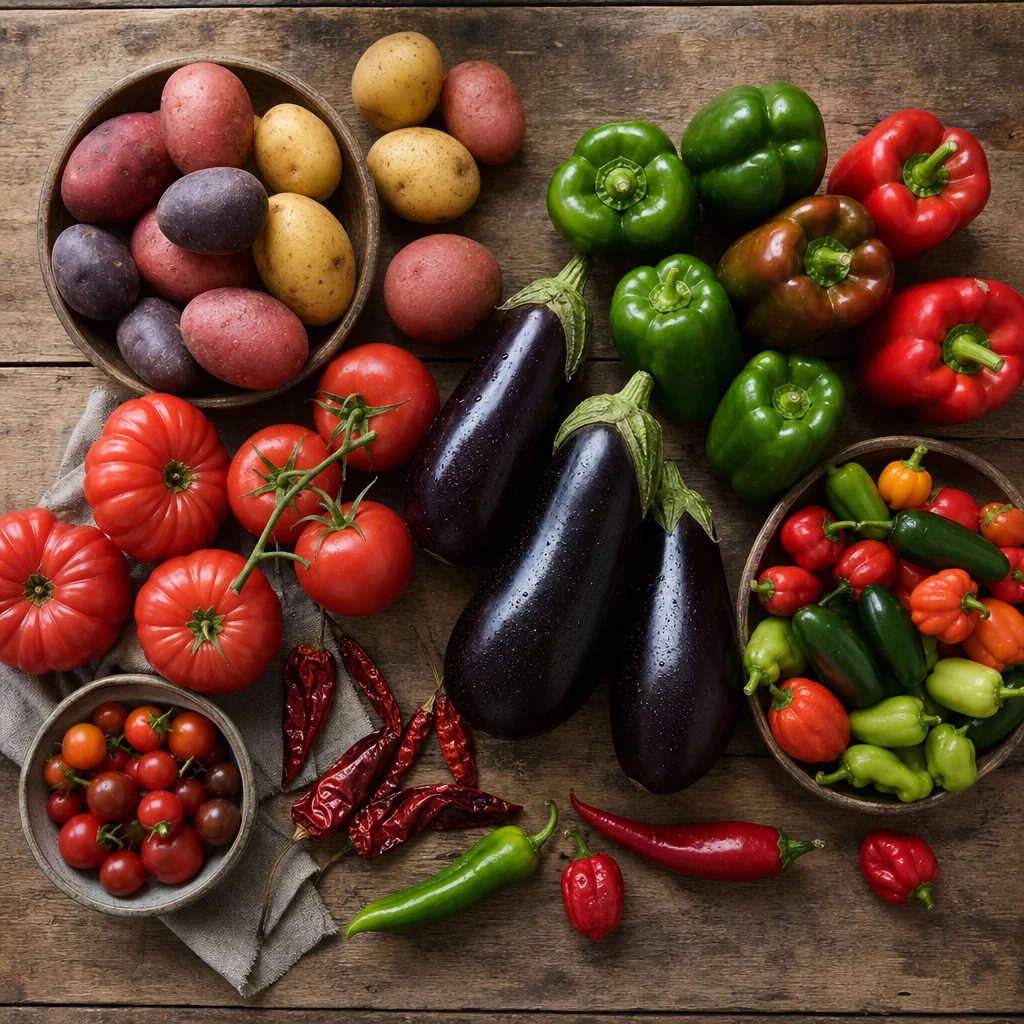
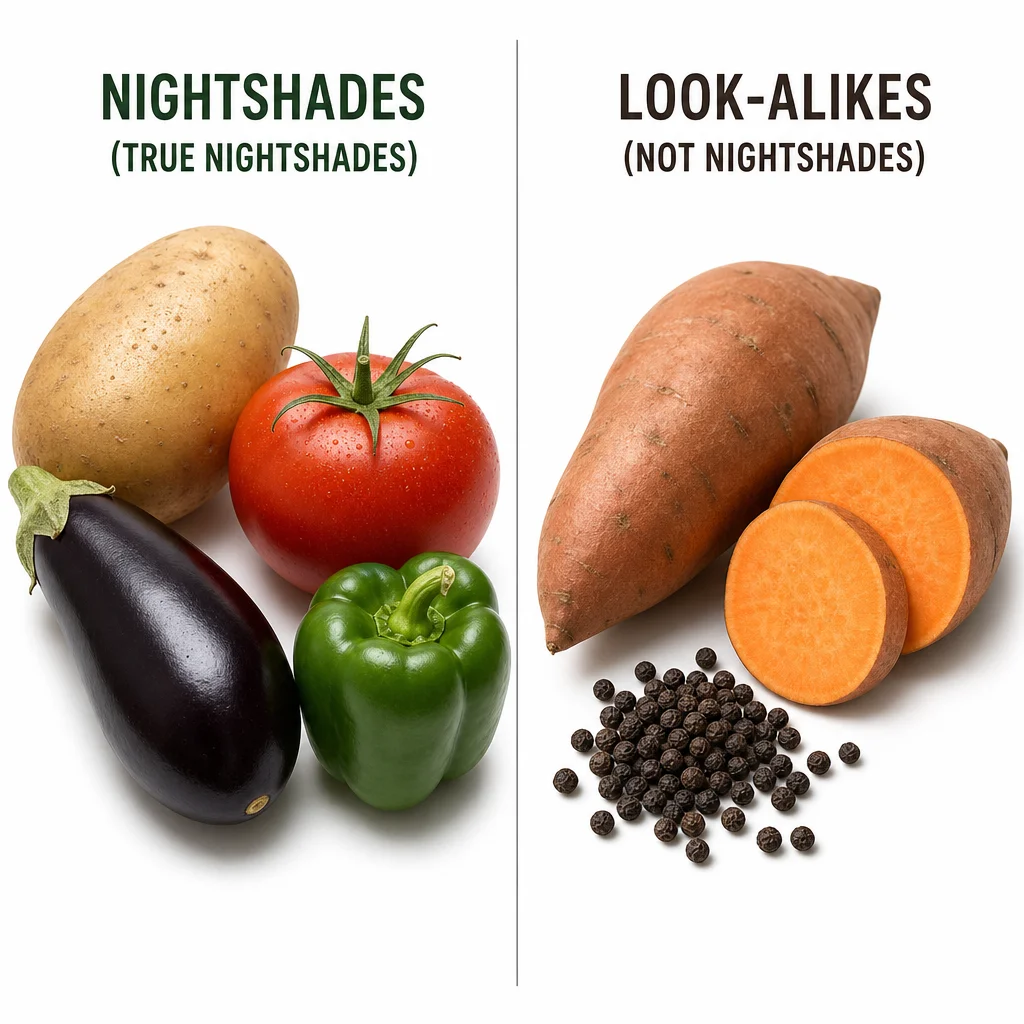
Nightshades produce several defensive compounds that account for most of the health conversation around them.
Solanine and chaconine are glycoalkaloids produced by potato plants as a natural pesticide. They concentrate heavily in the leaves, stems, and sprouts, and in the tuber they build up most in the skin and in areas exposed to light or physical damage. According to MedlinePlus, the U.S. National Library of Medicine's consumer health resource, solanine poisoning is rare but genuinely dangerous, producing delayed gastrointestinal and neurological symptoms 8 to 10 hours after ingestion, with vision changes, hallucinations, and slowed breathing in severe cases. The advice is unambiguous: never eat a potato that is green beneath the skin or has visible sprouting.
The numbers matter here. Commercial potato varieties typically test below 100 milligrams of combined glycoalkaloids per kilogram of fresh tuber, a level international food safety bodies consider of no concern. Levels above 140 mg/kg start tasting bitter, above 200 mg/kg produce a burning sensation in the mouth and throat, and levels this high are considered unsafe. Potato skin, however, can carry glycoalkaloid concentrations five to ten times higher than the peeled flesh, which is why heavily greened or sprouted potatoes should be discarded rather than simply peeled and cooked. Deep-frying at high temperature reduces glycoalkaloid content somewhat; boiling has essentially no effect, and microwaving only marginally reduces it.
Tomatine, the tomato's equivalent alkaloid, is chemically related but considerably less toxic than solanine, and no credible toxicology has established meaningful tomato poisoning risk at normal consumption levels.
Capsaicin, the compound that makes chili peppers hot, is a genuine gastrointestinal irritant for some people, contributing to heartburn and acid reflux independent of any broader nightshade sensitivity.
Lectins, present across many nightshades as well as grains and legumes, are proteins that can resist digestion, but the mainstream nutrition science position is that normal cooking and food preparation neutralizes the vast majority of dietary lectin activity for healthy people.