Dietary Guides

Low Purine Dietary Guide: Hidden Organ Derivatives, Yeast Extracts, and Gout Triggers on Labels

An encyclopedic guide to the low-purine diet for gout and kidney stone prevention covering hidden organ meat derivatives, yeast extract in soups and sauces, purine content of seafood, alcohol's uric acid impact, fructose's underappreciated purine-equivalent effect, and how to read labels for gout triggers.

Jun 11, 2026|12 min read
By Sanket Patel|Updated 2026-06-11|6 sources|Editorial standards
Low Purine Dietary Guide: Hidden Organ Derivatives, Yeast Extracts, and Gout Triggers on Labels

What Is the Low-Purine Diet?

The low-purine diet is a therapeutic eating pattern designed to reduce the body's production of uric acid. Purines are nitrogen-containing compounds found in the nuclei of all living cells. When the body breaks down purines, whether from food or from normal cellular turnover, the end product is uric acid. In most people, uric acid dissolves in the blood, passes through the kidneys, and leaves the body in urine without incident.

In people with gout or certain types of uric acid kidney stones, this system breaks down. Either the kidneys excrete too little uric acid, the body produces too much, or both. Uric acid accumulates in the bloodstream, a state called hyperuricemia, and eventually crystallizes in joints and surrounding tissues. The resulting inflammation produces the intense joint pain, swelling, and redness that characterize a gout flare, most commonly at the base of the big toe but also at the ankles, knees, and wrists.

Gout has been documented since antiquity and was historically associated with wealthy men who ate red meat and drank heavily. Modern research has confirmed those associations while adding important nuance. The New England Journal of Medicine published landmark findings in 2004 showing that dietary choices, particularly purine-rich foods, alcohol, and fructose-sweetened beverages, independently predict gout risk. The American College of Rheumatology now incorporates dietary guidance into its gout management framework alongside medication.

The diet works by reducing the dietary purine load entering the body, which reduces the substrate available for uric acid production. It does not cure gout and is rarely sufficient as a standalone treatment when uric acid levels are severely elevated, but it materially reduces flare frequency and supports the action of urate-lowering medications.

What the Low-Purine Diet Actually Bans

The restrictions cover several overlapping categories, and the severity of exclusion varies by purine concentration.

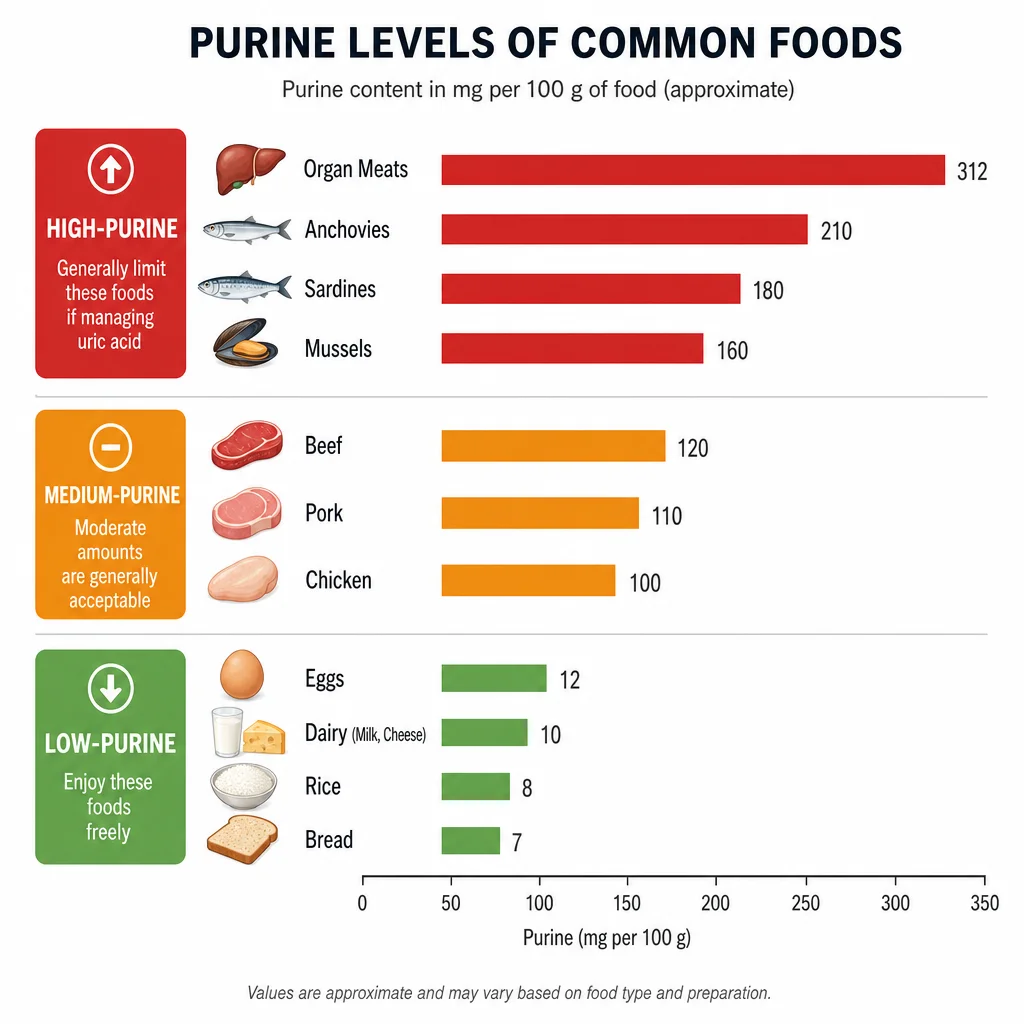
Organ meats sit at the top of the high-purine list. Liver, kidney, heart, brain, sweetbreads (thymus and pancreas), and tripe are among the most purine-dense foods in the human diet. This applies to organ meats from all species, including beef, pork, lamb, and poultry. A single serving of beef liver carries a purine load roughly four to six times higher than an equivalent portion of chicken breast.

Certain seafood categories are excluded entirely or nearly so. Anchovies carry an exceptionally high purine concentration, as do sardines, herring, sprats, and mackerel. Among shellfish, mussels and scallops rank highest. Shrimp, crab, lobster, and most white fish occupy a moderate range and are often tolerated in limited amounts depending on individual management goals.

Red meat and game meat are restricted rather than banned outright in many clinical frameworks, but venison, rabbit, wild boar, and similar game meats are higher in purines than farmed beef or pork, which are themselves moderate sources. Processed meats such as pâtés, meat pastes, cured salamis, and sausages made with organ content add further purine burden, sometimes invisibly.

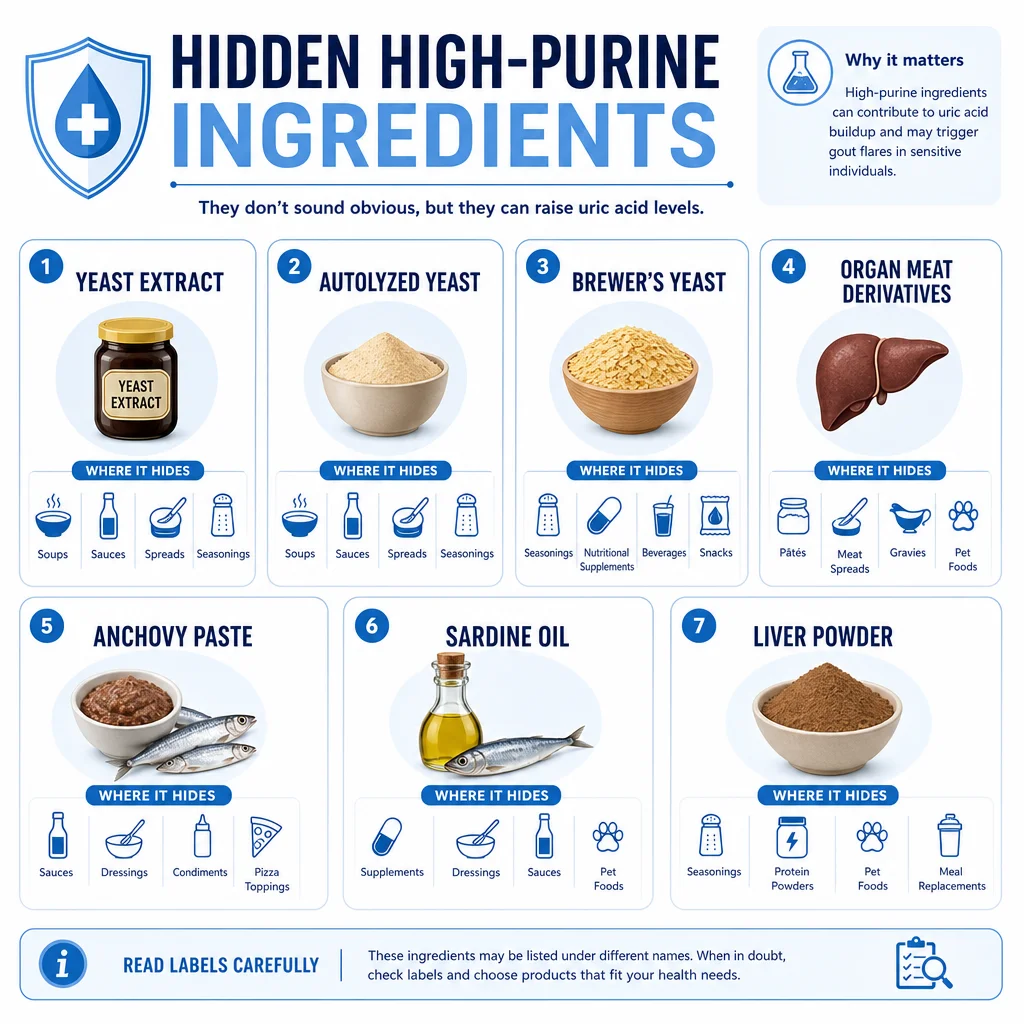
Yeast and yeast-based products require attention that many guides overlook. Brewer's yeast and baker's yeast are both high in purines because they consist of dense cellular material. Products made with concentrated yeast extracts, including Marmite, Vegemite, and nutritional yeast, are among the highest-purine condiments available commercially.

Alcohol functions through multiple mechanisms. Beer is particularly problematic because it combines ethanol with brewer's yeast and fermentation-derived purines. Spirits and wine carry fewer purines but still impair renal uric acid excretion and increase production through ethanol metabolism. Any alcohol-containing ingredient in a food product is relevant.

High-fructose sweeteners represent a non-purine pathway to hyperuricemia that many people on gout diets fail to account for. Fructose metabolism in the liver generates adenosine monophosphate as a byproduct, which is rapidly degraded to uric acid. High-fructose corn syrup, agave syrup, and concentrated fruit juice sweeteners in soft drinks, energy drinks, flavored waters, and packaged baked goods can elevate uric acid without containing a single purine.

Meat extracts and meat-based stocks concentrate the purines present in muscle and connective tissue. Beef extract, chicken extract, meat stock, and bone broth products sold as powders or pastes carry purines proportional to their concentration. A teaspoon of concentrated meat extract may deliver the purine equivalent of a much larger serving of whole meat.

Certain pulses such as dried lentils, chickpeas, and dried peas are moderate purine sources. Research has generally been reassuring about plant-based purines raising gout risk, but packaged soups, curries, and dal products based on these ingredients may be relevant when consumed frequently.

The Hidden Ingredient Problem

The Hidden Ingredient Problem

The most difficult aspect of the low-purine diet is not the obvious exclusions. Nobody who understands the diet is going to eat a plate of chicken livers or anchovies on toast without knowing the consequences. The difficulty lies in the dozens of ingredient categories that smuggle high-purine material, alcohol, or fructose into products marketed as soups, seasonings, condiments, or health foods.

Yeast extract and autolyzed yeast appear across an enormous range of processed foods as flavor enhancers, umami boosters, and natural flavoring agents. Worcestershire sauce is one of the most commonly consumed condiments in Western diets, and virtually every commercial version contains yeast extract as a core ingredient. Bouillon cubes, stock cubes, and powdered soup bases from nearly every major brand list yeast extract in their formulations. Canned soups, including chicken noodle, tomato bisque, French onion, and minestrone, routinely contain yeast extract whether or not the label foregrounds it. Ramen seasoning packets are concentrated sources. Flavored crackers, crisps, pretzels, and snack mixes commonly use yeast extract for their savory note. Soy sauce does not contain yeast extract directly but is itself a fermented product with moderate purine content, and some soy sauce products are blended with yeast extract to deepen flavor. Marmite and Vegemite are essentially pure yeast extract and are marketed in some regions as nutritional spreads. Nutritional yeast flakes, widely used as a cheese substitute in vegan cooking, are similarly concentrated.

Hidden organ derivatives surface in products where the label is not explicit. Liver powder and liver concentrate appear in some pâtés, meat-based baby foods, and pet food-adjacent products. Meat extract, a term that encompasses beef extract and chicken extract, is the basis of products like Bovril and many commercial gravies. Bone marrow derivatives may appear under the label of "beef stock" or "natural flavoring" in bone broth powders and fortified soups. Kidney extract occasionally appears in veterinary and specialty nutrition products. In processed sausages and meat products, regulations in both the US and EU require that organ content be declared, but the declaration may be buried in a long ingredient list and the word "mechanically separated" does not distinguish muscle from organ tissue.

High-purine seafood in disguise surfaces in multiple categories. Anchovy paste appears in Caesar dressing, certain pasta sauces, tapenade, and some brands of Worcestershire sauce. Sardine oil and fish powder feature in omega-3-fortified products, protein powders, and some pet nutrition crossover supplements marketed for human use. Mackerel and herring appear in fish paste products, tinned fish spreads, and smoked fish preparations. Mussels and mixed shellfish are common in frozen paella mixes, seafood soups, and shelf-stable bisque products.

Fructose and high-fructose corn syrup deserve particular attention because research published in leading journals has confirmed that fructose raises serum urate through adenosine monophosphate degradation, a pathway completely independent of dietary purines. High-fructose corn syrup is the sweetener of choice in American soft drinks, sports drinks, flavored juices, and many baked goods. In the EU, glucose-fructose syrup is the common formulation with a similar metabolic effect. Agave nectar and agave syrup, marketed in health food settings as low-glycemic sweeteners, are particularly high in fructose. Fruit juice concentrates used in "no added sugar" products still deliver concentrated fructose. Honey is approximately half fructose and half glucose, making it a moderate concern. Flavored yogurts, sweetened protein shakes, energy bars, and granola products frequently use these sweeteners.

Alcohol-containing ingredients appear not only in obvious products but in certain vinegars, vanilla extracts, mirin, cooking wines, beer-battered coatings, and fermented condiments. Mirin, a sweet Japanese rice wine used in sauces and marinades, contains both alcohol and fermentation-derived purines. Beer batter on frozen fish fillets or onion rings contains brewer's yeast-derived purines alongside ethanol.

Red meat and game meat derivatives extend beyond fresh cuts. Beef tallow, lard, and dripping used as cooking fats or listed as ingredients in pastries carry some residual purine content. Pemmican, jerky, and meat-based protein bars made from game or high-grade muscle meat concentrate purines significantly. Collagen peptide supplements derived from bovine or porcine sources are largely purine-free after processing, but bone broth protein powders retain more cellular material and carry a measurable purine load.
US vs EU Labeling: What's Different

US vs EU Labeling: What's Different

Labeling regulations on both sides of the Atlantic require ingredient declaration but differ significantly in how certain relevant categories are handled.

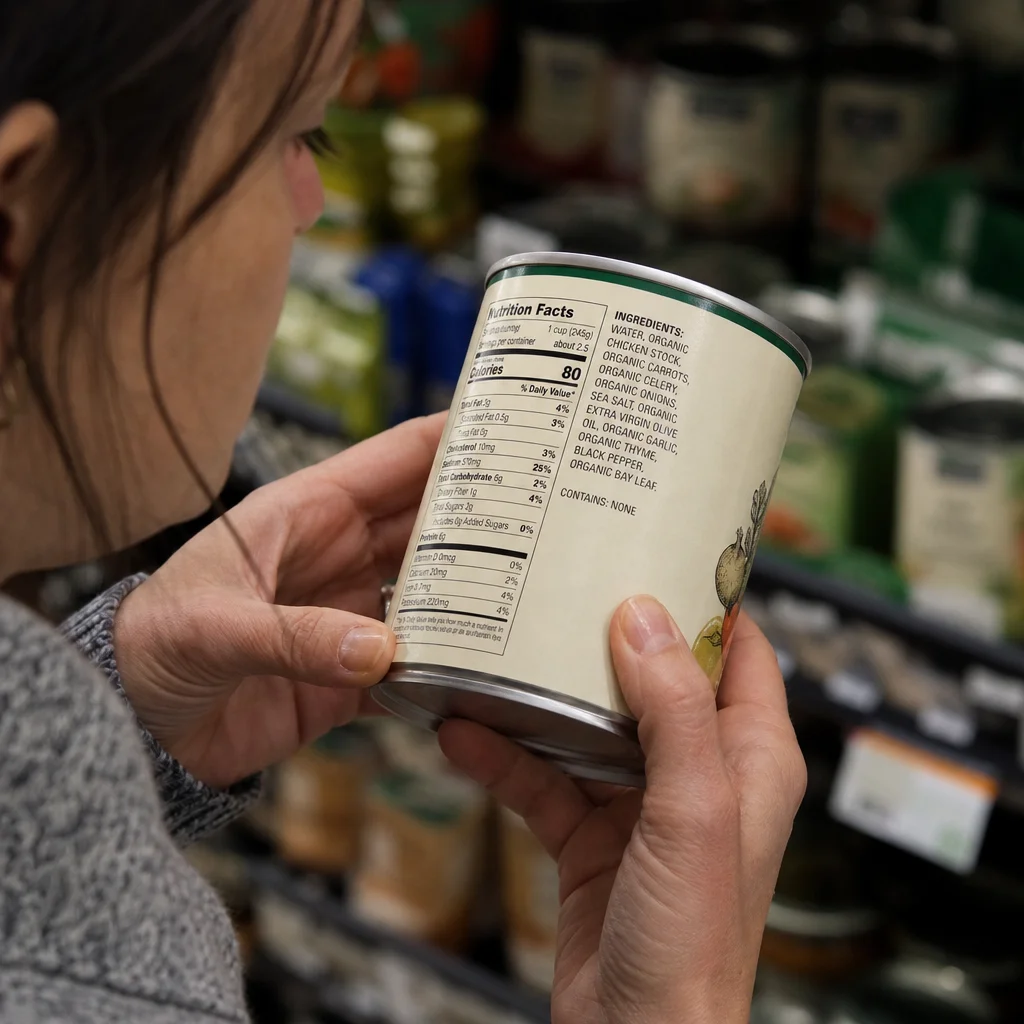
In the United States, the FDA requires that all ingredients appear on the label in descending order by weight, which theoretically makes identification possible. However, "natural flavors" is a permissible catch-all that can legally encompass yeast extract, meat extract, anchovy derivatives, and other purine-contributing substances without specific identification. The term "natural beef flavor" must at minimum indicate the protein source, but this disclosure is not always sufficient to reveal concentration or organ content.

High-fructose corn syrup must be declared by name in the US, which aids identification. Alcohol present as an ingredient must be listed, though the alcohol content of the finished product is only mandatory on beverages regulated by the Alcohol and Tobacco Tax and Trade Bureau, not on food items that contain incidental alcohol from fermentation or added flavoring.

In the European Union, the requirement for flavor compound disclosure is similar in principle but the term "yeast extract" is more consistently broken out from generic "natural flavoring" declarations, making it somewhat easier to spot. EU labeling rules also require the declaration of celery and certain other allergens, and while purine content is not an allergen-related requirement, the stricter allergen labeling culture tends to produce more granular ingredient lists overall.

One practical difference involves fish derivatives. In the EU, fish is a mandatory allergen and must be declared even when present in trace amounts or as a processing aid, meaning anchovy paste in Worcestershire sauce or fish-derived gelatin in products must appear on the label. In the US, fish is similarly a major allergen under FALCPA, so anchovy and other fish derivatives must be disclosed. However, "fish" as a category may not specify species, meaning the distinction between low-purine tilapia and high-purine anchovy is not always clear from the allergen declaration alone.

Neither the US nor the EU requires purine content labeling. Uric acid precursors are not regulated the way allergens, trans fats, or sodium are, so the burden of identification falls entirely on the consumer.

A Practical Label-Reading Strategy

A Practical Label-Reading Strategy

Strictly Avoid

These ingredient terms always disqualify a product for strict low-purine followers:

  • Yeast extract, autolyzed yeast, torula yeast, brewer's yeast, yeast powder
  • Liver (any species), liver powder, liver concentrate, liver extract
  • Kidney, sweetbreads, heart, brain, tripe, offal
  • Anchovies, anchovy paste, anchovy extract, sardines, herring, mackerel, sprats
  • Mussels, scallops (in ingredient lists of soups, sauces, or prepared meals)
  • Meat extract, beef extract, chicken extract, Bovril, bone marrow extract
  • High-fructose corn syrup, glucose-fructose syrup, isoglucose
  • Agave syrup, agave nectar
  • Beer, ale, stout, malt liquor (as ingredients), brewer's yeast
  • Mirin, sake (in significant quantities as flavoring bases)
  • Fish stock, seafood stock
  • Beef stock, chicken stock, bone broth
  • Nutritional yeast
  • Fruit juice concentrate
  • Dried lentils, chickpeas, dried peas in concentrated forms (e.g., pulse-based pasta)
  • Miso, tempeh and other fermented soy products
  • Beer vinegar

Generally Safe

These ingredients are typically low in purines and compatible with the diet:

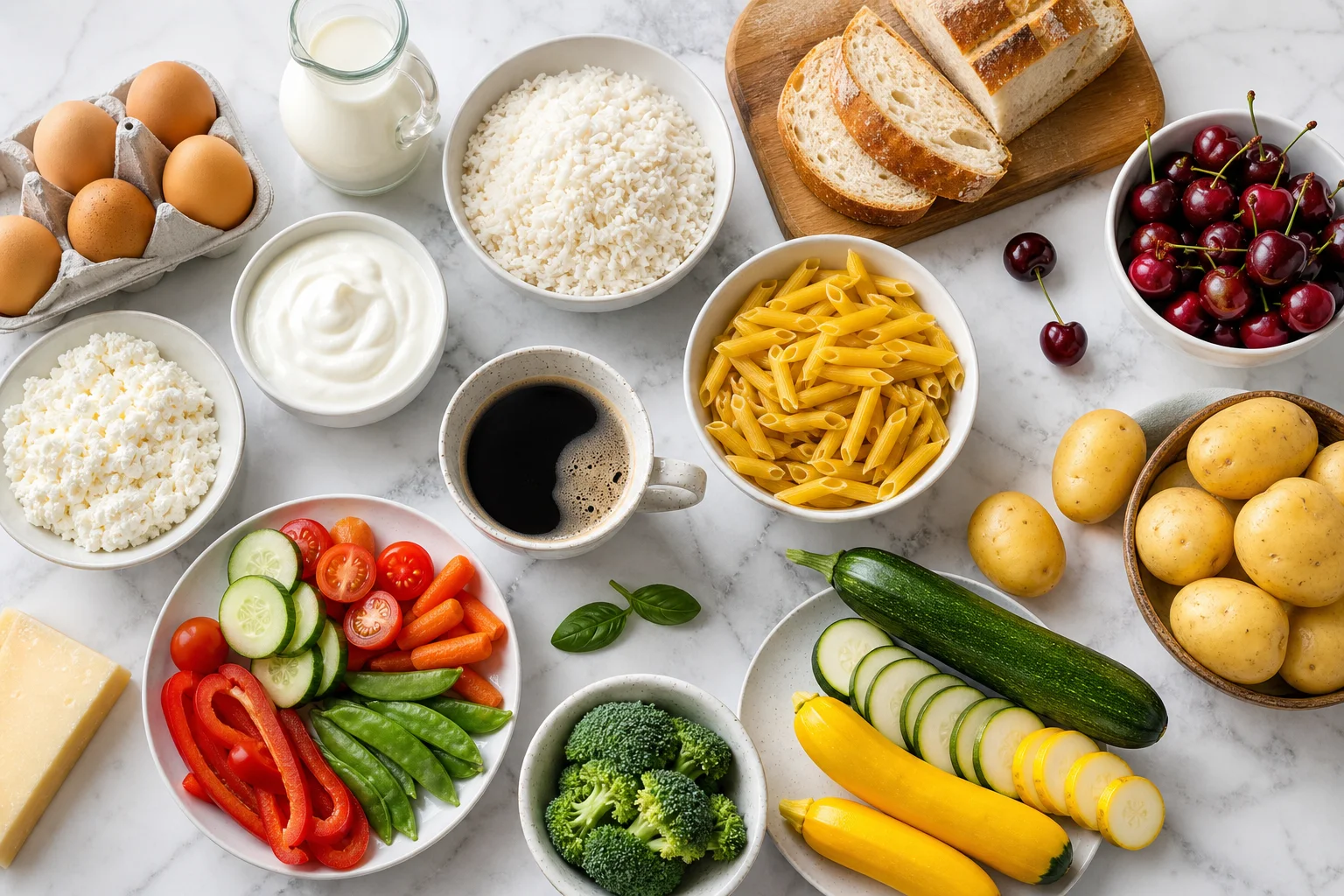
  • Eggs (whole egg, egg white, egg yolk, dried egg)
  • Dairy ingredients: milk, cream, butter, cheese, whey protein, casein, lactose
  • Most refined vegetable oils: sunflower oil, rapeseed oil, olive oil, coconut oil
  • Refined starches and flours: wheat flour, corn starch, rice flour, potato starch
  • Most vegetables in ingredient lists: tomato, carrot, onion, garlic, spinach, mushrooms (though mushrooms contain moderate purines)
  • Sugar (sucrose): does not raise uric acid the way fructose does
  • Salt, sodium chloride
  • Citric acid, ascorbic acid, lactic acid
  • Most spices and herbs: pepper, cumin, paprika, turmeric, basil, oregano
  • Vinegar, wine vinegar
  • Honey
  • Natural flavors or natural flavoring: generally low risk, though natural flavors on meat or seafood products carry slightly higher risk from potential yeast or fish derivatives that remain unverifiable on the label
  • Tofu and soy protein isolate: despite being soy-based, these are generally considered safe and may even support uric acid excretion

Ignore on Labels

These terms have no meaningful impact on purine content:

  • "Natural" as a standalone marketing claim
  • "Organic" certification (does not alter purine content)
  • "Low sodium" (relevant to other health conditions but not to purine load)
  • "Gluten-free" (no relation to purines)
  • "Preservative-free" (preservatives do not contribute purines)
  • Vitamin and mineral fortification declarations (added nutrients at supplemental levels do not affect uric acid)
  • "No artificial colors" or "no artificial flavors" (natural flavors are the concern, not artificial ones)

Managing a low-purine diet through a modern supermarket requires translating ingredient lists that were never designed with uric acid in mind. The terms are technical, the portion sizes unreported, and the distinction between "natural flavors" that are safe and those that are not is invisible without additional information. IngrediCheck was built precisely for this gap: scan a barcode, and the app evaluates the full ingredient list against your dietary profile, flagging yeast extract, organ derivatives, hidden seafood, and fructose sweeteners before the product goes into the basket. For those also managing kidney disease dietary restrictions alongside gout, where phosphate additives and potassium load add further label complexity, IngrediCheck handles all active profiles simultaneously so nothing slips through.

Next Label Check

Follow the scanner, hub, and ingredient paths connected to this guide

Get the app for clearer label decisions.

Scan labels, see what fits your food notes, and read the why in plain English.

IngrediCheck app